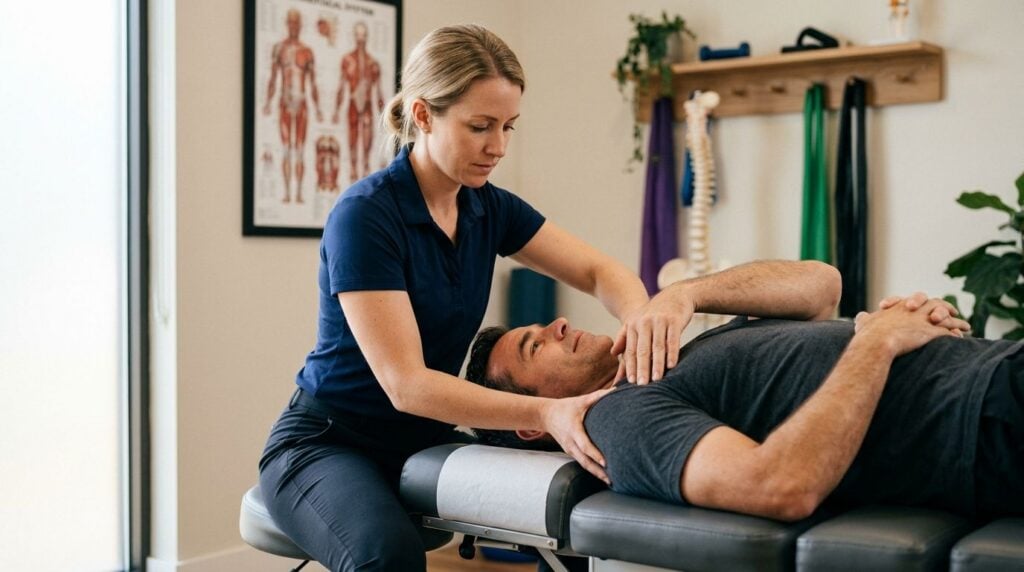
Thoracic outlet syndrome chiropractor care covers the assessment, postural correction and manual therapy options available when nerve or blood vessel compression near the collarbone and first rib causes arm, neck or shoulder symptoms. This guide sets out what an assessment involves, which self-directed steps typically come first, and which signs call for urgent medical referral rather than a chiropractic appointment.
- A thoracic outlet syndrome chiropractor starts with a neurological and vascular screen before any adjustment, not after it.
- Neurogenic thoracic outlet syndrome accounts for most diagnosed cases and often involves postural and nerve-mobility factors.
- Pallor, a weak pulse or arm swelling call for immediate GP or emergency review, not a chiropractic booking.
- MyChiro pairs manual therapy with posture-focused exercise for postural thoracic outlet symptoms, once red flags are ruled out.
- Desk setup changes and scapular stabiliser strengthening reduce mechanical loading on the thoracic outlet over time.
Why this matters for people with thoracic outlet syndrome symptoms
Thoracic outlet syndrome sits in a narrow space between the collarbone, first rib and surrounding muscles. Nerves from the brachial plexus and blood vessels running to the arm pass through that space, and when it narrows, symptoms can range from tingling fingers to a heavy, aching arm after overhead work.
Most people searching for a thoracic outlet syndrome chiropractor in 2026 are dealing with the neurogenic form, which involves nerve irritation rather than vessel compression. Clinical literature consistently places neurogenic presentations as the large majority of diagnosed cases, with vascular thoracic outlet syndrome far less common but more urgent when it occurs.
That distinction matters because the two forms need different first steps. Before any exercise plan or hands-on care, it helps to understand when back pain needs a doctor instead of a chiropractor, because the same screening logic applies to arm and shoulder symptoms with a vascular or neurological pattern.
Chiropractic care may be an appropriate part of managing neurogenic thoracic outlet syndrome symptoms linked to posture and repetitive overhead movement, once a chiropractor has ruled out vascular or neurological red flags. That single sentence is the core of what follows.
Red flags that need medical review first
- Pallor, coldness or a bluish tinge in the hand or fingers
- A weak or absent pulse at the wrist compared with the other side
- Visible swelling in the arm, or heaviness that comes on suddenly
- Numbness affecting the whole hand rather than specific fingers
- Symptoms that started after a traumatic injury or a fall
Any of these warrants a GP or emergency assessment before a chiropractic appointment, not after one.
Steps for managing postural thoracic outlet syndrome symptoms
Get a full assessment before starting any exercise plan
A chiropractor working with suspected thoracic outlet syndrome should run a structured screen before any hands-on care. Ask what the intake assessment covers before booking one.
- Postural screening of the shoulder girdle, cervical spine and first rib position
- Neurological testing of grip strength, reflexes and sensation in the arm and hand
- Vascular checks, including pulse comparison and provocative positioning tests
- A history review covering repetitive overhead work, carrying habits, sleep position and screen use
- A decision on whether imaging or medical referral is needed before manual therapy begins
Correct the postural loading pattern first
Rounded shoulders and a forward head position narrow the space between the collarbone and first rib. Fixing static posture is usually the first practical step in 2026, well before any adjustment is considered.
- Raise the monitor to eye height so the neck stays neutral, not tilted forward
- Keep elbows supported at roughly 90 degrees when typing
- Swap prolonged phone-to-ear holding for a headset or speaker
- Spread bag load evenly across both shoulders rather than one
- Check chair depth so the shoulders sit back instead of rounding forward
Restore thoracic and scalene mobility with targeted movement
Stiffness through the mid-back and neck muscles adds tension around the thoracic outlet. Mobility work aims to reduce that tension without forcing joints through end-range positions.
- Doorway pectoral stretch, held gently rather than pulled hard
- Thoracic extension over a foam roller or chair edge
- Scalene stretch with the head tilted away from the affected side
- Median and ulnar nerve glides performed slowly, never aggressively
- Upper trapezius stretch held for short intervals rather than long holds
Strengthen the scapular stabilisers
Weak mid-back and rotator cuff muscles let the shoulder blade drift forward, which narrows the outlet further under load. Strength work is slower than stretching, and it is the part most people skip.
- Prone Y, T and W raises with light resistance
- Band pull-aparts at chest height
- External rotation work with the elbow tucked to the side
- Rows performed with controlled scapular retraction, not just an arm pull
- Wall slides to reinforce upward rotation of the shoulder blade
Adjust daily habits and sleep position
Small repeated loads matter more than one heavy lift. Overnight positioning is one of the most overlooked contributors to morning symptoms, and it costs nothing to change.
- Avoid sleeping with the affected arm overhead or tucked under the pillow
- Swap a heavy shoulder bag for a backpack with even strap tension
- Take movement breaks every 30 to 45 minutes during desk-based work
- Lower the working height where a task allows it, instead of sustained overhead reaching
Consider chiropractic adjustments as one part of a broader plan
Manual therapy, joint mobilisation and soft tissue work can be discussed with a qualified chiropractor as one component of a wider plan that includes the exercise and ergonomic steps above. At MyChiro, that discussion follows assessment rather than preceding it.
- Cervical and first-rib mobility work assessed case by case
- Soft tissue release through the scalenes and pectoralis minor
- Combined care with exercise prescription rather than adjustments alone
- Reassessment of neurological and vascular signs at follow-up visits
Book a chiropractic assessment
Discuss thoracic outlet symptoms with a registered chiropractor before starting a plan.
Track symptoms and reassess on a schedule
Thoracic outlet symptoms fluctuate with load, sleep and desk setup, so a one-off assessment gives an incomplete picture.
- Log triggers such as overhead lifting, phone use or a poor night's sleep
- Note whether numbness follows a specific finger pattern or spreads across the whole hand
- Re-check grip strength and range of motion every few weeks
- Report any new pallor, swelling or pulse change immediately rather than waiting for the next visit
Comparing your options
| Option | Best for | Key limitation |
|---|---|---|
| Chiropractic care (manual therapy plus exercise) | Neurogenic thoracic outlet symptoms linked to posture or desk work, following assessment | Not appropriate for vascular red flags; medical referral comes first |
| Physiotherapy | Structured, supervised strength and mobility programs | Program length and availability vary by provider |
| Self-directed stretching and ergonomic changes | Mild, early-stage postural symptoms | No professional screening for red flags or diagnosis |
| GP or vascular review | Pallor, weak pulse, swelling or sudden-onset symptoms | Does not address the underlying postural or biomechanical drivers |
| Remedial massage | Short-term muscle tension around the neck and shoulder | Does not address joint mobility or nerve mechanics over time |
Common mistakes people make with thoracic outlet symptoms
- Stretching only, without fixing the desk setup. Nerve glides and pec stretches lose most of their value when the monitor stays too low and the shoulders round forward eight hours a day.
- Ignoring a change in colour or pulse. A cold, pale hand or a weak wrist pulse is a vascular sign, not a stretching problem, and needs same-week medical review.
- Sleeping with the arm overhead. One of the most common and most fixable contributors to morning numbness, and rarely addressed in generic posture advice.
- Returning to heavy overhead lifting too soon. Symptoms often ease with rest, then flare once training load returns to baseline without a gradual build-up.
- Self-diagnosing from online symptom checklists. Thoracic outlet symptoms overlap with cervical radiculopathy, carpal tunnel syndrome and rotator cuff problems, which is why a hands-on neurological and vascular screen matters more than a symptom list.
FAQ
What does a thoracic outlet syndrome chiropractor actually check?
A chiropractor screening for thoracic outlet syndrome checks posture, neurological signs such as grip strength and sensation, and vascular signs such as pulse and skin colour before any hands-on care. That screening step separates a proper assessment from a generic neck and shoulder appointment.
Can chiropractic adjustments help thoracic outlet syndrome?
Manual therapy and mobilisation may be discussed as part of a broader plan for neurogenic thoracic outlet symptoms once red flags are ruled out. It is not a stand-alone solution and is usually combined with postural correction and exercise.
Is thoracic outlet syndrome the same as carpal tunnel syndrome?
No. Thoracic outlet syndrome involves compression near the collarbone and first rib, while carpal tunnel syndrome involves compression at the wrist. Both can produce hand numbness, which is why assessment matters before assuming either diagnosis.
When should thoracic outlet symptoms be seen by a doctor instead of a chiropractor?
Symptoms involving pallor, a weak or absent pulse, arm swelling or sudden onset after trauma need immediate GP or emergency review rather than a chiropractic booking. These can indicate vascular thoracic outlet syndrome, which sits outside routine musculoskeletal care.
What exercises are commonly used for thoracic outlet syndrome symptoms?
Doorway pectoral stretches, thoracic extension over a foam roller, scalene stretches and scapular strengthening such as prone Y and T raises are commonly used. These target the postural and muscular factors that narrow the space around the thoracic outlet.
How long do postural thoracic outlet symptoms take to settle?
Timelines vary with the individual, their workload and their consistency with exercise and ergonomic changes, so no single figure applies to everyone. Regular reassessment with a qualified health professional helps track whether a plan is working.
Does desk setup really affect thoracic outlet syndrome?
Yes. A low monitor, unsupported elbows and prolonged phone-to-ear holding all encourage the rounded-shoulder posture that narrows the thoracic outlet. Correcting these is usually addressed before or alongside any hands-on care.
Can sleeping position make thoracic outlet symptoms worse?
Sleeping with the arm overhead or tucked under a pillow is a common and often overlooked contributor to morning numbness and tingling. Adjusting sleep position is one of the simpler changes to test alongside a broader management plan.
One last thing
Most people assume thoracic outlet syndrome is rare, yet the neurogenic form makes up the large majority of diagnosed cases, well ahead of the vascular form. That gap is exactly why the screening step in 2026 matters more than the exercise list: it tells you which category you are dealing with before a single stretch or adjustment happens. A thoracic outlet syndrome chiropractor who skips that screen in 2026 is skipping the part that decides whether the rest of the plan is even appropriate.
Related guides
- Chiropractic care for musicians with neck and shoulder strain
- How to fix winged shoulder blades naturally
- Chiropractic care for remote workers with makeshift home offices
- How to prepare for your first chiropractor appointment