

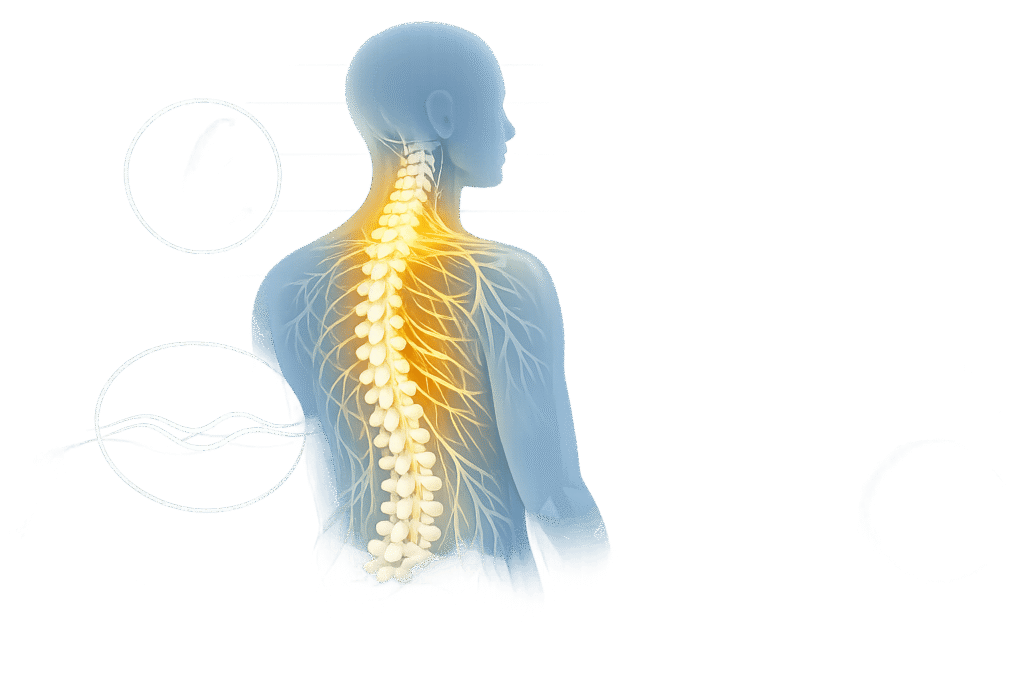
Chiropractic care focuses on aligning the spine to improve how your nervous system functions. Misaligned vertebrae can interfere with nerve signals, which may disrupt essential processes like muscle movement, posture, and stress regulation. By targeting specific areas of the spine, chiropractic adjustments aim to restore balance between the "fight or flight" (sympathetic) and "rest and digest" (parasympathetic) systems.
Key points include:
- The spine protects the spinal cord, which connects the brain to the body.
- Misalignment can cause nerve interference, affecting balance, coordination, and recovery from stress.
- Adjustments may reduce nerve pressure, improve neural communication, and support relaxation.
- Research suggests spinal adjustments can release proteins that promote nerve health.
Pairing chiropractic care with habits like good posture, core exercises, and relaxation techniques may help maintain spinal health and nervous system balance over time.
How Chiropractic Care Supports Nervous System Regulation
The Nervous System and Spinal Health Connection
How the Autonomic Nervous System Works
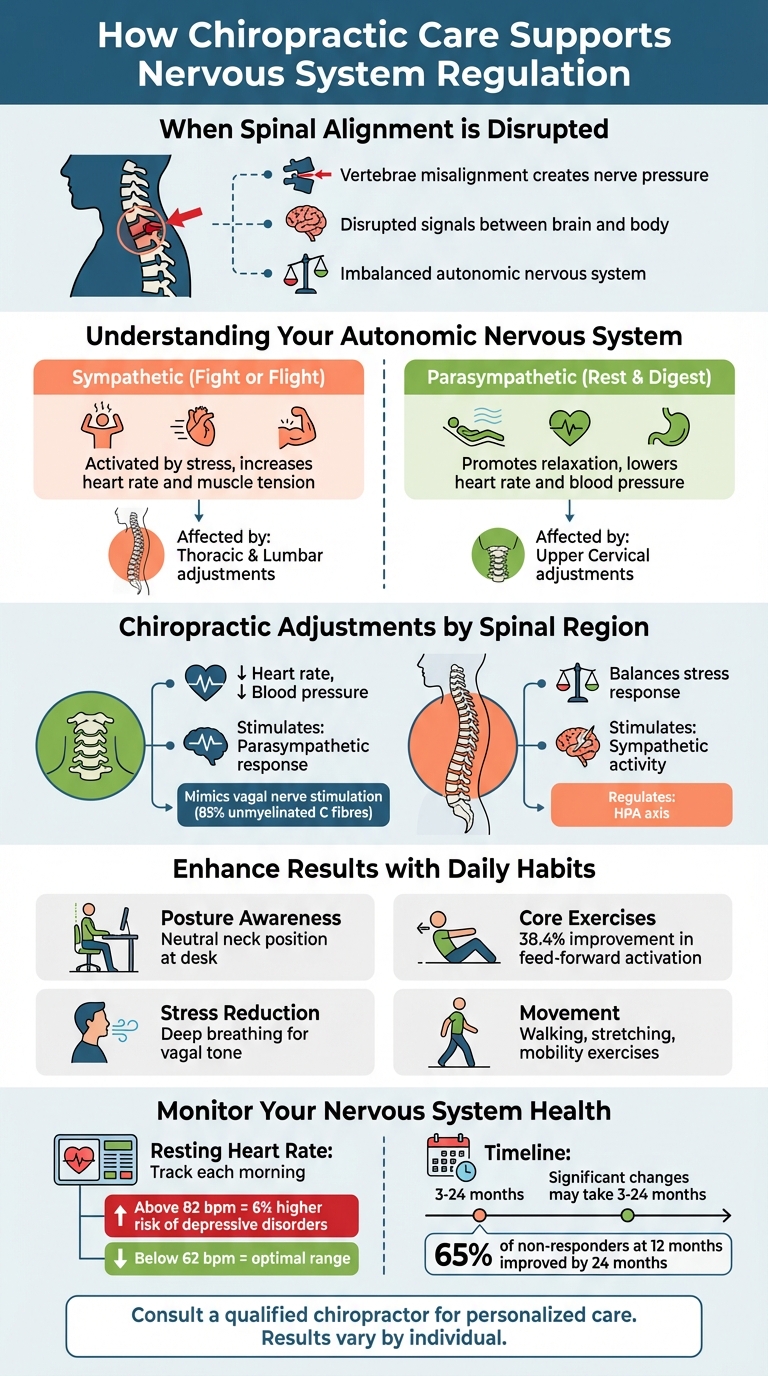
The autonomic nervous system (ANS) runs in the background, managing essential functions like your heartbeat, breathing, and digestion without requiring conscious effort. It has two main branches: the sympathetic system, which activates the "fight-or-flight" response, and the parasympathetic system, responsible for the "rest-and-digest" mode. These two systems work together to maintain balance in your body.
When you’re under stress, the sympathetic system kicks in, increasing your heart rate and muscle tension. On the other hand, during relaxation, the parasympathetic system takes over, slowing your heart rate and promoting digestion. This constant back-and-forth between the two systems helps maintain homeostasis – your body’s internal equilibrium.
"The autonomic nervous system consists of two systems, sympathetic and parasympathetic, which usually have opposite effects on tissues, so that an increase in one system’s activity concurrently decreases the other system’s activity in a very precise control of tissue function." – Aysha Karim Kiani, Researcher, MAGI EUREGIO
However, problems occur when this balance shifts too far. Chronic stress, poor posture, or physical strain can leave your body stuck in a state of sympathetic overdrive. This can lead to muscle tension, fatigue, and difficulty recovering from everyday challenges. Recognising how this system works helps explain why even subtle changes in spinal alignment can disrupt nerve signals.
How Spinal Alignment Affects Nerve Function
Your spine does more than just support your body – it also protects your spinal cord, which is the main communication link between your brain and the rest of your body. When vertebrae move out of alignment, they can press on nearby nerves, disrupting the flow of electrical signals.
These disruptions can affect sensory receptors in the deep spinal muscles, which constantly send alignment information to your brain. If these signals are interrupted, your brain’s ability to respond to changes in your environment diminishes, impacting balance, coordination, and overall function.
"Think of your brain as a computer and your spine as the main data cable sending information to every part of the body. If that cable gets kinked, twisted, or blocked, messages don’t travel properly – and your system can’t reset." – Coconut Grove Chiropractic
Different areas of the spine influence the autonomic nervous system in unique ways. Adjustments in the upper cervical (neck) region tend to activate the parasympathetic system, helping to lower heart rate and blood pressure. Meanwhile, adjustments in the thoracic and lumbar (mid-to-lower back) regions often stimulate the sympathetic system. This intricate relationship between spinal health and nerve function highlights how specific chiropractic adjustments can help regulate your nervous system.
sbb-itb-585d67d
You Experience Your ENTIRE Life Through Your Nervous System | What Chiropractic REALLY Does
How Chiropractic Adjustments May Help Regulate the Nervous System
Chiropractic adjustments aim to address spinal misalignments that may compress or irritate nerves, potentially improving the communication between your brain and body. By making precise adjustments, chiropractors may enhance neural signalling, which could help restore balance to the autonomic nervous system. This system plays a key role in managing essential functions like heart rate and digestion.
"Chiropractic care and spinal manipulation regulate the autonomic nervous system at peripheral level and its projections to the central nervous system." – Aysha Karim Kiani et al., Researchers
These adjustments may also stimulate the release of neurotrophins such as brain-derived neurotrophic factor (BDNF) and nerve growth factor (NGF), which are vital for supporting nerve health. Different areas of the spine affect either the parasympathetic or sympathetic nervous system. Below, we explore how specific spinal adjustments may influence these systems.
Upper Neck Adjustments and Relaxation Response
Adjustments to the upper cervical spine can enhance parasympathetic activity, which may help lower heart rate and blood pressure.
"The parasympathetic nervous system regulates the upper cervical region, so a cervical manipulation or adjustment results in a parasympathetic response (lowering of heart beat, reduction of blood pressure, pupil constriction)." – Aysha Karim Kiani et al., Researchers
The cervical vagal nerve, which is about 85% unmyelinated and made up of slow-conducting afferent C fibres, connects directly to the brain. Adjusting the upper neck may mimic vagal nerve stimulation, encouraging the body to transition from a stressed state to a more relaxed one. Research published in the Journal of Neural Plasticity in 2023 suggests that cervical adjustments can improve heart rate variability, a key indicator of autonomic balance.
Mid and Lower Back Adjustments for Stress Response Balance
Adjustments in the mid and lower back regions primarily influence sympathetic activity, which plays a role in managing the body’s stress responses and activating the hypothalamic-pituitary-adrenal (HPA) axis.
"Manual adjustment of spinal regions with significant sympathetic innervation, i.e. the upper thoracic and lumbar regions, produces a sympathetic response (heart beat stimulation, blood pressure increase, pupil dilation)." – Aysha Karim Kiani et al., Researchers
Lifestyle Practices to Support Nervous System Health
These daily habits complement chiropractic adjustments, helping to maintain nervous system balance and spinal alignment. By incorporating small changes in movement, breathing, and stress management, you can enhance the benefits of chiropractic care and support your body’s overall function.
Posture Awareness and Movement Exercises
Keeping your spine aligned during everyday activities is key to maintaining clear communication between your brain and body. For instance, maintaining a neutral neck position is especially important if you spend hours at a desk or in front of a screen. Poor posture can disrupt this balance, while proper alignment supports the parasympathetic nervous system.
Core stability exercises can also play a role in supporting spinal adjustments. These exercises promote feed-forward activation, where your postural muscles engage automatically to stabilise the spine. Interestingly, research has shown that sacroiliac joint manipulation can improve feed-forward activation times by 38.4% – a strong case for incorporating core strengthening and mindful movement into your routine.
Gentle activities like walking, stretching, or targeted mobility exercises can further support nerve health when practised regularly. Combined with chiropractic adjustments, these movements help sustain spinal health and encourage better nervous system function.
Stress Reduction and Relaxation Methods
Relaxation techniques that stimulate the vagus nerve can amplify the calming effects of chiropractic care. Deep breathing, for example, enhances vagal tone, helping shift your body from the ‘fight or flight’ state to the ‘rest and digest’ mode. When paired with chiropractic adjustments, these practices may even improve heart rate variability – a key indicator of how well your autonomic nervous system is functioning.
Mindfulness and relaxation methods can also influence how your brain processes pain and stress. These "top-down" approaches may help regulate the nervous system’s response to external stressors. When combined with the physical benefits of spinal adjustments, these techniques can help sustain a balanced and healthy nervous system.
Tracking Progress and Maintaining Spinal Health
Keeping tabs on your progress is a key part of maintaining spinal health over the long term. By combining objective data with your personal observations, you can get a clearer picture of how your nervous system is adapting and improving.
Monitoring Changes in Tension and Posture
A simple but effective way to start is by tracking your resting heart rate each morning before getting out of bed. Studies suggest that a resting heart rate above 82 beats per minute may be linked to a 6% higher risk of depressive disorders compared to rates below 62 beats per minute[1]. As your nervous system becomes more balanced, you might notice this number gradually dropping.
In addition to heart rate, keep a journal of other changes. Are you sleeping better? Feeling more mentally focused? Standing straighter? These small but meaningful shifts could indicate that your neural communication is improving. Regular posture checks can also make it easier to see and measure progress over time.
Long-Term Care and Prevention Strategies
Maintaining spinal health isn’t just about short-term fixes – it’s about building habits that last. Regular physical activity plays a big role in supporting your nervous system and reducing the effects of chronic stress.
If you work at a desk, take a closer look at your workspace setup. Adjust your screen to the right height, use a supportive chair, and make it a point to take movement breaks throughout the day. These small changes can help prevent spinal strain and keep your nervous system functioning smoothly.
Combining ongoing chiropractic care with mindful posture habits and stress-reduction techniques can help you maintain a healthy spine and support a more balanced nervous system in the long run.
Conclusion
Chiropractic care might play a role in supporting nervous system regulation by addressing spinal misalignments that disrupt communication between the brain and body. When combined with habits like mindful posture, stress management, and regular physical activity, chiropractic adjustments may help shift the autonomic nervous system towards a more balanced state. This can potentially ease chronic stress responses and promote relaxation and recovery, though outcomes can differ from person to person.
For some, noticeable changes occur relatively quickly. However, research indicates that significant neurological shifts often require consistent care over 3 to 24 months. Long-term studies on vagal pathway stimulation linked to cervical adjustments show that 65% of patients who didn’t initially respond at 12 months began experiencing improvements by the 24-month mark.
It’s essential to consult a qualified healthcare professional before starting any care plan. A licensed chiropractor can conduct a detailed history and physical exam to determine if chiropractic care is suitable for your symptoms and rule out other medical issues that may need different treatment.
By combining chiropractic adjustments with supportive lifestyle changes, many individuals may find improved balance in their autonomic function. If you’re in Bondi Junction and dealing with desk-related tension or back discomfort, Dr Steve offers evidence-based chiropractic care tailored to support nervous system health and overall wellbeing.
This content is for general informational purposes and is not a replacement for professional medical advice. Chiropractic care focuses on musculoskeletal health, and results can vary. Always consult a qualified healthcare provider before making health-related decisions.
FAQs
How can spinal alignment affect my nervous system?
Spinal alignment plays a role in supporting the nervous system’s regulation and balance. Chiropractic care, particularly spinal adjustments, is thought to help activate the parasympathetic system. This activation can offset the effects of the sympathetic system, aiding in stress management. Although chiropractic care primarily targets musculoskeletal health, these adjustments may also have indirect benefits for nervous system function. When performed by a qualified practitioner, such treatments are generally regarded as safe.
How many sessions might it take to notice nervous system changes?
The number of sessions needed to observe changes in the nervous system can differ from person to person. Research hints that improvements in nervous system regulation – like shifts in heart rate variability (HRV) – might appear after several sessions. However, there’s no universally agreed-upon timeframe, as results often depend on individual circumstances and tailored care plans.
What can I do at home to support nervous system balance?
To help maintain a balanced nervous system, focus on activities that encourage relaxation and support spinal health. Practices like mindfulness, deep breathing exercises, and other relaxation methods can be effective. Paying attention to your posture and minimising spinal strain through ergonomic adjustments – like using a supportive chair or setting up your workspace properly – can also make a difference.
There’s also some research indicating that chiropractic care might play a role in improving nervous system function, potentially by enhancing heart rate variability. Incorporating these habits into your routine could naturally contribute to better nervous system regulation.