


Brain fog – that sluggish, fuzzy feeling in your head – might not just be about sleep or diet. Poor spinal alignment, especially in the upper neck (C1 and C2 vertebrae), could also play a part. Misaligned posture can disrupt blood flow, cerebrospinal fluid circulation, and nervous system communication, all of which are vital for mental clarity.
Key takeaways:
- A misaligned neck may restrict blood flow and oxygen to the brain.
- Poor posture can impact how well your brain and body communicate.
- Chiropractic care and posture adjustments might help reduce strain.
If you’re dealing with brain fog, addressing spinal health through better posture, ergonomic setups, and movement could make a difference.
What is Brain Fog?
Brain fog refers to a state of reduced mental clarity that can make everyday tasks feel harder than usual. You might lose your train of thought mid-sentence, forget why you entered a room, or have to re-read the same paragraph over and over without it sinking in. Some people describe it as feeling like their brain is running slower than usual.
Common Symptoms
Key signs of brain fog include trouble focusing, especially during that mid-afternoon dip, and difficulty remembering names or tasks. You may feel mentally drained even after getting a full night’s rest, struggling to stay alert in the morning and experiencing a noticeable energy crash later in the day. Many describe it as a general sense of mental sluggishness, like you’re not quite operating at your usual speed.
Contributing Factors
Brain fog can stem from a variety of causes, including stress, poor sleep, and diet. However, habits related to posture and movement are also gaining attention as potential triggers. Spending hours slouched over a screen – whether it’s your phone or computer – can lead to a forward head posture and neck compression, which may interfere with your nervous system’s ability to function properly.
Sedentary lifestyles and poorly designed workspaces can make things worse, adding physical tension that saps your mental energy. Subtle but ongoing physical stress, such as misalignment in the upper cervical spine, can keep your nervous system in a state of imbalance. This may disrupt communication between your brain and the rest of your body.
"Brain fog and fatigue are incredibly common complaints, but what’s often missed is the silent contributor that sits right beneath your head: your spine." – Amanthi Demuth, Chiropractor
These factors highlight that brain fog isn’t just a mental challenge – it may also be tied to how your body, particularly your musculoskeletal system, is functioning. The connection between posture-related strain and cognitive sluggishness opens the door to understanding how spinal alignment might play a role in supporting clearer thinking.
sbb-itb-585d67d
How Spinal Alignment May Affect Brain Function
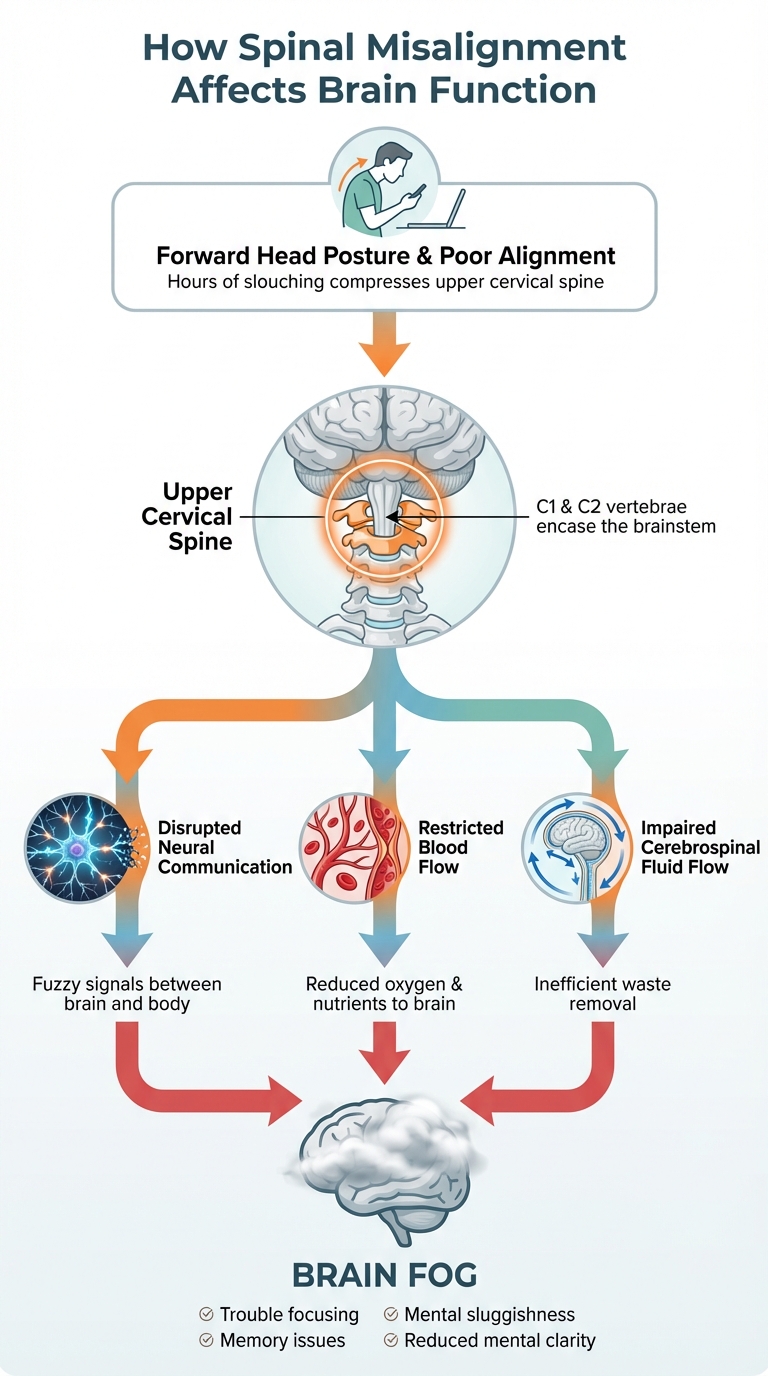
How Spinal Misalignment Affects Brain Function and Mental Clarity
The Nervous System and Cognitive Health
Your spine does more than just hold you upright – it acts as the main communication highway between your brain and the rest of your body. Spending hours hunched over a screen or slouching can lead to forward head posture and compression in the upper cervical spine, particularly around the atlas (C1) and axis (C2). These two vertebrae sit directly beneath your skull and encase the brainstem, which is responsible for regulating vital functions like energy levels, focus, and blood flow.
When these areas are misaligned, it can interfere with how neural signals travel through your body. This subtle disruption may create a low-level stress on your nervous system, often draining your mental and physical energy without you even noticing. The result? You might find yourself feeling mentally sluggish, struggling with memory, or just unable to shake that "foggy" sensation.
"And when that communication gets fuzzy, your brain feels fuzzy too." – Amanthi Demuth, Chiropractor
Now, let’s explore how posture-related changes in blood flow can also influence brain function.
Poor Posture and Blood Flow to the Brain
Forward head posture doesn’t just affect your spine – it can also compress the upper cervical area, limiting blood flow to the brain. This reduced circulation can decrease the oxygen and nutrients your brain needs to perform at its best. Since this type of compression doesn’t always cause noticeable discomfort, it’s easy to overlook its role in issues like brain fog or lack of focus.
Cerebrospinal Fluid Flow and Waste Removal
Spinal alignment doesn’t just impact blood flow; it also plays a key role in the circulation of cerebrospinal fluid (CSF). This fluid surrounds your brain and spinal cord, helping to clear out metabolic waste. Proper CSF flow is crucial for keeping your mind sharp and your thoughts clear. However, when the spine is out of alignment, this circulation can be disrupted, making waste removal less efficient. Over time, this may add to that heavy, sluggish feeling in your head.
Can Chiropractic Care Support Spinal Alignment and Mental Clarity?
How Spinal Adjustments May Help
Chiropractic adjustments focus on improving spinal alignment, particularly in the upper cervical spine, where the atlas (C1) and axis (C2) vertebrae are located. Misalignments in these areas can put pressure on the brainstem, which plays a key role in regulating energy, focus, and blood flow. By addressing these issues, chiropractic care might help ease stress on the nervous system and promote better communication between the brain and the rest of the body.
Many chiropractors utilise digital imaging to identify specific misalignments, especially in the upper spine. Correcting these structural issues may help reduce tension and balance the autonomic nervous system. This includes calming the sympathetic system (linked to the "fight-or-flight" response) and enhancing parasympathetic function (the "rest-and-heal" response). This balance can also relieve chronic tension that often saps mental energy. Combined with postural advice and ergonomic adjustments, chiropractic care can help combat the "screen hunch" that contributes to spinal compression over time.
These adjustments, by improving neural communication, have been linked anecdotally to sharper mental clarity and improved focus for some individuals.
Patient-Reported Experiences
Anecdotal accounts suggest that certain patients experience short-term boosts in alertness following adjustments, though scientific research on this topic is still limited. It’s important to note that chiropractic care focuses on musculoskeletal and nervous system health, rather than directly addressing cognitive issues.
Important Disclaimer
Chiropractic care aims to support spinal and nervous system health but is not a treatment for brain fog or cognitive disorders. Outcomes can vary widely between individuals. If you’re struggling with persistent mental fog, it’s essential to consult your GP or a qualified healthcare professional to rule out underlying medical conditions. Chiropractic care can be a valuable addition to a comprehensive wellness plan but should always complement – not replace – medical advice.
Practical Tips for Supporting Spinal Health and Mental Clarity
Set Up Your Desk for Better Posture
How you arrange your workspace has a big impact on your posture and spinal health. One of the most important things to avoid is a forward head tilt, which can compress your upper cervical spine. To help with this, position your monitor at eye level so you’re not constantly looking down. Also, choose a chair that supports the natural curve of your lower back.
"When your head is tilted forward or your neck is compressed, it places pressure on the upper cervical spine – especially the atlas (C1) and axis (C2) vertebrae… Even subtle misalignments here can: Impede blood flow to the brain [and] Interfere with cerebrospinal fluid circulation." – Amanthi Demuth, DC
Ergonomic tools can also be a game-changer for avoiding "screen hunch", which is the rounded shoulder and forward head position common among desk workers. Keep your keyboard and mouse positioned so your elbows stay at a 90° angle. This setup can reduce strain on your body and potentially minimise brain fog.
Daily Stretches and Exercises
Adjusting your workstation is only part of the solution – movement is equally important. Incorporating stretches and exercises into your daily routine can help improve neck mobility and support spinal alignment. Simple movements like neck rotations or gentle chin tucks can counteract the effects of sitting for long periods. Move slowly and with control to retrain the muscles that stabilise your upper spine.
Tools like Neck Smart can help measure and improve your neck control, but even a basic stretching routine can make a difference. The focus should be on restoring mobility in the upper cervical spine, where misalignments often occur. Just five minutes of targeted stretches during your workday can help keep oxygen and nutrients flowing to your brain. In addition to these stretches, regular activity throughout the day is essential for overall spinal health.
Stay Active and Reduce Sitting Time
Sitting for long periods can increase spinal pressure and limit circulation. Breaking up your sitting time with short walks or standing breaks helps keep your spine healthy. Try to move or stand for at least five minutes every hour – whether that’s walking to grab a glass of water or doing a quick stretch at your desk.
Low-impact activities like walking, swimming, or yoga are excellent for supporting spinal health without overloading your joints. Regular movement can also ease the tension that builds up and drains your energy throughout the day. The key is consistency – frequent, small breaks are more effective than occasional bursts of intense exercise for maintaining both spinal alignment and mental clarity.
Conclusion
Brain fog can sometimes be linked to subtle spinal misalignments that disrupt nerve function. The upper cervical spine, particularly the C1 and C2 vertebrae, plays a key role in supporting the brainstem, which is responsible for regulating blood flow, energy levels, and focus. When these vertebrae are misaligned, they may place stress on the nervous system, potentially contributing to that "fuzzy" disconnect between your brain and body.
Chiropractic care may assist by addressing these structural issues. Gentle spinal adjustments can help improve alignment and ease unnecessary pressure on specific areas of the spine. However, adjustments alone aren’t enough – your posture, workspace ergonomics, and regular movement also play a big part in maintaining mental clarity.
This combined approach works to resolve alignment concerns while encouraging healthier daily habits. While spinal adjustments target structural problems, your everyday actions – like how you sit, how often you move, and how you handle stress – are just as important for supporting your nervous system. These small, consistent efforts may help reduce strain and improve overall function.
If brain fog persists, especially when paired with neck tension or poor posture, it may be time to consult a chiropractor. For those in need of spinal health support and improved mental clarity, Dr Steve in Bondi Junction offers care focused on the nervous system with the convenience of online booking. Whether you’re managing strain from long hours at a desk or simply want to prioritise your spinal health, professional guidance can help you move forward.
This information is general and not a replacement for professional medical advice.
Chiropractic care addresses musculoskeletal health, and results can vary between individuals.
Always consult a qualified healthcare professional before making decisions about your health.
FAQs
How do I know if my posture is causing brain fog?
Poor posture, particularly in the neck and upper back, can impact both nervous system function and blood circulation. Some studies suggest this might play a role in experiencing brain fog. Common signs of poor posture include slouching, tension in the neck or shoulders, and feeling mentally sluggish after sitting for extended periods. Making lifestyle adjustments or seeking chiropractic care could potentially help, but it’s important to consult a healthcare professional to properly assess your symptoms and determine the best course of action.
Can neck alignment issues affect blood or CSF flow to the brain?
Some studies indicate that improper neck alignment might impact the nervous system, possibly altering blood or cerebrospinal fluid (CSF) flow to the brain. However, the available research on this topic is still limited and does not provide definitive conclusions.
When should I see a GP instead of a chiropractor for brain fog?
If you’re experiencing brain fog along with sudden or severe neurological changes, symptoms that persist or worsen over time, or have underlying health issues like infections or neurological conditions, it’s important to see a GP. These situations might need medical attention that goes beyond what chiropractic care can address.


