

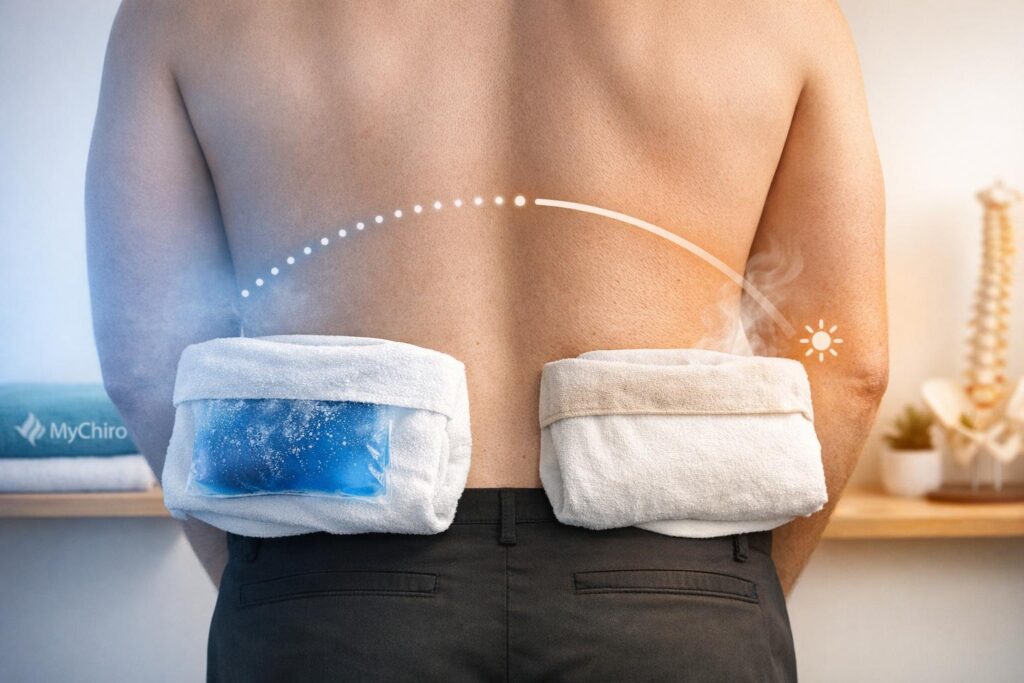
Feeling sore after a chiropractic adjustment? It’s normal! Your body is adjusting to improved alignment, and temporary discomfort can occur. Choosing between heat or ice therapy can significantly impact your recovery. Here’s the short answer:
- Ice: Best for the first 24–72 hours to reduce swelling, inflammation, and sharp pain.
- Heat: Ideal after 72 hours for muscle stiffness, spasms, or chronic tension.
Quick Tips:
- Use ice for acute inflammation (redness, swelling, sharp pain). Apply in 10-minute intervals with a barrier (e.g., towel).
- Use heat for lingering tightness or stiffness. Apply for 15–20 minutes, testing temperature first to avoid burns.
If symptoms persist or worsen, consult your chiropractor. Timing and proper usage are key to effective recovery.
Heat vs Cold Therapy for Chiropractic Injury Recovery
Why You Might Feel Sore After an Adjustment
When your chiropractor adjusts your spine and joints, your body begins to adapt to the new alignment. Post-adjustment soreness is a common response as your body gets used to better joint movement and improved spinal positioning.
"Soreness after an adjustment is normal, especially if it’s your first time or if manual therapy involved deep tissue work." – Bradford House Chiropractic Clinic
This soreness is often more noticeable during your first few visits or after a long break between sessions. If deep tissue techniques were part of your treatment, the discomfort might feel more intense. You could experience mild inflammation or tenderness, and muscles that have remained tight for a long time may feel similar to how they do after a tough workout.
Post-adjustment soreness is usually temporary and often settles within 24 to 48 hours. Staying hydrated supports your general recovery.
In most cases, this soreness fades within 24 to 48 hours. Gentle movement and light stretching can improve circulation and help you recover without putting too much strain on your body. However, if the discomfort lingers for more than a few days or worsens, it’s a good idea to reach out to your chiropractor for advice.
When to Use Ice
Ice therapy is often recommended to manage acute inflammation and sharp pain during the first 24–48 hours after a chiropractic adjustment. If the area feels hot, swollen, or tender, applying ice can help ease discomfort. This method works in tandem with your body’s natural healing process triggered by the adjustment. Here’s a closer look at how ice therapy works and how to use it effectively.
How Ice Therapy Works
The science behind ice therapy explains why it can be so effective. When you apply ice, it causes vasoconstriction, which means your blood vessels narrow, reducing blood flow to the affected area. This helps limit swelling and prevents fluid buildup. On top of that, ice slows down nerve activity, which can dull sharp or stabbing pain. Essentially, ice acts as a natural anti-inflammatory.
"The cold constricts blood vessels, reducing blood flow to the affected area and thus minimising swelling and pain."
– Richie Sanchez, Chiropractor, New Farm Chiropractic
Now that you know why it works, let’s talk about how to use it properly.
How to Apply Ice Safely
To avoid skin damage, always wrap your ice pack in a damp tea towel, washcloth, or paper towel before applying it. Direct contact with ice can lead to burns or frostbite in just a few minutes. Stick to the "10-10-10" method: keep the ice on for 10 minutes, take it off for 10 minutes, and then reapply for another 10 minutes. During the first 24–48 hours, you can repeat this cycle every two hours while you’re awake.
For extra relief, elevate the treated area while icing. However, if you have a heart condition, avoid icing your left shoulder. When in doubt, consult your chiropractor for guidance.
When to Use Heat
After tackling initial swelling with ice, heat therapy can step in to aid recovery once the inflammation has subsided – typically after 48 to 72 hours. If the area no longer feels warm or swollen and sharp pain has diminished, it may be time to swap ice for heat. Heat is especially beneficial for easing chronic discomfort, muscle spasms, or stiffness that greets you in the morning.
Heat can be a game-changer for long-standing muscle tightness. It’s also a great prep tool before stretching or exercise, as it helps loosen up muscles for movement. That said, steer clear of heat if the area is still red, swollen, or causing sharp pain, as these signs suggest the acute phase isn’t over yet, and heat could make inflammation worse. Now, let’s dive into how heat supports the recovery process.
How Heat Therapy Works
Heat therapy promotes recovery by triggering vasodilation, or the widening of blood vessels, which boosts blood flow to the affected area. This increased circulation delivers much-needed oxygen and nutrients to the tissues, while also relaxing muscles and easing spasms.
"Heat treatment is particularly effective for easing muscle stiffness and spasms when applied only to the muscle."
– Rasura Chiropractic Team
Additionally, the warmth soothes nerve endings, helping to reduce pain sensations. Unlike ice, which focuses on reducing inflammation, heat works to enhance your body’s natural healing by improving blood flow. While the benefits are clear, knowing how to apply heat safely is just as important.
How to Apply Heat Safely
You can use a moist heat pack, heating pad, warm towel, or even enjoy a warm bath or shower. Moist heat is often more effective than dry heat, as it penetrates deeper into muscle tissue. Apply heat for 15 to 20 minutes at a time, and always test the temperature on a small area of skin first to avoid burns. Never fall asleep with a heating pad on.
If you’re targeting muscle spasms, focus the heat directly on the muscle rather than joints. Continuous low-level heat wraps, which maintain a temperature above 40°C, can also be a convenient option for extended relief. After your heat session, drink water to stay hydrated.
Heat vs Ice: Which Should You Use?
Knowing when to use heat or ice can make a big difference in how your body heals. Ice is your go-to during the first 24–72 hours to tackle sharp pain, swelling, or redness. After this initial period, heat becomes more effective for easing dull aches, muscle spasms, or chronic stiffness.
"Ice is generally preferred immediately after to manage acute pain and inflammation."
– Richie Sanchez, Chiropractor, New Farm Chiropractic
Your symptoms are the best guide. If the area feels warm, swollen, or has a stabbing pain, ice is the better option. On the other hand, heat works well for muscle tightness or joint stiffness. Choosing the right therapy can aid recovery and help avoid making the problem worse.
Comparison Table
Here’s a quick breakdown to help you decide:
| Feature | Ice Therapy (Cryotherapy) | Heat Therapy (Thermotherapy) |
|---|---|---|
| Primary Timing | Acute (first 24–72 hours) | Chronic (after 72 hours) |
| Best For | New injuries, swelling, sharp pain, inflammation | Muscle spasms, joint stiffness, chronic tension |
| Physiological Action | Constricts blood vessels (vasoconstriction) | Dilates blood vessels (vasodilation) |
| Primary Benefit | Reduces swelling and numbs pain | Relaxes muscles and improves flexibility |
| Application Time | 10–20 minutes | 15–20 minutes |
| Precautions | Avoid on stiff muscles or front/side of neck | Avoid on open wounds, bruises, or active swelling |
If you’re unsure, start with ice for the first couple of days, then switch to heat once the initial pain and swelling have eased. For more tailored advice, your chiropractor can recommend the best approach for your situation. This guide provides a solid starting point for using these therapies effectively.
Using Ice and Heat Together
Contrast therapy takes the benefits of ice and heat and combines them to support recovery after a chiropractic adjustment.
By alternating between ice and heat, contrast therapy creates a "pumping" effect in the body. Ice causes blood vessels to constrict, while heat makes them expand. This process can help improve circulation and may also interrupt pain cycles, making it useful for addressing prolonged stiffness or mild inflammation.
"Contrast therapy can help reduce inflammation while promoting blood flow and muscle relaxation."
– Richie Sanchez, Chiropractor, New Farm Chiropractic
Timing is everything with this technique. Start contrast therapy only after the first 24–48 hours, when the sharp pain and swelling of the acute phase have eased. Follow the 10-10 rule: apply an ice pack for 10 minutes, then switch to a heat pack for another 10 minutes. Repeat this cycle three times in one session.
You can use this method up to three times a day to manage lingering soreness or stiffness. To protect your skin, always place a damp tea towel between the pack and your skin to avoid burns or frostbite. If you’re unsure about your level of inflammation, it’s best to check with your chiropractor before starting.
This approach addresses both inflammation and muscle relaxation, offering a practical way to manage discomfort after an adjustment.
Safety Tips for Heat and Ice Therapy
When it comes to contrast therapy, taking a few precautions can make all the difference in keeping your skin and nerves safe.
Always use a barrier between your skin and any heat or ice pack. A thin towel, damp washcloth, or cloth is your best bet to avoid burns, frostbite, or other skin damage. Even if the temperature feels mild, never place a pack directly on bare skin.
"Never put ice directly on your skin, always use a barrier like a towel. This prevents any skin damage and keeps you comfortable." – Rasura Chiropractic Team
Stick to 10–20 minutes per session and give your body time to recover in between. Using a pack for longer than 20 minutes can lead to skin or nerve damage. Take a break of 10–15 minutes between sessions, and if you’re alternating between heat and ice, wait at least an hour before switching. Also, avoid falling asleep with a pack in place – prolonged exposure can cause serious burns or tissue injury.
If you have conditions like diabetes, heart disease, or anything that affects your ability to sense temperature changes, speak to your chiropractor or GP first. These conditions can increase the risk of injury from temperature therapy. It’s also important to avoid applying heat to open wounds or areas with active swelling. Following these precautions will help you safely use heat and ice therapy while supporting your recovery.
Choosing the Right Therapy for You
When deciding between heat and ice for relief, it’s all about timing and symptoms. For acute pain, swelling, or inflammation – especially within the first 24–72 hours after an adjustment – ice is your go-to. On the other hand, if you’re dealing with lingering stiffness or muscle tension after this period, heat can help ease tight muscles and improve comfort.
Here’s a simple guide: use ice when there’s redness and swelling, and turn to heat for stiffness or muscle spasms. During colder or damp weather, heat might also feel more soothing, helping to maintain flexibility and ease tension.
"Ice or heat should reduce your pain, not make it worse. If your pain doesn’t settle within a few days or keeps coming back, it’s time to get professional advice." – Ansell Chiropractic Centre
If the pain doesn’t improve or keeps returning, it’s time to check in with your chiropractor. They’ll assess your symptoms, how long you’ve been dealing with them, and any underlying conditions that could influence your recovery. And remember, stop immediately if a therapy worsens your pain or causes discomfort.
While these general tips can guide you, personalised advice ensures you’re choosing the right approach for your situation. If you’re unsure, don’t hesitate to reach out for professional guidance – it’s always better to be certain when it comes to your health.
FAQs
Why might I feel sore after a chiropractic adjustment?
It’s quite common to experience a bit of soreness after a chiropractic adjustment. This happens as your body starts adjusting to the new alignment or due to slight muscle strain and tension during the healing process.
The discomfort is usually mild and doesn’t last long – often just a day or two. To ease any soreness, you can try applying ice or heat to the area. However, if the soreness continues or gets worse, it’s wise to reach out to your chiropractor for guidance.
Should I use heat or ice after a chiropractic adjustment?
Using ice or heat after a chiropractic adjustment can be an effective way to manage discomfort, but which one you choose depends on your symptoms and the timing.
If you’re dealing with swelling, pain, or inflammation, ice is often the better option. Wrap a cold pack or even a bag of frozen peas in a damp cloth and apply it to the affected area for about 10–20 minutes. You can repeat this every two hours during the first 24–48 hours. Just make sure there’s always a barrier, like a towel, between the ice and your skin to avoid irritation or frostbite.
On the other hand, if muscle tension or stiffness is the issue, heat might work better. Use a warm pack or a heated towel for 15–20 minutes, but only after the initial inflammation has gone down – usually 48 hours after the adjustment. Be cautious with the temperature to avoid burns and don’t place the heat source directly on your skin.
If you’re not sure which approach is right for you or have specific concerns, it’s always a smart move to check in with your chiropractor for personalised guidance.


