

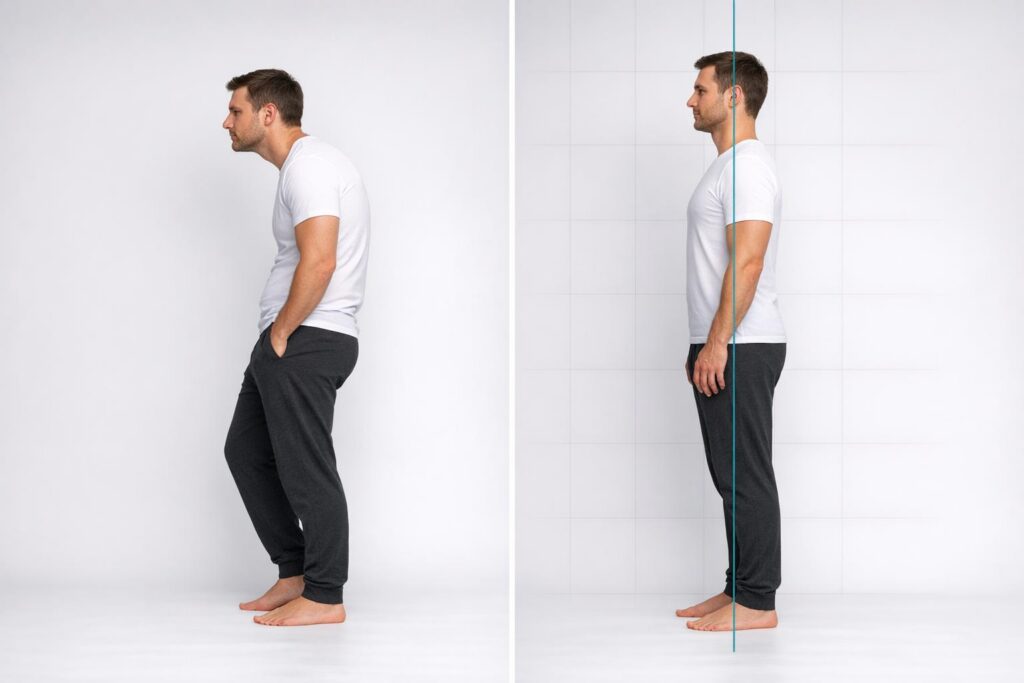
Posture – it’s something we often take for granted until pain, discomfort, or fatigue forces us to pay attention. But did you know that our bodies are inherently asymmetrical, and this natural imbalance can significantly influence our posture? In this article, we’ll explore the fascinating science behind human asymmetry, how it affects our posture, and practical strategies to identify and address common patterns. Based on insights from an expert video on posture restoration, this article will give you a clearer understanding of why we stand, move, and stabilise the way we do.
The Foundation: Human Asymmetry and Right-Side Dominance
The human body is not perfectly symmetrical – and that’s completely normal. From the structure of our brains to the function of our diaphragms, humans are naturally right-side dominant. This dominance leads to predictable posture patterns, including a tendency to shift weight toward the right side. As the expert speaker explains, this right-sided bias can even be observed in classical art (e.g., Michelangelo’s David) or in people standing casually in public spaces.
Key Terminology: Patterns vs Orientation
To understand posture restoration, it’s essential to distinguish between two key terms:
- Pattern: A recurring and predictable way the body functions based on its asymmetry. The most common example is the "left AIC pattern", where the left side of the pelvis moves forward, and the body prefers to shift weight to the right.
- Orientation: Refers to the position or direction in which the body or a specific part (e.g., pelvis) is facing. Orientation can vary due to compensation, but it doesn’t change the underlying pattern.
This distinction is critical, as misinterpreting orientation for a pattern can lead to confusion or incorrect treatment approaches.
sbb-itb-585d67d
Exploring the Left AIC Pattern
One of the most common patterns in posture restoration is the left AIC (anterior interior chain) pattern, which reflects right-side dominance. In this scenario:
- The pelvis naturally shifts forward on the left side.
- The right side of the body becomes stronger and more engaged, often leading to sensations of weight on the right foot, heel, or teeth.
- The left side compensates, sometimes appearing as though it’s bearing weight or dominant when, in reality, it’s not functioning in true balance.
While this pattern is normal, issues arise when compensations – such as overarch in the lower back or instability in the pelvis – create discomfort, pain, or dysfunction.
Common Signs of the Left AIC Pattern
- Feeling more weight or pressure on the right foot or heel.
- A slight drop in the right shoulder and elevation of the left shoulder.
- Sensations of imbalance in the jaw or teeth (e.g., feeling more contact on one side).
The speaker highlights that many individuals mistakenly believe they are left-side dominant due to compensations, but testing consistently reveals the underlying right dominance.
When Patterns Become Problematic
While the left AIC pattern is a natural byproduct of human asymmetry, various factors can exacerbate it and lead to discomfort or dysfunction. These include:
- Cranial Strain: Issues with the jaw, teeth, or visual system can drive an imbalanced posture. For instance, a misaligned jaw can create a fake left-side stance, where the pelvis appears shifted to the left, but the underlying pattern remains unchanged.
- Compensations: Overstretched ligaments, instability in the lumbar spine, or locked knees can cause the body to adopt unnatural orientations.
- Visual and Sensory Inputs: A dominant left eye, for example, can trick the body into shifting leftward, creating further sensory confusion.
These compensations often result in pain patterns such as lower back discomfort, neck spasms, or even plantar fasciitis, as the body struggles to stabilise itself around an imbalanced core.
Restoring Balance: The Path to Better Posture
The goal of posture restoration is not to eliminate asymmetry (which is natural) but to rebalance the body and address compensations that lead to discomfort. Here are key strategies discussed in the video:
1. Understand Your Pattern
Testing by a trained professional is critical to identify whether your body exhibits a left AIC pattern or other compensations. Awareness of these patterns is the first step toward meaningful change.
2. Re-establish Right AIC Patterns
To move toward true balance, individuals must learn to shift their pelvis back on the left side and turn it to the left, reversing the left AIC pattern. This requires targeted exercises and guidance from a posture restoration practitioner.
3. Address Cranial Strain and Sensory Inputs
- Misalignments in the jaw or teeth, dominant visual inputs, and even narrow spaces can contribute to imbalance. These factors must be assessed and corrected as part of a holistic approach to posture restoration.
- For example, the speaker illustrates how simply adjusting jaw position can impact pelvic alignment.
4. Develop Stability in Left Stance
True left stance involves the left hip moving back, the pelvis stabilising, and the body weight evenly distributed. Achieving this requires intentional practice and strengthening of underutilised muscles.
The Role of Visual and Neurological Factors
One of the most fascinating insights from the video is the role of visual and neurological factors in posture. For example, a dominant left eye or narrow spaces can unconsciously alter head and neck positioning, leading to instability. The speaker shares a compelling example of how their own posture and pain were influenced by visual inputs from childhood.
This connection between sensory perception and physical posture underscores the complexity of posture restoration – it’s not just about biomechanics but also how the brain and body interact.
Key Takeaways
- The human body is naturally asymmetrical and exhibits predictable posture patterns, such as right-side dominance and the left AIC pattern.
- Distinguishing between patterns and orientation is crucial to understanding and addressing posture issues.
- Cranial strain, sensory confusion, and compensations can exacerbate posture patterns and lead to discomfort or dysfunction.
- Effective posture restoration requires rebalancing the body, addressing compensations, and building true stability in left stance.
- Visual and neurological inputs play a significant role in posture and may need to be addressed in cases of chronic pain or imbalance.
Final Thoughts
Posture is far more than just standing up straight. It’s a dynamic interplay between the brain, body, and external environment. By understanding the science of human asymmetry and the common patterns that shape our posture, we can take proactive steps to restore balance, reduce pain, and improve overall well-being.
If you’re struggling with posture-related issues or chronic discomfort, consider consulting with a posture restoration specialist to uncover the root causes and develop a tailored plan for relief.
By addressing these underlying patterns, you can unlock a new level of comfort, confidence, and physical presence – one step, and one stance, at a time.
Source: "Why do People Stand Like This? (Posture Issues Explained)" – Neal Hallinan, YouTube, Jun 4, 2025 – https://www.youtube.com/watch?v=afmflcFq7nY


