


Stress can take a toll on your body, especially through muscle tension, poor posture, and nervous system strain. Chiropractic care, which focuses on spinal alignment, may help reduce these effects. Research suggests spinal adjustments could lower stress hormones like cortisol, improve heart rate variability (HRV), and alleviate tension. While the findings are promising, studies often have small sample sizes and short durations, so more evidence is needed. Combining chiropractic care with posture improvements and lifestyle changes may support stress management.
Key takeaways:
- Stress affects your nervous system, leading to tension and posture issues like "text neck."
- Chiropractic adjustments may help reduce cortisol levels and improve HRV.
- Improved spinal alignment could ease physical symptoms of stress.
- Current research is limited; results vary by individual.
For best results, consider a personalised care plan alongside healthy habits like exercise and ergonomic improvements.
How Stress Impacts the Nervous System and Physical Health
The Nervous System’s Response to Stress
When you’re under stress, your sympathetic nervous system kicks into gear, triggering the classic fight-or-flight response. This involves releasing hormones like adrenaline and cortisol to prepare your body to handle the perceived threat. Meanwhile, the parasympathetic system – the one responsible for calming you down – takes a backseat. If stress becomes a constant in your life, this imbalance can persist, keeping your sympathetic system overly active and leaving little room for recovery.
Over time, this prolonged state of activation can lead to increased muscle tension, particularly in areas like your neck, shoulders, and back. This tension is your body’s natural "guarding" response, designed to protect you in the short term. But when it sticks around, it can cause subtle misalignments in your spine, known as vertebral subluxations. These misalignments disrupt the communication between your brain and the rest of your body, interfering with your nervous system’s ability to function smoothly. The result? A domino effect of neural changes that set the stage for the physical symptoms often linked to chronic stress.
Physical Symptoms Caused by Chronic Stress
The ongoing strain on your nervous system doesn’t just stay hidden – it shows up in your body in ways you can feel and see. One of the most obvious signs is postural change. Think rounded shoulders, a slumped upper body, or "text neck", where your head juts forward unnaturally. These aren’t just cosmetic issues; they shift the way your spine bears weight, particularly in the cervical region. The more your head tilts forward, the greater the strain on your neck, leading to discomfort and stiffness.
Stress also impacts your circulation. It narrows blood vessels, reducing the blood flow to muscles in your back and elsewhere. This lack of circulation can cause pain, stiffness, and reduced muscle performance. Unlike an injury from a single event, stress-related discomfort tends to creep up over time, often fluctuating with your emotional state.
What makes things worse is the cycle that stress and poor posture create. The more stressed you feel, the more your posture suffers, which in turn increases muscle tension and discomfort. Chiropractors often group stressors into three categories: mechanical (like injuries from accidents), chemical (stimuli like caffeine or nicotine), and mental (ongoing emotional pressures). Each of these can contribute to the persistent muscle tension and spinal misalignments that make stress-related symptoms harder to shake off.
sbb-itb-585d67d
Current Research on Chiropractic Care and Stress
Chiropractic Effects on Nervous System Function
Recent studies are shedding light on how chiropractic care in Bondi Junction might influence nervous system regulation. A key area of focus is vertebral subluxations – misalignments in the spine that can act as both physical and neurological stressors, disrupting nerve communication throughout the body.
Advanced imaging has provided some intriguing insights. For example, Ogura and colleagues used PET scans to monitor brain activity during chiropractic adjustments. Their findings revealed changes in cerebral metabolism and activity, particularly in regions associated with stress and pain processing. This suggests that chiropractic care might directly affect how the brain handles stress signals, although the exact mechanisms remain under investigation.
Beyond spinal adjustments, researchers are exploring physiological markers to assess stress management. One such marker is Heart Rate Variability (HRV), which reflects the body’s ability to adapt to stress. Roy and colleagues found that chiropractic treatments improved HRV, indicating better autonomic regulation. Since higher HRV is often linked to a more resilient stress response, these findings highlight chiropractic care’s potential role in supporting nervous system health.
Measured Changes in Stress Indicators
To better understand chiropractic care’s impact on stress, researchers have also examined specific biomarkers that indicate stress levels in the body. Improved nervous system function may help alleviate stress-related physical symptoms, and early studies are beginning to explore this connection.
For instance, Vernon and Humphreys conducted research showing that chiropractic adjustments were associated with reduced cortisol levels – a hormone that spikes during stress – and decreased pain. While these findings are promising, they are still preliminary, and larger studies are needed to confirm their reliability.
Other areas of research suggest that chiropractic care might influence the release of endorphins and help balance neurotransmitters like serotonin and dopamine. These changes could potentially enhance mood and stress resilience, though more work is needed to establish definitive links. Additionally, chiropractic adjustments may improve blood flow and oxygen delivery to the brain, which could support mental clarity during stressful times. There’s also some evidence pointing to reduced spinal inflammation, often a physical consequence of chronic stress. However, these findings are still in the early stages and require further validation.
Here’s a snapshot of some key research findings:
| Study Author | Focus Area | Key Finding Related to Stress/Nervous System |
|---|---|---|
| Vernon & Humphreys | Cortisol & Pain | Reduction in cortisol levels and pain after adjustments |
| Ogura et al. | Brain Activity | PET scans showed changes in cerebral metabolism and brain function |
| Roy et al. | Heart Rate Variability | Improved HRV, suggesting enhanced autonomic stress regulation |
While these studies provide encouraging insights, it’s important to recognise their limitations. Many of the studies involve small sample sizes and varied methodologies, making it challenging to draw broad conclusions. Still, the evidence suggests that chiropractic care may support the nervous system in managing stress more effectively. However, individual results will vary, and further research is needed to solidify these findings. These early observations pave the way for deeper exploration into how chiropractic care might address the physical effects of chronic stress.
Scientific Study Neuroplastic Responses to Chiropractic Care: Broad Impacts Health For Pt’s & DR.s
How Chiropractic Care May Help Manage Stress-Related Symptoms
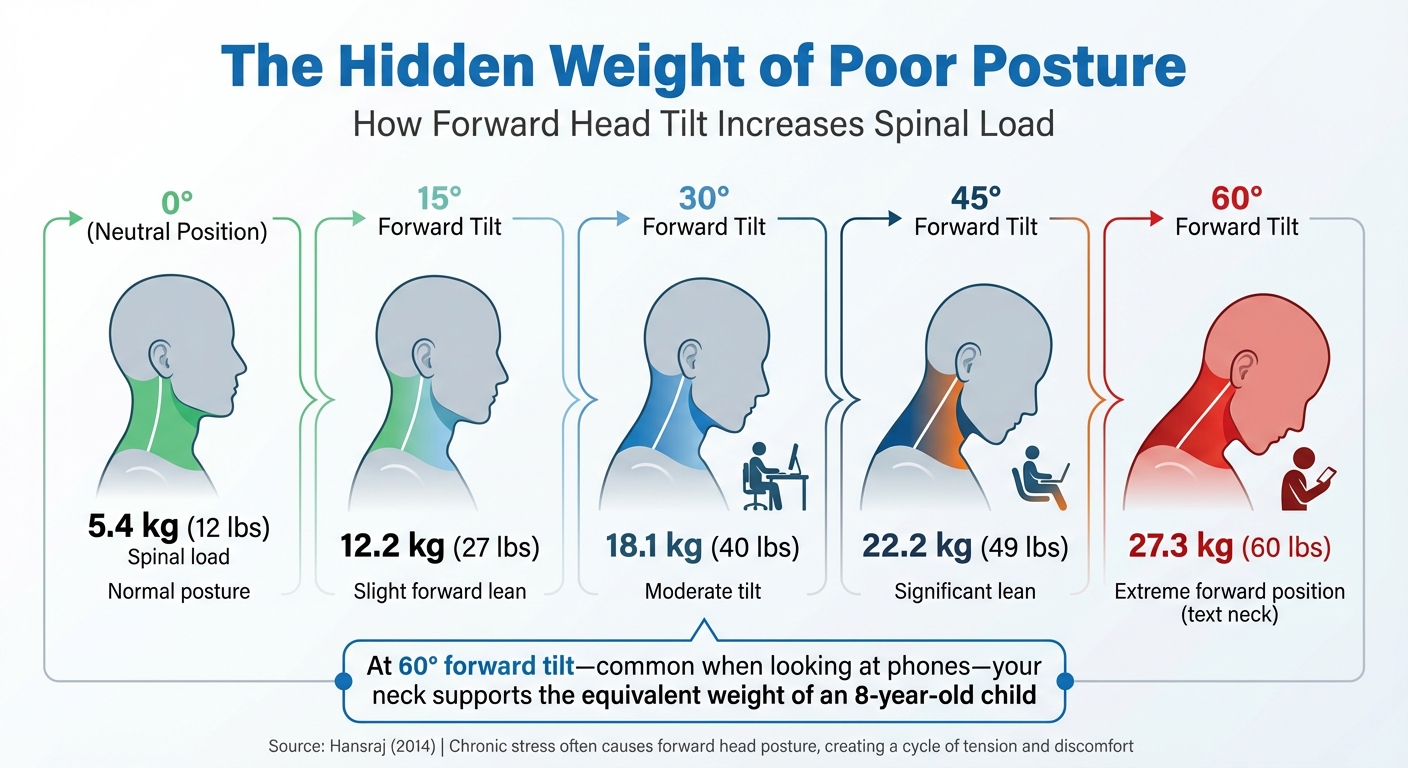
How Forward Head Posture Increases Spinal Load and Stress
Addressing Posture and Muscle Tension
Chronic stress often shows up physically, particularly in the form of muscle tension and poor posture. When stress kicks in, many people unconsciously hunch their shoulders, slump their heads forward, and lose the natural alignment of their spine. This creates a vicious cycle: stress worsens posture, and poor posture adds to physical strain, which can amplify stress even further.
To put this into perspective, research by Hansraj (2014) found that the load on the cervical spine increases significantly as the head tilts forward. In a neutral position, the head exerts about 5.4 kg of force on the spine. But at a 60-degree tilt – like when you’re staring down at your phone or laptop – that load jumps to a staggering 27.3 kg. For those who spend long hours at a desk or glued to screens, this added strain can lead to chronic discomfort and tension.
Chiropractic care may help by addressing spinal misalignments caused by stress-related posture changes. Adjustments aim to realign the spine and reduce muscle tension, potentially breaking the cycle where poor posture fuels stress and vice versa. This can be especially helpful for office workers dealing with "tech-neck" or persistent upper back tightness. Beyond just physical relief, spinal adjustments may also impact how the body handles stress overall.
Supporting Nervous System Balance During Stress
Stress doesn’t just affect your muscles – it also impacts your nervous system. Chiropractic care may play a role in helping shift the body out of a constant "fight-or-flight" mode (sympathetic state) and into a calmer "rest-and-digest" mode (parasympathetic state). This shift could improve the way the brain and body communicate during stressful times.
While mental relaxation techniques like meditation or breathing exercises are helpful, they might not fully address the physical toll of chronic stress. Chiropractic adjustments could complement these practices by targeting the physical symptoms stress creates. When combined with other strategies – like regular exercise, balanced nutrition, and relaxation methods – chiropractic care might contribute to a more rounded approach for managing stress’s physical effects.
Research Limitations and Areas for Further Study
A significant hurdle in current research is the small sample sizes often used – sometimes as few as 10–11 participants – or studies based on single-case reports. On top of that, trial durations are often brief, lasting just 6–7 weeks, which makes it hard to assess any long-term effects. This creates challenges when trying to apply these findings to broader populations.
Another issue lies in the reliance on subjective self-reports rather than objective data. Participants might say they feel less stressed or anxious, but without physiological measures like cortisol levels or heart rate variability, it’s tough to determine the actual physical impact. There’s also the potential for the placebo effect – where improvements may stem more from the extra attention participants receive during care rather than the treatment itself. These limitations make it harder to translate findings to varied and diverse groups.
The narrow focus of many studies adds another layer of complexity. For instance, some research centres on young, healthy military personnel, which doesn’t provide much insight into how results might apply to older adults, sedentary office workers, or individuals with differing health challenges. Dr Robert H. Shmerling from Harvard Health Publishing highlights this point:
It’s hard to generalise these results to everyone with back pain. If this study had included only people with muscle spasm, or only people who were obese (rather than military recruits), the results might differ.
To address these gaps, future research needs to involve larger and more diverse participant groups while also extending study durations. Incorporating objective tools like brain imaging and heart rate variability could shed light on the underlying mechanisms. As researcher David Russell aptly notes:
Considerably more research is necessary to adequately bridge the gaps in the field of chiropractic care.
For now, the role of chiropractic care in managing stress remains an area requiring more robust evidence.
Conclusion
Research highlights that chiropractic care might assist in managing stress by addressing physical tension and helping regulate the nervous system. Some studies suggest that adjustments can lower cortisol levels and improve heart rate variability, hinting at a possible connection between chiropractic care and relief from the physical effects of chronic stress.
That said, the current evidence has its limitations. Small sample sizes, short study durations, and a reliance on subjective measures make it challenging to draw definitive conclusions. As stress researcher Hans Selye famously noted:
Stress is not necessarily bad for you. It is also the spice of life, for any emotion, any activity causes stress… Complete absence of stress is incompatible with life.
This quote underscores an important truth: the goal isn’t to eliminate stress altogether but to support the body’s natural ability to adapt and respond effectively.
For those considering chiropractic care as part of their approach to stress management, an evidence-based evaluation is key. A clinical assessment can pinpoint areas of spinal tension or misalignment that might be contributing to stress-related symptoms. Combining spinal adjustments with lifestyle changes – like postural exercises and ergonomic improvements – could help ease discomfort tied to stress.
Consistency is crucial for long-term results. A personalised care plan, paired with strategies to improve posture, movement, and daily habits, can help break the cycle of tension and discomfort over time.
This information is general and not a substitute for professional medical advice.
Chiropractic care focuses on musculoskeletal health, and results can vary from person to person.
Always consult a qualified healthcare professional before making decisions about your health.
FAQs
Can chiropractic care reduce stress?
Chiropractic care might play a role in managing stress by helping to regulate the nervous system, easing muscle tension, and encouraging relaxation. These effects can create a soothing impact on the body, though outcomes can differ from person to person.
What is HRV and why is it important for stress?
Heart rate variability (HRV) refers to the slight differences in time between each heartbeat. It’s a key indicator of how effectively the autonomic nervous system manages both stress and relaxation. Generally, a higher HRV suggests a more adaptable and resilient nervous system. Some research points to chiropractic care as a potential way to support nervous system function, which may, in turn, positively impact HRV. This could help the body handle stress more effectively while maintaining a better balance between recovery and stress responses.
How many sessions might I need to notice a change?
The number of sessions required to see changes can differ from person to person. Some studies indicate that improvements in how the nervous system functions and how the body handles stress may become noticeable after a few sessions. Continuing care could contribute to maintaining these benefits over time. Since results vary for everyone, it’s a good idea to regularly discuss your goals and progress with your chiropractor.


