

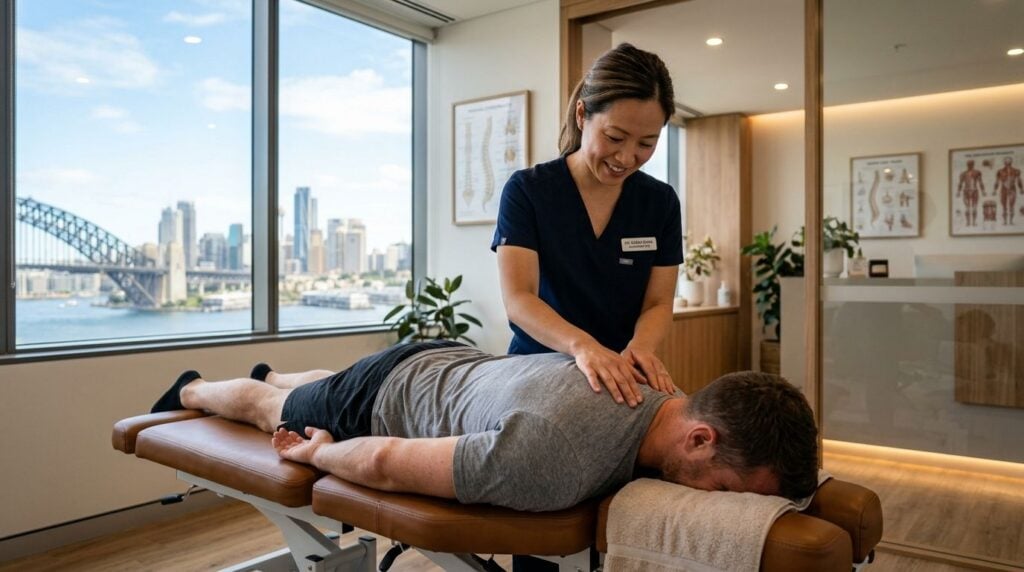
Private health cover for chiropractic in Sydney comes down to extras tiers, waiting periods and annual limits — not which insurer runs the biggest ad campaign. Best overall for balancing hospital and extras cover in 2026: Medibank. Best for chiropractic listed as its own benefit category: HCF. Best budget-friendly option for younger members: nib.
- Private health cover for chiropractic in Sydney sits under extras/general treatment, not hospital cover.
- Medibank suits members who want hospital and chiropractic extras bundled into one 2026 policy.
- HCF lists chiropractic as a distinct benefit line rather than folding it into natural therapies.
- nib appeals to younger Sydney members after a lower-cost entry into extras cover.
- Extras waiting periods for chiropractic commonly run around two months before benefits activate.
Why this matters
Chiropractic sessions in Sydney fall under extras (also called general treatment or ancillary) cover, never hospital cover, because a chiropractic visit isn't a hospital admission. That distinction matters because members often assume a high hospital tier automatically includes chiropractic rebates — it doesn't. A clinic like MyChiro's chiropractic clinic in Bondi Junction can confirm which funds it's set up to process, but the extras policy itself decides whether a rebate exists at all.
Getting this wrong costs money over a year of regular visits. A policy with no chiropractic inclusion, or a low annual limit, means paying the full consultation fee out of pocket every time. Before picking a fund in 2026, work out roughly how often you expect to see a chiropractor, then match that to a policy's annual limit and rebate structure rather than its brand recognition. Choosing the right chiropractor for your condition is a separate decision from choosing the fund that pays for it, but the two decisions work together.
What makes the best private health fund for chiropractic cover
- Waiting period length — most extras policies apply a period before chiropractic benefits activate, commonly around two months, though this varies by fund and product
- Annual limit per person — the calendar-year cap on rebates, which resets and is usually set per policy tier
- Rebate percentage per visit — the proportion of the consultation fee refunded, again tier-dependent
- Whether chiropractic is a named category — some funds list it separately, others bundle it under "natural therapies"
- On-the-spot claiming support — whether the clinic can process the rebate immediately via a claiming terminal, or whether you pay upfront and claim later
- Hospital bundling — whether the fund packages hospital and extras cover together or sells them separately
Private health funds for chiropractic cover in Sydney at a glance
| Fund | Best for | Standout feature | Key limitation |
|---|---|---|---|
| HCF | Chiropractic as its own benefit category | Named chiropractic line separate from general natural therapies | Higher extras tiers usually needed for a meaningful annual limit |
| Medibank | Bundling hospital and extras cover | Wide range of combined hospital+extras packages | Chiropractic benefits sit mostly in mid-to-top tiers |
| Bupa | Members who move between states | National network of participating allied health providers | Entry-level extras tiers can cap or exclude chiropractic |
| nib | Younger members on a budget | Digital-first sign-up and product comparison tools | Lower tiers carry lower annual limits for allied health |
| Australian Unity | Members who want a mutual, member-owned fund | Profits reinvested into member benefits, not shareholders | Smaller provider network than the largest for-profit funds |
| Doctors' Health Fund | Medical professionals and immediate family | Restricted-membership fund built for the medical profession | Not available to the general public |
1. HCF: best for chiropractic listed as its own benefit category
HCF is Australia's largest not-for-profit health fund and typically lists chiropractic as a named benefit within its general treatment (extras) cover, rather than folding it into a broader natural therapies category.
HCF pros:
- Chiropractic appears as its own line item on extras statements, easier to track against your annual limit
- Not-for-profit structure directs surplus back into member benefits
- Wide network of participating allied health providers across Sydney
HCF cons:
- Higher extras tiers are usually needed to get a meaningful annual limit for chiropractic
- Waiting periods and limits change with policy updates, so current tables need checking before signing up
HCF pricing: extras premiums and chiropractic limits vary by tier and change through the year — confirm the current benefit table with HCF directly before choosing a policy.
Best for: members who want chiropractic treated as its own budget line rather than lumped in with other therapies. Verdict: Buy if benefit visibility matters more than bundling.
2. Medibank: best for bundling hospital and extras cover
Medibank is one of Australia's largest health insurers and packages hospital cover with extras options that can include chiropractic under general treatment benefits.
Medibank pros:
- Combined hospital+extras packages simplify managing one insurer for both
- Large claims processing infrastructure with app-based claiming
- Broad allied health network across metropolitan Sydney
Medibank cons:
- Chiropractic benefits typically sit in mid-to-top extras tiers, not entry-level policies
- As an ASX-listed company, some members weigh a profit-driven structure against not-for-profit alternatives
Medibank pricing: premiums and chiropractic limits depend on the specific hospital+extras combination — check Medibank's current product comparison tool for exact figures.
Best for: members who want one insurer covering both hospital admissions and day-to-day chiropractic visits. Verdict: Buy for combined-cover seekers.
3. Bupa: best for members who move between states
Bupa operates a large national network of participating allied health providers, useful for members who split time between Sydney and other cities or travel regularly for work.
Bupa pros:
- National provider network, useful if you won't always see the same chiropractor
- Digital claiming through the app in addition to on-the-spot processing at many practices
- Multiple extras tiers to match different levels of allied health usage
Bupa cons:
- Entry-level extras tiers can cap or exclude chiropractic benefits
- Multinational parent company structure means profit motive shapes pricing
Bupa pricing: extras tiers and chiropractic limits vary — compare Bupa's current extras tables against your expected visit frequency before switching.
Best for: members who need chiropractic cover to travel with them across states. Verdict: Buy for mobile or multi-location members.
4. nib: best for younger members on a budget
nib positions itself toward younger members with digital-first sign-up, offering extras tiers that include chiropractic at accessible entry points.
nib pros:
- Digital sign-up and side-by-side product comparison tools
- Extras tiers designed for members starting out with private cover
- Simple tier structure makes comparing chiropractic inclusion easier
nib cons:
- Lower extras tiers generally carry lower annual limits for allied health, chiropractic included
- Smaller allied health network than the largest incumbent funds in some Sydney suburbs
nib pricing: extras premiums and chiropractic limits scale with tier — compare at least two tiers before choosing.
Best for: younger Sydney members after a lower-cost entry point into extras cover. Verdict: Buy for first-time extras cover buyers.
5. Australian Unity: best for a member-owned mutual
Australian Unity is a member-owned mutual offering extras cover that includes chiropractic, with profits directed back into member services rather than shareholder returns.
Australian Unity pros:
- Member-owned mutual structure, no shareholder dividend pressure on pricing decisions
- Extras cover includes chiropractic within its general treatment categories
- Appeals to members who prioritise a not-for-shareholder-profit model
Australian Unity cons:
- Smaller provider network than Medibank or Bupa in some Sydney suburbs
- Less brand recognition means fewer independent comparisons available
Australian Unity pricing: extras tiers and chiropractic limits are set per policy — compare current tables directly with the fund.
Best for: members who value a mutual, member-owned fund over a listed insurer. Verdict: Hold — solid if you're already a member, worth comparing before switching in.
6. Doctors' Health Fund: best for medical professionals
Doctors' Health Fund is a restricted-membership fund built for medical practitioners, medical students and their immediate families, with extras cover that includes chiropractic. It's a relevant option for anyone in chiropractic care for nurses and healthcare workers who also meets the fund's eligibility criteria.
Doctors' Health Fund pros:
- Extras policies built around a membership base of healthcare professionals
- Includes chiropractic within general treatment categories, similar to open funds
Doctors' Health Fund cons:
- Restricted eligibility, not available to the general public
- Smaller scale than open funds means a narrower provider network and product range
Doctors' Health Fund pricing: available only to eligible applicants; premiums and chiropractic limits are set per policy.
Best for: medical professionals and immediate family who meet the eligibility criteria. Verdict: Skip unless you qualify for membership.
How we ranked
Each fund above is placed against the criteria set out earlier: waiting period length, annual limit structure, whether chiropractic gets its own benefit line, claiming convenience, and hospital bundling. No fund wins across every criterion at once in 2026 — that's why the list reads as a decision tree by use case rather than a single leaderboard.
“Compare the annual limit and waiting period before the premium — the premium is the last number that should decide it.”
Which private health fund covers chiropractic best for you?
For most Sydney members balancing hospital cover with regular chiropractic visits in 2026, Medibank's combined hospital+extras packages are the practical default. If chiropractic-specific benefit visibility matters more than bundling, HCF is the stronger pick. Younger members buying extras cover for the first time get more value comparing nib's entry tiers before anything else. Whichever fund you pick, preparing for your first chiropractor appointment includes checking your extras benefit table beforehand so there are no surprises at the front desk.
FAQ
What’s the best private health fund for chiropractic cover in Sydney?
It depends on the use case: Medibank suits members who want hospital and extras bundled, HCF suits members who want chiropractic listed as its own benefit line, and nib suits younger members after a lower-cost entry policy in 2026.
Does Medicare cover chiropractic care in Sydney?
Medicare only contributes toward chiropractic under a GP-issued Chronic Disease Management plan, which caps combined allied health visits at five per calendar year across all eligible services. Outside that plan, chiropractic isn’t covered by Medicare and relies on extras cover instead.
How long is the waiting period for chiropractic under extras cover?
Most extras policies apply a waiting period of around two months before chiropractic benefits activate, though this varies by fund and product. Check the specific policy document before booking your first claimable visit.
Is chiropractic covered under hospital cover or extras cover?
Chiropractic sits under extras (general treatment) cover, not hospital cover, because a consultation isn’t a hospital admission. A high hospital tier alone won’t include chiropractic rebates without an extras policy attached.
Can I claim chiropractic on the spot at a Sydney clinic?
That depends on whether the clinic has a claiming terminal set up with your fund. Ask before the appointment whether the rebate is processed on the spot or whether you’ll pay upfront and claim separately.
Do all extras policies include chiropractic?
No. Entry-level extras tiers often exclude allied health services including chiropractic, while mid-to-top tiers usually include it with a set annual limit. Compare tiers, not just brand names, before signing up.
Can I switch health funds without resetting my chiropractic waiting period?
Under Australian portability rules, switching to an equivalent or lower level of cover generally carries over waiting periods already served, so you don’t start from zero. Check with the new fund that the cover level is genuinely equivalent before switching.
How much does a chiropractic session cost with private health cover in Sydney?
The out-of-pocket cost depends on the rebate percentage and annual limit set by your specific extras policy, not a fixed market rate. Compare your fund’s current benefit table to work out the likely gap payment for a session in 2026.
One last thing
The most overlooked rule in this whole comparison isn't about limits or rebates — it's portability. Switching funds for equivalent cover doesn't reset a waiting period you've already served, which means members who assume they're starting from scratch after switching in 2026 are often wrong, and end up delaying a claim they were already entitled to.
Related guides