
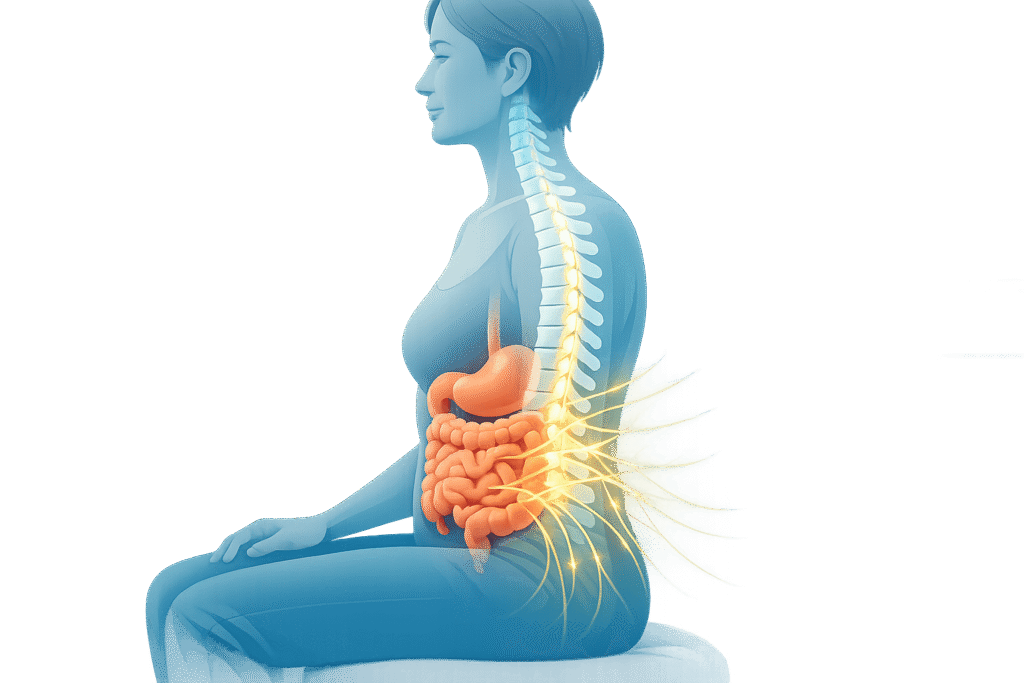
Digestive issues like bloating and irregular bowel movements affect about 30% of Australians. While diet and stress are common culprits, spinal health also plays a role. The spine protects nerve pathways, including the vagus nerve, which controls many digestive processes. Misalignments in the spine may disrupt these signals, potentially contributing to discomfort.
Chiropractic care focuses on spinal alignment, which could support nerve communication and digestive balance. Combined with stress management, good posture, and a fibre-rich diet, it may help ease symptoms like reflux or cramping. However, results vary, and chiropractic care should complement – not replace – medical advice from your GP or interest in.
How the Spine and Nervous System Affect Digestion
Discovering the Benefits of Chiropractic Care for Your Digestive Health
sbb-itb-585d67d
The Autonomic Nervous System and Digestion
The autonomic nervous system plays a key role in managing digestion, working behind the scenes to keep everything running smoothly. This complex network sends signals from the brain, through the spinal cord, and out to the digestive organs – all without you needing to think about it. Knowing how these processes function can help explain how spinal alignment and stress levels might impact digestion.
Sympathetic and Parasympathetic Nervous Systems
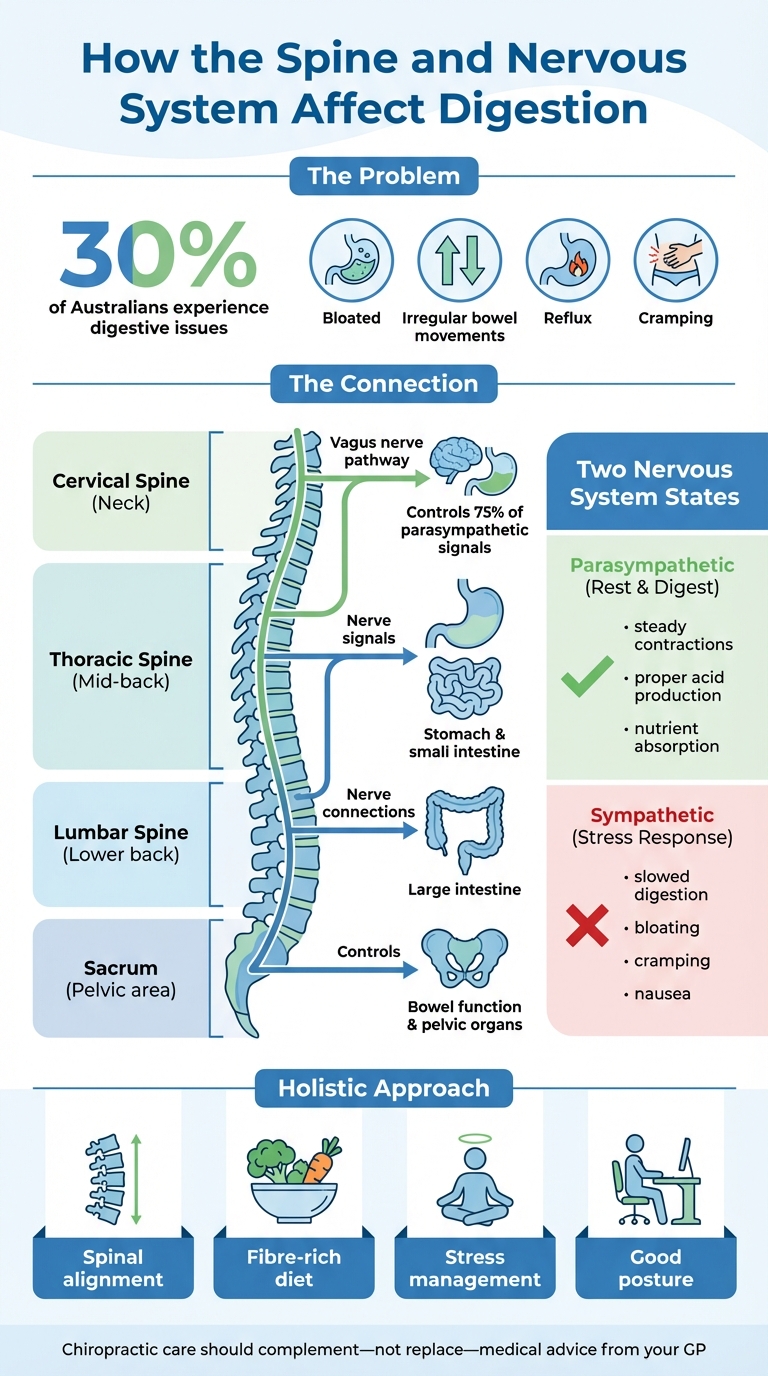
The autonomic nervous system has two branches that balance each other out. The parasympathetic nervous system is responsible for the "rest and digest" mode. When this system is active, it promotes calm and efficient digestive processes. It helps regulate stomach acid production, keeps intestinal contractions steady, and ensures nutrients are absorbed properly.
On the flip side, the sympathetic nervous system kicks in during stress. Whether it’s from a tough day at work, lack of sleep, or tension, this system shifts energy away from digestion to deal with the stressor. This can lead to slower digestion and symptoms like bloating, cramping, or nausea.
The Vagus Nerve and Digestive Function
The vagus nerve acts as the main communication line between your brain and digestive system, handling around 75% of all parasympathetic signals sent to your digestive organs. It runs from the brainstem, through the neck, and into the abdomen, controlling critical functions like stomach acid production, gut movement, and nutrient absorption. It also ensures that your gut stays in a healthy rhythm, moving food along efficiently.
"A healthy vagus nerve keeps your digestive system calm, coordinated and efficient. Your stomach and intestines can contract and relax in a healthy rhythm and you’re in ‘rest and digest’ mode." – Jacinth Tan, Chiropractor, Tan Chiropractic
When the vagus nerve is disrupted – whether by ongoing stress or physical issues in the cervical spine – digestion can slow down. This can lead to discomforts like acid reflux, irregular bowel movements, or feeling overly full after meals. Supporting the vagus nerve through proper spinal alignment and stress management techniques, such as deep breathing, can help maintain its function. These connections between the nervous system and digestion highlight why spinal health and stress reduction are often seen as essential for digestive wellness.
Spinal Alignment and Digestive Function
The connection between spinal alignment and digestion goes beyond posture – it directly impacts how efficiently nerve signals travel through the body, influencing digestive health.
Nerve Communication and Digestion
Your spine is more than just a structural support system; it also protects the spinal cord, which acts as the communication highway between your brain and digestive organs. If your spine is out of alignment, this can irritate or compress nerve pathways, potentially disrupting the signals required for proper digestion.
Each section of the spine plays a distinct role in digestive processes:
- The thoracic spine (mid-back) manages nerve signals to the stomach and small intestine.
- The lumbar spine (lower back) connects with the large intestine.
- The sacrum (pelvic area) influences bowel function and pelvic organs.
Misalignments in these areas can lead to digestive issues such as bloating, irregular bowel movements, or heartburn. Additionally, the cervical spine (neck) is crucial because it houses the vagus nerve pathway. If this area is misaligned, vagus nerve function may be impaired, potentially affecting stomach acid production and gut motility.
Stress, Posture, and Digestive Health
Posture plays a surprisingly important role in digestion. Poor habits like slouching at a desk or maintaining a forward head posture can strain the spine, irritating nerves that control digestive organs. This physical stress on the spine may disrupt the autonomic nervous system, pulling your body away from the "rest and digest" state it needs for smooth digestion.
Stress only makes things worse. When you’re stressed, muscles in the neck, shoulders, and mid-back tighten, potentially compressing spinal nerves. This can trigger a sympathetic nervous system response, diverting energy from digestion. Over time, this might lead to symptoms like nausea, cramping, or constipation – especially if poor posture and stress become long-term issues.
Improving spinal alignment and addressing posture can help ease nerve irritation and support the nervous system’s ability to maintain digestive balance. The relationship between spinal health and digestion highlights how interconnected these systems truly are.
Chiropractic Care and Nervous System Balance
This section dives into how chiropractic adjustments might help restore nervous system balance, particularly when spinal misalignments interfere with nerve signals.
How Chiropractic Adjustments May Work
Chiropractic adjustments aim to correct spinal misalignments, potentially improving nerve communication between the brain and vital organs, including those involved in digestion. A key player here is the vagus nerve, which runs through the cervical spine and plays a central role in the "rest and digest" functions of the parasympathetic nervous system.
Adjustments to specific spinal regions can have different impacts on the autonomic nervous system. For example, gentle techniques applied to the cervical spine are often intended to enhance parasympathetic activity. This can support functions like gut motility, stomach acid regulation, and nutrient absorption. By easing tension and reducing nerve interference, chiropractic care might help improve vagal tone, promoting smoother digestion.
The overarching goal is to address structural stressors that may disrupt the nervous system’s ability to maintain digestive balance. Realigning the spine could help shift the body out of a stress-driven sympathetic state and into a more balanced parasympathetic state, which is essential for proper digestion.
While these adjustments may encourage parasympathetic activity, it’s worth noting that research on their specific effects is still evolving, with outcomes varying from person to person.
Current Evidence and Research Limitations
Some case reports and smaller studies suggest that chiropractic care might support autonomic balance and ease certain functional symptoms. However, when it comes to digestive disorders, the research is still in its early stages, and findings vary widely.
It’s important to understand that chiropractic care primarily focuses on musculoskeletal health. Any potential benefits for digestion are considered indirect, stemming from improved nerve communication rather than directly addressing digestive conditions. If you’re dealing with persistent digestive issues that haven’t improved with dietary changes or other treatments, a spinal evaluation might be worth exploring as part of a broader healthcare plan. However, it’s crucial to see this as a complementary approach – not a replacement for advice or treatment from your GP or gastroenterologist.
Lifestyle Practices for Digestive Health
In addition to spinal care, certain lifestyle habits can play a role in supporting digestive health.
Diet and Hydration
What you eat and drink provides the foundation for gut health, while chiropractic care may assist by supporting nerve communication. A diet rich in fibre can help maintain regular bowel movements and stool bulk, complementing the nervous system’s role in digestion. Staying properly hydrated is equally important, as it promotes smooth food movement through the digestive tract.
If digestive issues persist despite dietary changes, probiotics might be worth considering. These can help maintain gut balance, especially when combined with other measures. Including tryptophan-rich foods – such as poultry, eggs, and nuts – can also support serotonin production. This neurotransmitter plays a role in balancing the body’s "rest and digest" system with its "fight or flight" response. However, if spinal misalignments or nerve interference are present, dietary changes alone may not fully address the issue.
Stress Management Techniques
Stress can significantly impact digestion, but techniques like deep breathing, mindfulness, and gentle yoga can help. These practices encourage relaxation and may promote the production of digestive enzymes. When paired with chiropractic care, they may further support the body’s natural nerve communication processes.
By reducing stress, the body can shift from a "fight or flight" state to a "rest and digest" mode, potentially easing symptoms like bloating and reflux. Chiropractic adjustments, particularly in the neck and head regions, may enhance these effects by improving vagus nerve function – a critical player in digestion.
Combining stress management techniques with good posture can further reinforce balanced nerve communication, creating a more supportive environment for digestive health.
Posture and Ergonomics
Maintaining proper posture and ergonomics is another way to support digestion. Good posture helps keep the spine aligned, reducing nerve irritation that can contribute to issues like bloating, sluggish digestion, or acid reflux.
For example, adjusting your workstation to ensure correct desk ergonomics can prevent awkward spinal positions. Minimising neck and shoulder tension is also key, as this can reduce stress on the nervous system, which may otherwise affect gut function. Pairing ergonomic improvements with chiropractic adjustments aimed at restoring spinal mobility can help prevent recurring nerve interference, promoting better digestive outcomes.
This content is for general information purposes and should not replace professional medical advice.
Chiropractic care focuses on musculoskeletal health, and results may vary.
Always consult a qualified healthcare professional before making health-related decisions.
Conclusion
Digestive health is shaped by a variety of factors, with the nervous system playing a central role in managing gut function. While chiropractic care primarily targets musculoskeletal health, some evidence suggests that spinal adjustments might help promote nervous system balance. This could happen by minimising nerve interference, particularly along pathways like the vagus nerve, which influences the body’s "rest and digest" processes.
That said, chiropractic care alone is unlikely to fully address digestive issues. A more effective approach combines spinal care with lifestyle habits such as eating a fibre-rich diet, managing stress, and improving posture. This dual focus on physical and neurological health can provide more well-rounded support.
If digestive problems persist despite dietary changes or seem linked to stress, it might be helpful to consider a spinal assessment alongside consulting your GP or a interest in. This ensures that any potential underlying conditions are identified while exploring how better nerve communication might enhance overall wellbeing.
Combining these lifestyle adjustments with spinal care can strengthen musculoskeletal health. While chiropractic adjustments are generally safe when performed by a qualified practitioner, they should be part of a broader wellness plan rather than a standalone solution. By addressing nerve function, posture, stress, and nutrition together, you may create a more favourable environment for your digestive system to work effectively.
This information is general and not a substitute for professional medical advice. Chiropractic care focuses on musculoskeletal health, and outcomes vary. Always consult a qualified healthcare professional before making health decisions.
FAQs
Can spinal issues affect digestion?
Some studies indicate that spinal problems might impact digestion by interfering with the autonomic nervous system, which helps regulate gut activity. Chiropractic care is thought to assist in maintaining nervous system balance, which may, in turn, provide some digestive benefits. However, individual outcomes can differ.
Can chiropractic care help bloating or reflux?
Chiropractic care might play a role in balancing the autonomic nervous system, which could indirectly affect digestive processes such as gut motility and nutrient absorption. That said, there’s no specific evidence to suggest it directly targets issues like bloating or reflux. Outcomes can differ from person to person, as chiropractic treatment primarily centres on musculoskeletal health.
When should I see a GP for digestive symptoms?
If your digestive symptoms continue, become severe, or are accompanied by other worrying signs, it’s best to see a GP for a detailed evaluation. They can help identify the underlying issue and guide you toward appropriate care.