

Hunchback posture, also known as kyphosis, rounded shoulders, or forward head posture, isn’t just a desk-worker’s problem – it’s a modern epidemic that stems from prolonged screen time, sedentary lifestyles, and stress-induced movement patterns. But did you know the root cause often lies far from your upper back? The foundation of your posture begins at your hips and pelvis.
In this article, we explore five effective exercises designed to improve posture, relieve tension, and realign your body. These exercises don’t just target symptoms; they address the deeper structural imbalances to help you stand taller, feel better, and move with confidence.
Understanding the Problem: What is Hunchback Posture?
Hunchback posture, or kyphosis, is characterised by an exaggerated curve in the upper back, rounded shoulders, and a forward-jutting head. While many attribute this issue to poor desk posture, the video challenges this assumption by highlighting the role of the pelvis and hips as the foundation of your spine.
Key Causes of Hunchback Posture:
- Pelvic misalignment: Uneven or tilted hips can destabilise the entire spinal column.
- Prolonged sitting: Hours hunched over a desk or phone reinforces poor movement patterns.
- Compensatory habits: Forward head posture and rounded shoulders emerge as the body attempts to balance a misaligned foundation.
The solution? Address these root causes with targeted exercises that restore balance and alignment.
The Wall Test: Assessing Your Posture
Before you can fix your posture, you need to understand its current state. The simple wall test is a quick and effective way to assess your alignment.
How to Perform the Wall Test:
- Stand with your heels, hips, and shoulders touching a wall.
- Check if the back of your head can rest naturally against the wall without tilting your chin up.
- If your head is far forward or you struggle to maintain contact without strain, it’s a sign of misalignment in your spine, neck, or pelvis.
This test provides a clear indication of whether forward head posture, rounded shoulders, or kyphosis is an issue – and sets the stage for correction.
The Root Cause: Hips and Pelvis Alignment
While the upper back and neck may show the symptoms of poor posture, the video underscores a crucial point: your hips and pelvis are the true foundation of your spine. Think of your pelvis as the base of a building – if it’s tilted or uneven, the upper structure compensates, leading to forward head posture and rounded shoulders.
By addressing the alignment of the hips and pelvis, you can create a stable foundation for the spine, reducing strain and improving overall posture.
The 5 Exercises to Realign Your Posture
The following exercises are designed to address pelvic misalignment, spinal imbalances, and poor posture habits. Each movement builds on the last, allowing your body to reset and realign naturally.
1. Standing Wall Reset
This foundational exercise helps realign your spine by placing symmetrical demands on your body.
Instructions:
- Stand against a wall with your heels, hips, and upper back touching the surface.
- Keep your feet hip-width apart and slightly turned inward.
- Relax your stomach while straightening your knees and engaging your thigh muscles.
- Let your head rest naturally against the wall without forcing it.
Why it works:
This position uses gravity to reset your alignment, derotate the spine, and alleviate tension. Over time, your head will naturally rest closer to the wall without strain.
2. Chest Opener with Yoga Blocks
This exercise relaxes and opens up the chest, shoulders, and hips, setting the stage for improved alignment.
Instructions:
- Lie flat on your stomach on a firm surface.
- Place your arms at 90 degrees, resting your forehead on the floor.
- Drop your heels outward to allow your hips and pelvis to relax fully.
- Focus on letting your chest and shoulders sink into the floor.
Why it works:
This gentle stretch realigns the hips and pelvis while reversing the tension caused by rounded shoulders and forward head posture.
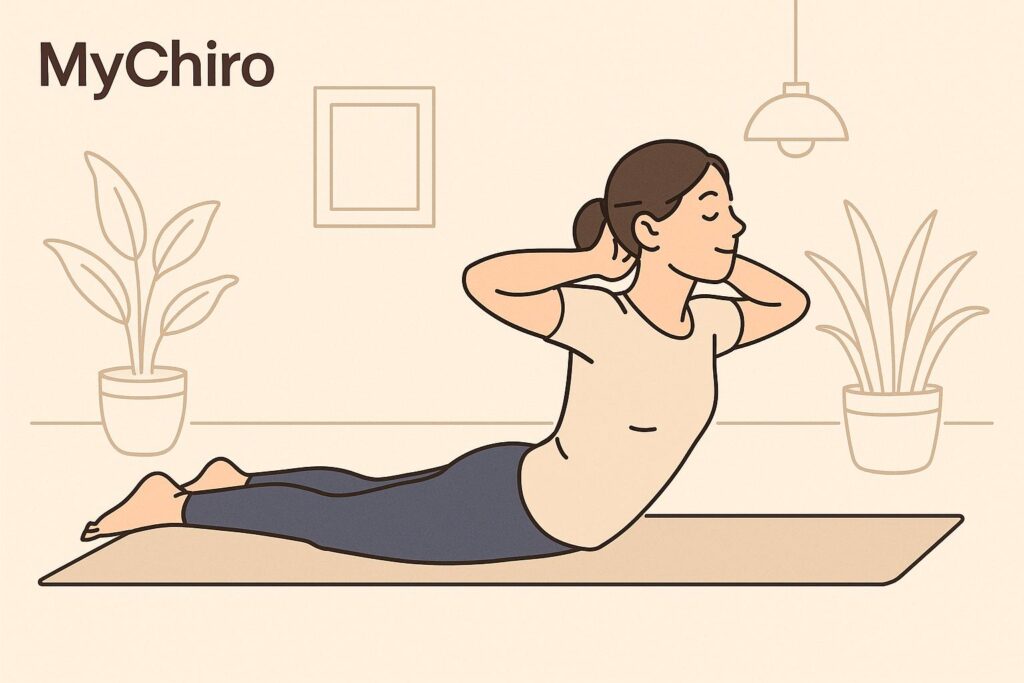
3. Cobra Pose
The cobra pose extends and decompresses the spine, opening up the chest and shoulders.
Instructions:
- Lie facedown on your stomach with your hands placed under your shoulders.
- Slide your shoulder blades back and down while keeping your elbows close to your sides.
- Lift your chest gently while keeping your neck neutral and your stomach relaxed.
Why it works:
This exercise helps counteract the effects of hunching forward by improving spinal extension and chest mobility.
4. Spinal Twist
Spinal mobility is essential for posture correction. This twist restores balance between the left and right sides of your body.
Instructions:
- Lie on your side with your knees bent at 90 degrees, stacking your ankles and knees.
- Extend your arms forward with palms together.
- Slowly open your top arm and rotate your spine, following your hand with your eyes.
- Keep your knees stacked and stable as you rotate.
Why it works:
The spinal twist relieves rotational restrictions, restores symmetry, and improves upper back mobility.
5. Spinal Extension on Elbows
The final stretch ties everything together by helping your spine settle into proper alignment.
Instructions:
- Start on all fours, with your hips slightly forward of your knees.
- Drop down onto your elbows, keeping your wrists neutral and thumbs up.
- Let your head fall forward and relax your shoulders.
Why it works:
This position decompresses the spine, engages the hips, and promotes a balanced alignment from top to bottom.
Key Takeaways
- Posture begins at your foundation: The alignment of your hips and pelvis directly impacts your upper body posture.
- The wall test is your starting point: Assessing your alignment helps identify key areas to target.
- Gravity is your ally: Simple positions like the standing wall reset use gravity to restore balance.
- Consistency matters: Small, daily efforts in these exercises can significantly improve posture over time.
- Breathwork is key: Deep breathing during exercises enhances relaxation and improves alignment.
- Progress is visible: Even after a single session, many notice reduced tension and better alignment.
Improving Posture for a Better Life
Hunchback posture is about more than appearance – it’s about how you feel, move, and interact with the world. By addressing the root cause at the hips and pelvis, and committing to these five exercises, you can create meaningful and lasting changes in your posture and overall well-being.
Incorporate these movements into your daily routine and observe how your body responds. As your alignment improves, you’ll not only stand taller but also enjoy reduced tension, greater mobility, and increased confidence in your daily life.
Your posture is more than a static position – it’s a dynamic reflection of your health. Start today, and let gravity and movement guide you to a healthier, more aligned self.
Source: "How to Fix Hunchback Posture (5 Must-Try Exercises)" – Posture Guy, YouTube, Jan 13, 2025 – https://www.youtube.com/watch?v=CYqsIL1XOms


