

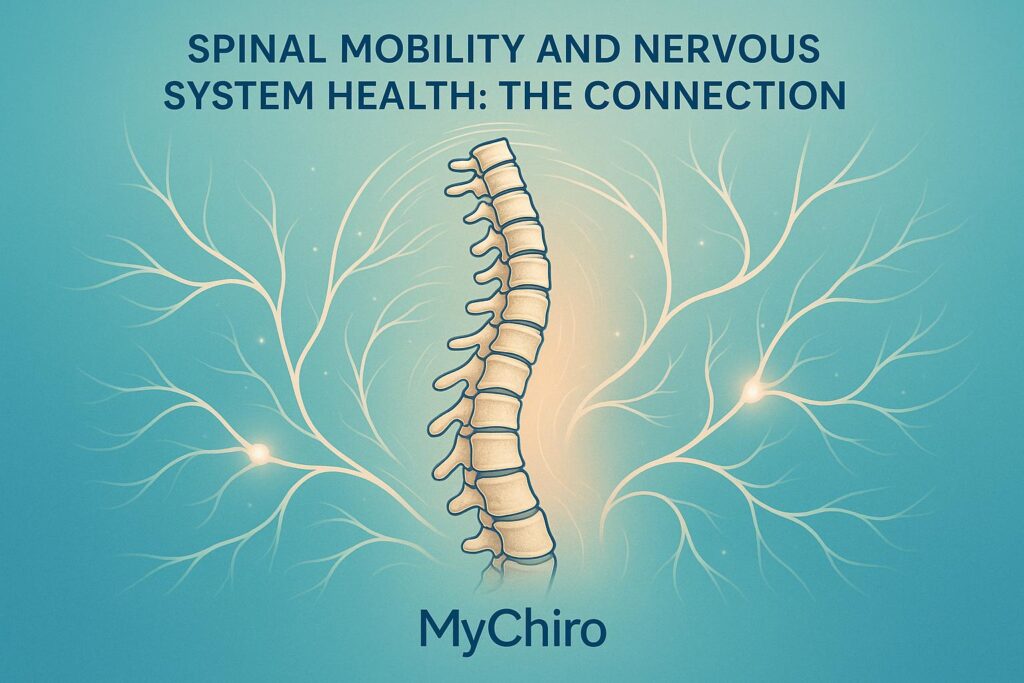
Your spine does more than keep you upright – it’s a key player in how your brain communicates with your body. Healthy spinal movement supports nerve signalling, stress management, and coordination. But restricted mobility can disrupt these processes, potentially affecting posture, balance, and even how your body handles stress.
Here’s what you need to know:
- Spinal movement: Smooth motion across all vertebrae helps maintain nerve function and overall health.
- Nervous system link: The spine protects the spinal cord, which transmits signals between your brain and body. Mobility issues can interfere with this process.
- Stress and balance: Limited mobility may contribute to stress and poor posture, while improving movement could support relaxation and coordination.
- Key regions: The cervical and thoracic spine are especially important for nerve function and stress regulation.
Simple habits like stretching, walking, and improving posture can help keep your spine healthy. For more persistent issues, professional care like chiropractic adjustments may provide targeted support.
Basic Spine Mobility Exercises for Every Body
Research Findings: How Spinal Movement May Affect Your Nervous System
Emerging research points to a potential connection between spinal mobility and nervous system function, although more studies are needed to fully understand this relationship. Current evidence hints that spinal movement could influence key markers of nervous system health, but individual responses vary widely. Here’s a closer look at the specific markers and spinal regions involved.
Studies on Spinal Movement and Stress Response
Improved spinal movement could play a role in stress regulation, though the exact mechanisms remain under investigation. Researchers have been exploring how spinal mobility interacts with the autonomic nervous system, which governs automatic functions like heart rate, breathing, and stress responses.
One area of focus is heart rate variability – a measure of the time variation between heartbeats. This marker reflects how effectively the autonomic nervous system adapts to stress. Studies suggest that spinal care interventions may positively influence heart rate variability, hinting at a link between spinal health and stress adaptation.
Cortisol levels, often referred to as the stress hormone, have also been studied in relation to spinal function. Some findings suggest that treatments improving spinal movement might influence cortisol patterns, though more robust, controlled studies are needed to confirm these observations.
Inflammation is another area of interest. Early research suggests that limited spinal mobility might be associated with heightened inflammatory markers, whereas improved mobility could support the body’s natural anti-inflammatory processes. However, this connection is still being explored and requires further evidence.
Which Parts of the Spine Matter Most
Different sections of the spine appear to influence nervous system function in distinct ways. Among these, the cervical spine (neck region) has drawn significant attention due to its proximity to the brainstem and its high concentration of mechanoreceptors, which provide critical feedback on head and neck positioning.
Research on the upper cervical spine suggests that dysfunction in this area may impact balance, coordination, and certain autonomic functions. This region’s role in nervous system health highlights its importance in spinal care.
The thoracic spine (mid-back) is another area of interest, particularly for its potential effects on breathing and heart function. Restricted movement in this region may influence the sympathetic nervous system, which governs the "fight or flight" response. Studies suggest that improving thoracic mobility could enhance breathing mechanics and stress regulation.
Meanwhile, the lumbar spine (lower back) has been studied for its role in movement and posture. Research indicates that lumbar mobility may affect overall movement patterns and how the nervous system coordinates complex actions. These findings emphasise the importance of tailoring spinal care to the unique needs of each individual.
What the Research Cannot Tell Us Yet
Although these findings are promising, there are several limitations to the current research. Many studies rely on small sample sizes and inconsistent methods, making it hard to isolate the effects of spinal mobility from other variables. Additionally, individual differences mean that outcomes can vary greatly, and the long-term implications remain uncertain.
Another challenge is distinguishing causation from correlation. While associations between spinal movement and nervous system function have been observed, proving direct cause-and-effect relationships requires more rigorous study designs. Nervous system health is influenced by a multitude of factors, complicating efforts to pinpoint the role of spinal movement.
Finally, the sheer complexity of the nervous system presents ongoing hurdles for researchers. With billions of nerve connections and interrelated systems at play, understanding how spinal movement interacts with these processes demands advanced research techniques that are still being developed. These findings, while intriguing, represent just one piece of the larger puzzle connecting spinal health to nervous system function.
How Spinal Movement May Help Manage Stress and Health
Understanding how spinal mobility connects to nervous system health sheds light on its potential benefits for overall wellbeing. While research in this area is ongoing, there are several ways spinal movement might support stress management and nervous system function.
Nerve Signal Flow and Body Coordination
The spine acts as a critical highway for nerve signals travelling between your brain and the rest of your body. When spinal joints move freely, they may create optimal conditions for nerve signal transmission. This interaction between spinal structures and the nervous system is complex and still under investigation.
A key player in this process is mechanoreceptors, specialised nerve endings within spinal joints and surrounding tissues. These receptors detect movement, position, and pressure changes, constantly sending updates to the brain about your body’s positioning. Free spinal movement allows mechanoreceptors to function properly, supporting reflexes, balance, and muscle activation.
Restricted spinal movement, on the other hand, may disrupt this feedback loop. When mechanoreceptor input is altered, coordination can suffer. Restoring spinal mobility could help normalise this function, improving nerve signal flow and overall coordination.
Your proprioceptive system, which helps you sense your body’s position in space, also relies heavily on spinal movement. This system is what allows you to maintain balance, coordinate actions, and react to your environment. Some studies suggest that good spinal mobility supports proprioceptive function, though individual results can vary.
This efficient nerve communication is a foundation for how your body handles stress.
Effects on How Your Body Handles Stress
Building on its role in nerve signalling, spinal movement may also impact how your body manages stress. This connection primarily involves the autonomic nervous system, which regulates automatic functions like heart rate, breathing, and stress hormone production. The autonomic system has two main branches: the sympathetic system ("fight or flight") and the parasympathetic system ("rest and digest").
When spinal movement is restricted, it may contribute to sympathetic overactivity, keeping your body in a heightened state of alert. This might show up as muscle tension, an elevated heart rate, or difficulty relaxing – common signs of an overactive stress response.
Improved spinal movement, however, could help balance these systems. Freely moving spinal joints may send clearer, more accurate signals to the brain, supporting the parasympathetic system’s ability to activate during rest. This can help the body recover from stress more effectively.
The vagus nerve, a key part of the parasympathetic system, may also be linked to spinal health. Some researchers believe that spinal movement, particularly in the upper cervical spine, might indirectly influence vagal function. While this connection is not fully understood, it could play a role in stress recovery.
Posture, Balance, and Nervous System Health
Good spinal movement not only supports nerve signalling but also plays a role in posture and balance, which are closely tied to nervous system health. Poor posture and balance issues can stress the nervous system, creating a challenging cycle. Restricted spinal movement may worsen postural imbalances, increasing this strain. On the flip side, maintaining spinal mobility might help improve posture and balance, easing the burden on your nervous system.
Effective posture control depends on seamless communication between the brain, spine, and muscles. The nervous system constantly processes information about your body’s position, making small adjustments to keep you upright. When spinal joints don’t move properly, this process can become less efficient, leading to muscle fatigue and tension.
Research indicates that individuals with better spinal mobility often have more efficient posture control systems. This can reduce energy demands during daily activities and lessen strain on supporting muscles, potentially benefitting nervous system health and stress resilience over time.
Balance and coordination also rely on proper spinal function. Inputs from the inner ear, eyes, and spinal mechanoreceptors work together to help the brain maintain balance. When spinal movement is restricted, it can disrupt this sensory integration, increasing the risk of falls.
By addressing spinal movement restrictions through appropriate care and exercises, you may support these interconnected systems. Many people report improvements in balance and coordination, which may reflect better nervous system integration and more effective stress management.
For persistent issues with posture, balance, or stress-related tension, seeking professional guidance can be helpful. Modern chiropractic care offers gentle, evidence-based techniques that support nervous system health and can complement other wellness practices.
sbb-itb-585d67d
Ways to Improve Spinal Movement and Support Nervous System Health
Keeping your spine flexible and healthy can play a big role in supporting your nervous system. Fortunately, there are many simple ways to work this into your daily life.
Movement and Stretching Exercises
Regular movement is one of the easiest ways to keep your spine mobile. The spine is designed to move in various directions – forward, backward, sideways, and through rotation. However, spending too much time in one position can limit these natural movements.
A good place to start is the cat-cow stretch. Begin on your hands and knees, then alternate between arching your back upwards and rounding it downwards. This exercise gently mobilises each part of your spine and can be done almost anywhere.
Other activities like seated twists, yoga, Pilates, and walking also help maintain spinal flexibility. For example, seated twists involve rotating your torso while keeping your hips steady, which is great for the thoracic spine. Yoga and Pilates not only stretch but also strengthen the muscles that support your spine. Walking, though simple, is surprisingly effective because the natural swinging of your arms and legs encourages subtle spinal movements. Aim for at least 30 minutes of walking daily to reap these benefits.
If you spend a lot of time at a desk or looking at screens, neck mobility exercises can be particularly helpful. Gentle neck rotations, side bends, and chin tucks can counteract the strain caused by forward head posture.
Lastly, don’t underestimate the importance of your workspace setup in maintaining spinal health.
Better Posture and Workplace Setup
Setting up an ergonomic workspace can make a big difference for your spine. Start by positioning your monitor at eye level and using an external keyboard and mouse if necessary. Choose a chair that offers good lower back support, and make sure your feet are flat on the floor with your thighs parallel to it.
Taking breaks to move around every 30–45 minutes can help reduce stiffness and improve blood flow, which is essential for nerve function. If possible, alternate between sitting and standing – using a standing desk is a great option to mix things up.
Other everyday habits also matter. Sleeping in a supportive position and practising proper lifting techniques – like keeping objects close to your body, bending at the hips and knees, and avoiding twisting – can protect your spine and the surrounding muscles and joints.
If these self-care strategies don’t fully resolve stiffness or discomfort, professional treatment may be the next step.
Professional Treatment for Spinal Movement
Sometimes, general exercises aren’t enough to address specific restrictions in spinal movement. This is where professional care can help. Manual therapies, such as chiropractic adjustments, can target areas where joint movement is limited.
Chiropractic care often focuses on restoring natural movement patterns and easing tissue tension, which may improve the flow of nerve signals between your brain and body. Some studies suggest that these adjustments can support better nervous system function overall. Soft tissue therapies, like massage, can also complement these treatments by relieving muscle tension around stiff joints.
For those in Sydney’s Eastern Suburbs, Dr Steve in Bondi Junction offers chiropractic care tailored to individual needs. His approach includes a detailed assessment of your spinal movement, posture, and any areas of restriction. This ensures the treatment plan is customised rather than a one-size-fits-all approach.
Chiropractic care is often combined with other therapies, such as physiotherapy, massage, or targeted exercise programs, to provide a well-rounded approach to spinal and musculoskeletal health. The key is finding a practitioner who uses gentle, evidence-based techniques and takes the time to understand your specific needs and goals.
Conclusion: Spinal Movement and Nervous System Health – What You Need to Know
Main Points About Spinal Movement and Nervous System Health
Research is beginning to uncover a connection between spinal mobility and the function of the nervous system. Since the spine serves as the protective casing for the spinal cord – the key communication link between the brain and body – its mobility may influence how well nerve signals travel and how the body manages stress. However, while these findings are promising, the exact processes behind this relationship are not yet fully understood.
Certain areas of the spine, particularly the cervical and thoracic regions, play an especially important role in maintaining nerve function. That said, current studies have limitations. There’s no conclusive evidence to suggest that improving spinal movement can cure specific conditions or deliver guaranteed health outcomes, especially for issues outside the realm of musculoskeletal health. Instead, the research highlights potential benefits rather than definitive solutions.
Taking Action for Your Spinal Health
There are practical steps you can take to support your spinal health and overall well-being. Simple daily habits can go a long way in maintaining your spine’s natural mobility.
- Stay Active: Incorporate regular movement into your day. Activities like walking, gentle stretching, or mobility exercises can help keep your spine flexible and functioning as it should.
- Optimise Your Workspace: Adjust your environment to reduce strain. For example, position your computer monitor at eye level and take frequent breaks if you spend long hours sitting. These small changes can prevent unnecessary stress on your spine.
If self-care doesn’t seem to be enough, professional guidance may provide additional support. A chiropractor, such as Dr Steve at Bondi Junction (https://mychiro.com.au), can assess your spinal health, identify restricted movement, and recommend tailored strategies to improve mobility. Keep in mind that progress can take time, and results will vary from person to person.
Disclaimer
This information is for general purposes only and does not replace professional medical advice. Chiropractic care focuses on musculoskeletal health, and individual outcomes may differ. Always consult a qualified healthcare professional before making decisions about your health.
FAQs
How does spinal mobility affect the autonomic nervous system and overall health?
Spinal mobility has been linked to the autonomic nervous system, which manages essential functions like heart rate, blood pressure, and breathing. Research points to the idea that movement in the spinal joints can activate sensory receptors, which may influence nerve signals responsible for regulating these critical processes. This connection could contribute to maintaining overall nervous system balance and function.
Although the evidence is still emerging, studies suggest that enhancing spinal mobility might help optimise neurophysiological activity. That said, outcomes can differ from person to person, making it crucial to approach care on an individual basis. Seeking guidance from a professional who relies on evidence-based methods is key to ensuring effective and personalised management.
What are some easy exercises I can do at home to improve spinal mobility and support my nervous system?
Incorporating a few easy exercises into your daily routine can do wonders for spinal mobility and supporting your nervous system. Simple movements like knee-to-chest stretches, cat-cow stretches, pelvic tilts, bridges, and side planks are fantastic choices. These exercises not only enhance flexibility and stability but also improve your spine’s range of motion – key factors in maintaining spinal health.
Gentle activities such as walking or light stretching can also play a role in promoting long-term spinal health and overall well-being. Just remember to start slowly and prioritise proper form to minimise the risk of strain or injury.
Always consult a qualified healthcare professional before starting any new exercise routine.
What are the signs that I might need professional help for restricted spinal movement?
If you’re dealing with persistent or worsening pain, difficulty moving, or symptoms like numbness, tingling, or weakness in your arms or legs, it might be a good idea to consult a healthcare professional. These signs could point to limited spinal movement or related issues that may need further evaluation.
A qualified professional can assess your spinal health and offer personalised guidance or treatment to address these concerns. Acting early can often lead to better results and help improve your comfort and ability to move freely.


