

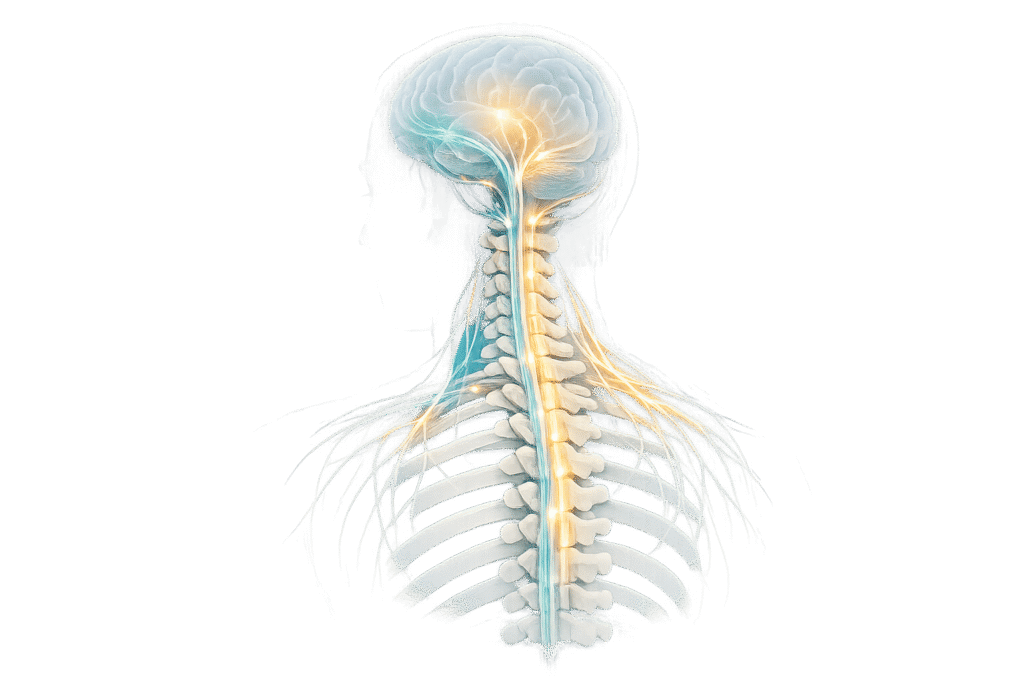
Chiropractic care may influence how your brain and body communicate by addressing spinal misalignments, which can disrupt nerve signals. Misalignments in the spine, caused by physical or emotional stress, can impact the autonomic nervous system (ANS), affecting functions like heart rate, digestion, and stress responses. Adjustments aim to restore alignment, improving nerve signal flow and balancing the ANS.
Key takeaways:
- Spinal misalignments can interfere with nerve communication and increase stress hormone levels like cortisol.
- Chiropractic adjustments may promote better blood flow, reduce inflammation, and support nerve health through the release of proteins like BDNF and NGF.
- Adjustments to specific spinal regions can activate either the sympathetic ("fight or flight") or parasympathetic ("rest and digest") systems, helping to rebalance your body.
- Emerging research suggests spinal adjustments could influence brain function by tapping into neuroplasticity, enhancing the brain’s ability to adapt.
To maintain spinal and nervous system health, focus on good posture, regular movement, and stress management. Consult a qualified chiropractor for tailored care.
Spinal Misalignments and Their Effect on Nerve Function
What Are Spinal Misalignments?
Spinal misalignments, or vertebral subluxations, happen when vertebrae shift out of their proper alignment, potentially impacting key parts of the nervous system along the spine.
These misalignments can result from physical trauma – like falls, car accidents, or repetitive strain caused by poor posture. Emotional stress plays a role too, as it can heighten sympathetic nerve activity, disrupting the body’s natural balance. Such misalignments often occur in areas that influence both the sympathetic and parasympathetic systems, which are crucial for maintaining the autonomic nervous system’s balance.
How Nerve Signals May Be Disrupted
The spine acts as a protective pathway for the nervous system, and when it’s out of alignment, it can interfere with the precise functioning of both the sympathetic and parasympathetic systems. This interference might even reduce the production of essential neurotrophins, like brain-derived neurotrophic factor (BDNF) and nerve growth factor (NGF), which are vital for keeping neurons healthy.
When nerve signals are disrupted, the body may struggle to maintain balance, potentially leading to chronic overactivation of the sympathetic system. This can result in elevated levels of cortisol and adrenalin. Research shows that about 85% of the cervical vagal nerve consists of unmyelinated, slow-conducting afferent C fibres that directly connect to the brain. This highlights how sensitive this pathway is to changes in spinal alignment.
"Chiropractic therapy works on the nervous system, stimulating it to release various chemicals and hormones that regulate blood pressure and flow, calm the brain and reduce inflammation." – Matteo Bertelli et al., Researchers
Chiropractic adjustments aim to restore proper brain–body communication by addressing these misalignments. This understanding helps explain how these adjustments can improve nerve signal flow and support overall nervous system health.
sbb-itb-585d67d
Stop Blaming Biomechanics: The New Neurobiology of the Chiropractic Adjustment | #524
How Adjustments May Support Nerve Function
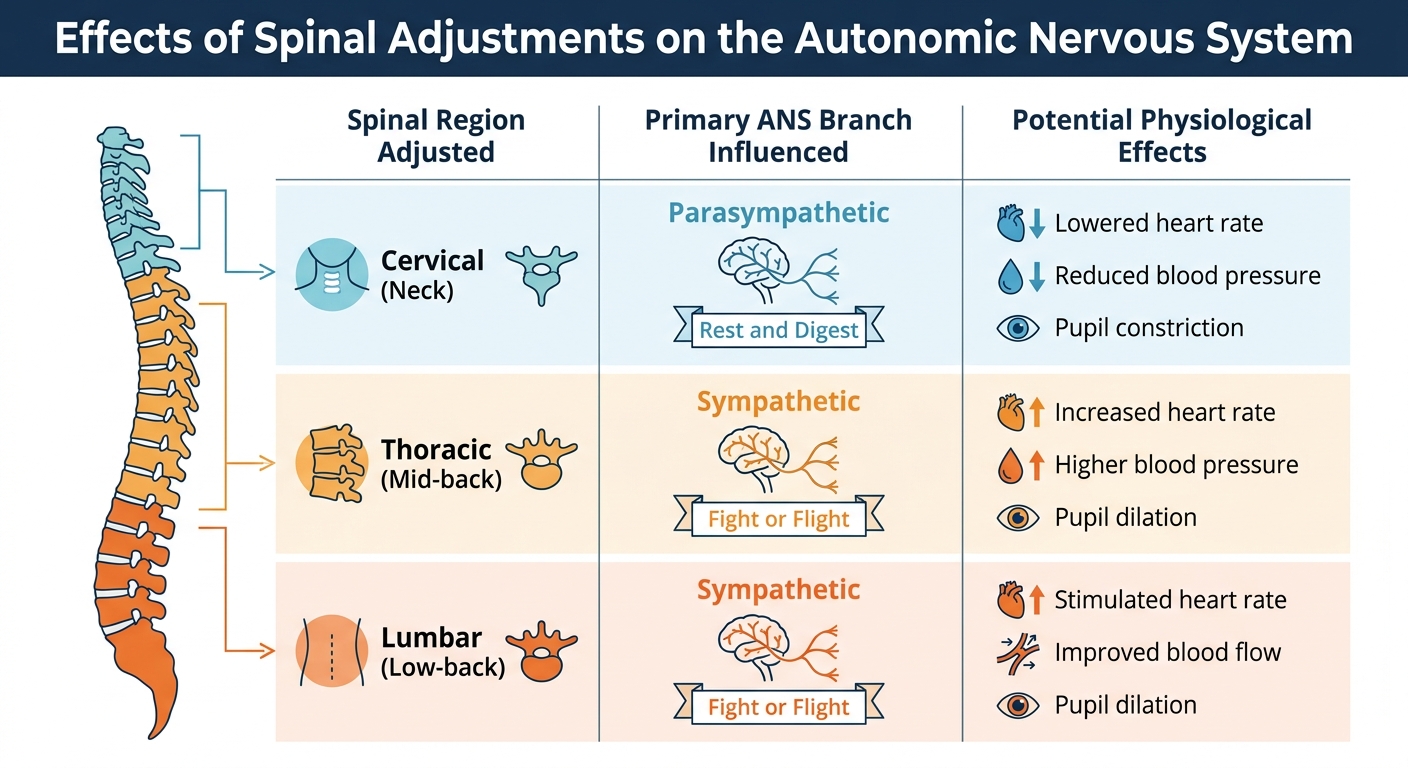
How Spinal Adjustments Affect Different Regions of the Autonomic Nervous System
Spinal misalignments can disrupt nerve signals, but adjustments may help improve neural function by supporting biochemical signalling and balancing the autonomic nervous system.
Supporting Nerve Signal Flow
Chiropractic adjustments involve precise mechanical stimulation of specific spinal areas, which can encourage the release of neurotrophins like Brain-Derived Neurotrophic Factor (BDNF) and Nerve Growth Factor (NGF). These molecules are essential for neuron health and smooth communication within the nervous system.
By addressing misalignments, adjustments may also improve blood flow and reduce inflammation. Research indicates that these changes can help restore proper communication between the brain and the rest of the body. The mechanical stimulation involved in adjustments appears to aid the nervous system in releasing chemicals and hormones that promote clearer signal transmission throughout the body.
Effects on the Autonomic Nervous System
Beyond improving overall nerve signalling, adjustments can specifically influence the autonomic nervous system (ANS). The effects depend on the location of the adjustment. For example, adjustments to the cervical (neck) region often activate the parasympathetic system, which is associated with the "rest and digest" state. This can lead to a decrease in heart rate and blood pressure. On the other hand, adjustments to the upper thoracic and lumbar regions, which are more closely tied to the sympathetic system, may increase heart rate and blood flow.
| Spinal Region Adjusted | Primary ANS Branch Influenced | Potential Physiological Effects |
|---|---|---|
| Cervical (Neck) | Parasympathetic | Lowered heart rate, reduced blood pressure, pupil constriction |
| Thoracic (Mid-back) | Sympathetic | Increased heart rate, higher blood pressure, pupil dilation |
| Lumbar (Low-back) | Sympathetic | Stimulated heart rate, improved blood flow, pupil dilation |
This targeted approach can help rebalance the autonomic nervous system, especially when the sympathetic system becomes overactive due to chronic stress or strain. Cervical adjustments, in particular, may influence the vagus nerve – 85% of its fibres connect directly to the brain – helping regulate neurotransmitter activity and enhance the body’s ability to maintain equilibrium.
Chiropractic Care and Brain Adaptation
Spinal adjustments may influence the brain’s ability to reorganise and adapt itself, though this is still a developing area of research. By examining how the nervous system responds to mechanical stimulation, we can start to understand some of the broader effects linked to chiropractic care. This concept connects spinal adjustments to the brain’s ability to rewire itself, a phenomenon known as neuroplasticity.
What Is Neuroplasticity?
Neuroplasticity is the nervous system’s ability to adapt through processes like neuronal growth, the formation of new neurons, and changes in the strength of synaptic connections. This adaptability plays a crucial role in learning, recovering from injuries, and maintaining overall function throughout life.
The brain is constantly processing signals from the body. When spinal health is compromised, it can affect the quality of these signals, potentially limiting the brain’s ability to adapt. On the other hand, improving nerve communication through better spinal health might enhance the brain’s natural ability to adjust. Research supports the idea that spinal adjustments could positively influence brain function by tapping into this adaptability.
How Adjustments May Influence Brain Function
There is growing evidence that chiropractic adjustments may support brain function. The mechanical stimulation involved in these adjustments can trigger the release of neurotrophins – proteins that help facilitate changes in brain pathways. Just as spinal adjustments can improve nerve signal flow, they may also encourage the brain’s capacity for adaptation.
"The theory of an association between spinal manual therapy and spinal cord neuroplasticity is being explored and several studies have shown such a connection." – Maltese P, et al., Acta Biomedica
For example, research on vagal nerve stimulation – a process potentially influenced by cervical adjustments – has shown that prolonged neural stimulation can lead to physical changes in the brain. These changes include increased dendrite length and greater complexity in hippocampal neurons. Although these findings come from broader neuroscience studies, they hint at mechanisms through which spinal adjustments might promote brain adaptation. Mechanical stimulation of the spine may also encourage the release of chemicals that support neuron survival, further linking spinal health to brain function.
Lifestyle Tips to Support Nervous System Health
While chiropractic adjustments can aid nervous system function, your daily habits also play a big role in maintaining spinal health and neural communication. By making small adjustments to your workspace, incorporating movement into your routine, and managing stress effectively, you can complement professional care and support overall nervous system balance. Below are some practical tips to enhance your daily habits and work in tandem with chiropractic care.
Improving Posture and Workspace Setup
The way your workspace is set up has a direct impact on spinal alignment, which can influence your nervous system. Poor posture – especially in the neck area – can interfere with the parasympathetic system, which is responsible for your body’s "rest and digest" functions.
- Position your computer screen at eye level to keep your neck in a neutral position and reduce strain on the upper neck. This can help support parasympathetic function.
- Ensure your feet are flat on the floor and that your chair supports your lower back’s natural curve. This helps maintain the spine’s natural alignment and reduces stress on the nerves.
- Take regular breaks to stand and reset your posture. Simple actions like pulling your shoulders back or gently tucking your chin can also encourage the release of neurotrophins – proteins that support nerve health and brain adaptability.
Movement and Stretching Exercises
Regular physical activity can provide gentle stimulation to your nervous system, promoting the release of NGF (nerve growth factor) and BDNF (brain-derived neurotrophic factor), both of which are essential for healthy neurons.
Incorporate daily stretches to target common areas of tension, such as the neck, shoulders, and lower back. Movements like shoulder rolls, neck rotations, and spinal twists can improve mobility and support nerve communication. Low-impact aerobic exercises like walking or swimming are also great options, as they can improve heart rate variability, an important marker of a healthy and responsive nervous system.
Managing Stress for Nervous System Balance
Chronic stress tends to overactivate the sympathetic nervous system, leading to elevated cortisol levels and other imbalances. Studies show that individuals with a resting heart rate above 82 beats per minute are 6% more likely to develop depressive disorders compared to those with rates below 62 beats per minute[1].
"Major depression may depend largely on imbalances in autonomic nervous system activity. All symptoms of depression, such as high cortisol, high adrenalin, insomnia, agitation and anxiety, can be attributed to excessive activity of the sympathetic system." – Aysha Karim Kiani et al., Researchers
Engaging in activities that activate the parasympathetic system can help restore balance. Techniques like slow, diaphragmatic breathing, meditation, and gentle stretching can shift your body toward a calmer state. Keeping an eye on your resting heart rate can also provide insight into your nervous system’s balance – consistently high readings might indicate the need for lifestyle adjustments or professional care to support your nervous system.
Conclusion
Chiropractic adjustments may play a role in supporting the nervous system by influencing the communication between the spine and brain, as well as regulating autonomic functions like heart rate, blood pressure, and stress responses.
"Chiropractic care and spinal manipulation regulate the autonomic nervous system at peripheral level and its projections to the central nervous system." – Aysha Karim Kiani et al., Researchers
These adjustments might also encourage the release of neurotrophins such as BDNF and NGF, which are important for neuron health and neuroplasticity. This could help the nervous system adapt more effectively to daily challenges. However, individual results can vary, and ongoing research continues to explore these effects.
Incorporating chiropractic care with healthy lifestyle habits can further support nervous system balance. If you’re looking for evidence-based care that focuses on the nervous system, seek advice from a qualified chiropractor. For those in Bondi Junction, Dr Steve provides modern, gentle chiropractic treatments designed to support musculoskeletal health and overall wellbeing.
Combining professional care with practices like good posture, regular movement, and stress management can contribute to a healthier nervous system. While chiropractic adjustments can be a helpful addition to your health routine, they work best as part of a comprehensive approach to wellness.
This information is intended as a general guide and should not replace professional medical advice. Chiropractic care focuses on musculoskeletal health, and individual results may vary. Always consult a qualified healthcare provider before making health-related decisions.
FAQs
How do spinal misalignments affect nerve signals?
Spinal misalignments can disrupt the flow of nerve signals, potentially affecting how the brain and body communicate. Chiropractic adjustments aim to align the spine correctly, which may help reduce nerve interference and support improved nervous system function.
Can adjustments influence the autonomic nervous system?
Chiropractic adjustments might play a role in supporting the autonomic nervous system, particularly by potentially affecting cardiovascular autonomic activity. While some studies indicate that spinal manipulation could influence this system, further research is necessary to clarify and deepen our understanding of this relationship.
How many sessions might be needed to notice changes?
The number of sessions needed to see improvements can differ greatly from person to person. It often depends on factors like your specific condition, your goals, and how your body responds to treatment. The best approach is to have an open conversation with your chiropractor. They can assess your progress and create a plan that’s customised to suit your situation and needs.


