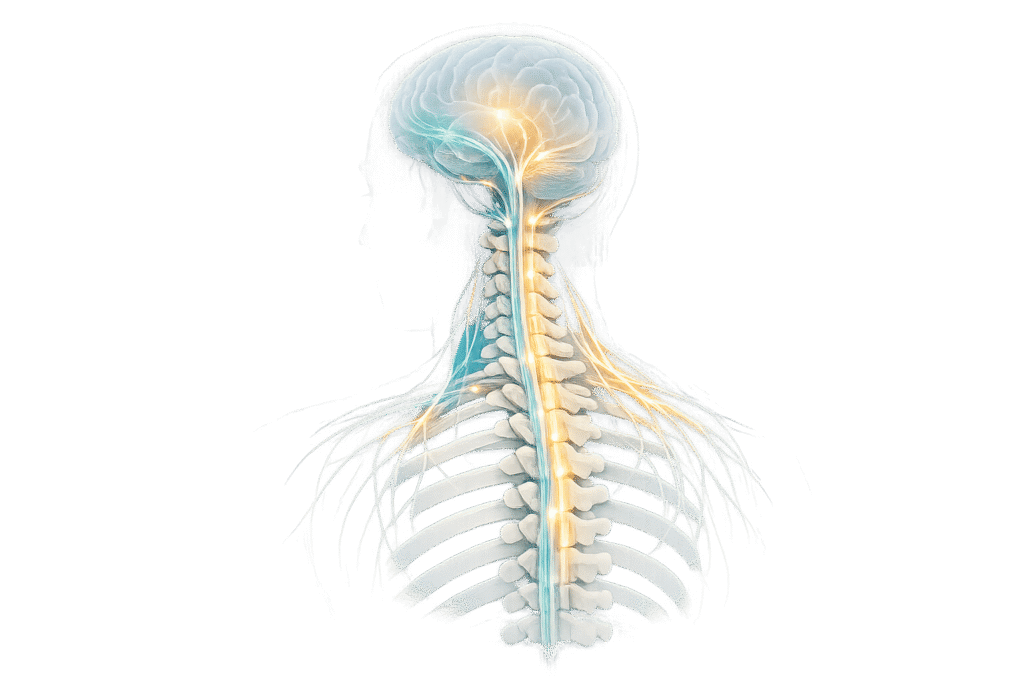
Chiropractic adjustments are one option for some musculoskeletal complaints, including certain types of back or neck pain. Researchers also study short-term nervous-system responses to manual therapy, but those findings do not establish that adjustments restore nerve signals, improve brain health or regulate heart rate, digestion and stress. Care decisions should be based on the complaint, relevant evidence and individual assessment.
Key takeaways:
- Spinal symptoms need assessment; pain or posture alone does not establish nerve interference or autonomic dysfunction.
- Chiropractic adjustments should not be promoted as a proven way to improve nerve growth, hormone balance or brain function.
- Research has not established a reliable way to use adjustments at particular spinal levels to switch between sympathetic and parasympathetic activity.
- Changes in a laboratory measure are not the same as a meaningful improvement in symptoms, daily function or long-term health.
For people in Bondi Junction with back pain, neck pain or headaches, a consultation can help identify appropriate assessment and care options. Nerve symptoms or concerns about heart, digestive or mental health may need medical review.
Spinal Symptoms and Nerve Function: Important Distinctions
What Does “Spinal Misalignment” Mean?
The word “misalignment” is sometimes used loosely in chiropractic advertising. It should not be assumed to explain pain, stress or a general health problem. Medical conditions involving injury, instability or nerve compression require an appropriate clinical diagnosis.
Stress, prolonged activity and injury may contribute to discomfort in different ways. They do not establish that vertebrae have shifted or that the autonomic nervous system needs an adjustment. Your history and examination help determine the next step.
When Do Nerve Symptoms Need Assessment?
Pain radiating into an arm or leg, numbness, tingling or weakness can have several causes. An examination may help identify whether a nerve is involved and whether medical tests or referral are needed. These symptoms should not automatically be described as blocked nerve signals.
New or worsening weakness, difficulty walking, or loss of bladder or bowel control needs urgent medical assessment. Sudden one-sided weakness, facial drooping or speech difficulty is an emergency: call 000. Do not delay medical care to seek an adjustment.
Research about biological mechanisms cannot, by itself, show that a treatment improves a health condition. Clinical benefits and harms must be assessed in relevant patient studies.
Manual therapy may be considered for some musculoskeletal symptoms after assessment. That does not demonstrate that it repairs brain–body communication or treats general nervous-system dysfunction.
sbb-itb-585d67d
Video Discussion: Neurobiology and Chiropractic Research
What Does Nervous-System Research Show?
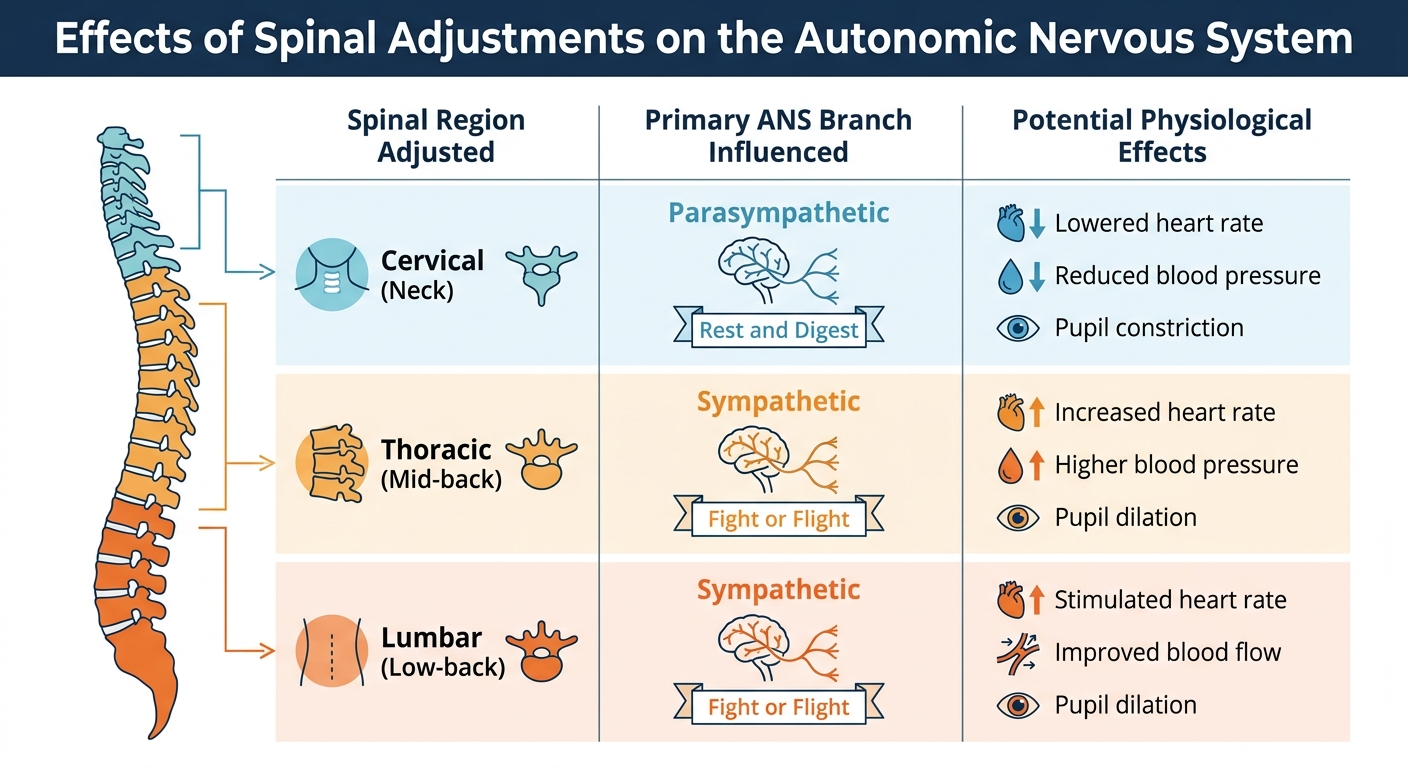
Illustration of proposed autonomic effects; these are not established treatment outcomes
The autonomic nervous system helps regulate involuntary functions. Research into its response to spinal manipulation is limited and inconsistent, and should not be presented as a proven benefit for heart, digestive or mental health.
Laboratory Findings and Patient Benefits
Brain-Derived Neurotrophic Factor (BDNF) and Nerve Growth Factor (NGF) are proteins studied in nervous-system biology. Their role in normal physiology does not establish that chiropractic adjustments increase them in a way that benefits patients.
A proposed mechanism is a research question, not a treatment promise. To support a clinical claim, studies need to show a meaningful benefit for the relevant condition compared with an appropriate alternative or control, while considering harms.
Evidence on Autonomic Activity
A 2024 systematic review of 14 trials involving 618 participants found low-quality evidence that spinal manipulation did not alter measured autonomic activity overall compared with controls or sham treatment. Research involving the cervical (neck) region does not establish a reliable “rest and digest” treatment, and findings for the upper thoracic and lumbar regions do not justify claims of targeted sympathetic control.
| Spinal Region | Claim That Needs Caution | What Patients Should Know |
|---|---|---|
| Cervical (Neck) | Switching on parasympathetic activity | Not an established way to lower blood pressure or treat autonomic dysfunction |
| Thoracic (Mid-back) | Controlling sympathetic activity | Short-term measurements do not establish improved heart or organ health |
| Lumbar (Low-back) | Improving circulation through autonomic effects | Evidence does not establish a clinical benefit from targeting this region for autonomic regulation |
The location of an adjustment does not provide a validated treatment map for organ function. The review’s findings were limited by study quality and inconsistency. They do not establish a treatment schedule for autonomic symptoms.
Neuroplasticity: Research and Clinical Claims
Neuroplasticity describes the nervous system’s capacity to change. Researchers may investigate changes in brain activity or sensory processing after manual therapy, but a measured response does not necessarily mean better memory, learning, recovery or general health.
What Is Neuroplasticity?
Neuroplasticity includes changes in neural connections and how signals are processed. It occurs in many contexts, including learning and adaptation. The term does not, on its own, establish the value of a particular treatment.
Neither posture nor ordinary back or neck discomfort establishes impaired brain adaptability. Claims that adjustments enhance the brain’s ability to learn or recover require direct clinical evidence, rather than an inference from spinal movement.
What Would Show a Meaningful Benefit?
Relevant research should assess outcomes that matter to patients, such as symptoms and daily function, over an appropriate period. An immediate change in brain activity or a laboratory marker is not enough to recommend ongoing treatment for brain health.
A connection being explored in research is not the same as an established treatment effect. Study design, comparison groups, consistency and clinical relevance all matter.
Research on electrical vagus nerve stimulation or on animals cannot simply be transferred to chiropractic adjustments. These involve different interventions and settings. Such findings do not establish that neck manipulation produces the same changes or benefits.
Everyday Comfort and General Health
You can consider practical changes to activity, work habits and stress support without assuming that your nervous system is out of balance. Choose manageable options suited to your health and preferences, and seek advice when symptoms persist or change.
Improving Posture and Workspace Setup
A comfortable workspace may make tasks easier. There is no single posture that everyone must hold, and posture alone does not diagnose a nerve or autonomic problem. Adjust the setup to the task and vary your position when comfortable.
- Place your screen where you can read comfortably without repeatedly straining to see it. Adjust height, distance or text size to suit you.
- Use a chair and foot support that feel comfortable for the task. You do not need to hold a rigid position all day.
- Try short opportunities to change position or move when practical. A break can support comfort without being described as a nerve-growth treatment.
Movement and Stretching Exercises
Regular physical activity supports general health. Choose activities you enjoy and can manage, and adapt them to your symptoms and medical needs.
Walking, swimming or gentle mobility exercises may be options, depending on your circumstances. Start at a manageable level. Stop and seek advice if movement brings on new weakness, significant dizziness or worsening neurological symptoms.
Stress Support and Medical Review
Stress can affect sleep, concentration and how pain is experienced. Persistent stress, anxiety or low mood deserves appropriate support from a GP or mental-health professional. A heart-rate reading cannot diagnose depression or identify a need for spinal treatment.
Mental-health conditions have multiple contributing factors. Describing them as a simple sympathetic–parasympathetic imbalance can delay appropriate assessment and care.
Comfortable breathing or relaxation may help some people manage stress, but they are not a substitute for assessment of concerning symptoms. Discuss a persistent fast or irregular heartbeat with a doctor. If your concern is musculoskeletal discomfort, you can separately ask about care options suited to that complaint.
Conclusion
Evidence about manual therapy for selected musculoskeletal complaints should be kept separate from claims about nerve repair, brain enhancement or organ regulation. The latter are not established benefits of chiropractic adjustments.
An informed decision considers the likely benefits, uncertainty, possible harms, alternatives and cost of the specific care proposed.
Manual therapy can cause temporary soreness or discomfort. Rare serious adverse events have also been reported, and neck manipulation requires discussion of relevant risks and alternatives. An assessment and consent discussion should precede treatment.
In Bondi Junction, MyChiro offers a free initial consultation for new patients to discuss back pain, neck pain, headaches and care options. It is not a free examination or treatment. Optional same-day treatment is $125 if clinically appropriate, with no obligation.
If care is recommended, agree on a clear purpose and a review point. Continuing treatment should depend on your needs and response, rather than a promise to maintain nervous-system balance.
This information is intended as a general guide and should not replace professional medical advice. Chiropractic care focuses on musculoskeletal health, and individual results may vary. Always consult a qualified healthcare provider before making health-related decisions.
FAQs
Does back or neck pain mean nerve signals are blocked?
No. Pain can have several contributors and does not, by itself, show nerve damage or interference. Numbness, tingling, radiating pain or weakness may need further assessment; new or worsening neurological symptoms warrant prompt medical advice.
Are adjustments a proven treatment for autonomic dysfunction?
No reliable clinical benefit has been established for that purpose. Small studies of short-term measurements do not demonstrate treatment of heart, digestive or mental-health conditions. Discuss those symptoms with an appropriate medical professional.
How should the need for further appointments be decided?
There is no established adjustment schedule for improving neural pathways or autonomic balance. For a musculoskeletal complaint, further care should be based on your assessment, goals and response, with a planned review and options to change or stop treatment.