
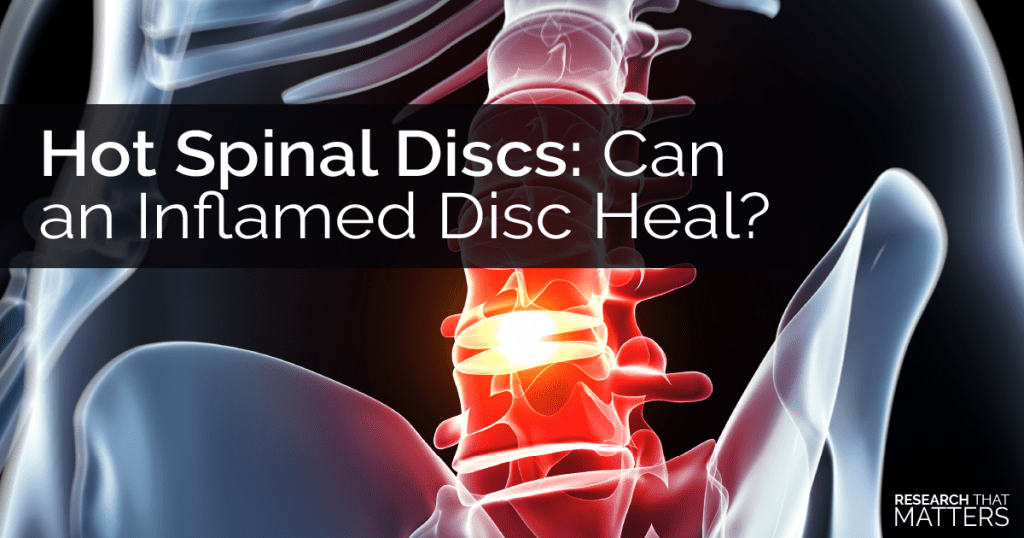
Hot Spinal Discs: Can an Inflamed Disc Heal?
Bottom Line:
A disc bulge or herniation can irritate nearby nerves and sometimes cause back or leg pain. Disc changes are also common in people without symptoms, so imaging alone cannot explain what is happening. The appropriate next step depends on your symptoms, examination and any warning signs.
Why it Matters:
Some lumbar disc herniations become smaller over time, including without surgery. Research on spontaneous regression does not establish that chiropractic treatment causes a disc to shrink or reabsorb. Outcomes differ between people, and a clinician should assess symptoms and neurological findings before advising on management.
Inflammation is one part of the body’s response to injury, but it does not by itself predict recovery or prove that a particular treatment is suitable. Disc herniations may regress naturally; the available evidence does not establish that chiropractic adjustments cause this. You can also read about spinal care and disc changes disc herniations have been shown to completely heal.
Next Steps:
Back pain or leg symptoms can be unsettling, especially when they affect sitting, work or sleep. If symptoms persist, a GP or appropriately qualified health professional can assess whether further investigation is needed. Seek urgent medical assessment for new bladder or bowel problems, numbness around the groin, or progressive leg weakness. At MyChiro in Bondi Junction, new patients may book a free initial consultation for assessment and advice; treatment is not included, and optional same-day treatment is $125 if clinically appropriate. Book a free initial consultation.
Science Source(s):
The probability of spontaneous regression of lumbar herniated disc: a systematic review.
The inflammatory response in the regression of lumbar disc herniation.