


Stretching might feel good, but it often doesn’t fix deeper spinal problems. If you’re dealing with persistent pain, stiffness, or limited movement, your spine could need professional care. Misaligned spinal joints or chronic tension can cause recurring discomfort that stretching alone won’t resolve. Here’s what to watch for:
- Neck and shoulder pain that keeps coming back.
- Tension headaches starting at the base of your skull.
- Morning stiffness lasting beyond 30 minutes.
- Limited range of motion, like trouble turning your head or bending.
These issues often stem from joint restrictions, poor posture, or stress-related muscle tension. While stretching provides temporary relief, practices like yoga, Pilates, and chiropractic care can address the root causes. Early action is key to preventing long-term problems.
Chiropractic Adjustments – Decreased Pain, Better Posture, Improved Function
How Spinal Stress Develops
Spinal stress builds up slowly, often as a result of daily habits that place too much strain on your body. When the physical demands of work, posture, or stress outpace what your body can handle, tension accumulates in ways that aren’t always resolved by a simple stretch.
Poor Posture and Sedentary Habits
Spending hours slouched over a desk or hunched over your phone can compress the muscles and tissues around your spine. But the problem goes beyond just sitting – staying in any one position for too long, without movement or variety, can lead to spinal discomfort.
Take forward head posture, for example. This posture, common among office workers, shifts the workload to your lumbar spine, forcing it to act as a shock absorber instead of a stable base. Over time, this pattern can lead to stiff hips and a rigid mid-back, leaving your lower back to take on motions and loads your hips should handle. This creates a cycle of stress on the spine, where what feels like tight muscles is often your body’s way of guarding against instability. In this state, stiffness becomes a protective mechanism rather than a simple case of muscle tightness.
Adding to the problem, chronic stress can make spinal issues even worse.
How Stress Affects Your Spine
Chronic stress keeps your muscles in a constant state of tension. Elevated stress hormones like cortisol restrict blood flow to your back muscles, which can lead to discomfort in specific areas. Stress also alters your breathing patterns, often causing you to raise your shoulders and strain your mid and upper back.
This constant guarding means that while stretching may feel good for a moment, the relief doesn’t last. As soon as you stretch, your nervous system kicks back in, tightening muscles to protect misaligned spinal joints. Chiropractor and Ergonomist Alan Brown explains it well: "There is a massive difference between suppressing symptoms and healing a problem!" Prolonged spinal irritation can even lead to changes in the brain’s grey matter and lower your pain tolerance over time.
Warning Signs Your Spine Needs Professional Care
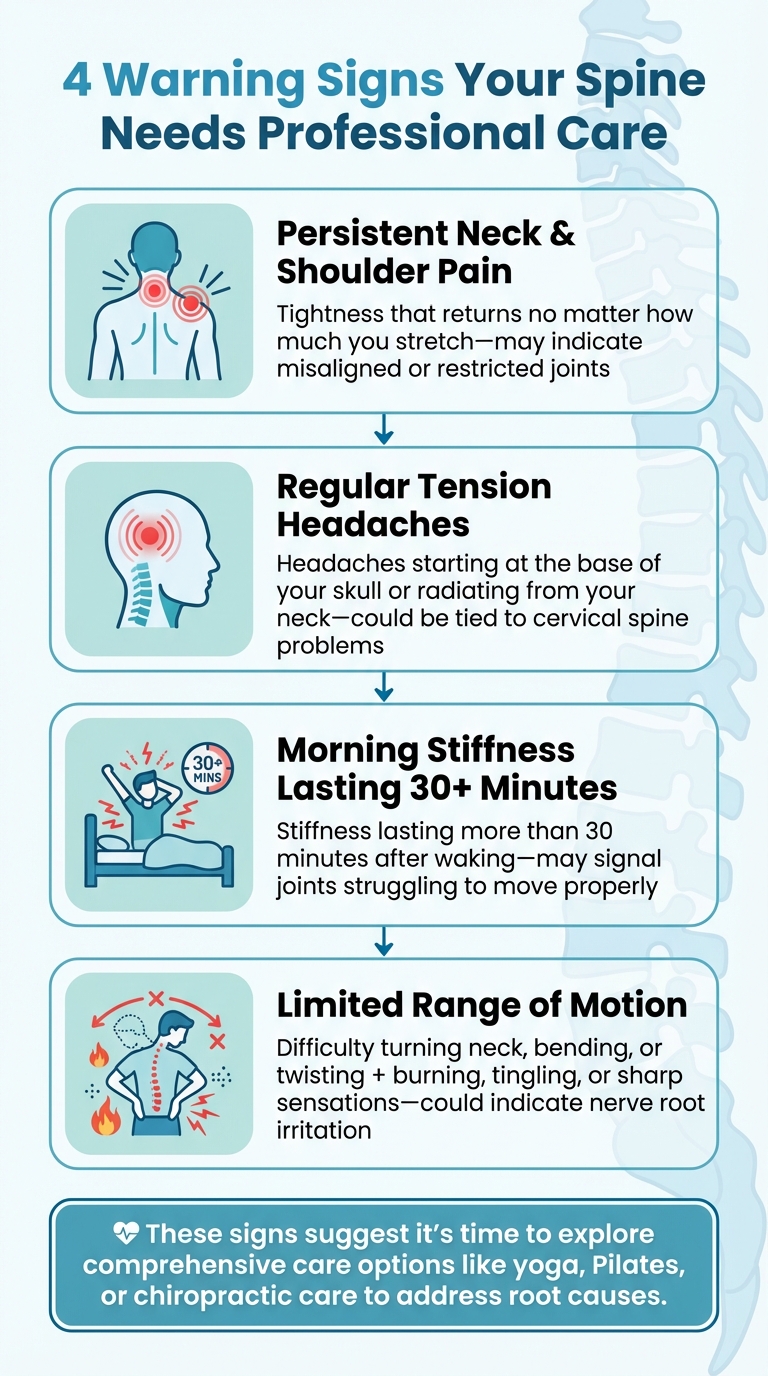
4 Warning Signs Your Spine Needs Professional Care
When stress builds up in your body, it often manifests in physical ways. Sometimes, these signals go beyond the occasional ache or stiffness, hinting at deeper spinal issues that need more than just a quick stretch to resolve. Paying attention to these signs can help you determine when it’s time to seek professional care.
Persistent Neck and Shoulder Pain
Do your neck and shoulders feel tight no matter how much you stretch? That lingering discomfort could point to a misaligned or restricted joint. According to Stein Chiropractic:
"Stretching feels good because it temporarily changes how tight tissue behaves… But if a spinal joint is stuck, misaligned, or moving poorly, your nervous system will turn those same muscles back on to guard the area."
In other words, the relief from stretching doesn’t last because your body is working overtime to stabilise the joint. If you frequently experience tightness or "hot spots" that come back week after week, it’s likely a structural issue rather than simple muscle fatigue.
Regular Tension Headaches
Headaches that start at the base of your skull or radiate from your neck could be tied to cervical spine problems. When the joints in your upper neck are restricted or misaligned, they can irritate nearby nerves and tissues, leading to recurring headaches. If these headaches tend to flare up after long hours at a desk, poor posture, or during stressful periods, the underlying problem might be mechanical rather than muscular. Stretching alone won’t address this.
Morning Stiffness That Won’t Go Away
Waking up stiff every morning is one thing, but if that stiffness lasts more than 30 minutes, it could mean your joints are struggling to move properly. When a spinal joint isn’t functioning well, surrounding muscles often stay tense to protect it. If you feel like you "slept wrong" on a regular basis, it might be more than just a bad night’s sleep – it could indicate that your joint mechanics need attention.
Limited Range of Motion
Struggling to turn your neck, bend, or twist without discomfort? That could signal joint restrictions. You might also notice sluggish or delayed movements in your limbs during exercise, which can point to subtle nerve interference. If you’re feeling burning, tingling, or sharp "zaps" in areas like your glutes, thighs, or feet, this could indicate nerve root irritation, not just a strained muscle. In these cases, stretching might actually worsen the problem by aggravating inflamed nerves or reinforcing unstable movement patterns.
These warning signs suggest it’s time to explore more comprehensive care options. Activities like yoga, Pilates, or chiropractic care can address the root causes and help restore proper function to your spine.
sbb-itb-585d67d
Treatment Options Beyond Stretching
When discomfort lingers, simple stretches often fall short. While stretching can temporarily ease tight muscles, it doesn’t tackle the deeper issues like joint mechanics or nervous system patterns that might be fuelling the problem. A more comprehensive approach – combining targeted exercises with hands-on care – can better support proper joint function.
Yoga and Pilates for Spinal Support
Yoga and Pilates go beyond just improving flexibility; they also activate core stabilisers that play a key role in maintaining alignment and posture. These practices focus on strengthening muscles around your pelvis, ribcage, and shoulders, which can contribute to better posture over time.
That said, there’s a catch: if your pelvis is tilted or your mid-back is stiff, certain movements in yoga or Pilates might reinforce those imbalances rather than correct them. When your alignment is off, your form during these exercises can reflect and even worsen that dysfunction. That’s why it’s crucial to ensure your joints are moving properly before diving into more advanced strength and flexibility work.
To complement these exercise-based approaches, hands-on treatments can address structural misalignments at their root.
Chiropractic Care for Spinal Health
Chiropractic care offers a focused way to correct joint misalignments that stretching alone can’t fix. When a spinal joint isn’t moving as it should, the nervous system often reacts by tightening nearby muscles as a protective measure. This can lead to issues like neck pain, tension headaches, or restricted movement.
Chiropractic adjustments aim to restore proper joint motion, ease muscle tension, and enhance mobility. There’s also some evidence to suggest these adjustments can help with nerve-related symptoms – like tingling, numbness, or burning – that stretching typically doesn’t address. Performed by a qualified practitioner, chiropractic care is generally considered safe and can be particularly effective for tackling problems like tech neck, desk-related posture strain, or lingering effects from past injuries.
If your discomfort persists despite regular stretching and exercise, it might be time to consult a chiropractor. For example, practitioners like Dr Steve, available at mychiro.com.au, specialise in evidence-based spinal care, combining hands-on treatments with lifestyle and movement strategies to help you feel and function better.
Building a Complete Spinal Health Routine
Taking care of your spine isn’t just about addressing pain when it arises – it’s about creating a daily routine that supports alignment and prevents discomfort from becoming a bigger issue.
Why Early Action Matters
That stiffness in your neck or the struggle to turn your head while reversing the car might seem minor, but ignoring these early signs can lead to more serious problems. When joint restrictions are left untreated, your muscles often step in to compensate. Over time, this can create tension patterns that turn into chronic lower back pain, ongoing neck discomfort, or even shoulder stiffness that interferes with everyday tasks.
Addressing these issues early can make a big difference. By acting before they worsen, you can help preserve your mobility and reduce the risk of long-term wear and tear. Including early interventions in your daily routine can be a simple yet powerful step toward maintaining spinal health.
Creating Your Personal Care Plan
Your spinal health routine should fit your lifestyle. If you spend most of your day sitting at a desk, incorporating short stretches or yoga poses like child’s pose or cat-cow can help counteract poor posture. On the other hand, if your day involves physical activity – whether it’s lifting kids, moving heavy items, or being on your feet for hours – core-strengthening exercises like Pilates bridges can help protect your lower back.
Customise your routine to your needs. If you notice ongoing stiffness or restrictions, consider periodic professional check-ups. For others, regular movement and stretching might be enough to maintain balance. Combining exercises like yoga and Pilates with occasional professional care can create a well-rounded approach that promotes good posture and movement.
Start with 10–15 minutes of targeted stretching daily, and try adding one or two yoga or Pilates sessions each week. Pay attention to how your body responds. If stiffness or limited movement persists, it might be time to see a qualified practitioner. Professionals like Dr Steve at mychiro.com.au offer evidence-based care that complements your routine, with flexible scheduling to fit into your busy life.
Conclusion
Your spine plays a central role in movement, balance, and overall function. Persistent issues like neck pain, headaches, or morning stiffness often signal that simple remedies like stretching might not be enough. These symptoms can arise from deeper concerns such as muscle tension, postural shifts, or joint restrictions.
A combination of movement and professional care can make a difference. Practices like yoga and Pilates strengthen core stability and improve spinal mobility, while chiropractic adjustments help restore alignment and relieve muscle tightness. Together, they tackle both the symptoms and their root causes, creating a well-rounded approach to spinal health.
Addressing discomfort early is key. Ignoring minor aches can allow them to develop into chronic issues that interfere with daily life. As mentioned earlier, resolving spinal misalignments promptly can help prevent long-term complications. If your symptoms persist, it’s worth consulting a healthcare professional. For example, Dr Steve at mychiro.com.au offers evidence-based chiropractic care in Bondi Junction, with flexible options to suit busy schedules.
Incorporating daily movement, maintaining good posture, and seeking timely professional advice can go a long way in supporting your spine. Since your spine is integral to everything you do, taking care of it now ensures better mobility, comfort, and overall quality of life in the future.
This information is intended as a general guide and should not replace professional medical advice. Chiropractic care focuses on musculoskeletal health, and results can vary. Always consult a healthcare professional before making decisions about your health.
FAQs
How can I tell if my pain is from muscle tightness or a spinal joint issue?
Muscle tightness typically presents as a feeling of stiffness or soreness in a specific area and often eases with rest or gentle movement. On the other hand, spinal joint problems can result in more complex symptoms, such as radiating pain, numbness, or even weakness, and these issues may persist even when you’re resting. If your discomfort worsens with certain movements or includes sensations like tingling, it could indicate a spinal joint issue. Seeking advice from a healthcare professional, like a chiropractor, can help pinpoint the cause and guide you towards the right treatment.
When should I stop stretching and see a chiropractor?
If stretching isn’t easing that nagging pain, stiffness, or tension, it might be worth looking into chiropractic care. Persistent muscle tightness, slouched posture, or nerve-related discomfort could point to spinal issues that need a professional’s expertise. Chiropractic treatment can work alongside stretching to tackle the root causes of discomfort and help maintain your musculoskeletal health. If your symptoms stick around or get worse, it’s always a good idea to consult a healthcare professional for personalised guidance.
Can yoga or Pilates make my back or neck worse?
Yoga and Pilates can be great for improving back and neck health, but there’s a catch: doing the exercises the wrong way or without proper supervision might actually make things worse. To stay on the safe side and ensure these practices suit your specific needs, it’s wise to check in with a qualified healthcare professional first.