

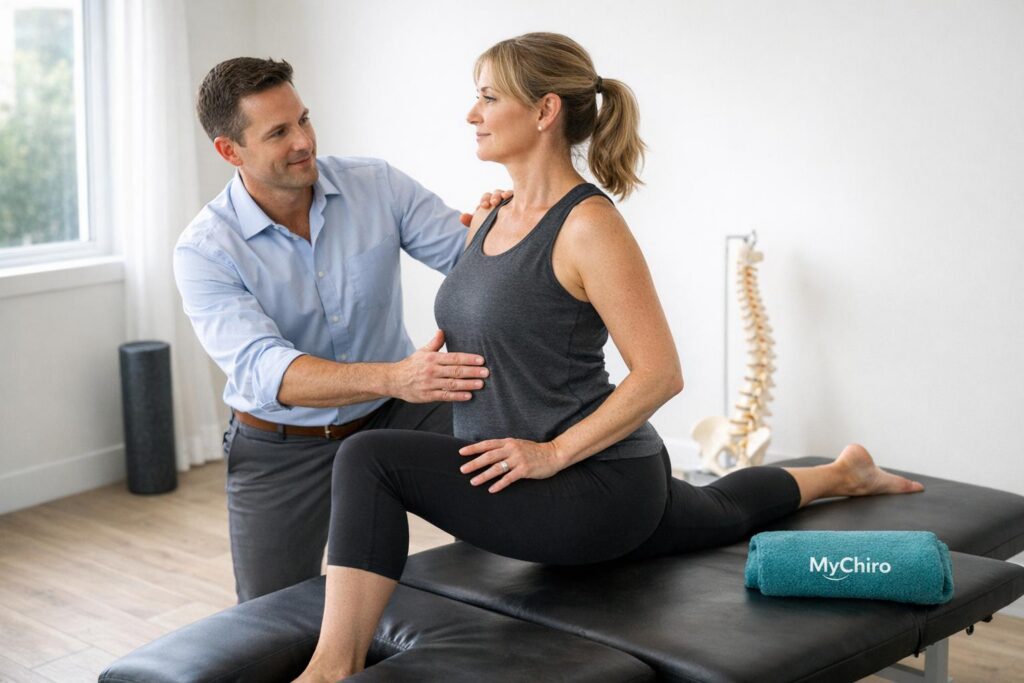
Combining chiropractic care with stretching offers a natural way to manage pain and improve mobility. Chiropractic adjustments focus on aligning the spine and relieving nerve pressure, such as chiropractic care for sciatica, while stretching reduces muscle tension and supports flexibility. Together, they address both structural and soft-tissue issues that contribute to discomfort.
Key takeaways:
- Chiropractic adjustments improve joint movement and nerve function.
- Stretching keeps muscles flexible, reducing tension and maintaining spinal alignment.
- This combination can help with posture, range of motion, and long-term pain relief.
For best results, pair chiropractic sessions with targeted stretches like chin tucks, hip flexor stretches, and cat-cow movements. These exercises can prolong the benefits of adjustments and support overall musculoskeletal health.
Back Pain Relief Exercises & Stretches – Ask Doctor Jo
sbb-itb-585d67d
Common Causes of Pain and Reduced Mobility
Daily routines – like sitting at a desk for hours, repetitive motions, or constant device use – can cause tension and stiffness in the body. Prolonged sitting, for instance, often leads to tight hip flexors (specifically the iliopsoas) and hamstrings. This tightness can pull the pelvis out of its natural alignment, creating an anterior pelvic tilt. The result? Strain on the lumbar spine, which frequently contributes to lower back discomfort.
Desk jobs and screen time are also major culprits. They often lead to a forward-head posture, weakening the deep neck flexors and putting extra strain on the cervical spine and upper back. Rounded shoulders, caused by tight chest muscles, pull the shoulders forward, adding tension to the thoracic spine (mid-back) and exacerbating upper back pain. Alarmingly, about 29% of adults report neck pain triggered by stress, which poor posture typically worsens – especially for office workers.
This ongoing tension doesn’t just impact muscles. It can also disrupt spinal alignment, as explained below.
How Tight Muscles Affect the Spine
Everyday stressors can cause tight muscles to pull vertebrae out of their natural position. This misalignment, sometimes referred to as a subluxation, can reduce mobility and lead to persistent pain. Chronically tight or imbalanced muscles may also compress nearby nerves, causing irritation and discomfort that often radiates beyond the initial problem area.
"Tight muscles can pull your vertebrae out of alignment, causing a new subluxation." – Todd Williams, DC
Sedentary habits further contribute to "muscle immobility." When movement is limited, blood circulation decreases, leading to chronic stiffness in the myofascia (the connective tissue around muscles) and joints. This stiffness not only restricts movement but also raises the risk of injury during physical activity.
Poor Posture and Its Impact on Pain
Misaligned spines caused by tight muscles are only made worse by poor posture. While posture might seem like a cosmetic concern, it has a profound impact on the body’s mechanics. Poor posture disrupts the spine’s natural curves, overloading muscles, joints, and nerves. As the spine shifts out of alignment, surrounding muscles tighten to compensate, further limiting movement and forcing the body into unnatural patterns. These compensatory movements often strain other joints, such as the knees and hips.
Pain linked to postural imbalances can stem from structures like the myofascia, cervical facet joints, or spinal discs. Globally, persistent or recurring neck pain affects between 19% and 37% of cases. Improving both spinal alignment and muscle flexibility can play a key role in reducing discomfort and restoring ease of movement.
How Chiropractic Care and Stretching Work Together
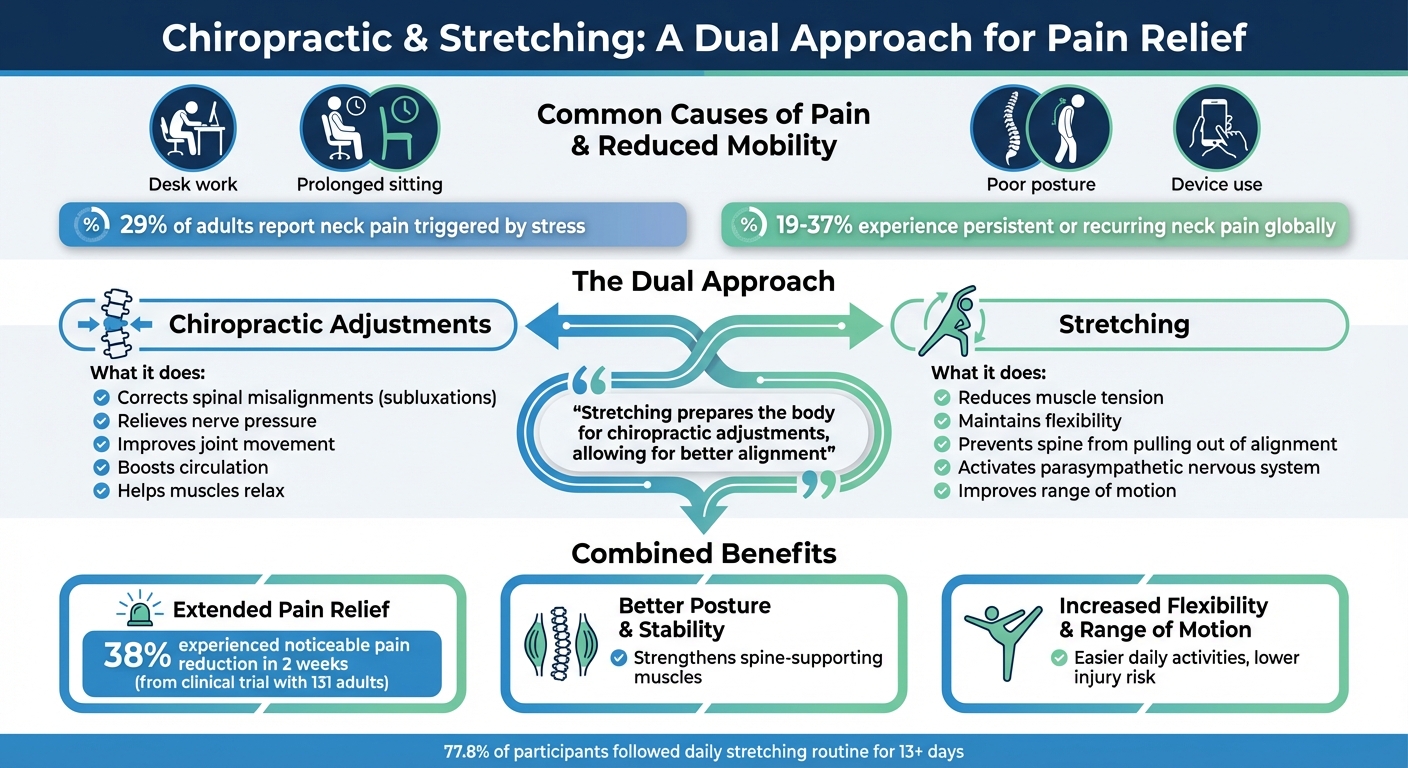
How Chiropractic Care and Stretching Work Together for Pain Relief
Chiropractic adjustments and stretching focus on different parts of the body, but when combined, they can complement each other to support pain relief and improved mobility. Adjustments primarily address bones and joints, while stretching targets muscles and connective tissues. Together, they may help maintain spinal alignment and reduce the chance of recurring discomfort.
What Chiropractic Adjustments Can Do
Chiropractic care focuses on correcting spinal misalignments – often referred to as subluxations – that can put pressure on nerves and surrounding muscles. By addressing these misalignments, adjustments can improve nerve function and joint movement. This process may also boost circulation, which can aid healing.
"Spinal manipulation treatments not only move your vertebrae back into their normal positions but also ease pressure on tight muscles, helping them relax." – Todd Williams, DC
However, tight muscles can sometimes work against these adjustments, making stretching an important addition to chiropractic care. Stretching helps reinforce the benefits of spinal realignment by addressing muscle tension.
How Stretching Supports Chiropractic Results
Stretching plays a key role in maintaining the benefits of chiropractic adjustments by keeping muscles flexible and reducing tension. It helps prevent muscles from pulling the spine back out of alignment, promoting longer-lasting results.
"Stretching prepares the body for chiropractic adjustments, allowing for better alignment." – The ChiropractOrr
Stretching may also activate the parasympathetic nervous system, which promotes relaxation and reduces stress-related muscle tension. In one clinical trial involving 131 adults with persistent neck pain, 77.8% followed a daily stretching routine for at least 13 out of 14 days. Among those combining spinal manipulation with stretching, 38% experienced a noticeable reduction in pain intensity within two weeks[1]. This suggests that combining these methods can be a practical way to manage musculoskeletal discomfort effectively.
Benefits of Combining Chiropractic Care and Stretching
Pairing chiropractic care with stretching can offer a range of benefits, enhancing the effects of each approach.
Extended Pain Relief
Chiropractic adjustments work to improve spinal alignment, while stretching focuses on releasing tension in tight muscles. Together, they can help maintain alignment and prevent muscles from pulling the spine out of position.
"Stretching could extend the positive effects of your chiropractic treatment." – Todd Williams, DCPA
Stretching also improves circulation, which aids tissue repair and contributes to longer-lasting pain relief. A 2025 review in the European Journal of Applied Physiology highlighted that stretching not only reduces muscle stiffness but also increases range of motion, which can relieve nerve pressure and discomfort.
Better Posture and Stability
This combined approach can also improve posture and stability. Stretching strengthens the muscles supporting the spine, making it easier to sustain the alignment achieved through chiropractic care. For instance, stretching tight chest muscles and hip flexors can counteract poor posture caused by prolonged sitting, such as forward-head or rounded-shoulder positions.
Movements like wall angels can enhance shoulder mobility and strengthen the upper back, while pelvic tilts activate core muscles to stabilise the lower spine. When paired with chiropractic adjustments, these exercises help reinforce proper alignment throughout the day.
Increased Flexibility and Range of Motion
Beyond pain relief and posture, combining chiropractic care with stretching can improve overall flexibility and movement. This pairing encourages joint lubrication by stimulating synovial fluid production and reduces muscle tightness, making everyday activities like bending or lifting easier and safer.
For example, flexible hamstrings and calves can alleviate strain on the lower back and improve walking mechanics, supporting the alignment achieved during chiropractic sessions. This enhanced range of motion may also lower the risk of injuries in daily life.
Stretching Exercises to Use After Adjustments
After a chiropractic adjustment, incorporating specific stretches can help reinforce the alignment by addressing muscle tension. These exercises target common problem areas, working alongside the adjustments to provide longer-lasting relief.
Stretches for Neck and Shoulder Tension
To ease neck and shoulder tension, try the chin tuck. This exercise strengthens the deep neck flexors and helps correct forward-head posture. Simply pull your chin back, creating a double-chin effect. Hold the position for 5–10 seconds and repeat 10–12 times. It’s a simple yet effective way to support cervical alignment.
For better side-to-side neck mobility, perform lateral neck tilts. Gently tilt your ear toward your shoulder, hold for 15–30 seconds, and repeat on the other side. To address tight chest muscles and rounded shoulders, use doorway stretches. Place your forearm against a door frame, then rotate your body away to stretch. Hold for 20–30 seconds. Finally, relieve upper body tension with shoulder circles. Rotate your shoulders in both directions for 15–20 seconds to loosen the joints and improve circulation.
Stretches for Lower Back and Hip Flexibility
The cat-cow stretch is perfect for enhancing spinal mobility. Start on all fours, then slowly alternate between arching your back upward and dipping it downward. This movement activates your core muscles and supports the spinal alignment achieved during adjustments.
For decompressing the lower back, try the child’s pose. Kneel on the floor, sit back onto your heels, and stretch your arms forward. Hold this position for 20–30 seconds. To improve hip flexibility, use a hip flexor stretch. In a kneeling lunge position, gently push your hips forward to stretch the iliopsoas muscle, which can often pull the pelvis forward and strain the lower back. Lastly, the knee-to-chest stretch is another great option. While lying on your back, pull one knee toward your chest and hold for 20–30 seconds, then switch legs. This stretch helps relieve pressure on the lower back and hip flexors.
Conclusion
Blending chiropractic care with targeted stretching might offer support for managing musculoskeletal pain and improving long-term mobility. Chiropractic adjustments focus on realigning the spine and relieving nerve pressure, while stretching works to ease muscle tension and stiffness. Together, these approaches address both structural and soft-tissue factors contributing to discomfort.
Incorporating regular stretching between chiropractic sessions can also help maintain spinal alignment by reducing muscle tightness. A 2025 review in the European Journal of Applied Physiology highlighted that chronic stretch training can reduce pain by enhancing range of motion and lowering muscle stiffness.
This combination may promote better posture, increased flexibility, and relief from everyday musculoskeletal strains. For those with desk jobs, taking short stretching breaks during the day can help offset the negative effects of prolonged sitting.
If you’re considering this approach, consulting a qualified chiropractor can help you create a tailored stretching routine to complement spinal care. Together, these strategies may improve both comfort and physical function.
This content is intended for general informational purposes and does not replace professional medical advice. Chiropractic care focuses on musculoskeletal health, and results can vary. Always consult a qualified healthcare provider before making decisions about your health.
FAQs
How often should I stretch between adjustments?
Incorporating gentle stretching into your routine – whether daily or a few times a week – can help support your mobility and complement the benefits of chiropractic care. The key is to focus on stretches that feel comfortable and are in line with your chiropractor’s advice, ensuring they suit your specific needs.
Should I stretch before or after a chiropractic session?
Stretching can play a helpful role both before and after a chiropractic session, depending on what you’re aiming to achieve. Stretching beforehand can help loosen up your muscles and get your body ready for adjustments. On the other hand, stretching after your session can promote relaxation, help maintain the benefits of alignment, and ease any lingering tension. Remember to stretch gently and talk to your chiropractor for tailored advice that suits your specific needs.
When should I stop stretching and seek medical advice?
If stretching leads to persistent pain, discomfort, or if your symptoms get worse or don’t improve over time, it’s important to seek medical advice. These signs could point to an underlying issue that needs professional evaluation. When in doubt, consulting a healthcare provider can guide you toward the most appropriate treatment or care.


