
Brain fog describes difficulties with thinking, memory or concentration. It can have several causes and is not evidence that the upper neck is misaligned. Current evidence does not establish spinal adjustments as a treatment for brain fog or a way to improve blood or cerebrospinal fluid flow to the brain.
Key takeaways:
- Persistent or worsening difficulties with thinking or memory should be discussed with your GP.
- Neck discomfort and brain fog can occur together without posture causing the cognitive symptoms.
- Chiropractic care may be discussed for a separate musculoskeletal concern; it is not an established treatment for brain fog.
A comfortable workspace and regular movement may help neck or back comfort. They do not replace medical assessment of cognitive symptoms.
What is Brain Fog?
Brain fog refers to a state of reduced mental clarity that can make everyday tasks feel harder than usual. You might lose your train of thought mid-sentence, forget why you entered a room, or have to re-read the same paragraph over and over without it sinking in. Some people describe it as feeling like their brain is running slower than usual.
Common Symptoms
Symptoms can include trouble focusing, forgetfulness or difficulty following information. Record when symptoms occur, how long they last and how they affect daily tasks to help your GP assess them.
Contributing Factors
Possible contributors include stress, poor sleep and health conditions, as well as some medicines. Brain fog may also occur with menopause or long COVID. The cause cannot be identified from posture alone.
Desk work may coincide with neck discomfort, tiredness or difficulty concentrating. That does not establish compression of the brainstem, impaired nerve signalling or an imbalance that needs a spinal adjustment.
Persistent cognitive symptoms deserve assessment of their possible causes, even when neck tension is present at the same time.
It is useful to describe cognitive symptoms and musculoskeletal symptoms separately. This helps clinicians consider appropriate assessment and care for each concern.
sbb-itb-585d67d
What Spinal Anatomy Does and Does Not Explain
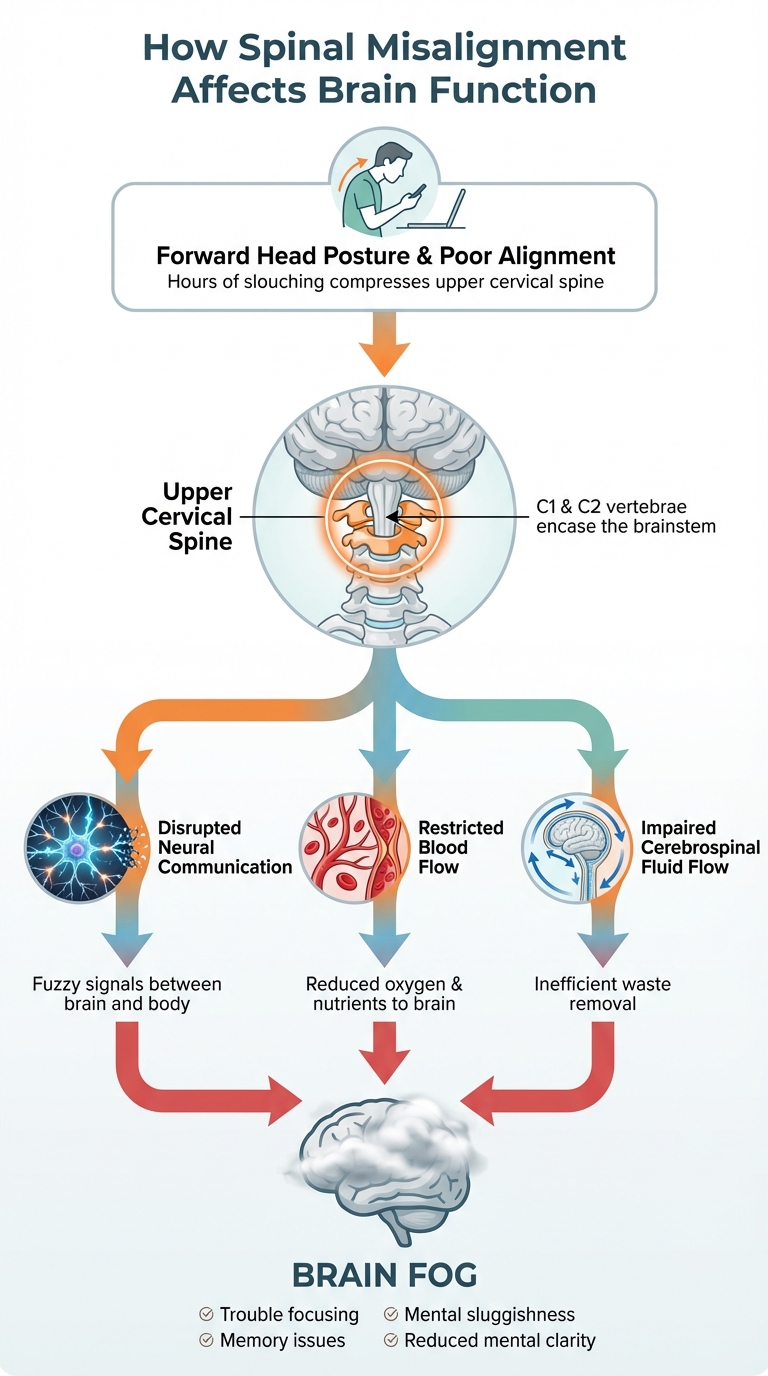
This older graphic presents spinal misalignment as a cause of impaired brain function. That mechanism is not established for ordinary posture or brain fog; the graphic should not guide diagnosis or treatment.
The Nervous System and Cognitive Health
The brain and spinal cord form the central nervous system. The upper cervical vertebrae support the head and protect part of the spinal cord. Their anatomy does not establish that ordinary slouching compresses the brainstem or causes cognitive symptoms.
Actual neurological or vascular conditions require medical assessment. They should not be inferred from a posture photograph, neck tension or a feeling of mental sluggishness.
Feeling foggy is a symptom to investigate, not proof of a blocked communication pathway in the neck.
Claims about circulation need evidence for the specific condition and intervention being discussed.
Does Ordinary Posture Restrict Brain Blood Flow?
There is not adequate evidence that ordinary forward-head posture causes brain fog by reducing blood flow or oxygen to the brain. Suspected blood-flow or neurological problems need medical evaluation; posture correction is not a substitute.
Claims About Cerebrospinal Fluid Flow
Cerebrospinal fluid (CSF) surrounds the brain and spinal cord. Its role does not demonstrate that a chiropractic adjustment improves waste clearance or mental clarity. Symptoms of brain fog cannot establish a CSF-flow problem.
Where Chiropractic Care Fits
Assessment of a Separate Musculoskeletal Concern
For back or neck pain, an assessment may help identify reasonable musculoskeletal care options and whether referral is needed. Spinal adjustments do not routinely reposition upper-neck vertebrae or relieve presumed pressure on the brainstem.
Imaging should have a clinical reason and be used when it is likely to change management. A posture assessment or routine neck X-ray cannot establish that misalignment is causing brain fog or that an adjustment will regulate the autonomic nervous system.
Research showing a short-term physiological response to manual input does not establish improved concentration or lasting cognitive benefit.
Why Anecdotes Are Not Proof
A report of feeling more alert after treatment cannot establish why it happened or predict the result for another person. Evidence for brain-fog treatment needs to measure meaningful benefits in appropriately designed clinical studies.
When to Seek Medical Advice
Arrange a GP appointment for frequent, worsening or disruptive cognitive symptoms. Sudden confusion, trouble speaking, facial droop or one-sided weakness needs urgent emergency help; call 000. Do not wait for a posture or chiropractic assessment.
Practical Tips for Neck and Back Comfort
Set Up Your Desk for Better Posture
Set up a workspace that feels comfortable: keep the screen easy to view, use a supportive chair and position frequently used items within reach. Adjust the setup to your body and task rather than trying to hold one rigid posture.
A comfortable desk setup is intended to reduce strain during work. It should not be presented as restoring blood or CSF flow to the brain.
Keep the keyboard and mouse close enough to use with relaxed shoulders. Try changes that improve comfort, and vary your position. Expensive equipment is not automatically necessary.
Daily Stretches and Exercises
Break up long periods of sitting with comfortable movement. If neck exercises are recommended, they should suit your symptoms and health. Avoid forcing movement, and seek advice if it produces dizziness, worsening pain or neurological symptoms.
A movement device or a short stretching routine cannot diagnose upper-neck misalignment or establish improved oxygen delivery to the brain. Choose exercises for an assessed movement or comfort goal, not a promise of clearer thinking.
Stay Active and Reduce Sitting Time
Short walks or changes of position can help break up prolonged sitting. Choose breaks that fit your work and health needs, rather than treating a fixed schedule as a medical prescription.
Choose activities you enjoy and can tolerate, and build up gradually where appropriate. If illness or fatigue limits activity, ask your clinician about a suitable plan. Movement advice for comfort does not replace investigation of brain fog.
Conclusion
Brain fog has several possible causes. Posture and neck symptoms do not show that the brainstem is compressed, that circulation is restricted or that nerve communication needs to be restored by adjustments.
If you also have neck or back pain, discuss that concern separately. Assessment may lead to self-management advice, exercise, manual therapy or referral, depending on the findings.
A useful plan makes clear what each intervention is intended to help and how progress will be reviewed. Improvement in neck comfort should not be interpreted as proof that a cognitive condition has been treated.
For a separate back pain, neck pain or headache concern, Dr Steve in Bondi Junction offers new patients a free initial consultation at MyChiro. Same-day treatment is optional, costs $125 and is offered only if clinically appropriate, with no obligation to proceed. Brain fog itself should be discussed with your GP.
This information is general and not a replacement for professional medical advice.
Chiropractic care addresses musculoskeletal health, and results can vary between individuals.
Always consult a qualified healthcare professional before making decisions about your health.
FAQs
How do I know if my posture is causing brain fog?
Posture alone cannot establish the cause of brain fog. Neck tension and difficulty concentrating can happen together for several reasons. Discuss persistent or worsening cognitive symptoms with your GP, even if changing your workstation makes your neck more comfortable.
Can neck alignment issues affect blood or CSF flow to the brain?
The anatomy of the neck does not prove that ordinary postural variation restricts brain blood flow or CSF circulation. Current evidence does not establish chiropractic correction of alignment as a treatment for brain fog. Suspected neurological or vascular problems need medical assessment.
When should I see a GP instead of a chiropractor for brain fog?
See your GP for recurring, worsening or disruptive brain fog. Call 000 for sudden confusion, speech difficulty, facial droop, one-sided weakness or other suspected stroke symptoms. These symptoms should not wait for a chiropractic appointment.