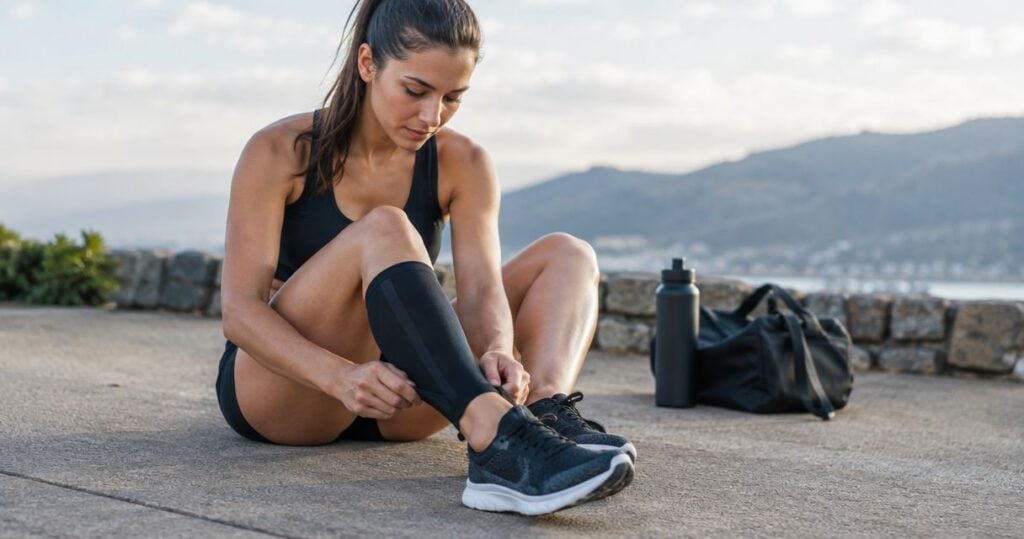
If you are searching for the best shin splint sleeve, the answer depends on what you want from it. A graduated compression calf sleeve suits most runners who want a comfortable, supportive feel on easy runs. A padded shin sleeve suits runners who want targeted coverage over the front of the lower leg. A sleeve is a comfort aid. It does not replace load management or an assessment of why your shins hurt, and the evidence for sleeves as a solution is limited.
- A graduated compression calf sleeve is the most suited default for most runners with sore shins in 2026.
- Check fit and compression range (commonly 15-20 mmHg or 20-30 mmHg) before you buy.
- A sleeve may feel supportive, but it does not address training load, footwear or running mechanics.
- Sharp, pinpoint bone pain, night pain or swelling needs assessment by a GP or health professional, not a sleeve.
Why this matters in 2026
Shin pain is one of the most common reasons runners cut sessions short. Many runners reach for a sleeve first because it is cheap, easy and low-risk to try.
That is a reasonable first step. It becomes a problem when the sleeve hides a pattern that needs attention. If you are building mileage, changing shoes or running more hills, the sleeve does not change those inputs.
At MyChiro, a chiropractic clinic in Bondi Junction, Sydney, the useful question is why the shins are loaded the way they are. Our guide to chiropractic care for shin splints in runners covers what an assessment may involve. This page covers the sleeve itself: which type fits which runner, and where each one falls short.
What to look for in a shin splint sleeve
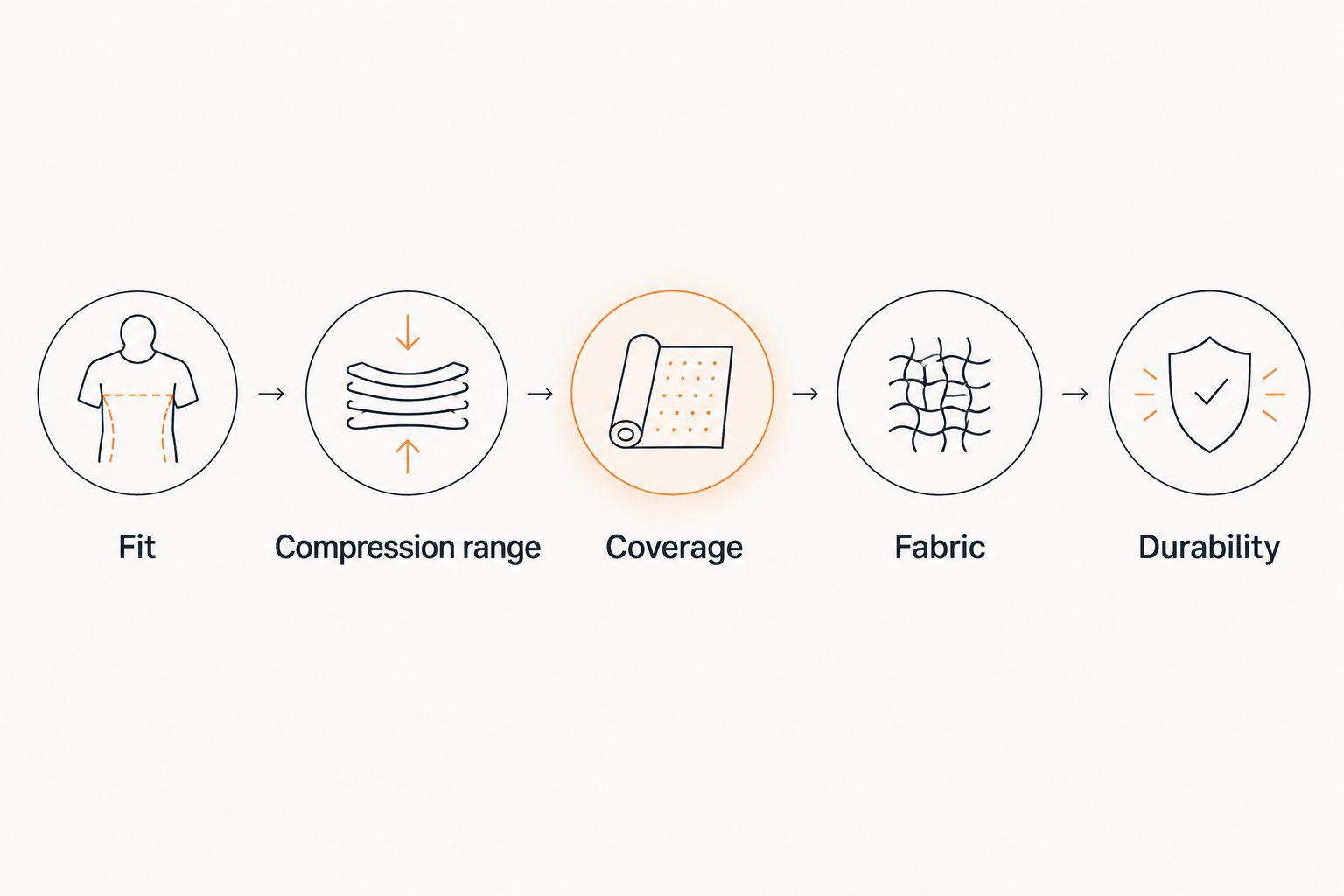
Use these criteria to audit the ranking below before you read it.
- Fit: the sleeve should sit snug without leaving deep marks or tingling. A sleeve that rolls down mid-run is worse than none.
- Compression range: graduated sleeves are commonly sold in light (about 15-20 mmHg) and firmer (about 20-30 mmHg) ranges. Firmer is not automatically better.
- Coverage: some sleeves cover the whole calf and shin, others only the shin or the lower leg to the ankle.
- Fabric and breathability: a sleeve you sweat through on a Sydney summer run needs moisture-wicking fabric.
- Durability and washing: elastic loses tension. Check the care label and replace the sleeve when it stops gripping.
The diagram below sums up the five checks.
Shin splint sleeves at a glance
| Sleeve type | Best for | Standout feature | Key limitation |
|---|---|---|---|
| 1. Graduated compression calf sleeve | Everyday easy runs | Even, snug support from ankle to below the knee | Sizing varies between brands |
| 2. Padded shin sleeve | Runners wanting front-of-shin coverage | Targeted padding over the shin | Can run warm and feel bulky |
| 3. Light compression sleeve | Sensitive skin or first-time users | Gentle pressure, easy to wear | Less snug feel |
| 4. Firm compression sleeve | Runners who like a tight feel | Higher compression range | Too tight for some, may restrict comfort |
| 5. Compression sock | Runners wanting foot and ankle coverage | One piece, no slipping | Less targeted to the shin; see compression socks for leg pain and circulation |
| 6. Neoprene warming sleeve | Cool mornings and cold-sensitive legs | Retains heat | Poor breathability in warm weather |
The table lists six types. Specific brand and model choice is yours; the type decides most of the outcome.
1. Graduated compression calf sleeve: most suited for everyday running
A graduated compression calf sleeve applies firmer pressure at the ankle and eases toward the knee. It covers the calf and the shin in one piece, which is why it is the default pick for most runners.
Graduated compression calf sleeve pros:
- Covers the whole lower leg, including the calf
- Comfortable on long easy runs for most people
- Widely available in a range of sizes and colours
- Easy to wash and reuse
Graduated compression calf sleeve cons:
- Sizing charts differ between brands, so measure your calf before ordering
- Elastic wears out with repeated washing
- Does not change the load going through your shins
Graduated compression calf sleeve pricing: check current pricing with the retailer. It is typically a low-cost purchase compared with footwear.
Best for: runners who want a supportive feel and one sleeve for most sessions. Verdict: Buy.
2. Padded shin sleeve: best for front-of-shin coverage
A padded shin sleeve adds a layer of foam or gel over the front of the shin. It is aimed at runners whose discomfort sits along the inner edge of the shinbone and who want something between the skin and the air.
Padded shin sleeve pros:
- Targets the area that bothers you
- Adds a protective layer for contact, such as a shin knocked on a stair or hurdle
- Can feel reassuring on return-to-run sessions
Padded shin sleeve cons:
- Bulkier and warmer than a plain compression sleeve
- Padding may shift if the sleeve is too loose
- Padding does not reduce training load
Padded shin sleeve pricing: check current pricing with the retailer.
Best for: runners who want localised coverage and do not mind the extra bulk. Verdict: Hold until you have tried a plain compression sleeve and found it lacking.
3. Light compression sleeve: best for first-time users
A light sleeve in the lower end of the typical range (around 15-20 mmHg) gives a gentle hug rather than a squeeze. It is a low-commitment starting point.
Light compression sleeve pros:
- Easy to put on and take off
- Less likely to feel restrictive
- Suits sensitive skin and warm-weather running
Light compression sleeve cons:
- Subtler feel, so some runners think it does nothing
- Still no change to training load
Light compression sleeve pricing: check current pricing with the retailer.
Best for: first-time users and runners who dislike tight garments. Verdict: Buy if you are trying a sleeve for the first time.
4. Firm compression sleeve: best for runners who like a tight feel
Firmer sleeves sit in the higher range (around 20-30 mmHg). Some runners prefer the snugger feel. Others find it uncomfortable or notice numbness or tingling.
Firm compression sleeve pros:
- A noticeably snug, secure feel
- Stays in place on hills and fast efforts
Firm compression sleeve cons:
- Too tight for some calves and some skin
- Higher compression is not shown to give better outcomes
- Take it off if you feel numbness, tingling, colour change or swelling
Firm compression sleeve pricing: check current pricing with the retailer.
Best for: runners who already know they like firm compression. Verdict: Wait until you have tried a lighter option.
5. Compression sock: best for foot and ankle coverage
A compression sock covers the foot, ankle and calf in a single piece. It removes the slipping problem some sleeves have. The trade-off is less shin-specific focus. Our guide to compression socks for leg pain and circulation looks at that category in more detail.
Compression sock pros:
- Does not roll down
- Doubles as a recovery garment after the run
- Simple to wear with normal shoes
Compression sock cons:
- Heavier in hot weather
- Less targeted to the shin
- Can feel tight around the foot with narrow shoes
Compression sock pricing: check current pricing with the retailer.
Best for: runners whose sleeves keep slipping. Verdict: Hold if sleeves already work for you.
6. Neoprene warming sleeve: best for cool mornings
A neoprene sleeve traps heat. Some runners with tight, cold-sensitive legs like the warm feel at the start of a run on a cold morning.
Neoprene warming sleeve pros:
- Retains warmth during the first kilometres
- Firm, simple fit
Neoprene warming sleeve cons:
- Poor breathability, which is uncomfortable in Sydney's warmer months
- Can irritate skin when sweaty
- Not designed for compression gradients
Neoprene warming sleeve pricing: check current pricing with the retailer.
Best for: cold-weather runners who run in cool conditions. Verdict: Skip for warm-weather running.
How these types were ranked
The order follows the five criteria above: fit, compression range, coverage, fabric and durability. Types that suit the widest group of runners rank first. Niche types, such as neoprene, rank last. No product testing is claimed here. This is a guide to types, not a lab comparison, and no brand ranks above another.
Talk to a chiropractor
Book an assessment at MyChiro in Bondi Junction.
Which shin splint sleeve should you choose?
If you are undecided, start with a graduated compression calf sleeve in the lighter range. It suits most runners, it is the lowest-regret purchase, and you can step up or down from there.
Try it on a short easy run first. If it slips, buy the next size. If it feels tight or your toes tingle, take it off.
If you want to compare other lower-limb supports, our guide to knee supports for runners with IT band pain covers a different problem area with the same practical approach.
When a sleeve is not enough in 2026
A sleeve will not address why your shins are sore. These signs mean you should see a GP or other qualified health professional promptly:
- Sharp pain at one spot on the bone
- Pain at rest or at night
- Visible swelling, redness or heat
- Pain that is worsening despite rest
- Numbness or tingling in the foot
These can have causes other than shin splints, including stress injury to the bone, and they need assessment. A chiropractor can discuss your running history and, where appropriate, refer you on.
FAQ
What is the best shin splint sleeve for runners?
A graduated compression calf sleeve in a light to moderate range suits most runners in 2026. Fit matters more than brand, so measure your calf and check the size chart.
Do shin splint sleeves work?
Some runners find a sleeve comfortable and supportive. Research on compression sleeves for shin pain is limited, so regard a sleeve as a comfort aid rather than a solution.
How tight should a shin splint sleeve be?
Snug but not painful. If you notice numbness, tingling, colour change or deep marks, take it off and try a larger size or a lighter compression range.
What compression level should I pick?
Sleeves are commonly sold at about 15-20 mmHg and 20-30 mmHg. Start with the lighter range and move up only if you prefer a firmer feel.
Can I run in a compression sleeve every day?
Many runners wear one for most sessions. If your skin is irritated or the sleeve feels restrictive, stop wearing it and ask a health professional.
Is a compression sock better than a sleeve?
A sock stays put better and covers the foot and ankle. A sleeve is more targeted to the calf and shin. Choose based on which one you will actually keep on.
When should I see a professional about shin pain?
See a GP or qualified health professional for sharp pinpoint bone pain, night pain, swelling, or pain that is getting worse. A chiropractor can discuss your options after an assessment.
One last thing
The most useful change for most runners is not the sleeve. It is the weekly pattern: how fast mileage has risen, how many hills, how worn the shoes are. Write those three down before you buy anything. If the shins still hurt, bring the notes to your assessment at MyChiro, a Bondi Junction chiropractic clinic, so the conversation starts with real information.
Related guides
- Chiropractic care for Achilles tendonitis in runners
- Chiropractic care for runners with knee and hip pain