


Choosing a hip brace for trochanteric bursitis or labral pain comes down to matching the brace type to what you need it to do. This guide compares five types for the best hip brace for bursitis question, with honest pros and cons. It also explains where bracing sits next to assessment-led care such as chiropractic care for bursitis in the hip and shoulder.
- Compression sleeves suit mild, activity-related lateral hip soreness and are the easiest brace type to wear daily in 2026.
- Pelvic belts suit people whose pain sits around the pelvis and sacroiliac area rather than the outer hip.
- Rigid hip braces are for clinician-directed situations, such as after surgery, not self-selected bursitis care.
- No brace type replaces assessment: persistent or worsening hip pain needs a registered health professional.
Why this matters in 2026
Hip bursitis and labral pain are often confused, and a brace that suits one can be a poor match for the other. Outer hip pain that is worse lying on your side points one way. Deep groin pain with clicking or catching points another.
A brace is a support tool. It may change how a joint feels during a task, but it does not address why the area became irritated. Evidence for hip braces specifically is limited, so treat any product claim promising a particular outcome with caution.
MyChiro, a chiropractic clinic in Bondi Junction, Sydney, sees people who have tried a brace first and then want to understand what is driving the pain. The practical order in 2026 is the same as it has always been: get the cause assessed, then choose supports that fit the plan.
What to look for in a hip brace
These criteria apply to every type below. Check them before you look at the comparison.
- Where your pain sits. Outer hip, groin and pelvic-ring pain each call for a different design.
- Fit and adjustability. A brace that rolls down or bunches at the hip crease gets abandoned within days.
- Skin comfort. Look at fabric breathability and edge finishing, especially under work clothes or in a Sydney summer.
- Level of restriction. More restriction is not better. Heavy limits on movement can leave muscles around the hip less active.
- Ease of use. If you cannot put it on alone, it will not get used.
- Fit with your day. Sitting at a desk, standing shifts and walking each load the hip differently.
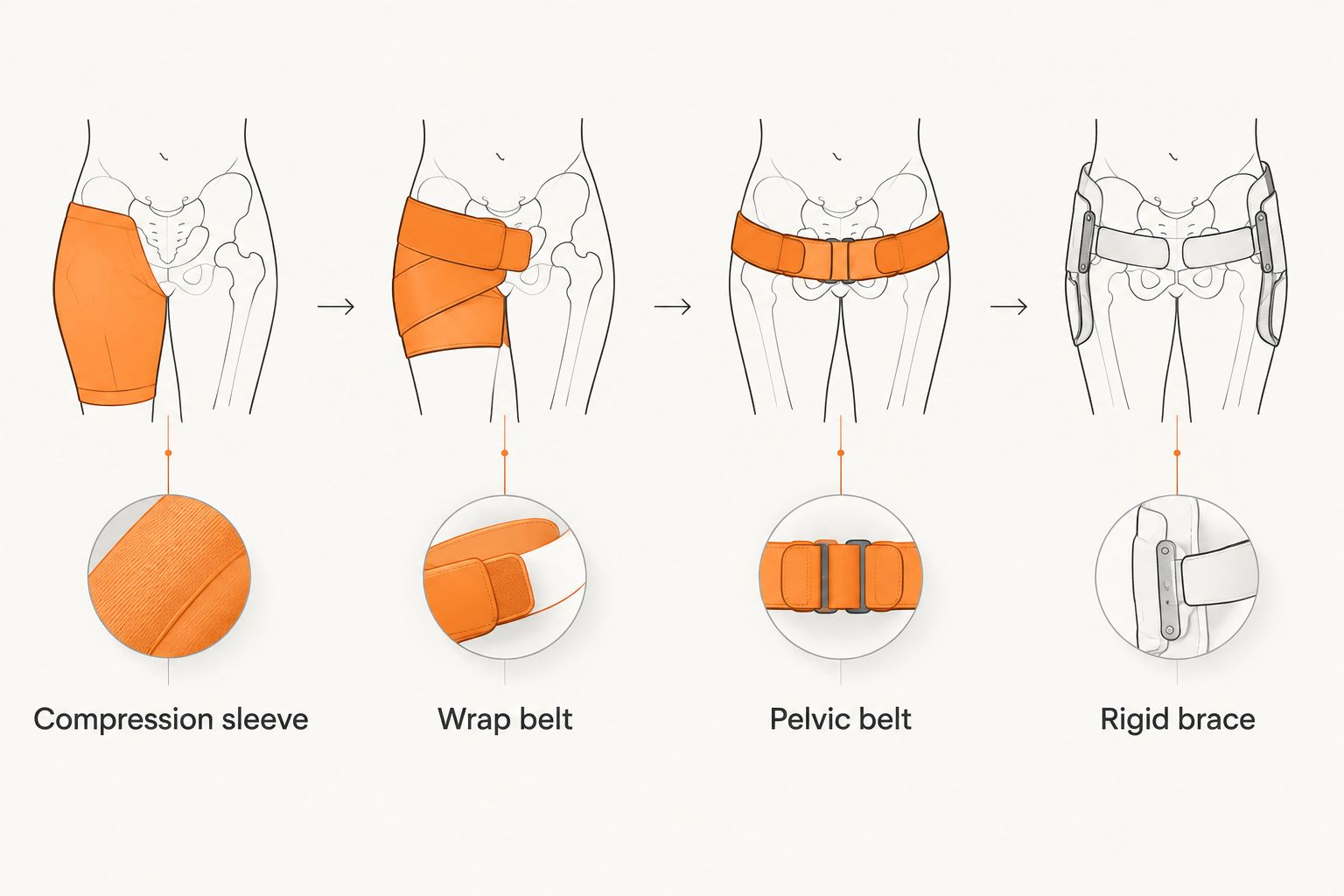
The types below are ordered from least to most restrictive. Each one owns a different use case, so read it as a decision path rather than a leaderboard.
Hip brace types at a glance
| Brace type | Suited to | Standout feature | Key limitation |
|---|---|---|---|
| Compression hip sleeve | Mild outer hip soreness during activity | Low profile, wearable under clothes | Little structural support |
| Hip wrap with straps | Adjustable support around the greater trochanter | Tension can be changed through the day | Can shift when sitting |
| Pelvic or sacroiliac belt | Pain around the pelvic ring and back of the hip | Sits low and firm around the pelvis | Poor fit for outer hip pain alone |
| Neoprene thermal wrap | Stiffness that feels better with warmth | Retains warmth over the joint | Can feel hot, may irritate skin |
| Rigid or hinged hip brace | Clinician-directed protection of the joint | Limits range of motion | Not a self-selected bursitis option |
1. Compression hip sleeve: suited to mild outer hip soreness
A compression hip sleeve is a close-fitting elastic garment worn around the hip and upper thigh. It is the lightest option and the one most people can wear through a full day.
Compression sleeve pros:
- Thin enough to wear under trousers or sports gear
- Easy to put on and take off alone
- Gentle, even pressure that some people find reassuring
- Low cost of trying compared with heavier designs
Compression sleeve cons:
- Offers little mechanical support to the joint
- Can ride up or roll at the top edge
- May feel tight over a tender outer hip
Suited to: mild, activity-related lateral hip soreness where you want light feedback rather than restriction. Verdict: Buy as a low-commitment first step, with no expectation that it fixes the underlying cause.
2. Hip wrap with straps: suited to adjustable support
A strapped hip wrap goes around the hips and thigh with hook-and-loop fastening. You choose the tension, which suits days when the hip feels different from morning to evening.
Hip wrap pros:
- Adjustable compression through the day
- Firmer feel than a plain sleeve
- Often usable on either side with one product
Hip wrap cons:
- Straps can dig in when you sit for long periods
- Can slide down during walking if not seated correctly
- Takes a few tries to position over the outer hip
Suited to: people who want more than a sleeve and need to adjust support between sitting, standing and walking. Verdict: Buy, but only if the fit holds without cutting into the hip crease.
3. Pelvic or sacroiliac belt: suited to pelvic-ring pain
A pelvic belt sits low across the hips and is tightened to compress the pelvic ring. It targets the sacroiliac joints and back of the pelvis more than the outer hip, so it matters that the pain location matches.
Pelvic belt pros:
- Firm, stable feel around the pelvis
- Often used by people with pelvic-ring or sacroiliac discomfort
- Simple to adjust with a single strap system
Pelvic belt cons:
- Not designed for pain that is purely over the outer hip
- Can be uncomfortable when seated
- May give a false sense that the cause is solved
Suited to: discomfort around the base of the spine and back of the hip. If that sounds like you, chiropractic care for sacroiliac joint pain covers the overlap in more detail. Verdict: Hold until the pain location is confirmed.
4. Neoprene thermal wrap: suited to warmth-responsive stiffness
Neoprene wraps hold heat against the joint. Some people with stiff, achy hips find warmth makes movement feel easier, particularly in the morning.
Neoprene wrap pros:
- Retains warmth over the hip without a separate heat pack
- Snug, stable feel
- Usable at home during rest periods
Neoprene wrap cons:
- Can feel hot and sweaty in warm weather
- May irritate sensitive skin if worn for long stretches
- Heat does not suit every irritated area, and a hot, red, swollen hip needs medical review
Suited to: general stiffness that eases with warmth, not a hot or swollen joint. Verdict: Hold unless warmth reliably settles your symptoms.
5. Rigid or hinged hip brace: suited to clinician-directed use
Rigid and hinged hip braces limit range of motion and are typically prescribed after surgery or a specific injury. They sit in a different category from the options above.
Rigid brace pros:
- Strong control over joint movement when it is clinically required
- Designed with a clinician's plan in mind
Rigid brace cons:
- Bulky and hard to wear under clothing
- Prolonged restriction may reduce activity of surrounding muscles
- Not intended as a do-it-yourself bursitis solution
Suited to: situations where a surgeon or treating clinician has specifically advised one. Verdict: Skip for self-managed bursitis.
How the types were ordered
The order follows the criteria above: restriction level, daily wearability and how closely the design matches common pain locations. No brace type is ranked on proven outcome, because the evidence does not support that kind of ranking. Prices are left out because they change; check current listings from a reputable pharmacy or supplier.
When a brace is the wrong move
Stop and get assessed before buying anything if you notice any of the following:
- Hip pain after a fall or significant impact
- A hot, red or swollen hip, or fever alongside pain
- Numbness, weakness or pain spreading down the leg
- Pain that wakes you repeatedly at night
- Inability to put weight on the leg
These may need medical assessment and imaging. A chiropractor can discuss your history and, where appropriate, refer on. How to relieve bursitis pain naturally sets out the general approach to load, movement and rest that usually sits alongside any support.
Bursitis versus labral pain: why the difference matters
Bursitis usually shows up as tenderness over the bony point of the outer hip, worse lying on that side or climbing stairs. A labral problem more often presents as deep groin pain, clicking, catching or a sense of the hip locking.
That difference changes the brace conversation. A sleeve or wrap that comfortably offloads the outer hip does little for a joint problem deep in the socket. Bracing does not alter the structure of a labral tear, and many people explore rehabilitation first, since labral tear rehab without surgery is a recognised route that depends on strengthening and movement control around the joint rather than on external support alone (McKenzie Sports Physical Therapy).
If your symptoms sound more like the second pattern, read about chiropractic care for hip labral tears for general education on how assessment works. Whether care is appropriate for you can only be decided after an individual assessment.
Support that is not a brace
Braces are one piece. For most people with outer hip irritation, day-to-day habits matter as much:
- Avoid lying on the sore side overnight
- Break up long periods of sitting or standing
- Keep walking at a comfortable level rather than resting completely
- Build hip and glute strength with guidance from a qualified professional
Sleeping position is the one that catches people out, which is why a pillow between the knees is a common suggestion for side sleepers. If you want product options for that, the article on best knee pillows for side sleepers with hip pain compares them.
Talk to MyChiro about hip pain
Book an assessment in Bondi Junction to discuss your hip symptoms.
Which hip brace should you choose?
Start with where it hurts. For mild outer hip soreness, a compression sleeve is the most sensible low-commitment pick. For adjustable support through a changing day, a strapped wrap is the next step. For pain around the pelvic ring, a pelvic belt fits better. A neoprene wrap suits warmth-responsive stiffness only, and a rigid brace belongs with a clinician's plan.
If you are undecided, choose the lightest option that stays comfortable, and book an assessment if pain persists beyond a short period or keeps returning. In 2026, the most useful purchase is usually the one that helps you keep moving while the cause is identified.
FAQ
What is the best hip brace for bursitis?
There is no single best brace. A compression sleeve or strapped wrap is commonly chosen for outer hip soreness, and the right one depends on fit and where your pain sits. Evidence for bracing is limited, so assessment matters more than the product.
Can a hip brace cure bursitis?
No. A brace is a support tool and does not address why the bursa became irritated. It may change how the hip feels during activity while other strategies such as load management are used.
Should I wear a hip brace to sleep?
Most people do not need to. Sleeping position and a pillow between the knees are usually more relevant for side sleepers. Discuss night-time use with a health professional if pain disturbs your sleep.
Is a hip brace suitable for a labral tear?
Light supports may feel comfortable, but a brace does not change the structure of a labral tear. Persistent groin pain, clicking or catching should be assessed by a qualified professional.
Do I need a prescription for a hip brace in Australia?
Compression sleeves and wraps are generally sold over the counter at pharmacies. Rigid or hinged braces are normally advised by a treating clinician or surgeon.
How tight should a hip brace be?
Snug but comfortable. If it causes numbness, tingling, skin marks or more pain, loosen it or stop wearing it and seek advice.
Can I see a chiropractor without a referral for hip pain?
Yes. You can book directly with MyChiro in Bondi Junction for an assessment, and a chiropractor can discuss whether referral to another health professional is appropriate.
One last thing
People often buy a brace after weeks of pain, hoping it will settle things. The better order is the reverse: get the pain location and pattern assessed first, then choose a support to match. A brace that suits a pelvic problem will not help an outer hip problem, however well it is made.
Related guides
- How to fix hip pain from crossing your legs while sitting
- Chiropractic care for sacroiliac joint pain