


Chiropractic care may influence how your brain processes signals from the spine, potentially improving movement, posture, and balance over time. This process ties into neuroplasticity – your brain’s ability to reorganise itself by forming new neural pathways. Research suggests spinal adjustments can impact brain activity, particularly in areas responsible for coordination and musculoskeletal control.
Key highlights:
- Neuroplasticity helps the brain adapt to injuries, learning, or physical challenges by creating new neural connections.
- Spinal adjustments may alter sensory signals to the brain, affecting regions like the motor cortex and cerebellum.
- A 2024 study found chiropractic care increased brainwave activity linked to focus, relaxation, and alertness.
- Consistency is crucial – neural changes often take weeks or months to develop.
To support this process, combine chiropractic care with good posture, gentle exercises, and stress management techniques. Together, these habits may help refine how your nervous system functions and improve overall well-being.
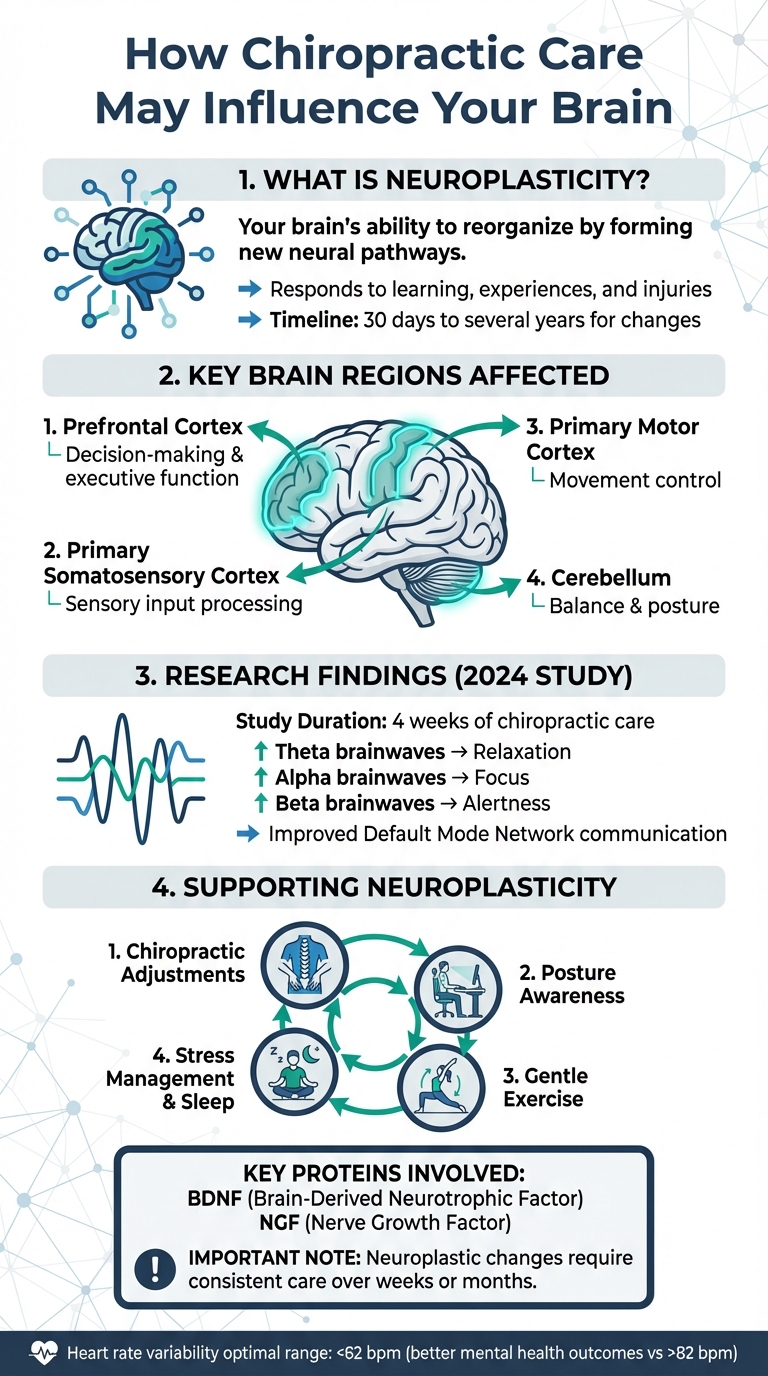
How Chiropractic Care Influences Brain Neuroplasticity and Movement
Scientific Study Neuroplastic Responses to Chiropractic Care: Broad Impacts Health For Pt’s & DR.s
sbb-itb-585d67d
What Is Neuroplasticity?
Neuroplasticity refers to your brain and nervous system’s ability to change and adapt by forming new neural pathways. This process happens in response to learning, experiences, or even injuries.
This ability is key when recovering from injuries or adjusting to new physical challenges. Essentially, your brain is constantly processing sensory input and combining it with past experiences to predict outcomes and prepare your body to respond.
How the Brain Reorganises Neural Pathways
New neural pathways are created through processes involving proteins like Brain-Derived Neurotrophic Factor (BDNF) and Nerve Growth Factor (NGF). These proteins help neurons mature and support changes in synaptic connections, which are essential for neural adaptability. Physical interventions, such as spinal manipulative therapy or other forms of mechanical stimulation, can influence these proteins and promote neural changes.
The time it takes for the brain to reorganise its pathways can range from just 30 days to several years. This timeline depends on factors like the condition being treated and how consistent the interventions are. These neural changes are fundamental to how the nervous system operates.
Neuroplasticity and Nervous System Function
Neuroplasticity also affects key brain regions involved in musculoskeletal health. Changes in areas like the somatosensory cortex, motor cortex, prefrontal cortex, and cerebellum can lead to better movement, posture, and coordination. However, not all changes are beneficial – maladaptive changes can contribute to chronic pain, highlighting the importance of targeted, consistent treatments to encourage healthy adaptations in the nervous system.
How Chiropractic Care May Support Neuroplasticity
Neuroplasticity plays a crucial role in how the nervous system adapts and functions. Chiropractic care may contribute to this adaptability by influencing neural signals originating from the spine. Let’s take a closer look at how this works.
Spinal Adjustments and Neural Activity
Research indicates that spinal adjustments may impact key areas of the brain involved in musculoskeletal control. These include the prefrontal cortex (linked to decision-making and executive function), the primary somatosensory cortex (which processes sensory input), the primary motor cortex (essential for movement control), and the cerebellum (responsible for balance and posture). By altering sensory signals from the spine, chiropractic adjustments might improve communication between these brain regions, potentially enhancing coordination.
To assess these changes, tools like heart rate variability (HRV) and surface electromyography are often used. These measurements provide insight into autonomic balance and muscle tension, offering a window into how chiropractic care may influence brain activity over time.
Research on Chiropractic Care and Neuroplasticity
A study published in November 2024 in the Journal of Clinical Medicine by Heidi Haavik and her team explored the connection between chiropractic care and neuroplasticity. The research followed patients with chronic lower back pain over four weeks of treatment. Using electroencephalography (EEG) and somatosensory evoked potentials (SEP), the study found increased Theta, Alpha, and Beta brainwave activity, which are linked to relaxation, focus, and alertness. Additionally, improved communication within the Default Mode Network was observed.
"Chiropractic care works on the brain, utilising neuroplasticity, to promote a shift towards normal function in the body." – Adelaide Chiropractic Centre
These findings highlight how chiropractic care may support neurological changes that align with better posture and movement.
Possible Benefits for Posture and Movement
Adjustments provided by a chiropractor in Sydney or your local practitioner may positively influence neural pathways tied to posture and movement. For instance, the cerebellum, which plays a central role in balance, might benefit from these adjustments, helping to retrain habitual posture. Similarly, changes in the primary motor cortex could enhance coordination and muscle control, making everyday activities like walking or lifting smoother and more efficient.
It’s important to note that neuroplastic changes often occur gradually. Consistent chiropractic care over weeks or months is typically needed to observe meaningful improvements. As Dr. David Fletcher, Founder & CEO of CLA Inc., explains:
"Neuroplastic transformation doesn’t happen overnight. It may take weeks or even months of consistent care to observe significant changes."
Ways to Support Neuroplasticity Alongside Chiropractic Care
Lifestyle habits can play a crucial role in enhancing the neural benefits brought about by chiropractic adjustments. Neuroplasticity – the brain’s ability to adapt and create new neural pathways – can be further encouraged by adopting practices that work hand-in-hand with spinal care. These habits may amplify the positive effects initiated during chiropractic treatment.
Posture Awareness and Ergonomics
Your cerebellum, which helps regulate posture, relies on stored neural patterns, or "engrams", to maintain balance and alignment. After chiropractic adjustments, clearer spinal input may assist in retraining these patterns. To support this process, maintaining good posture during daily activities is essential. For example:
- Position your monitor at eye level.
- Keep your feet flat on the floor.
- Ensure your keyboard is at elbow height.
These adjustments provide steady, low-stress sensory feedback to the nervous system, helping it adapt to healthier postural habits. It’s all about consistency – regularly practising these habits is far more effective than occasional corrections. Pairing good posture with regular movement can further reinforce these neural changes.
Gentle Exercises for Spinal Health
Incorporating gentle movement into your routine can complement chiropractic care by supporting both spinal health and neuroplasticity. Activities like yoga, Pilates, or light stretching not only improve spinal mobility but may also help reduce muscle tension. Additionally, movement triggers the release of important proteins like Brain-Derived Neurotrophic Factor (BDNF) and Nerve Growth Factor (NGF), which are vital for neuron survival and synaptic flexibility.
Choose exercises that align with your spine’s range of motion and avoid anything that causes discomfort. This balance ensures that your physical activity enhances the brain’s ability to adapt while protecting your spinal health.
Stress Management and Sleep Hygiene
Physical habits are just one piece of the puzzle – managing stress and maintaining good sleep hygiene are equally important for supporting neuroplasticity. Chiropractic care has been linked to improvements in sleep quality and reduced fatigue, making it a valuable part of a holistic approach to wellness.
Mindfulness practices, such as meditation, can complement spinal adjustments by supporting the prefrontal cortex, which is involved in emotional regulation and decision-making. A consistent sleep routine is also essential. Monitoring heart rate variability (HRV) can provide insights into how well your nervous system is managing stress. Studies suggest that individuals with a resting heart rate below 62 beats per minute often experience better mental health outcomes compared to those with rates above 82 beats per minute [1]. This highlights the close connection between autonomic balance and emotional well-being.
Key Takeaways
Neuroplasticity, or the brain’s ability to reorganise itself by forming new neural connections, provides an interesting perspective on how chiropractic care might influence the adaptability of the nervous system. This summary highlights how chiropractic adjustments, paired with supportive habits, could potentially improve posture and movement by encouraging neural changes.
Spinal adjustments play a role in altering the sensory input your brain receives from your joints. This, in turn, can affect how certain brain regions handle movement and posture. A study by Haavik et al. from November 2024 found that four weeks of chiropractic care led to increases in Theta, Alpha, and Beta brainwaves – patterns linked to relaxation, mental focus, and alertness.
It’s worth noting that neuroplastic changes don’t happen overnight. For meaningful and lasting changes in nervous system function, a consistent and tailored care plan is essential. As Dr. David Fletcher, Founder & CEO of CLA Inc., explains:
"Achieving significant neuroplastic changes requires more than just sporadic adjustments, it demands a commitment to a personalized, long-term care plan that allows for a fuller expression of their innate performance potential."
To maximise results, it’s helpful to seek care approaches that include measurable outcomes. Look for chiropractors who use evidence-based methods and tools like Heart Rate Variability (HRV) or surface EMG. These technologies can provide objective insights into nervous system adaptations, complementing subjective feedback.
Chiropractic care may impact musculoskeletal health by influencing brain areas tied to movement coordination, sensory processing, and posture control. When combined with lifestyle practices like posture awareness, light exercise, and stress management, these effects may be even more noticeable. While results differ for everyone, ongoing care could help maintain strong communication between the brain and body.
This information is general and not a substitute for professional medical advice. Chiropractic care focuses on musculoskeletal health, and individual results may vary. Always consult a qualified healthcare professional before making health-related decisions.
FAQs
How does a spinal adjustment affect the brain?
Spinal adjustments might play a role in regulating the autonomic nervous system, potentially aiding its ability to adapt. This adaptability is connected to neuroplasticity – the brain’s capacity to reorganise and form new connections. Although research is still in progress, there are indications that these adjustments could impact how the nervous system reacts and adjusts to various changes.
How long does it take for neuroplastic changes with chiropractic care?
Neuroplastic changes associated with chiropractic care often develop gradually, requiring consistent effort over time. It may take several weeks or even months of regular sessions before noticeable improvements emerge. However, once the nervous system reaches a certain threshold, its adaptability can begin to improve at a faster pace. This underscores the need for patience and a tailored, long-term plan to support your nervous system’s ability to adapt effectively through chiropractic care.
How can I support neuroplasticity between visits?
To help your nervous system stay flexible and responsive between visits, engage in activities that encourage neural adaptability. Regular movement, maintaining good posture, and practising mindful exercises can strengthen and support neural pathways. Additionally, focusing on a healthy lifestyle is essential – ensure you’re getting enough sleep, managing stress effectively, and eating a well-balanced diet. While chiropractic care can play a supportive role, it’s important to remember that results take time. Progress often depends on consistency and patience, with changes developing over weeks or even months, varying from person to person.