


Chiropractic care may help your body switch from "fight or flight" to "rest and digest" mode by improving spinal alignment and reducing stress on the nervous system. This process involves the parasympathetic nervous system (PNS), which helps regulate heart rate, digestion, and recovery. Key points include:
- The vagus nerve, linked to the PNS, plays a major role in calming the body.
- Misalignments in the upper cervical spine can interfere with vagus nerve function.
- Chiropractic adjustments aim to restore spinal motion, potentially improving nervous system balance.
- Everyday habits like good posture, breathing exercises, and gentle movement can complement chiropractic care.
Chiropractic Adjustments and Their Effect on the Autonomic Nervous System | Podcast Ep. 229
sbb-itb-585d67d
What Is the Parasympathetic Nervous System?
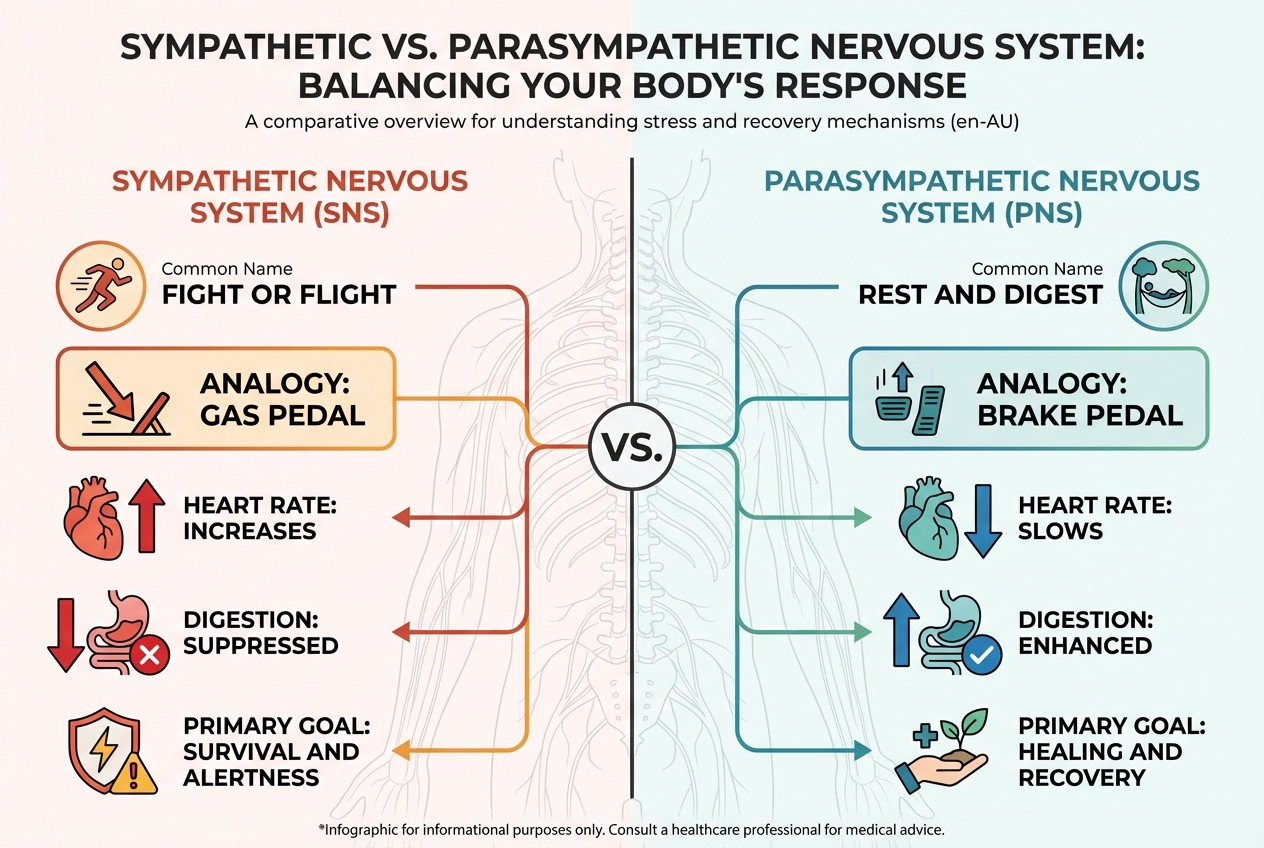
Sympathetic vs Parasympathetic Nervous System Comparison
Your autonomic nervous system has two key branches that work in opposition: the sympathetic nervous system (SNS) and the parasympathetic nervous system (PNS). Think of the SNS as the accelerator, kicking your body into gear during stressful or dangerous situations. The PNS, on the other hand, acts like a brake, helping your body recover and focus on essential functions like digestion.
When the PNS is active, your heart rate slows, blood pressure drops, and your digestive system works efficiently. This "rest and digest" mode is crucial for tissue repair, reducing inflammation, and conserving energy. If the PNS isn’t functioning properly, the body can remain in a state of sympathetic dominance, where stress keeps it on constant high alert. This interplay between the SNS and PNS is key to understanding how the body manages stress and recovery, with the vagus nerve playing a central role.
| Feature | Sympathetic Nervous System (SNS) | Parasympathetic Nervous System (PNS) |
|---|---|---|
| Common Name | "Fight or Flight" | "Rest and Digest" |
| Analogy | Gas Pedal | Brake Pedal |
| Heart Rate | Increases | Slows |
| Digestion | Suppressed | Enhanced |
| Primary Goal | Survival and alertness | Healing and recovery |
The Vagus Nerve and Nervous System Regulation
The vagus nerve, the longest cranial nerve in the body, is a primary channel for parasympathetic signals. It’s a two-way communicator, sending commands from the brain to your organs while also relaying sensory feedback back to the brain. This connection influences critical functions like heart rate, breathing, and digestion.
A term you’ll often hear is vagal tone, which measures how well the vagus nerve functions. High vagal tone is linked to better stress management and quicker recovery, while low vagal tone has been associated with issues like poor heart health and digestive problems. Scientists often use heart rate variability (HRV) as a way to assess vagal tone and overall nervous system balance.
Interestingly, the vagus nerve originates near the brainstem, close to the upper cervical spine. Mechanical stress or restricted movement in this area can disrupt nerve signals, which may affect how well your body transitions between stress and recovery. This highlights the potential importance of spinal health in maintaining nervous system balance.
How Stress and Posture Affect Nervous System Balance
Stress and posture are two everyday factors that can disrupt the balance between the SNS and PNS. Chronic stress often keeps the sympathetic system in overdrive, leading to shallow breathing, higher cortisol levels, and digestive problems like bloating. Poor posture adds to the problem by creating tension along the spine, which may lock the body into a state of heightened alertness even after the stress has passed.
Signs of an underactive PNS include difficulty falling asleep, heightened sensitivity to pain, and feeling constantly "on edge." Since the spine protects the spinal cord and brainstem, misalignments or restricted movement in this area can irritate the nervous system and prevent it from calming down. Addressing posture issues or seeking chiropractic care may help the body naturally activate the PNS, promoting better stress recovery and overall balance.
How Chiropractic Care May Support Nervous System Regulation
Chiropractic adjustments can help reduce mechanical stress along the spine, potentially supporting nervous system regulation. Proper spinal joint movement may ease irritation, encouraging the body to transition from a state of heightened alertness to one of recovery. This is especially relevant in the upper cervical spine near the brainstem. By addressing stress on the spine, chiropractic care aligns with techniques aimed at promoting calm and recovery. Below, we’ll explore how adjustments and spinal alignment work together to support these processes.
Spinal Adjustments and Nerve Function
Chiropractic adjustments focus on restoring motion in restricted spinal joints, which may reduce interference with nerve signalling. Andrew Roberts, a chiropractor at Salt Chiropractic, highlights this connection:
"By relieving spinal tension, the body may shift towards a state that supports parasympathetic activation."
Studies have shown that chiropractic care can lead to measurable improvements in vagal activity. Heart rate variability (HRV), a key indicator of parasympathetic function, often improves with chiropractic adjustments. Upper cervical adjustments, in particular, target the brainstem region, which plays a critical role in regulating vagus nerve function.
Spinal Alignment and Nervous System Health
In addition to adjustments, maintaining proper spinal alignment helps ensure clear neural communication. The spine serves as a protective structure for the spinal cord, which connects directly to the brainstem. Misalignment can create tension, potentially disrupting how the brain processes signals from the body. Dr. Nicole Hudson, Principal Chiropractor at Connect Chiropractic, explains it this way:
"Chiropractic adjustments are like tuning an orchestra, so the symphony of all our instruments (respiration, cardiovascular function, and digestion) can sound amazing."
Practical Ways to Support Parasympathetic Activation
Expanding on how spinal adjustments contribute to nervous system regulation, here are some everyday habits that can help you achieve a calmer, more restorative state.
Posture Support and Ergonomic Adjustments
Good posture isn’t just about appearances – it plays a key role in reducing strain on your nervous system. To maintain proper spinal alignment, position your computer screen at eye level and keep your feet flat on the floor. Opt for a chair that supports the natural curve of your lower back, which can help you relax your shoulders instead of hunching forward. Taking short 5-minute breaks every 30–45 minutes to stand up and stretch can also work wonders for your posture and overall balance.
Breathing Exercises and Stress-Reduction Techniques
Slow, controlled breathing can be a simple yet powerful tool for calming your nervous system. Dr. Ni-Cheng Liang, an integrative pulmonologist, explains:
"Making the exhale longer than the inhale helps to activate the vagus nerve and bring on the parasympathetic nervous system."
One effective method is the 4-7-8 technique: inhale for 4 seconds, hold your breath for 7 seconds, and exhale slowly over 8 seconds. You can also try humming, singing, or splashing cold water on your face – these activities are known to stimulate the vagus nerve. Combined with breathing exercises, small, consistent lifestyle adjustments can further support your nervous system.
Lifestyle Changes for Long-Term Nervous System Balance
When paired with chiropractic care, certain lifestyle habits can help maintain a balanced nervous system over the long term. Gentle movement, such as walking, cycling, stretching, or yoga, can improve spinal mobility and relieve chronic tension. Even dedicating just 15 to 20 minutes a day to these activities can make a noticeable difference. Additionally, cutting back on screen time before bed and incorporating mindfulness or meditation into your routine may enhance vagal tone and promote better sleep quality.
Conclusion
A well-balanced nervous system can transition smoothly between periods of activity and recovery. Chiropractic care may play a role in supporting this balance by addressing spinal tension and mechanical stress, but it works best when combined with a broader wellness strategy. Research using heart rate variability (HRV) has shown increases in vagal activity following chiropractic adjustments. Many patients also report improvements in sleep quality and stress management after several weeks of regular care.
This perspective is shared by practitioners who note that improving spinal function may contribute to better overall nervous system performance.
"Improving spinal function isn’t just about relieving pain; it’s about helping your nervous system, including the vagus nerve, to work at its best so your body can heal and thrive." – Andrew Roberts, Chiropractor, Salt Chiropractic
To maximise the benefits, consider incorporating complementary habits like posture support, controlled breathing, and gentle movement into your routine. Chiropractic care can be viewed as a long-term strategy to support your body’s natural ability to regulate itself and maintain balance.
For those in Bondi Junction, integrating these practices into daily life is made easier with access to evidence-based chiropractic care. Dr Steve provides tailored, patient-focused treatments designed to fit seamlessly into your busy schedule. Whether you’re dealing with desk-related tension, staying active for your family, or looking for natural ways to feel more balanced, this care is structured to meet your needs.
This information is general in nature and not a substitute for professional medical advice. Chiropractic care focuses on musculoskeletal health, and results can vary between individuals. Always consult a qualified healthcare professional before making decisions about your health.
FAQs
How can I tell if my body is stuck in “fight or flight”?
When your body is stuck in "fight or flight" mode, it can show up in several ways: a racing heart, persistent anxiety, trouble sleeping, digestive problems, or feeling constantly on edge – even when there’s no immediate threat. These symptoms often stem from an overactive sympathetic nervous system, which keeps your body in a heightened state of alertness.
Chiropractic care might offer some relief by helping your nervous system find balance again. However, if these symptoms continue, it’s important to consult a healthcare professional to discuss the best course of action for managing and addressing these issues.
How many chiropractic visits are usually needed to notice changes?
The number of visits required to observe changes can differ from person to person. For acute issues, improvement may be seen within 4 to 6 visits. However, chronic conditions often take 12 or more visits before noticeable progress occurs. How quickly you see results depends on factors like the severity of the condition and how your body responds to treatment.
Is chiropractic safe if I’m feeling stressed or run down?
Chiropractic care is widely regarded as safe when performed by a qualified professional. It might assist in maintaining balance within your nervous system, which can be particularly helpful if you’re experiencing stress or fatigue. Through gentle adjustments, it can encourage relaxation and help your body handle tension more efficiently.


