


If you’re dealing with posture issues, exercises like chin tucks, wall angels, and Brugger’s relief position can help strengthen muscles and reduce strain. But when pain persists, posture visibly changes, or daily tasks become challenging, it’s time to consult a professional. Persistent discomfort, alignment shifts, or limited mobility might indicate deeper issues requiring expert assessment. A professional evaluation can identify root causes and offer tailored solutions, including spinal adjustments, soft tissue therapy, and ergonomic advice. Combining expert care with home exercises ensures better long-term posture and comfort.
Perfect Posture in 10 Minutes | Follow Along Routine
sbb-itb-585d67d
Common Posture Problems and How Exercises Can Help
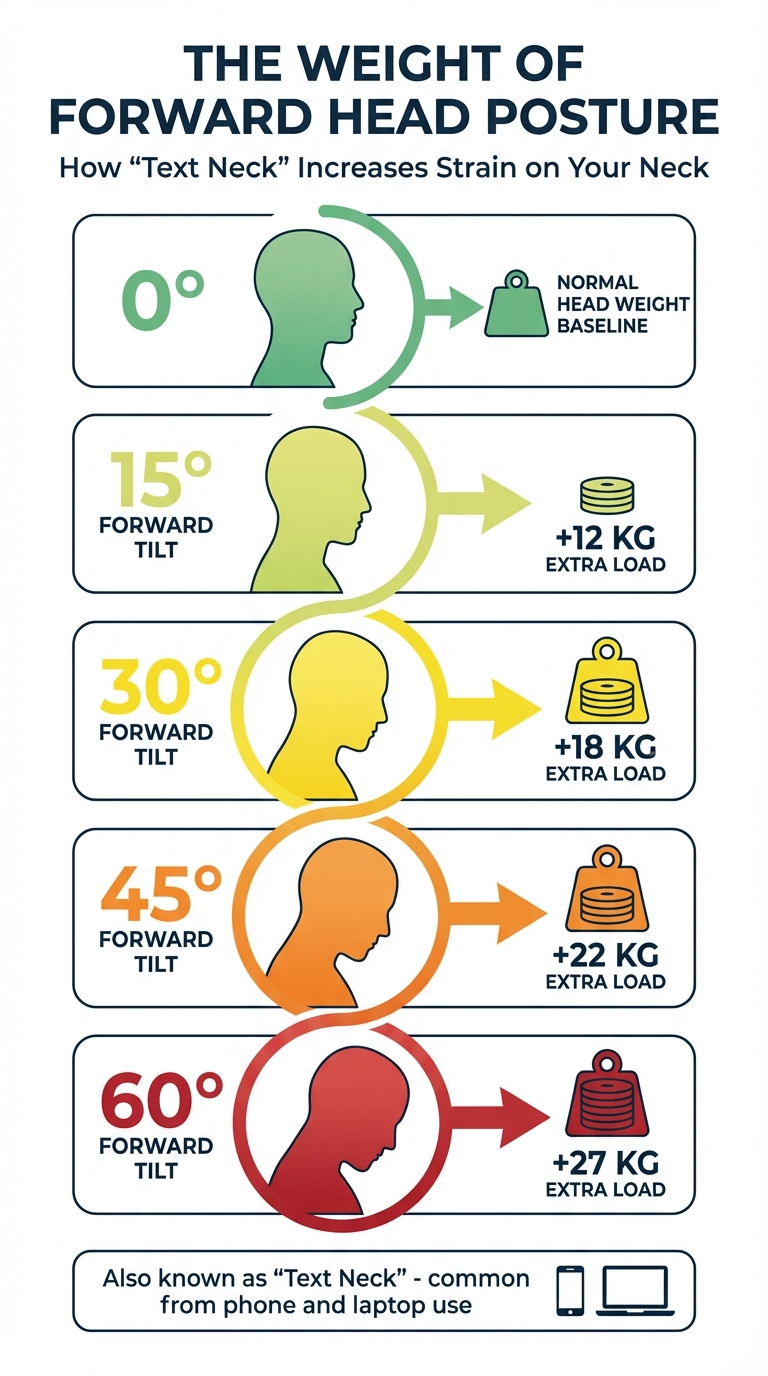
Forward Head Posture Neck Strain: Weight Load by Angle
How Poor Posture Affects Your Body
Poor posture creates a muscle imbalance where some muscles become overstretched and weak, while others tighten and shorten. Physiotherapist Chris Morton from Ethos Health explains it well:
In the body, there are sets of muscles that are in a sort of tug of war… when that tug of war isn’t in equilibrium – when one set of muscles overpowers the other, they pull the joint into an exaggerated position.
Take forward head posture, for example. When your head tilts forward, even slightly, it puts a surprising amount of extra strain on your neck. At just a 15-degree tilt, your neck bears an extra 12 kg of load. At 30 degrees, this increases to 18 kg, then 22 kg at 45 degrees, and a whopping 27 kg at 60 degrees. This is often called "text neck" and is a common issue for people who spend long hours looking down at their phones or working on laptops.
Another common issue is rounded shoulders paired with upper back stiffness, often referred to as "upper crossed syndrome." Tight chest muscles and weakened upper back muscles can lead to problems like neck pain, headaches, limited range of motion, and even trouble breathing. Everyday tasks can become challenging when joint stiffness and muscle tension take hold.
These imbalances highlight why exercises alone might not always fully tackle the root of the problem.
What Postural Exercises Can and Cannot Do
Targeted exercises can be a game-changer for improving muscle balance and reducing discomfort caused by poor posture. They focus on addressing the imbalances created by prolonged sitting or excessive screen time, helping to realign your posture and ease the strain on overworked muscles.
However, it’s important to understand their limits. While these movements can improve muscle function and flexibility, they might not be enough to resolve more serious structural issues. Conditions like advanced joint degeneration or significant spinal curvature often require more than just exercises. If discomfort persists despite regular practice, it could be a sign that a professional musculoskeletal evaluation is needed.
When to Seek Professional Help
Sometimes, self-care isn’t enough to address discomfort, especially when symptoms persist or worsen. While postural exercises can be helpful, there are clear signs that call for a professional assessment. Catching these issues early can stop minor discomfort from turning into serious musculoskeletal problems.
Pain That Doesn’t Improve
If you’ve been doing postural exercises for several weeks without relief from neck, shoulder, or lower back pain, it might be time to seek help. Persistent pain could be a sign of muscle imbalances or joint restrictions that need professional attention. Physiotherapist Chris Morton explains:
Lower back pain, neck pain, headaches, shoulder pain and upper limb pain, such as wrist and elbow pain, can all be the effects of bad posture.
Additionally, sharp, burning, or tingling sensations, numbness, or muscle weakness in your limbs are red flags that shouldn’t be ignored.
Visible Changes in Alignment
Pay attention to how your body looks. If one shoulder or hip is noticeably higher than the other, your head tilts forward or backward, or your upper back has an exaggerated forward curve (commonly called a "stoop"), these could be signs of misalignment. Such changes often mean that some muscles are overly tight while others are too weak, creating patterns that exercises alone may not fix. Professional realignment might be necessary to address these issues.
Difficulty with Daily Activities
Postural problems can also show up as challenges in everyday tasks. Struggling to turn your head while driving, stiffness that makes lifting objects harder, or discomfort that sets in after just a few minutes of sitting are all signs to take seriously. As Longueville Road Chiropractic Centre points out:
if you’ve tried at-home changes but still struggle with aches or stiffness, a professional assessment can uncover issues you might not notice yourself.
When posture-related problems begin to interfere with work, hobbies, or even simple actions like taking a deep breath, it’s a clear signal that professional care could help. Don’t wait for these limitations to worsen – getting expert advice can make a big difference.
What Happens During a Professional Postural Assessment
A professional postural assessment goes far beyond simply observing how you stand or sit. It’s an in-depth process aimed at uncovering the root causes of discomfort or misalignment, helping you take steps towards better musculoskeletal health.
What a Professional Assessment Includes
The process usually starts with a detailed case history. Your practitioner will ask about factors like your work environment (especially if you work from home), how much time you spend in front of screens, your exercise habits, and any past injuries. These insights often reveal patterns or behaviours that contribute to poor posture.
Next comes a visual alignment check. The practitioner will observe your posture from different angles – typically from the back and the side – to spot imbalances such as uneven shoulders, hips, or abnormal spinal curves like hunching. This is followed by functional mobility tests, where you’ll perform specific movements. These tests show how your body compensates for misalignments. For example, straightening a hunched back might cause another part of the body to shift unnaturally.
A biomechanical analysis then focuses on muscle imbalances. For instance, someone with Upper Crossed Syndrome might have tight chest muscles paired with weaker upper back muscles. In some cases, additional tools like orthopaedic testing or X-rays may be used to check for structural issues like scoliosis or arthritis.
How Care Plans Are Developed
Based on the findings, your practitioner will create a personalised care plan. This often includes a mix of techniques aimed at addressing the root causes of your postural issues. Spinal adjustments may be used to improve vertebral alignment, while soft tissue therapy can help ease tension in overworked muscles. If foot mechanics are contributing to the problem, orthotics (custom shoe inserts) might also be recommended.
Your care plan will likely include tips for home-based rehabilitation. This could involve adjusting your workstation – like raising your monitor to eye level or using a stand-up desk – and learning specific exercises tailored to your needs. These strategies are designed to promote long-term improvements rather than just short-term relief. Your practitioner may also investigate whether your discomfort is due to referred pain, such as nerve compression in the neck or upper back. Together, these steps aim to support ongoing chiropractic care and help you achieve lasting postural improvements.
How Chiropractic Care May Support Postural Correction
Chiropractic care takes a hands-on approach to addressing structural issues that can contribute to poor posture. After a thorough assessment, chiropractors aim to target deeper structural problems that exercises alone might not resolve. While postural exercises focus on improving muscle strength and flexibility, chiropractic care prioritises spinal alignment and joint function. This approach can help address the root causes of posture problems, rather than just alleviating symptoms.
Chiropractic Techniques for Posture Support
Spinal adjustments are a key part of chiropractic care when it comes to posture. These adjustments aim to restore normal spinal movement, which may help reduce stiffness and tension. By improving spinal mobility, your body can better maintain proper alignment throughout the day. Soft tissue techniques often complement adjustments, helping to release tight muscles in areas like the chest and neck that may be pulling your posture out of balance.
Corrective exercises, such as chin tucks and wall angels, are frequently included in care plans. These exercises are tailored to the specific imbalances identified during your assessment. The goal is to retrain your movement patterns so that proper alignment feels more natural over time.
Forward head tilt is another common issue that can strain the spine. Over time, this additional strain may lead to chronic neck pain or headaches. Chiropractic adjustments aim to reduce this strain by improving spinal alignment and encouraging a more neutral head position. These techniques work together to support better overall posture.
Maintaining Improvements Over Time
While immediate adjustments can provide relief, long-term improvement often requires ongoing care. Regular check-ins with your chiropractor can help monitor progress, fine-tune your care plan, and prevent old habits from creeping back. Making ergonomic changes, like adjusting your computer monitor to eye level or using a supportive chair, can also reinforce the benefits of chiropractic care. Combining professional treatment with home exercises and workplace adjustments creates a more rounded approach to maintaining good posture over time.
For those in Bondi Junction dealing with posture concerns, chiropractic care offers a natural, evidence-based way to support spinal health and musculoskeletal function. With flexible scheduling and personalised treatment plans, you can find an approach that fits your lifestyle and work commitments.
This information is general and not a substitute for professional medical advice.
Chiropractic care focuses on musculoskeletal health, and results may vary between individuals.
Always consult a qualified healthcare professional before making decisions about your health.
Conclusion
Postural exercises can help improve strength and flexibility, but they’re most effective when your body’s alignment is on track. If you’re dealing with ongoing pain, noticeable changes in your spine or shoulders, or struggling with everyday activities, it might be time to seek professional advice.
Blending self-care with expert guidance offers a more rounded way to tackle posture issues. A healthcare professional can pinpoint muscle imbalances or structural challenges causing discomfort, ensuring your exercises focus on correcting the right areas instead of reinforcing poor habits. This combination sets the stage for better long-term posture.
For those in Bondi Junction facing persistent posture-related discomfort, chiropractic care could provide a natural, hands-on option to support spinal alignment and overall musculoskeletal health. When paired with corrective exercises and ergonomic changes, professional care can address the underlying causes of poor posture and promote lasting improvement.
Daily habits also play a big role in maintaining good posture. Make it a point to change positions every 30 minutes, even if you’re already receiving professional care. Small, consistent efforts – combined with expert support when necessary – can make a noticeable difference in your comfort and mobility.
This information is intended as general guidance and should not replace professional medical advice. Chiropractic care focuses on musculoskeletal health, and results may vary. Always consult a healthcare professional before making decisions about your health.
FAQs
How long should I try posture exercises before seeking help?
It’s often recommended to stick with posture exercises for several weeks or even months to see noticeable improvements. However, if the discomfort doesn’t ease, gets worse, or begins to disrupt your daily life, it might be a good idea to reach out to a professional, like a chiropractor. They can evaluate your posture and offer personalised advice to help address your specific concerns.
What symptoms suggest my posture issue could be more serious?
Persistent or worsening pain in the neck, back, or shoulders – especially when paired with numbness, tingling, or weakness in your arms or legs – could signal a more serious condition. Other warning signs include a noticeably forward head posture, uneven shoulders or hips, limited range of motion, frequent headaches, dizziness, or trouble breathing. It’s important to consult a qualified healthcare professional to evaluate these symptoms. Addressing them early may help avoid further complications.
Who should I see first for posture pain in Australia?
If you’re dealing with posture pain in Australia, it might be worth consulting a healthcare professional like a chiropractor. Chiropractors specialise in musculoskeletal health and can assess your posture to identify any issues. They may provide personalised care and suggest strategies to manage discomfort while working on improving your overall alignment.


