


Your spinal discs rely on hydration and nutrients to stay healthy as you age. Over time, these discs lose their blood supply and depend on nearby capillaries for essential nutrients like glucose and oxygen. Without proper nutrition, they dehydrate, shrink, and weaken, leading to back pain and reduced mobility.
To maintain disc health:
- Stay hydrated: Drink about 2 litres of water daily.
- Eat anti-inflammatory foods: Include salmon, walnuts, turmeric, and leafy greens.
- Support collagen production: Consume bone broth, lean proteins, and vitamin C-rich fruits.
- Get enough calcium and vitamin D: Found in dairy, spinach, and sunlight exposure.
- Exercise regularly: Activities like walking or swimming improve nutrient flow to discs.
Avoid smoking, prolonged sitting, and sugary or processed foods, which can worsen inflammation and restrict nutrient delivery. Pair these habits with professional care if needed, like consulting a GP, dietitian, or chiropractor, to address persistent issues. Simple changes in diet, hydration, and lifestyle can help keep your spine strong and flexible as you age.
How spinal discs heal, receive nutrients and what you can do to help this process…
sbb-itb-585d67d
How Spinal Discs Change with Age
Spinal discs start to change earlier in life than many realise. During childhood, notochordal cells in the nucleus pulposus are gradually replaced by chondrocyte-like mature cells. This shift, typically occurring between ages 10 and 16, marks the beginning of changes that impact how the discs function. These adjustments affect the disc’s ability to retain water, leading to further complications.
One of the key changes involves a reduction in proteoglycans, particularly aggrecan, which are essential for retaining water in the disc. Proteoglycans carry a negative charge that attracts water, but as their levels drop with age, the disc’s water-binding ability weakens. This leads to the nucleus pulposus shrinking and dehydrating, often being replaced by fibrotic tissue that lacks the same shock-absorbing qualities. As a result, the disc becomes less effective at evenly distributing pressure across the vertebrae.
The cartilaginous endplates also calcify and harden over time, creating a barrier that limits the flow of oxygen and glucose into the disc. This restricted nutrient flow contributes to an 11% loss in cell density in degenerated discs compared to healthy ones. Without adequate nutrients, waste products like lactic acid build up, making the disc environment more acidic. This lower pH reduces the cells’ ability to produce new matrix materials and can lead to further cell death. The posterior portion of the disc, being farthest from the primary blood supply, is particularly vulnerable. Over time, the disc becomes thinner, less flexible, and less capable of cushioning the spine during movement.
"Disc degeneration [is] an active, irregular, cell-involved response to progressive structural failure due to ageing and other environmental factors such as abnormal mechanical stress rather than a passive process of wear and tear." – Lombardy Chiropractic Clinic
Why Hydration Matters for Disc Function
Water content is essential for spinal discs to function properly. The nucleus pulposus, in particular, relies on high water levels – ranging from 66% to 86% in healthy discs – to maintain turgor or intradiscal pressure. This pressure is what allows discs to absorb shocks and distribute forces evenly across the vertebrae when you walk, bend, or lift.
The disc’s ability to hold water depends on glycosaminoglycans (GAGs), which can absorb water up to nine times their weight. Even a small 10% reduction in disc porosity can prevent glucose from reaching the centre of the disc, leading to cell death and faster degeneration. Daily activities like walking or lifting temporarily reduce disc hydration, which is why rest is crucial for recovery. However, degenerated discs struggle to regain hydration due to their reduced swelling pressure.
Hydration also plays a vital role in nutrient transport and waste removal. Adult discs lack a direct blood supply, so they rely on fluid movement through the endplates to deliver oxygen and glucose while clearing out lactic acid. When hydration levels drop, this exchange becomes less efficient, creating an acidic environment that further damages disc cells. The posterior half of the disc, already at a disadvantage due to its distance from blood vessels, is especially at risk when hydration decreases.
Maintaining proper hydration is crucial for ensuring the disc’s ability to function and recover effectively.
What Ageing Spinal Discs Need from Nutrition
As blood flow to the spinal discs decreases after adolescence, nutrition becomes increasingly important to support disc health. Disc cells rely on glucose for energy and oxygen for producing glycosaminoglycans, which help retain water. A consistent intake of these nutrients through diet is essential to slow the progression of degeneration.
Ageing discs benefit from nutrients that promote collagen production, which helps maintain the structural integrity of both the nucleus pulposus and the annulus fibrosus. The disc matrix depends on a balance of proteins, minerals, and water-attracting molecules to function optimally. Additionally, nutrients with anti-inflammatory properties may help mitigate the effects of inflammatory enzymes and cytokines that accelerate matrix breakdown as proteoglycan levels decline.
Lifestyle factors also influence how well nutrients reach the discs. Smoking, for instance, restricts oxygen flow and hinders the removal of lactic acid, creating a hostile environment for disc cells. Similarly, sitting for long periods reduces oxygen levels and increases lactic acid buildup. On the other hand, dynamic movements like walking can increase oxygen consumption in the nucleus pulposus by up to 30%, supporting ATP production and cellular health even as the natural blood supply diminishes.
Nutrients That Support Spinal Disc Health
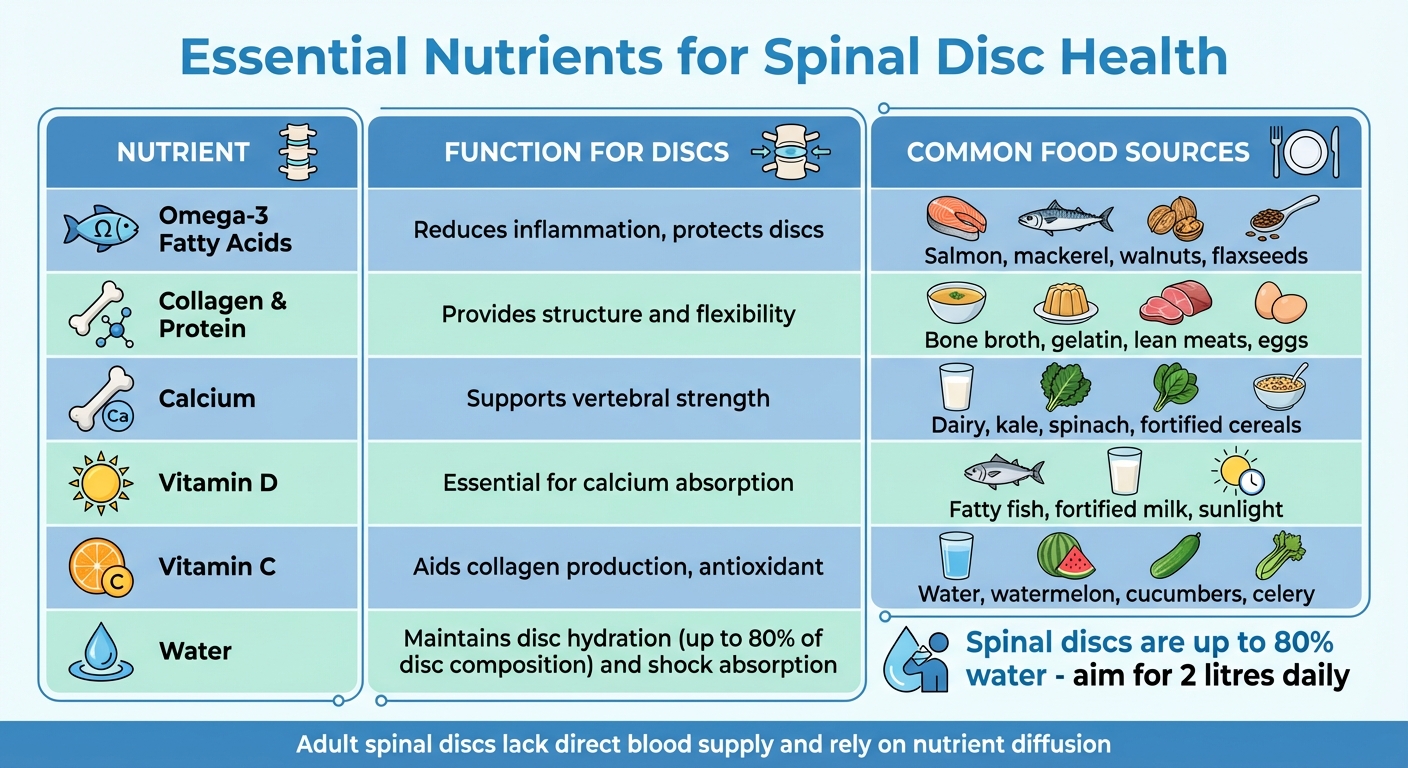
Essential Nutrients for Spinal Disc Health: Food Sources and Functions
The health of your spinal discs relies heavily on key nutrients that maintain their structure and function, especially as we age. Since adult spinal discs lack their own blood supply, they depend on diffusion to receive the nutrients needed for repair and upkeep. Understanding these nutrients and their sources can help you make informed dietary choices to support your spine.
Omega-3 Fatty Acids
Omega-3 fatty acids can help reduce inflammation around the spine, potentially protecting discs from damage caused by chronic inflammation. These fats are found in oily fish like salmon, mackerel, and sardines, as well as plant-based options like walnuts and flaxseeds. Incorporating these foods into your diet may help manage the inflammatory responses that contribute to disc degeneration.
Collagen and Protein
Collagen is the backbone of spinal disc flexibility and resilience. As we age, the body produces less collagen, so dietary sources become more important. Bone broth is a great option because it contains collagen along with glucosamine and chondroitin, which support cartilage health. Protein-rich foods like lean meats, eggs, and even gelatin aid in muscle support for spinal stability. Additionally, sulfur-rich vegetables like broccoli and garlic may help boost the body’s natural collagen production.
Calcium and Vitamin D
Calcium plays a key role in keeping vertebrae strong, which indirectly benefits spinal discs by providing a stable foundation. Vitamin D is essential for calcium absorption, making it a crucial partner nutrient. You can find calcium in dairy products, dark leafy greens like kale and spinach, and fortified cereals. For vitamin D, consider foods like fatty fish and fortified milk, or spend time in sunlight to help your body produce it naturally.
Antioxidants and Vitamin C
Antioxidants, including vitamins A, C, and E, help protect disc cells from oxidative stress and free radical damage. Vitamin C stands out for its role in collagen production and bone health, making it particularly beneficial for spinal discs. Foods rich in these nutrients include citrus fruits, berries, bell peppers, and broccoli. Eating a variety of colourful fruits and vegetables ensures you’re getting a wide range of antioxidants.
Water and Hydrating Foods
Spinal discs are made up of up to 80% water in their healthy state, so staying hydrated is crucial for maintaining disc height and their ability to absorb shocks. Aim to drink about 2 litres of water daily. Foods with high water content, such as cucumbers, watermelon, and oranges, can also help keep you hydrated while providing additional nutrients. A quick hydration check is to look at the colour of your urine – light yellow usually means you’re drinking enough fluids.
| Nutrient | Function for Discs | Common Food Sources |
|---|---|---|
| Omega-3s | Reduces inflammation, protects discs | Salmon, mackerel, walnuts, flaxseeds |
| Collagen | Provides structure and flexibility | Bone broth, gelatin, lean meats |
| Calcium | Supports vertebral strength | Dairy, kale, spinach, fortified cereals |
| Vitamin C | Aids collagen production, antioxidant | Oranges, strawberries, bell peppers |
| Water | Maintains disc hydration and shock absorption | Water, watermelon, cucumbers, celery |
Armed with this nutrient guide, you’re better equipped to make dietary choices that support spinal health. Up next, we’ll explore practical lifestyle tips to complement these nutritional strategies.
Practical Tips for Supporting Spinal Health Through Diet and Lifestyle
Anti-Inflammatory Foods to Include
Reducing inflammation can ease stress on the spine, and making smarter food choices is a great way to start. Swap out refined carbs and processed sugars for whole, nutrient-rich options like fatty fish, nuts, and leafy greens to avoid insulin spikes that can worsen inflammation. Extra virgin olive oil is another excellent choice – use it on salads or cooked veggies for its anti-inflammatory properties. Spices like turmeric and ginger are also worth adding to your meals. Turmeric contains curcumin, which may help protect spinal discs, while ginger can combat oxidative stress. Fruits like berries and citrus provide essential vitamins and antioxidants, all of which support nutrient diffusion and keep your spinal discs hydrated.
| Food Category | Recommended (Anti-Inflammatory) | Avoid (Pro-Inflammatory) |
|---|---|---|
| Proteins | Salmon, sardines, lean poultry, legumes | Red meat, processed meats |
| Fats | Extra virgin olive oil, walnuts, flaxseeds | Inflammatory oils, high-fat dairy |
| Vegetables | Kale, spinach, broccoli, garlic | Fried vegetables |
| Fruits | Blueberries, strawberries, citrus, melons | Sugary fruit snacks, heavy syrups |
| Spices | Turmeric, ginger | Excessive salt, artificial sweeteners |
| Carbs | Whole grains, sweet potatoes | Refined white bread, sugary cereals |
Planning Meals for Spinal Health
Creating meals that support your spine doesn’t have to be complicated. Start with a lean protein like chicken or fish to aid collagen repair, and pair it with dark leafy greens for calcium and magnesium. Add healthy fats such as extra virgin olive oil, and include water-rich snacks like watermelon or cucumbers to help keep your spinal discs hydrated. Keeping blood sugar levels steady by avoiding refined sugars can also reduce inflammation in the discs. Maintaining a healthy BMI is equally important, as it lessens the mechanical load on your spine and improves nutrient flow to the discs. Combine these dietary efforts with regular exercise to further enhance nutrient delivery.
Lifestyle Habits That Work Alongside Nutrition
Good nutrition is just one part of the equation – your daily habits also have a big impact on spinal health. Regular moderate exercise, such as walking, swimming, or cycling, helps increase oxygen and nutrient flow to your spinal discs. Aim for three to five sessions a week to promote disc repair and hydration. Dynamic movements can boost oxygen consumption in the nucleus pulposus by up to 30%, supporting cell vitality. Additionally, core-strengthening exercises like planks or bridges can stabilise your spine and reduce strain.
Restorative sleep is another crucial factor. During about eight hours of sleep, your spinal discs can recover up to 20% of the fluid lost during the day. Using ergonomic furniture and maintaining good posture throughout the day can further reduce chronic strain. If you smoke, quitting is vital: smoking restricts blood flow, lowers oxygen levels, and can create an acidic environment in the discs, which may speed up degeneration.
This information is general in nature and is not a substitute for professional medical advice.
Chiropractic care focuses on musculoskeletal health and results vary between individuals.
Please consult a qualified healthcare professional before making decisions about your health.
When to Seek Professional Support
While good nutrition and lifestyle changes are essential for keeping your spinal discs hydrated, there are times when professional help becomes necessary to address persistent or worsening issues.
Even with a balanced diet, your spine might need additional support. If you’re dealing with ongoing stiffness or tightness in your neck or back, or if pain worsens after prolonged sitting or standing, it’s worth seeking professional advice. Pain that radiates to areas like your buttocks, hips, thighs, shoulders, or arms could signal the need for a musculoskeletal assessment.
Other warning signs include reduced flexibility, difficulty bending or twisting, or a sense of weakness in your spine. These symptoms may point to discs under strain, possibly due to degenerative changes or reduced nutrient levels, which can speed up the loss of disc cells[1]. Early action is critical, as disc degeneration can begin as early as adolescence. Addressing symptoms promptly can make a noticeable difference.
Although dietary changes play a role in disc hydration, persistent issues might require a more comprehensive approach. A multidisciplinary strategy often yields the best results. For example:
- Your GP or physician can monitor your overall health and manage chronic conditions that may impact spinal health.
- A nutritionist or dietitian can create a tailored diet plan to ensure you’re getting enough calcium, vitamin D, omega-3 fatty acids, and other nutrients essential for disc repair and hydration.
- A chiropractor can focus on the biomechanical side, working to restore spinal mobility and alignment. This can help evenly distribute physical stress and reduce strain on ageing discs.
By combining these professional services with targeted lifestyle adjustments, you can create a well-rounded plan to maintain spinal health.
"To stop or reverse disc degeneration, the abnormal conditions affecting cell development and maintenance must be addressed. When trying to repair or regenerate degenerated discs, both nutritional and biomechanical factors need to be corrected." – Lombardy Chiropractic Clinic
For residents in Sydney’s Eastern Suburbs, Dr Steve‘s chiropractic service in Bondi Junction offers evidence-based care that complements nutritional strategies. Techniques like flexion-distraction can help rehydrate discs and improve nutrient flow through the vertebral endplates. With an easy online booking system and a patient-focused approach, this service provides a convenient option for addressing both biomechanical and nutritional aspects of spinal care.
If your pain eases with gentle movement but worsens during static positions, or if you’re noticing concerning postural changes, a healthcare professional can help identify the root cause and guide you toward effective solutions. Pairing professional care with the dietary and lifestyle recommendations in this guide can support healthy, resilient spinal discs as you age.
Conclusion
Spinal discs depend on water and essential nutrients to stay resilient. As we age, the levels of glycosaminoglycans in the discs decline, reducing their ability to retain water. This makes staying hydrated and maintaining a nutrient-rich diet even more important. Drinking around 2 litres of water daily (roughly eight cups) can help your spinal discs absorb shock and stay flexible.
Simple lifestyle changes, like improving your diet and incorporating regular, moderate exercise, can go a long way in supporting disc hydration. Foods with anti-inflammatory properties – like salmon, turmeric, broccoli, and garlic – may help reduce oxidative stress, while dynamic exercises promote natural nutrient flow within the spine. Since our bodies lose fluids throughout the day, getting enough rest and sleep is also key to allowing discs to rehydrate effectively.
For a more comprehensive approach, combining these habits with professional guidance can address both nutritional and biomechanical needs. Consulting your GP, a dietitian, or a chiropractor can help you tailor a plan that works best for your spinal health.
"When trying to repair or regenerate degenerated discs, both nutritional and biomechanical factors need to be corrected." – Lombardy Chiropractic Clinic
By focusing on hydration, balanced nutrition, regular activity, and expert advice, you can build habits that support your spine’s long-term health and resilience.
This information is general in nature and not a substitute for professional medical advice. Chiropractic care focuses on musculoskeletal health, and results can vary between individuals. Always consult a qualified healthcare professional before making any health decisions.
FAQs
How can I tell if dehydration is affecting my spinal discs?
Staying hydrated plays a key role in keeping your spinal discs healthy and functioning well. When you’re dehydrated, your spinal discs can lose size and flexibility, which might lead to stiffness, discomfort, or even pain. Over time, chronic dehydration can raise the likelihood of disc degeneration, potentially impacting your mobility. Keeping up with your water intake helps support your discs and maintain their flexibility and overall health.
What’s a simple daily meal plan to support disc health?
Taking care of your spinal discs starts with what you put on your plate. A daily meal plan aimed at supporting spinal disc health should prioritise hydration, reducing inflammation, and tissue repair.
Here’s how to build your meals:
- Omega-3-rich foods: Incorporate options like salmon, walnuts, and flaxseed oil to help combat inflammation.
- Lean proteins: Think poultry, fish, or plant-based options like tofu to aid in repairing tissues.
- Calcium and vitamin D: Include dairy products, fortified alternatives, or leafy greens like spinach to strengthen bones and support overall spinal health.
- Fruits and vegetables: These provide antioxidants and essential nutrients. Aim for a colourful variety, such as berries, oranges, broccoli, and carrots.
- Healthy fats: Add seeds, nuts, or avocado for an extra nutrient boost.
And don’t forget the simplest yet most vital part: stay hydrated. Drinking plenty of water helps maintain the flexibility and function of your spinal discs.
When should back pain be checked by a health professional?
Back pain that persists for more than a few weeks, becomes severe, or is accompanied by symptoms such as numbness, weakness, or difficulty controlling the bladder or bowels should be evaluated by a health professional. These warning signs could point to a more serious condition that needs immediate medical attention.