


If desk work leaves you battling neck pain, backaches, or headaches, it might be time to consider chiropractic care. Long hours of sitting and poor posture can strain your spine, compress discs, and weaken muscles, leading to persistent discomfort. Chiropractors address these issues by focusing on spinal alignment and muscle imbalances, helping to relieve pain and improve mobility.
Here’s when to seek help:
- Neck and shoulder tension that doesn’t ease with rest or stretching.
- Lower back pain from prolonged sitting or limited movement.
- Tension headaches linked to poor posture.
If your pain lingers for over two weeks or returns despite ergonomic adjustments, professional care could uncover and treat the root cause. Combining chiropractic care with good desk habits – like taking breaks, adjusting your setup, and maintaining proper posture – can help prevent minor aches from becoming chronic problems.
5 Best Stretches You Can Do At Your Desk For Neck And Back Pain
sbb-itb-585d67d
Signs You May Need to See a Chiropractor
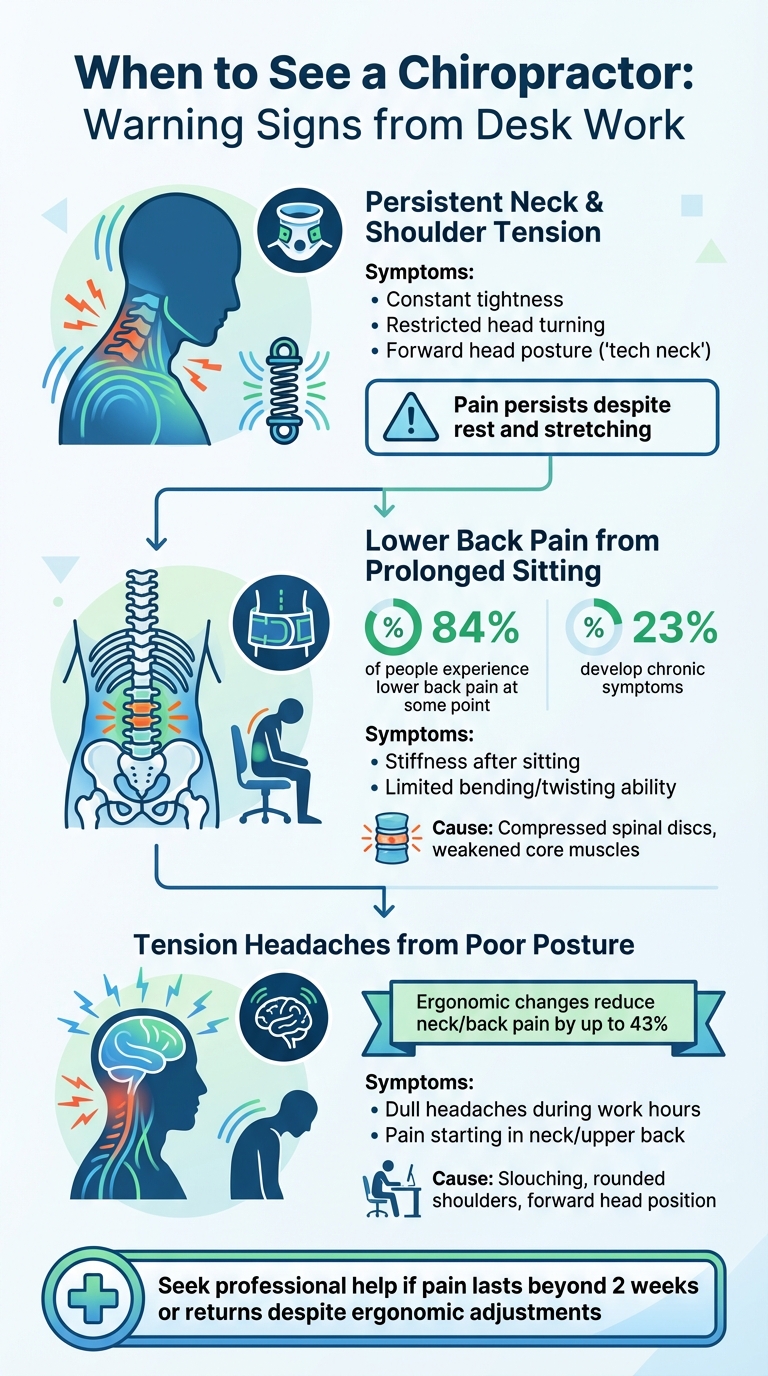
Key Signs You Need to See a Chiropractor for Desk Pain
Not every ache from sitting at a desk requires professional care, but certain symptoms suggest it might be time to seek help. Here are some key signs that your body could benefit from chiropractic attention.
Persistent Neck and Shoulder Tension
Do you find yourself constantly rubbing your neck or rolling your shoulders to ease tightness? This could be a sign of forward head posture, often referred to as "tech neck." When your head leans forward, it puts extra strain on your cervical spine, leading to tension and stubborn knots in your upper trapezius muscles.
If turning your head feels restricted or these issues persist despite rest and stretching, it might be time to consider chiropractic care. Spinal adjustments can help restore proper alignment, reduce nerve pressure, and improve neck mobility. These treatments can be especially useful for alleviating the muscle tension that builds up from long hours at your desk.
Lower Back Pain from Sitting Too Long
Sitting for extended periods can compress your spinal discs and weaken key muscles like your abdominals and glutes, leading to misalignment. Research indicates that 84% of people will experience lower back pain at some point, with 23% developing chronic symptoms.
If your lower back feels stiff after sitting or limits your ability to bend or twist comfortably, it might signal spinal misalignment. Chiropractors can perform adjustments to improve joint function and restore natural movement. Pairing these treatments with strengthening exercises and better ergonomic habits can make a big difference.
Tension Headaches Linked to Poor Posture
If you’re dealing with dull, ongoing headaches during work hours – especially ones that seem to start in your neck or upper back – poor posture might be the culprit. Slouching, rounded shoulders, and forward head positioning can create muscle imbalances, leading to tension that radiates to your temples or the base of your skull.
Studies show that ergonomic changes can reduce neck and back pain by up to 43%. However, if adjusting your workstation doesn’t fully resolve your headaches, chiropractic care for tension headaches may help. By realigning the cervical spine and easing pressure on nerves and muscles, chiropractors can address the root causes of tension in your neck and shoulders, offering relief from those nagging headaches.
When Home Remedies Don’t Resolve Desk Pain
Stretching, tweaking your workspace setup, and taking regular breaks are smart ways to tackle desk-related discomfort. But let’s face it – these quick fixes often only scratch the surface. If your pain keeps coming back or refuses to budge, it might be time to dig deeper. Persistent or recurring discomfort could point to a musculoskeletal issue that needs professional attention.
Pain Lingering Beyond Two Weeks
If you’ve been battling desk pain for over two weeks and basic remedies like rest and stretching haven’t done the trick, it’s worth consulting a professional. While minor aches usually clear up, pain that sticks around might signal deeper issues, like spinal misalignment or musculoskeletal dysfunction.
"While painkillers or stretches may offer temporary relief, they rarely address the underlying contributing factors." – Dr Marc Phelan, Total Health Chiropractic
Be on the lookout for signs like reduced range of motion or avoiding certain movements – they could indicate your body is compensating for an underlying problem. Chronic pain, defined as lasting more than three months, can become harder to treat if left unaddressed. So, waiting it out might not be the best strategy.
And if you’ve already made ergonomic adjustments but the pain keeps returning, there’s more to consider.
Pain That Keeps Coming Back Despite Ergonomic Tweaks
Maybe you’ve set your monitor at eye level, invested in a supportive chair, and ensured your feet rest flat on the floor. Yet, as soon as you dive back into work, the pain reappears. Sound familiar? This could mean the problem runs deeper than your desk setup.
Ergonomic changes are great for preventing future issues, but they’re not a magic cure for existing damage. Long hours at a desk can put constant pressure on your spine, leading to postural changes that furniture alone can’t fix. For example, prolonged sitting might shorten your hip flexors or weaken your glutes, requiring more focused rehabilitation than simple stretches can provide. Conditions like sciatica or nerve compression in the neck often need manual adjustments to relieve pressure and restore proper alignment.
If your discomfort starts to affect your sleep, mood, or work performance – or if you notice numbness, tingling, or sharp pain – it’s time to seek professional care. A chiropractic assessment can help uncover the root cause of your pain and work alongside your ergonomic efforts to get your body back on track.
Posture and Spinal Health for Desk Workers
Sitting at a desk for hours on end isn’t exactly what our bodies were designed for. As Total Health Chiropractic explains, "Human anatomy evolved for walking, lifting, reaching and bending – not for eight to ten hours a day of static sitting." In Australia, many office workers spend most of their day seated, and this prolonged sitting can lead to a range of postural issues that impact the spine, muscles, and overall comfort. Knowing how these problems arise is a critical step in protecting your spinal health.
Common Posture Problems from Desk Work
Spending long hours at a desk can lead to several postural challenges. One of the most common is forward head posture, where your head leans forward while focusing on a screen. This position puts extra strain on the muscles at the base of your skull and along your cervical spine.
Another frequent issue is rounded shoulders, caused by hunching over a keyboard. This posture pushes the shoulders forward, creating tension in the upper trapezius and shoulder blade areas. Additionally, sitting for extended periods can flatten the natural curve of your spine, increasing pressure on the intervertebral discs by as much as 40% compared to standing.
To identify these problems, chiropractors often perform thorough postural evaluations. This is a standard part of your first chiro appointment. They look at standing alignment, spinal curves, and the balance of your hips and shoulders. Dynamic movement analysis is also used to detect misalignments and muscle imbalances before they evolve into more serious, long-term issues.
Supporting Spinal Health Over Time
Addressing these posture problems involves a mix of professional care and small but meaningful changes to your daily routine. Chiropractors can help by providing manual adjustments, soft tissue treatments, and personalised rehabilitation plans to correct postural imbalances.
At the same time, adopting healthier habits at your desk can make a big difference. Adjusting your monitor to eye level, keeping it about an arm’s length away, and ensuring your elbows and knees are bent at 90-degree angles are great starting points. Taking breaks every 30–45 minutes to stretch or walk around can also help reduce the strain on your spine. Combined with professional care, these adjustments can go a long way in supporting your spinal health over the long term.
Combining Chiropractic Care with Desk Ergonomics
Managing desk-related pain effectively involves blending professional chiropractic care with smart ergonomic practices. Poor workstation setups can counteract the benefits of chiropractic adjustments by encouraging bad posture and repetitive strain. Research suggests that ergonomic improvements can lower neck and back pain by up to 43% while also increasing productivity by as much as 22%.
To get the most out of chiropractic care, consider making the following adjustments to your workspace and daily habits.
Workstation and Movement Adjustments
Fine-tuning your workstation can play a big role in maintaining the spinal alignment achieved through chiropractic care. A properly arranged desk setup supports good posture between visits, reducing the risk of recurring discomfort. Small changes, like adjusting the height of your chair or monitor, can make a noticeable difference.
Equally important is incorporating regular movement breaks into your routine. Sitting for extended periods puts extra pressure on your spinal discs – up to 40% more than standing. Taking a brief break every 30 to 45 minutes to stand, stretch, or walk can help alleviate this strain. For added support, the Australian Chiropractors Association (ACA) offers a free "Straighten Up" app. This app includes three-minute exercise routines designed to promote spinal health and strengthen your core, making it a handy tool for maintaining comfort during long workdays.
These small but impactful changes not only ease current discomfort but also help prevent future issues, enhancing the long-term benefits of chiropractic care.
Using Chiropractic Care for Prevention
Pairing ergonomic adjustments with regular chiropractic care can be a proactive way to maintain musculoskeletal health. Instead of waiting for pain to become chronic, routine chiropractic visits can help identify early signs of misalignment or muscle imbalance. Addressing these minor issues early can prevent them from escalating into more serious conditions.
Chiropractors can also offer personalised advice, such as ergonomic assessments tailored to your specific needs or exercises to strengthen key muscle groups. This personalised guidance ensures your body stays well-supported throughout your workday. By combining chiropractic care with an optimised ergonomic setup, you create a more comprehensive approach to reducing daily strain and maintaining overall comfort.
If you’re looking for a chiropractor in Bondi Junction, you’ll find local services offering convenient online bookings and treatment plans that fit seamlessly into your busy schedule, helping you work towards better comfort and health.
Conclusion
Desk pain doesn’t have to be a part of your daily routine. If you often deal with neck stiffness, lower back or shoulder tension, or headaches while working, it might be time to consult a Chiropractor. Addressing these issues early – ideally within three months – could help stop acute discomfort from escalating into chronic low back pain, which is a major cause of disability worldwide.
Chiropractic care plays a role in supporting musculoskeletal health through gentle adjustments designed to restore spinal alignment and encourage better posture. Pairing this with ergonomic changes – like setting your monitor at eye level, taking movement breaks every 30 to 45 minutes, and sitting with proper posture – can create a well-rounded plan to tackle and even prevent desk-related strain.
"Chiropractic care is proactive and preventative, not just reactive. It’s not about ‘cracking backs’ for temporary relief – it’s about restoring alignment and correct posture, supporting mobility, and preventing pain before it becomes chronic." – Total Health Chiropractic
This combined approach offers a way to address both immediate discomfort and long-term prevention. For those in the Bondi Junction area, local clinics provide online booking options, making it simple to integrate chiropractic care into your routine and prioritise your musculoskeletal health.
This content is intended for general informational purposes and does not replace professional medical advice.
Chiropractic care focuses on musculoskeletal health, and individual results may vary.
Always consult a qualified healthcare professional before making decisions about your health.
FAQs
What happens during a first chiropractic visit for desk pain?
Your first visit to a chiropractor for desk-related pain usually starts with a consultation. During this, the chiropractor will go over your health history, daily habits, and specific concerns – like discomfort caused by extended sitting or posture issues.
Next, a physical examination is likely to take place. This might include checking your posture, testing your range of motion, and performing other evaluations to identify problem areas.
From there, the chiropractor may create a personalised plan to address your pain. This could involve spinal adjustments, soft tissue therapies, and practical advice on improving your desk setup to better support your posture and reduce strain.
When should desk pain be checked by a GP instead?
If you’re dealing with desk-related pain, it’s crucial to see a GP if you notice severe or worsening symptoms. This includes issues like unexplained weight loss, neurological problems, pain that doesn’t ease with self-care, or signs pointing to a more serious condition. These could require further medical investigation.
How many visits might I need for desk-related neck or back pain?
The number of visits required to address neck or back pain caused by desk work can vary based on individual needs. Research indicates that visiting a chiropractor 2–3 times a week over several weeks may help provide initial relief. Many treatment plans often involve around 12 sessions spread over 6 weeks. However, the exact duration and frequency depend on your specific situation, so it’s a good idea to discuss a tailored plan with your chiropractor.


