


Sciatica, affecting up to 40% of Australians, causes sharp pain, tingling, or weakness along the sciatic nerve, often due to spinal issues like herniated discs or misalignments. Chiropractic care offers a drug-free way to address the root cause by realigning the spine, easing nerve pressure, and promoting mobility. Techniques such as spinal adjustments, decompression, and soft tissue therapies can help manage symptoms while reducing reliance on medication. Pairing these treatments with proper posture, regular exercise, and ergonomic habits can support recovery and prevent future flare-ups. Always consult a qualified chiropractor for a tailored plan.
Sciatica and Spinal Health
What Is Sciatica?
Sciatica refers to a group of symptoms that emerge when the sciatic nerve is injured, inflamed, or compressed. This nerve is crucial for leg movement and sensation, starting in the lower back, running through the hips and buttocks, and extending down each leg.
When the sciatic nerve is irritated, the symptoms are hard to miss. Many people describe the pain as a sharp, electric shock or a deep, persistent ache that travels down one leg. Along with the pain, there might be burning sensations, tingling (commonly called "pins and needles"), or even muscle weakness in the leg or foot. It’s important to understand that sciatica isn’t a condition in itself – it’s a symptom of an underlying problem affecting the nerve. Recognising these symptoms is key to understanding how spinal issues can worsen nerve pressure.
How Spinal Misalignments Affect the Sciatic Nerve
The spine acts as a protective structure for nerve roots as they exit the spinal column. When vertebrae become misaligned – sometimes called subluxations – or when the pelvis shifts out of position, the space around the sciatic nerve can become restricted. This narrowing can lead to the nerve being pinched or compressed, disrupting its function and causing pain to radiate down the leg.
Certain spinal conditions can make matters worse. Issues like herniated discs, bone spurs, or spinal stenosis can further reduce the space available for the sciatic nerve. Even everyday habits, like standing unevenly with more weight on one leg, can create small imbalances in the hips, increasing pressure on the nerve.
A properly aligned spine allows muscles to work evenly across the body. When misalignments occur, the body compensates by shifting weight or posture, creating new pressure points that can irritate the nerve. Keeping the spine aligned can help minimise nerve irritation and support better lower body function. Chiropractic care may play a role in managing these symptoms by addressing alignment and helping the nerve function more effectively.
sbb-itb-585d67d
How Chiropractic Adjustments Work for Sciatica
What Chiropractic Adjustments Aim to Achieve
Chiropractic adjustments use controlled force on specific areas of the spine to address vertebral subluxations. The main goal? To realign the spine, easing physical pressure on the sciatic nerve and reducing inflammation in the affected region. This creates an environment where the body’s natural healing mechanisms can function more efficiently.
Proper alignment also helps balance muscle activity, minimising compensatory strain that might aggravate sciatica symptoms. By restoring spinal and joint mobility, chiropractic care can improve overall movement and reduce the chances of future flare-ups. These objectives guide chiropractors in choosing the best techniques for managing sciatica.
Common Techniques for Sciatica Management
To address nerve compression, chiropractors rely on a mix of techniques tailored to the patient’s condition. The most widely used is spinal adjustments, which involve applying controlled force to realign vertebrae and ease joint stress. For patients with herniated or bulging discs, the flexion-distraction technique is often employed. This method uses a specialised table to gently stretch the spine, allowing discs to shift back into place without the intensity of traditional adjustments.
Another approach is spinal decompression, which stretches the spine to relieve pressure on compressed discs. Chiropractors may also use soft tissue therapies, such as myofascial release or trigger point therapy, to ease tightness in the hips and lower back – areas that can contribute to sciatic nerve irritation. Research suggests these techniques may offer a safer alternative to opioid-based treatments, with fewer side effects.
What to Expect During Treatment
The First Appointment
Your journey begins with a thorough assessment of your sciatica. During your first visit, the chiropractor will delve into your medical history, asking about the intensity and location of your pain, how long you’ve been dealing with it, and any activities that might worsen or relieve your symptoms. They’ll also look at lifestyle factors to shape a treatment plan tailored to your needs.
A physical examination is a key part of this visit. This might include posture and balance checks – for instance, if you tend to put more weight on one leg, it could signal spinal misalignment that’s irritating your nerves. Depending on your symptoms, the chiropractor may recommend X-rays to pinpoint the root cause, such as a herniated disc or spinal narrowing. All this information helps create a personalised plan designed to address your specific condition.
During the Adjustment
Adjustments involve applying precise, controlled force to realign your spine. You might hear those familiar cracking or popping sounds – don’t worry, that’s just gas bubbles escaping from your joints, much like cracking your knuckles. It’s not painful and is a normal part of the process.
Your session may also include therapies beyond the adjustment itself. Techniques like spinal decompression (gentle spinal stretching), ultrasound, cold-laser therapy, or soft tissue work could be used to ease muscle tension and reduce inflammation in your lower back and hips. Each of these methods works together to improve joint function and alleviate discomfort.
After Treatment and Follow-Up Care
After your adjustment, some people notice immediate relief, but sciatica often requires a series of sessions for meaningful improvement. Research indicates progress may start within a week, though full recovery could take months, depending on the severity of your condition.
To support your recovery, your chiropractor will likely give you at-home exercises. These might include bridges, pelvic tilts, or hamstring stretches to strengthen your core and stabilise your spine. They’ll also offer tips on proper ergonomics to help prevent future issues. Between visits, you can manage inflammation and muscle tension by applying ice packs for up to 20 minutes or using a heating pad. These at-home strategies, combined with lifestyle changes, are key to maintaining long-term spinal health.
How A Chiropractor Treats Sciatica
Supporting Chiropractic Care with Lifestyle Changes
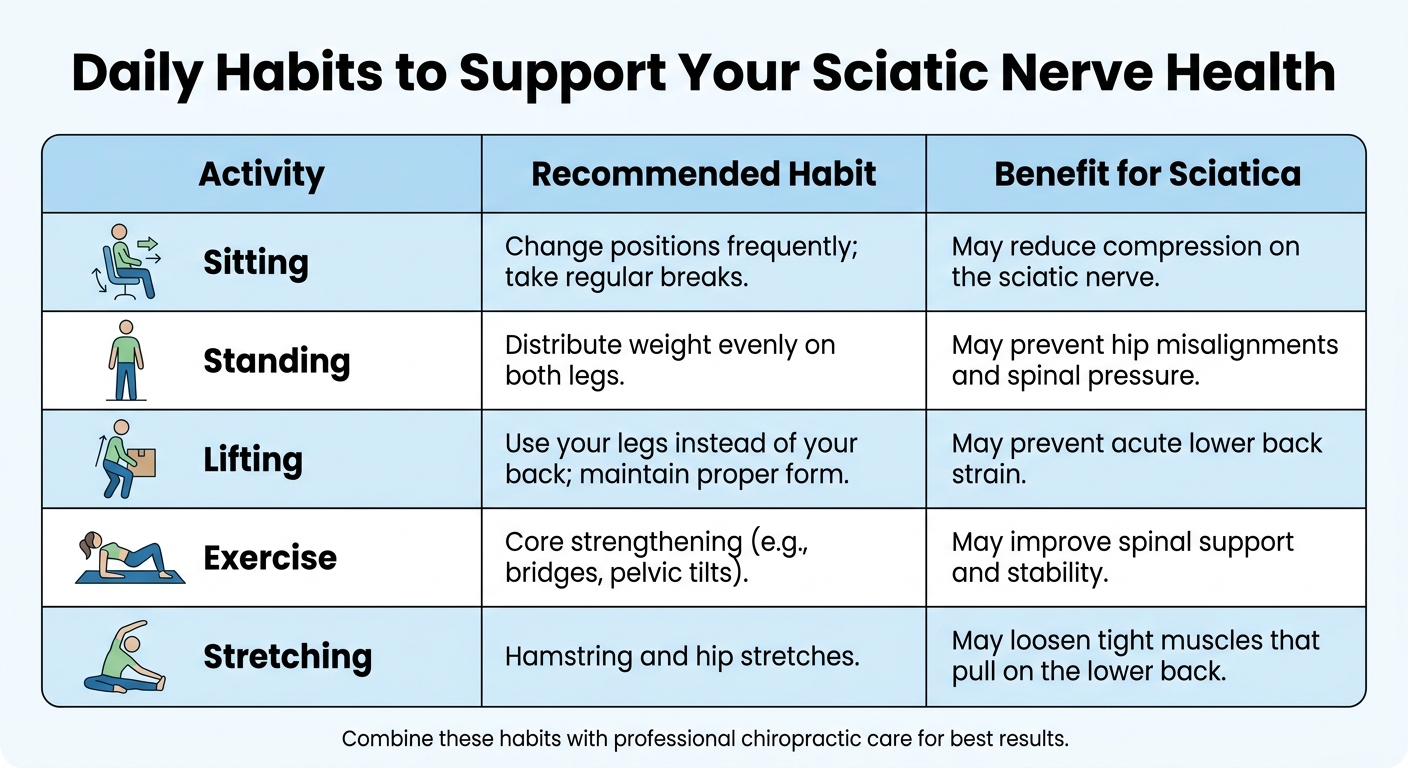
Daily Habits to Support Sciatic Nerve Health and Prevent Pain
Lifestyle Adjustments at Work or Home May Help Reduce Strain on the Sciatic Nerve
Chiropractic adjustments are just one piece of the puzzle when it comes to relieving sciatic nerve pressure. Everyday habits, whether at work or home, can make a big difference in reducing strain and supporting your spinal health.
If you work at a desk, consider using an ergonomic chair designed to support your lower back. Staying in one position for too long can irritate the sciatic nerve, so make it a habit to switch positions often. Taking regular breaks to stand, stretch, or walk around can ease discomfort and help prevent nerve compression.
When you’re standing, pay attention to your posture. Make sure to distribute your weight evenly across both feet. Shifting your weight unconsciously can lead to hip misalignments and extra pressure on your spine. Whether you’re cooking dinner or waiting in line, being mindful of how you stand can help reduce strain on the sciatic nerve.
Proper lifting techniques are another key factor. Always lift with your legs, not your back, and maintain good form to avoid sudden stress on your lower back. Even lifting something light the wrong way can trigger sciatica symptoms, so it’s worth practising safe techniques every time.
Incorporating these small, mindful changes into your daily routine can complement chiropractic care and help manage sciatica more effectively.
Exercises for Spinal Support
Strengthening your spine is an important step in reducing the risk of future sciatica. Core-strengthening exercises, like bridges and pelvic tilts, can help stabilise your spine and ease pressure on the sciatic nerve. These gentle movements provide the support your spine needs to stay aligned throughout the day.
Stretching is just as critical, especially for the hips and hamstrings. Tightness in these areas can pull on your lower back, increasing pressure on the sciatic nerve. Regular stretching can help loosen these muscles and provide relief. Activities like walking, swimming, or yoga not only improve flexibility and posture but also strengthen your core without overloading your lower back.
Here’s a quick guide to habits that can support your sciatic nerve health:
| Activity | Recommended Habit | Benefit for Sciatica |
|---|---|---|
| Sitting | Change positions frequently; take regular breaks | May reduce compression on the sciatic nerve |
| Standing | Distribute weight evenly on both legs | May prevent hip misalignments and spinal pressure |
| Lifting | Use your legs instead of your back; maintain proper form | May prevent acute lower back strain |
| Exercise | Core strengthening (e.g., bridges, pelvic tilts) | May improve spinal support and stability |
| Stretching | Hamstring and hip stretches | May loosen tight muscles that pull on the lower back |
Combining proper ergonomics, targeted exercises, and mindful habits with chiropractic care can not only relieve current discomfort but also support your long-term spinal health. Regular physical activity and maintaining a healthy weight are additional ways to reduce strain on the sciatic nerve and keep your spine in good shape. Together, these strategies create a solid foundation for managing sciatica and improving your overall well-being.
Conclusion
Chiropractic adjustments might assist in managing sciatica by addressing spinal misalignments that put pressure on the sciatic nerve. By realigning the spine, these adjustments can help reduce nerve irritation and potentially aid the body’s natural healing process. Techniques such as spinal decompression and flexion-distraction are often used to alleviate pressure on the nerve and reduce inflammation. This process not only addresses immediate discomfort but also helps improve overall mobility.
When combined with targeted exercises and lifestyle changes – like maintaining proper posture and staying active – chiropractic care may contribute to better mobility and function. This holistic approach can also help build long-term spinal stability and reduce the likelihood of future flare-ups.
To ensure the best care, it’s essential to consult a qualified chiropractor who can evaluate your condition thoroughly and create a tailored treatment plan. If you’re in Bondi Junction and dealing with sciatica, Dr Steve provides evidence-based chiropractic care designed to meet individual needs. Whether your back pain stems from long hours at a desk or sciatica is interfering with your daily routine, a personalised approach can help enhance your mobility and overall function.
This content is for informational purposes only and should not replace professional medical advice.
Chiropractic care focuses on musculoskeletal health, and outcomes can vary between individuals.
Always consult a qualified healthcare professional before making health-related decisions.
FAQs
Am I a good candidate for chiropractic care for sciatica?
Chiropractic care for sciatica can vary depending on your individual condition and symptoms. Gentle spinal adjustments might help improve alignment, which could ease nerve pressure and reduce discomfort. Common approaches include spinal adjustments, decompression therapy, and soft tissue techniques.
It’s crucial to consult a qualified healthcare professional to determine if chiropractic care suits your needs. They’ll consider factors like the severity of your symptoms, underlying causes, and your overall health before recommending a treatment plan.
How many visits might I need before noticing changes?
Many patients notice changes after just a few sessions, though the number of visits needed can differ from person to person. The outcome often depends on factors such as the severity of the condition and how well your body responds to the treatment.
When should sciatica be checked urgently by a doctor?
If you notice sudden weakness, difficulty controlling your bladder or bowel, or intense pain that doesn’t get better, it’s crucial to seek medical attention right away. These symptoms could signal a serious underlying issue that requires prompt assessment by a doctor.


