


Stress can take a toll on your body, often showing up as tight shoulders, jaw clenching, or poor posture. Chiropractic care may help by addressing spinal misalignments that disrupt your nervous system. By restoring proper joint movement, it can ease muscle tension, improve nerve communication, and support your body’s ability to shift from stress mode to relaxation. Research, including a 2023 study, suggests that spinal adjustments may positively influence brain activity and nervous system balance, contributing to better stress management over time. Pairing chiropractic care with exercise, posture corrections, and ergonomic changes can further reduce physical strain and promote overall well-being.
3 Ways Chiropractic Care Can Help Reduce Your Stress
sbb-itb-585d67d
How the Spine and Nervous System Connect
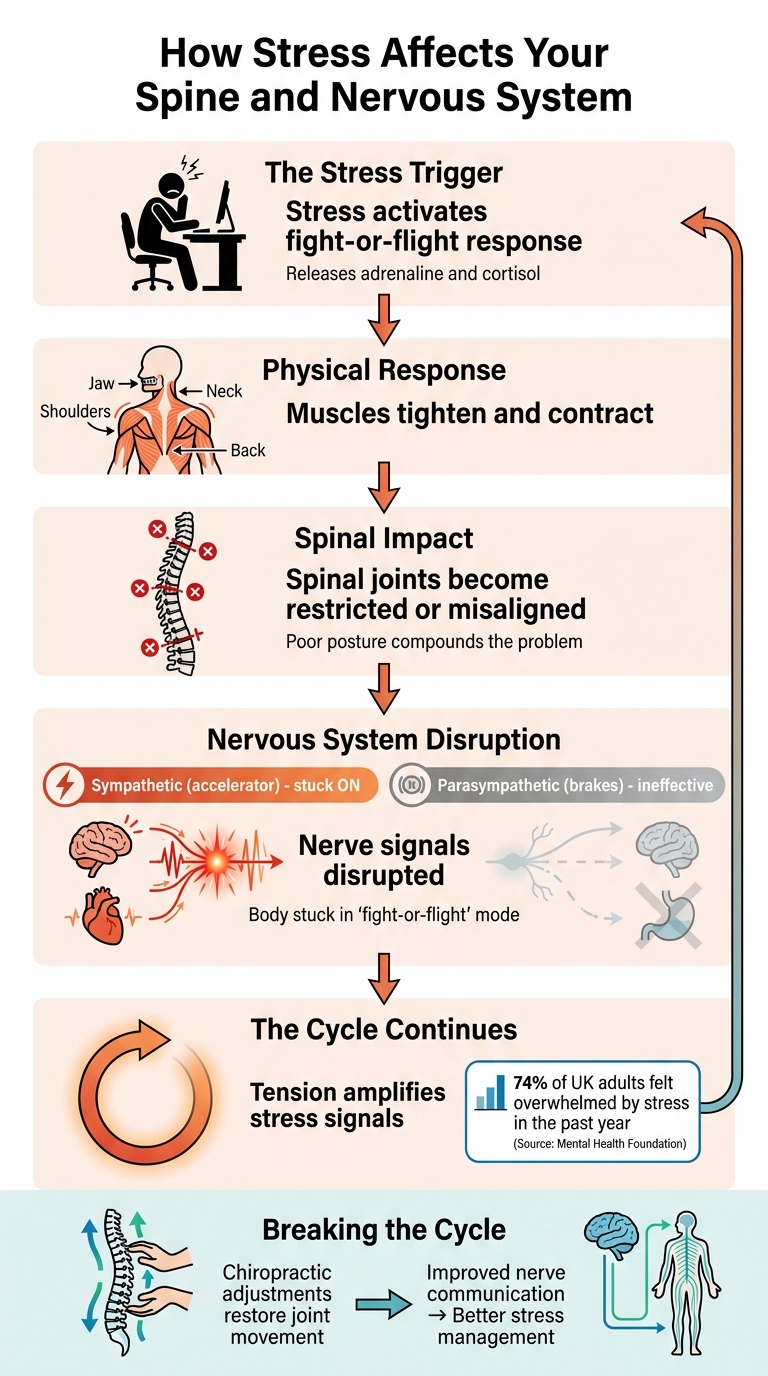
How Stress Affects Your Spine and Nervous System
The spine does more than just support your posture – it acts as a protective casing for the spinal cord, the main communication highway between the brain and the rest of the body. When the spine is in proper alignment, nerve signals can travel freely, helping the nervous system manage stress responses effectively. However, when spinal joints are misaligned or restricted, these signals can be disrupted. This interference impacts the body’s ability to shift from a stressed state to a calm one, highlighting how stress can physically affect the spine.
Physical Effects of Stress on the Spine
Stress triggers the fight-or-flight response, releasing hormones like adrenaline and cortisol. These hormones make muscles in the jaw, neck, shoulders, and back tighten. While this reaction is helpful in short, intense situations, prolonged stress leads to ongoing muscle tension and stiffness, which can restrict spinal joints.
Bad posture, especially during stressful times, makes things worse. Hunched over a screen, for example, compresses the neck and upper back, putting extra pressure on nerves that carry stress signals to the brain. This creates a vicious cycle: tension amplifies stress signals, keeping the body stuck in a heightened state of alertness. Over time, this constant activation of the sympathetic nervous system can cause inflammation, disrupt the nervous system, and make it harder for the body to switch to the parasympathetic "rest-and-digest" mode. A study by the Mental Health Foundation in the UK revealed that 74% of adults reported feeling so stressed in the past year that they felt overwhelmed or unable to cope.
This ongoing tension doesn’t just affect the spine – it also changes how the nervous system processes stress.
How the Nervous System Responds to Stress
The autonomic nervous system has two key components: the sympathetic system, which acts like an accelerator to prepare the body for action, and the parasympathetic system, which functions as the brakes, encouraging rest, digestion, and recovery. Chronic tension in the spine often keeps the accelerator stuck, leaving the brakes ineffective. This imbalance can lead to tight shoulders, jaw clenching, headaches, and constant fatigue.
Spinal misalignments can make it even harder for the nervous system to reset after stress. As Dr. Jonathan Cook from The House Clinics explains:
Chiropractic adjustments open the pathways of the nervous system allowing the information to flow unobstructed.
How Chiropractic Adjustments May Help Manage Stress
When spinal joints become restricted or misaligned – sometimes referred to as subluxations – they can disrupt the body’s nervous system, much like a kink in a communication cable. These disruptions might make it harder for the nervous system to reset after stressful events. Chiropractic adjustments aim to restore proper joint motion, potentially reducing nerve interference and helping the body shift from "fight-or-flight" mode to a calmer, more balanced state.
A 2023 study in the Journal of Neural Plasticity found that spinal adjustments influenced activity in the prefrontal cortex – the part of the brain responsible for decision-making and maintaining calm. This suggests that aligning the spine could affect how the brain processes stress. Research also highlights improvements in Heart Rate Variability (HRV) – a key measure of nervous system balance – following chiropractic care, indicating better stress adaptation. These benefits may come from enhanced joint mobility and reduced muscle tension.
Improving Joint Movement and Reducing Tension
Restoring movement to restricted joints may help clear nervous system pathways, allowing signals to travel more effectively between the brain and body. This improved communication could help the body transition into a parasympathetic "rest-and-digest" state, promoting relaxation and recovery.
Chiropractic adjustments often target areas where stress builds up, such as the neck, shoulders, jaw, and back. By addressing these tension points, the body may find it easier to relax and recover.
Addressing Posture and Muscle Tightness
Long hours spent hunched over screens can lead to poor posture, compressing the neck and upper back. This compression may irritate nerves and contribute to ongoing stress signals, keeping the body in a heightened state of alertness. Chiropractic care may help correct postural issues, potentially easing the physical strain caused by daily habits.
Adjustments can also relieve tightness in the jaw and shoulders – common areas for stress-related tension. While chiropractic care doesn’t tackle the root causes of stress, like work or financial worries, it can help alleviate physical symptoms such as tension headaches, muscle aches, and stiffness. Incorporating these adjustments into a broader stress management plan can offer relief and support overall well-being.
Adding Chiropractic to Your Stress Management Routine
Combining chiropractic care with exercise, posture adjustments, and lifestyle tweaks can help you better manage stress. These strategies work together to support your nervous system and promote long-term relief. While stress is an unavoidable part of life, these habits can prepare your body to handle it more effectively. Chiropractic adjustments, paired with small daily changes, can encourage a healthier stress response.
Pairing Chiropractic with Exercise and Posture Adjustments
Regular physical activity is a great complement to spinal adjustments. Exercises like walking, swimming, or stretching help improve joint mobility, ease tension, and boost circulation. These activities also aid recovery from the physical toll of stress.
Posture plays a big role, too. Chiropractic care can relieve neck and upper-back strain caused by slouching, but maintaining good posture is key to sustaining these benefits. Simple actions – like raising your monitor to eye level, relaxing your jaw during intense tasks, or rolling your shoulders during breaks – can stop stress from building up in your body.
Practical Changes to Minimise Physical Strain
Beyond exercise and posture, ergonomic improvements at work can make a big difference. Set up your workspace so your screen is at eye level, your feet rest flat on the floor, and your arms form a 90° angle. This setup can reduce spinal strain and help avoid "tech neck", which can irritate nerves.
Other small habits can also support your nervous system. Try incorporating deep breathing exercises, limiting screen time before bed, and taking regular breaks throughout the day. These practices can help your body switch from "fight-or-flight" mode to a more relaxed state. Paired with chiropractic care, these changes might lead to better sleep, less muscle tension, and a greater sense of control over your stress levels.
Conclusion
Stress is something we all encounter, but how our bodies handle it can evolve. As we’ve explored, there’s a connection between spinal health and stress management. Chiropractic care might play a role in supporting long-term physical stress management by addressing how muscle tension and joint restrictions affect your spine and nervous system. When spinal joints move more freely and nerve signals flow without disruption, your body may shift from a constant "fight or flight" mode to a state that encourages rest and recovery.
The goal here isn’t to erase stress completely but to build resilience. Regular chiropractic adjustments, paired with exercise, better posture, and ergonomic changes, may help ease physical symptoms like muscle tension, headaches, or sleep disturbances.
"It’s not about eliminating stress – it’s about giving your body the ability to move through it gracefully." – Dr. Scott Jutte, Chiropractor, Dickson Chiropractic
By maintaining proper spinal alignment and reducing tension, you may better manage the physical toll of stress. For a more comprehensive approach to your spinal health and stress management, consider seeking professional guidance.
This information is general and not a replacement for professional medical advice. Chiropractic care focuses on musculoskeletal health, and results can vary. Always consult a qualified healthcare professional before making health-related decisions.
FAQs
Can chiropractic help with stress symptoms like tight shoulders or headaches?
Chiropractic care might assist in managing stress-related symptoms like tight shoulders or headaches by encouraging relaxation and easing muscle tension. Additionally, it could help regulate the nervous system, which may play a role in calming the body’s stress response. Since results differ from person to person, it’s a good idea to consult a qualified practitioner to determine if chiropractic care aligns with your needs.
How many sessions might I need to notice changes in tension or posture?
The number of sessions required depends on your personal situation and the type of care you’re receiving. Some individuals might see improvements within a few sessions, while others may find continued care more beneficial to meet their specific needs. Factors such as your goals, daily habits, and how your body responds to treatment all play a role in determining the outcome.
Is chiropractic care safe if I’m feeling stressed and run down?
Chiropractic care, when administered by a qualified professional, is widely regarded as safe. It can offer support to your nervous system and may even help promote relaxation – particularly beneficial if you’re feeling stressed or fatigued. This gentle, nervous-system-focused approach can have a soothing effect, contributing to a sense of overall balance and well-being.


