

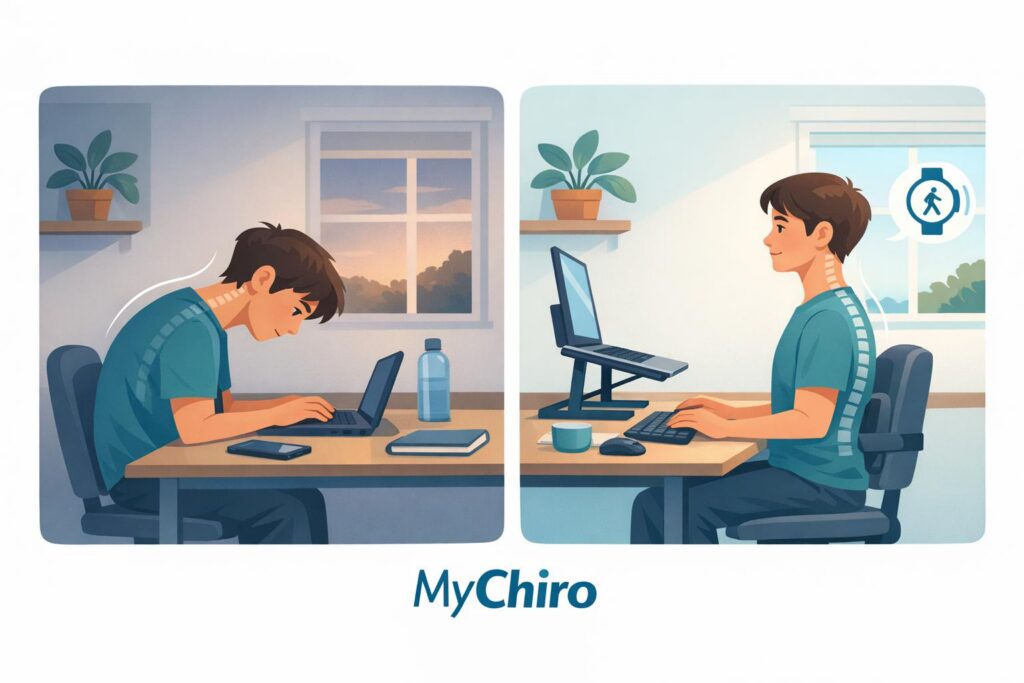
Tech-neck is a growing concern for teens. Spending hours hunched over devices leads to poor posture, known as postural kyphosis, which can cause a rounded upper back and forward head position. This issue is particularly common during adolescence when the body is still developing, making it easier for bad habits to affect long-term spinal health.
Key Takeaways:
- What is Tech-Neck? Poor posture caused by prolonged device use, leading to a hunched back and neck strain.
- Why Teens Are Affected: Their developing bodies are more prone to postural changes.
- Signs to Watch For: Rounded back, forward head position, and slouching.
- Prevention Tips:
- Set up ergonomic study spaces (screen at eye level, feet flat on the floor).
- Take regular breaks to stretch and move.
- Practice posture exercises like chin tucks and rowing motions.
- When to Seek Help: Persistent symptoms, stiffness, or signs of nerve involvement may require professional care.
Addressing tech-neck early helps teens build healthy habits, reducing the risk of long-term posture issues. Simple adjustments like proper screen height and regular movement can make a big difference.
Exercises to Help Teens with ‘Text Neck’
sbb-itb-585d67d
How Tech-Neck Affects Teenagers
Teenagers often spend countless hours hunched over screens – whether it’s a phone, tablet, or laptop. Over time, this posture can lead to physical changes in the body, some of which may have lasting consequences. The back muscles and spine gradually adapt to this rounded position, potentially leading to a condition called postural kyphosis. This occurs when the spine and its supporting muscles adjust to prolonged poor posture, resulting in a hunched upper back.
These changes aren’t just about appearance. A rounded upper back can become a habitual posture. While standing up straight might temporarily reverse the curve, weakened muscles make it harder to maintain proper alignment without conscious effort. This creates a cycle where poor posture becomes the default, leaving teens more vulnerable to long-term issues.
Why Teenagers Are More Vulnerable
Adolescence is a crucial time for physical development, as bones and muscles are still growing. During this period, the body is especially responsive to habits – whether they’re good or bad. Poor posture during these years can shape the spine in ways that persist into adulthood. On the flip side, this growth phase also presents an opportunity to establish healthy posture habits that can protect spinal health for life.
Interestingly, teenage girls seem to be affected by tech-neck more often than boys. However, boys aren’t immune to these posture-related changes.
Signs and Symptoms to Watch For
Catching the signs of tech-neck early can make a big difference. One of the most noticeable indicators is a rounded upper back that’s visible when a teenager is sitting or standing. A quick way to assess this is to ask the teen to stand up straight. If the spine straightens easily, the issue is likely postural rather than structural, meaning it can often be corrected through posture adjustments and targeted exercises.
Other signs include a forward head position, tightness in the neck muscles, and a tendency to slouch when not consciously focusing on posture. While postural kyphosis is typically not painful in its early stages and usually stabilises once growth stops, addressing it sooner rather than later can help prevent these habits from becoming ingrained and harder to fix in adulthood.
Practical Ways to Prevent and Manage Tech-Neck
Understanding the signs of tech-neck allows teenagers to make simple but effective changes to their habits. By tweaking how they use devices and organising their study environments, teens can actively lower their risk of tech-neck.
Setting Up an Ergonomic Study Space
How a study area is arranged can make a big difference in preventing tech-neck. When the head tilts forward by 45°, the strain on the neck increases significantly, leading to muscle fatigue during long periods of device use.
To maintain a neutral posture – where the ears align with the shoulders – start by adjusting screen height. Place the computer screen at eye level so the head stays upright. If using a laptop, elevate it with a stand or even a stack of books. For mobile devices, avoid using them while lying in bed. If you’re on a couch, use a pillow to raise the laptop closer to eye level.
Chair and desk height are equally important. Adjust the chair so your feet are flat on the floor, and position the keyboard and mouse so your elbows rest comfortably at a 90-degree angle. Gina Powers, PT, DPT, Assistant Professor of Physical Therapy at MCPHS, explains:
"Looking down at technology creates a whole host of muscular problems and stiffness."
Working from couches or beds might feel cosy but can worsen posture-related strain. A helpful trick is to imagine a string pulling the top of your head upward. This mental cue encourages a straighter spine and helps avoid slouching during study sessions.
Taking Regular Movement Breaks
Ergonomic setups are just one part of the solution – movement is the other. Taking frequent breaks – standing and walking for 1–2 minutes every half hour – can ease muscle tension and reset posture.
Incorporating simple stretches throughout the day can also help. Chin tucks gently stretch the back of the neck, while rowing motions using resistance bands or just body weight strengthen the shoulder blade muscles. These exercises are quick, require no special equipment, and can easily fit into a busy school day.
Powers highlights the growing importance of addressing tech-neck early:
"The more we rely on devices, the more prevalent these cases are becoming across all age ranges."
Teaching Posture Awareness in Schools
Schools can play a key role in addressing tech-neck by including posture awareness in health education. Teaching students about the physical effects of device use and showing them simple adjustments can help them develop healthier habits.
Posture education could involve practical demonstrations of ergonomic setups, reminders to take movement breaks between classes, and desk-friendly stretches. By making these habits part of the school routine, students can build lasting patterns of good posture.
| Ergonomic Element | Recommended Adjustment |
|---|---|
| Screen Height | Eye level; ears aligned with shoulders |
| Elbow Angle | 90 degrees while typing |
| Foot Placement | Flat on the floor |
| Device Support | Use pillows or stands to elevate screens on soft surfaces |
| Neck Position | Neutral; avoid downward tilt |
When Professional Care May Help
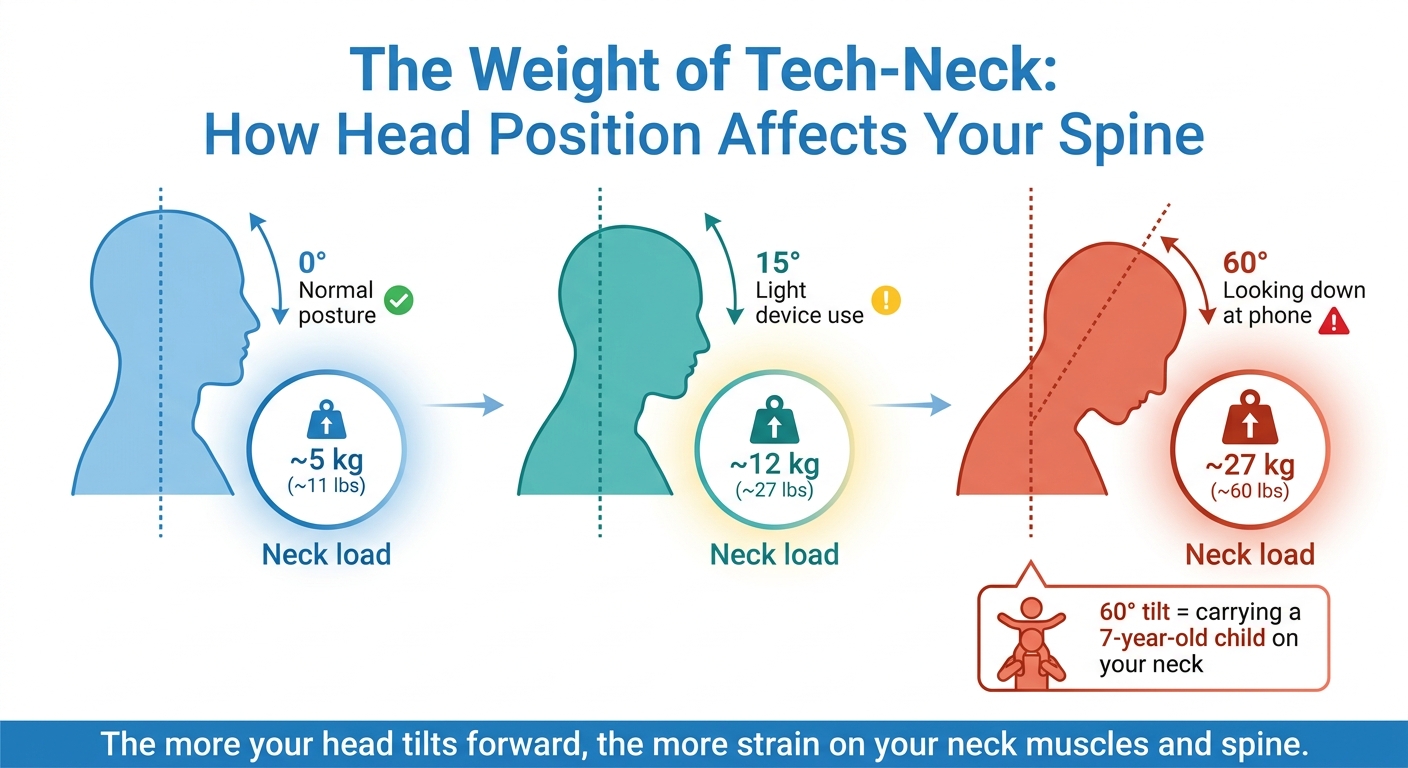
Tech-Neck Impact: How Forward Head Posture Increases Neck Strain in Teens
While schools and home routines provide some posture education, there are situations where more tailored care is necessary. If posture awareness and ergonomic adjustments don’t ease tech-neck symptoms – or if those symptoms worsen – professional guidance may be the next step.
Chiropractic Care for Posture Support
Chiropractic care can play a role in addressing musculoskeletal discomfort caused by poor posture, particularly during teenage growth spurts when spinal alignment is especially important. As one chiropractor explains:
"Maintaining good spinal mobility helps the body move and function more efficiently, especially in a world where screen use isn’t going away anytime soon."
Consider this: when the head tilts forward by just 15°, the load on the neck increases from about 5 kilograms (roughly 11 pounds) to around 12 kilograms (approximately 27 pounds). At a 60° tilt, common when looking down at a phone, that pressure can soar to about 27 kilograms (nearly 60 pounds). Chiropractic care often involves gentle techniques designed to improve joint movement and ease tension, helping the body better manage these stresses. When performed by a qualified practitioner, this form of care is considered safe and can complement other strategies like physical therapy, exercise routines, and posture education.
When to Consult a Healthcare Professional
Parents should consider professional help if their teenager shows ongoing signs of tech-neck. For instance, watch for a rounded back or hunched posture that doesn’t improve even when the teen attempts to stand straight. Another red flag is a natural forward lean, even when they’re not using a device.
It’s also wise to seek medical advice if your teen frequently experiences neck stiffness, headaches, or shoulder tension. More concerning symptoms, such as tingling, numbness, or arm fatigue, could point to nerve involvement and require immediate attention. In such cases, healthcare professionals can conduct a thorough physical examination and, if needed, use X-rays to differentiate between postural kyphosis (caused by habitual slouching) and more severe spinal conditions. Treatment options may include customised strengthening exercises or hands-on therapies tailored to the individual’s needs.
Conclusion: Building Better Posture Habits Early
Tech-neck doesn’t have to be a permanent issue – especially when teens and families commit to better posture habits. Since adolescent bodies are still growing, the choices made now can have a lasting impact on spinal health well into adulthood.
The good news? Postural kyphosis – a rounded back caused by slouching – can often improve when teens make a conscious effort to sit upright and incorporate specific strengthening exercises. Simple adjustments, like three simple ways to avoid tech-neck, can also help ease neck strain.
Beyond individual efforts, schools and parents have a key role in shaping these habits. By weaving posture education into daily life – through reminders in the classroom, ergonomic study setups, or supportive family routines – teens are more likely to stick with these practices. As one chiropractor explains:
"Prevention is especially important for teens because the habits they build now can influence their spinal health for years to come."
Tackling tech-neck isn’t about banning screen time altogether. It’s about creating healthy, sustainable habits that let teenagers enjoy technology while protecting their musculoskeletal health. With consistent practice and the right guidance, good posture can become second nature.
This information is general in nature and not a substitute for professional medical advice.
Chiropractic care focuses on musculoskeletal health, and results vary between individuals.
Always consult a qualified healthcare professional before making decisions about your health.
FAQs
How can I tell if my teen’s rounded back is posture-related or something more serious?
A rounded back in teens is often linked to posture issues, stemming from habits like slouching or weak muscles. In many cases, practising posture-improving exercises can help. However, if the rounded back comes with pain, neurological symptoms, noticeable deformities, or seems to worsen quickly, it’s important to consult a professional. A chiropractor or medical doctor can determine whether the cause is posture-related or due to an underlying condition. Getting an early evaluation ensures the right care and supports overall musculoskeletal health.
What’s the easiest way to set up a phone or laptop to reduce neck strain?
To ease neck strain, try keeping your phone or laptop at eye level. This small change prevents you from constantly looking down, which can put pressure on your neck. Also, remember to take regular breaks – stand up, stretch, and do some neck exercises. These habits can improve your posture and reduce discomfort caused by "tech-neck", helping you maintain better alignment overall.
What symptoms suggest we should see a health professional soon?
If you’re dealing with ongoing neck pain, frequent headaches, or symptoms such as numbness, tingling, or weakness in your arms or hands, it’s worth consulting a health professional. These issues are especially concerning if they’re severe or seem to be getting worse.