


If you are choosing between a chiropractor and an osteopath for neck or back discomfort, both professions are registered in Australia and their approaches to musculoskeletal care can overlap. The decision is not simply about joints versus muscles: you need to compare the individual practitioner’s assessment, proposed techniques, explanation of risks, and reasons for recommending care.
- Chiro vs osteo compares separately registered professions, not a simple joints-versus-muscles divide.
- Ahpra’s practitioner register lets you check a chiropractor’s or osteopath’s registration and any published conditions.
- Compare the proposed care, alternatives and review process rather than choosing by professional title alone.
- MyChiro provides chiropractic care in Bondi Junction; suitability for an individual requires assessment.
How do you choose between the two?
Choosing between a chiropractor and an osteopath should not depend on a slogan about which profession does more. Both professional titles tell you something about registration and education, but neither tells you exactly what will happen during your appointment.
When comparing practitioners, start with registration, then ask what the practitioner proposes and why. The guide to qualifications a Sydney chiropractor should have provides related reading before you contact a clinic.
This page compares professional roles and appointment decisions. It does not establish that either profession, or any particular technique, is appropriate for your symptoms.
Chiro vs osteo: what is the difference in Australia?
A chiropractor is registered with the Chiropractic Board of Australia, while an osteopath is registered with the Osteopathy Board of Australia. Ahpra administers the National Registration and Accreditation Scheme with the National Boards and publishes the register of practitioners.
The professions have different educational pathways and professional frameworks. Their day-to-day services can overlap, so a professional title alone does not identify every technique a practitioner uses.
| Comparison point | Chiropractor | Osteopath |
|---|---|---|
| Australian registration | Chiropractic Board of Australia, administered through Ahpra | Osteopathy Board of Australia, administered through Ahpra |
| Qualification check | Check registration and the Board’s approved programmes of study | Check registration and the Board’s approved programmes of study |
| Common professional emphasis | Musculoskeletal assessment, with a particular emphasis on the spine | Musculoskeletal assessment, considering relationships between body structures and movement |
| Possible appointment components | History, examination, discussion of options, manual techniques and exercise advice | History, examination, discussion of options, manual techniques and exercise advice |
| Adjustment or manipulation | Some practitioners use these techniques; ask what is proposed | Some practitioners use these techniques; ask what is proposed |
| Useful reason to enquire | You want to discuss a chiropractic assessment and the practitioner’s approach | You want to discuss an osteopathic assessment and the practitioner’s approach |
| Limitation | The title does not establish suitability or predict an individual outcome | The title does not establish suitability or predict an individual outcome |
The registration distinctions above come from Ahpra and the respective National Boards. Before deciding, check the live register rather than relying on a directory listing or an old screenshot.
Chiropractic: what should you ask about?
Chiropractic appointments can include discussion of spinal adjustments, other manual techniques, movement and exercise. An adjustment is a technique, not a complete explanation of your concern or a reason by itself to continue attending.
The practical advantage of enquiring is that you can ask directly about the proposed chiropractic approach. The limitation is that the word chiropractic does not tell you whether a particular technique is indicated, what alternatives exist, or how a care plan will be reviewed.
Ask for an explanation before agreeing to a procedure. You can ask whether an assessment can proceed without an adjustment and discuss your preferences with the practitioner.
Osteopathy: what should you ask about?
Osteopathic appointments can also include manual techniques, movement assessment and exercise advice. Osteopathy is not simply massage, and you should not assume an osteopath never uses joint manipulation.
The practical advantage of enquiring is the opportunity to discuss an osteopathic assessment and the practitioner’s individual approach. The limitation is the same: a professional label does not establish which proposed techniques suit your circumstances.
Ask what the practitioner expects to learn from the examination. Then ask how those findings would change the options they discuss with you.
Why chiro and osteo appointments vary
Differences between individual practitioners matter alongside differences between professions. Use these factors to compare actual appointments rather than broad descriptions:
- Your history: Explain your symptoms, relevant diagnoses, medicines and previous procedures so the practitioner can consider them during assessment.
- The proposed examination: Ask what each part involves and what question it is intended to answer.
- The techniques offered: Ask whether the practitioner proposes manipulation, mobilisation, soft-tissue techniques, exercise advice or another approach.
- Your preferences: Tell the practitioner if you do not want a particular technique or need more explanation before consenting.
- The review process: Ask when the plan will be reconsidered and what would prompt a change or referral.
- Coordination with other care: Explain whether you already see a GP or another health professional, and ask how relevant information can be shared with your consent.
These factors are discussion points, not a checklist that proves a service is suitable. A clear answer should relate to your circumstances rather than a standard package.
How do you compare a chiropractor and an osteopath?
Use the same questions for both professions. This keeps your comparison focused on information you can check, rather than assumptions about what a chiropractor or osteopath usually does.
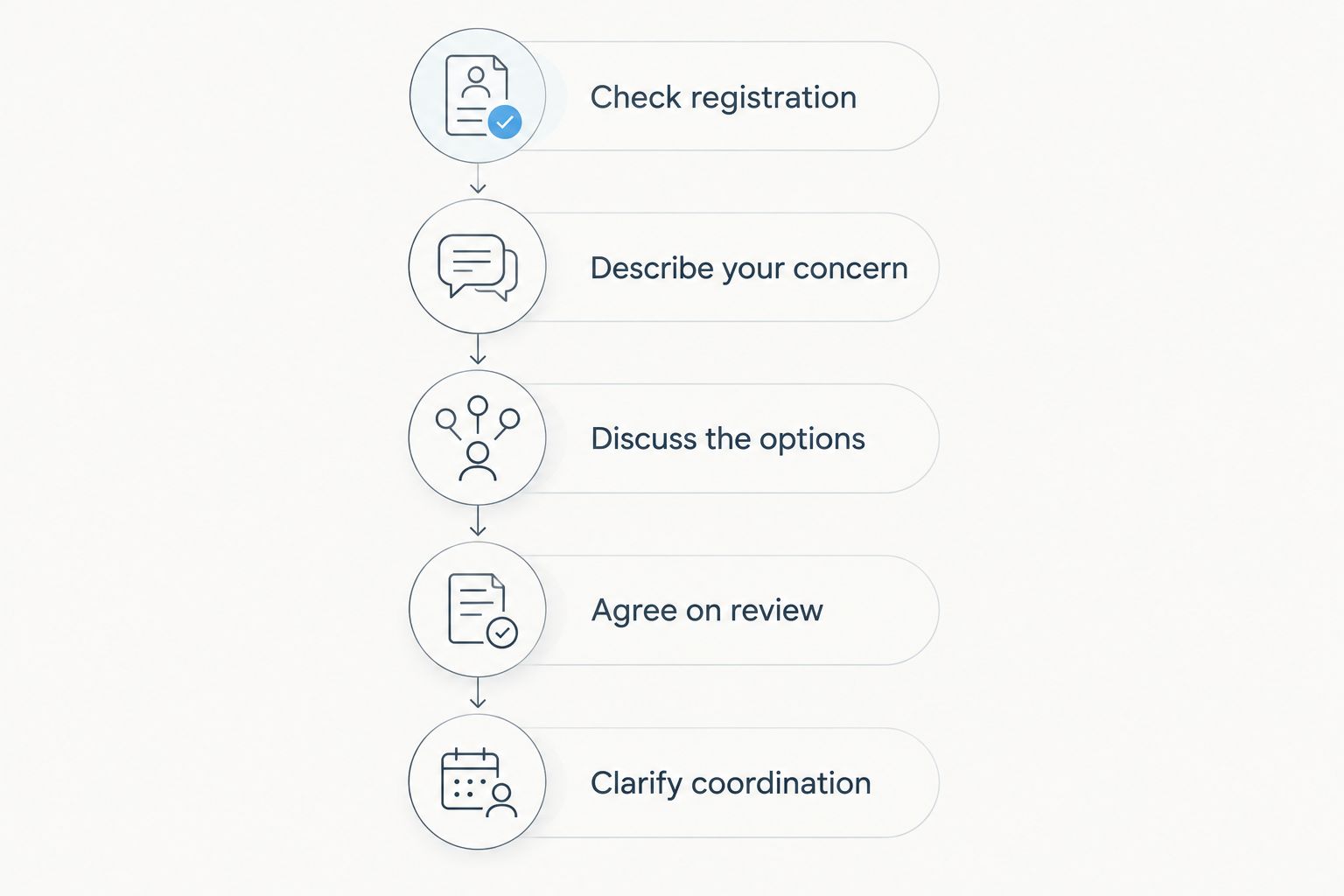
1. Check registration
Search Ahpra’s register using the practitioner’s full name. Check the profession, registration status and any published conditions or undertakings rather than stopping when you find a matching name.
A clinic website is not a substitute for the register. If the details do not match what you have been told, ask for clarification before deciding.
2. Describe your concern
Write down what prompted you to seek advice, when it started and which activities matter to you. Include relevant medical information and tell the practitioner about care you already receive.
You do not need to arrive with a self-diagnosis. A useful starting point is a plain description of what you notice and what you want assessed.
3. Discuss the options
Ask what the practitioner proposes, why they propose it, and what alternatives you can consider. Ask about material risks and uncertainties before consenting to a procedure.
You can request more time to decide. You can also decline a proposed technique and ask how that affects the available options.
4. Agree on review
Ask what will be reviewed and how the practitioner will decide whether to continue, change the plan or recommend another assessment. Do not substitute a standard attendance schedule for an individual explanation.
Before agreeing to ongoing care, ask for this explanation before committing to ongoing care. The reason for each proposed visit should be understandable to you.
5. Clarify coordination
If another clinician is involved, ask whether communication would be useful and how consent will be handled. Bring relevant reports you already have rather than assuming every clinic shares the same records.
The point is clarity. You should understand who is doing what and whom to contact with questions about your care.
Does a chiropractor work on joints and an osteopath on muscles?
Neither profession is defined by that split. Both chiropractors and osteopaths can assess musculoskeletal concerns and discuss approaches involving joints, muscles and movement.
The distinction becomes useful only when you ask about the actual appointment. Ask which structures or movements the practitioner wants to examine and how that information would influence their recommendations.
Likewise, do not assume one profession always uses forceful techniques while the other never does. Describe any concerns about hands-on procedures before the examination begins, then ask for an explanation of the proposed approach.
Do chiropractors and osteopaths need different qualifications?
Chiropractors and osteopaths follow different approved educational pathways and register with different National Boards. For both professions, Australian registration is the check to make before relying on a qualification listed in advertising.
There is no need to rank courses by their names or assume every practitioner followed an identical route. The Chiropractic Board of Australia and Osteopathy Board of Australia publish approved programmes of study and registration information.
When checking qualifications, use the Boards’ current information alongside the live Ahpra register. Registration is not an endorsement of every statement a practitioner makes or every service a clinic advertises.
Should you choose based on adjustments or other techniques?
Choose what to discuss based on your questions and preferences, not the assumption that you must receive a particular technique. A consultation and consent to a procedure are separate decisions.
Ask these questions if an adjustment or another hands-on technique is proposed:
- What does the procedure involve?
- Why are you recommending it in my circumstances?
- What are the material risks and uncertainties?
- What alternatives can I consider?
- What happens if I decline it?
Ahpra’s shared Code of conduct addresses informed consent and shared decision-making for participating professions, including chiropractic and osteopathy. Its relevance here is the decision process, not evidence that a particular procedure will produce a clinical outcome.
Where does MyChiro fit in this comparison?
MyChiro is a chiropractic clinic for people seeking chiropractic services in Bondi Junction, Sydney. Its stated services include chiropractic care and spinal adjustments; this identifies the service category, not whether an adjustment is appropriate for you.
You can review MyChiro when comparing local chiropractic services. Ask the same questions about assessment, consent, alternatives and review that you would ask any other practitioner.
The limit is straightforward: this comparison does not provide an osteopathic assessment or establish an individual care recommendation. An assessment may lead to discussion of chiropractic care, other options or referral, depending on the circumstances.
When should medical assessment come before this comparison?
Do not let choosing between professions delay medical assessment for urgent or unexplained symptoms. Healthdirect Australia provides public guidance on seeking urgent help for symptoms such as chest pain, stroke symptoms and serious injury.
New bladder or bowel control changes with back pain, numbness around the groin, or new or worsening limb weakness also warrant urgent medical assessment. These are not situations to resolve by comparing routine clinic appointments.
If you are unsure where to seek care, contact an appropriate medical service. This article is general information and does not diagnose symptoms or replace individual advice.
FAQ
What is the main difference between chiro and osteo in Australia?
Chiropractic and osteopathy are separately registered professions with different educational pathways and overlapping musculoskeletal approaches. Compare the individual practitioner’s proposed assessment and care rather than assuming a simple joints-versus-muscles distinction.
Do osteopaths also use joint manipulation?
Some osteopaths use joint manipulation, so you should not assume the technique is exclusive to chiropractic. Ask what the practitioner proposes and discuss risks, alternatives and your preferences before consenting.
Can I see a chiropractor without having an adjustment?
You can tell a chiropractor that you do not consent to an adjustment and ask what assessment or other options can be discussed. Agreeing to a consultation does not mean agreeing to every proposed procedure.
How do I check a chiropractor or osteopath in Australia?
Search the practitioner’s full name on Ahpra’s register and check their profession, registration status and any published conditions. Use the live entry rather than relying only on a clinic website or directory.
Does chiro vs osteo tell me which approach suits my back pain?
Chiro vs osteo does not establish which approach suits your back pain. Your history, assessment findings, preferences and the proposed options need individual consideration with an appropriately qualified health professional.
Does MyChiro provide chiropractic or osteopathy?
MyChiro is described as a chiropractic clinic and wellness centre in Bondi Junction, Sydney. Its stated services include chiropractic care and spinal adjustments; suitability for an individual requires assessment.
Should I choose by the number of appointments a clinic suggests?
Ask for the individual reason behind any proposed attendance schedule rather than choosing by appointment numbers alone. Clarify what will be reviewed and what would prompt a change, discharge or referral.
What to ask during your first consultation
Ask what would make the practitioner recommend a different course of action. That question invites an explanation of the limits of the proposed care, not just its intended purpose.
A useful consultation explains what has been assessed, what is uncertain, and which care options or referrals may be suitable. At MyChiro Bondi Junction, the initial consultation is free for new patients and includes assessment and advice. If appropriate, treatment can be provided the same day for a separate $125 fee, with no obligation to proceed.
Related guides
- How to prepare for your first chiropractor appointment
- What to expect from spinal manipulation
- How often should you see a chiropractor?