


There is no single chiropractic appointment schedule that suits everyone: whether you need another visit, and when, should follow an individual assessment and an agreed review plan. The important caveat is that a proposed schedule does not establish that adjustments are appropriate, and ongoing appointments should not be assumed necessary.
- How often should you see a chiropractor? Discuss an individual assessment, clear goals and a review point—not a universal schedule.
- MyChiro is a chiropractic clinic in Bondi Junction, Sydney; appointment frequency requires an individual discussion.
- Ask what would justify continuing, spacing out or stopping appointments before agreeing to ongoing care.
- New or worsening symptoms need reassessment, not an automatic increase in adjustments.
How often should you see a chiropractor?
Ask for a reason for each proposed appointment, rather than accepting a standard weekly or monthly routine. A scheduling recommendation should explain what the clinician has assessed, why the proposed care may be appropriate, and when you will review the decision together.
Frequency and total appointments are different questions. Frequency describes the gap between visits; the total describes how long a proposed course continues. Neither tells you, on its own, whether the care is appropriate for you.
For a related discussion, see how many chiropractic sessions you need for back pain. Do not interpret a session count as a personal prescription.
| Scheduling approach | What to clarify | Limitation to discuss |
|---|---|---|
| Assessment before further booking | What needs assessment and whether chiropractic care is appropriate | An assessment does not commit you to adjustments or ongoing visits |
| A proposed course with a review point | The purpose of appointments and the criteria for continuing | Booking a course does not establish that every appointment remains necessary |
| Longer gaps between appointments | Why follow-up is still proposed and what would change that decision | A longer interval does not, by itself, justify ongoing care |
| No further routine appointments | What advice applies and when to seek another assessment | New concerns still need appropriate professional advice |
These are discussion options, not recommended schedules. A general article cannot choose between them for you.
Why this matters
A calendar can make a plan look more definite than it is. Having another appointment booked does not answer whether its purpose remains relevant or whether another approach deserves consideration.
When comparing chiropractic appointment plans in 2026, distinguish a proposed schedule from a commitment. You should be able to ask questions, consider alternatives and decide whether to proceed without pressure.
A useful appointment discussion includes the option of not scheduling another appointment. That keeps the focus on your circumstances rather than attendance itself.
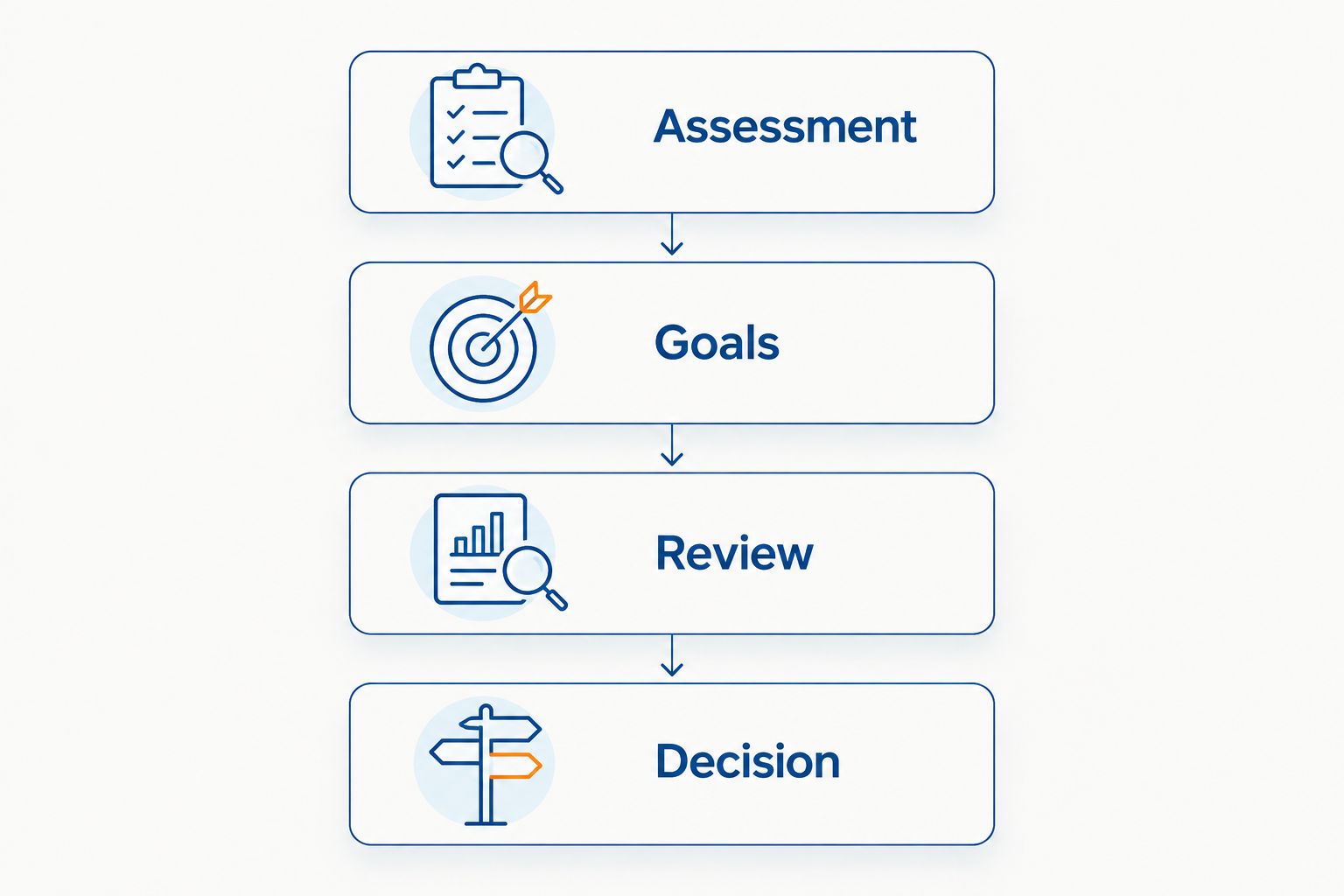
What should happen before you agree to a schedule?
Use this sequence to organise the conversation. It is a decision checklist, not a clinical protocol or a recommendation to begin care.
Assessment
Ask what the assessment has established and what remains uncertain. Explain your concerns, relevant health history, previous care and what you want help deciding.
Do not assume that an appointment must include an adjustment. Whether a particular procedure may be appropriate following assessment is a separate discussion from whether an appointment is available.
Goals
Describe what matters to you in everyday terms. That might be discussing difficulty with a particular activity, understanding your options, or deciding whether another health professional should assess your concern.
Ask how the proposed care relates to that goal. A goal is something to discuss and review—not a promised result.
Review
Agree when the plan will be reconsidered and what information will inform that conversation. Ask whether the review concerns your symptoms, everyday activities, concerns about care, or the suitability of continuing.
A review should allow a different decision. It should not simply confirm the next block of appointments without considering your current circumstances.
Decision
Clarify the possible decisions before starting: continuing, changing the approach, increasing the gap between visits, stopping, or seeking another opinion. Ask who to contact if your circumstances change before the review.
Keep a written summary of the proposed plan if that helps you consider it. You do not need to rely on remembering everything discussed during an appointment.
Why chiropractic appointment frequency varies
The reason for a proposed interval should be specific enough for you to understand. These are topics to discuss, not a formula for calculating visits:
- The purpose of the appointment. An initial assessment, a review and a proposed procedure are different activities. Ask which one is being recommended.
- What remains uncertain. Ask whether the clinician needs more information, medical input or another assessment before proposing further care.
- Your experience since the previous visit. Describe changes and concerns without assuming they show that more appointments are needed.
- Your goals and preferences. Explain what you want to discuss and whether you are comfortable with the proposed approach.
- Other care you receive. Tell the clinician about relevant advice from your GP, physiotherapist or other health professionals.
- Practical commitments. Discuss time, travel and your ability to attend. Practical convenience should not be presented as a clinical reason for care.
For a plan discussed in 2026, ask for the reasoning that applies to you now. A previous schedule, another person's experience or a generic online timetable is not an individual assessment.
Do you need weekly chiropractic appointments?
Weekly appointments are not a universal requirement. If a chiropractor proposes that interval, ask why it is being recommended for your circumstances and when the recommendation will be reviewed.
Useful questions include: What is this appointment intended to assess or address? What alternatives can we discuss? What would lead you to recommend a different interval or no further appointments?
A schedule deserves an explanation even when it sounds familiar. Popularity, convenience and another person's recommendation do not establish that weekly attendance is appropriate for you.
Should you keep going when you have no current concerns?
Having attended previously does not, by itself, justify continuing routine appointments. Ask what the proposed purpose is when you have no current concerns, what evidence supports that purpose, and what the alternatives are.
Do not interpret a maintenance label as proof of necessity. Ask the clinician to explain the proposal in plain language, including the option of no ongoing appointments.
In 2026, the relevant question is not simply whether a clinic offers ongoing care. It is whether there is a clear, individual reason to consider it and whether you understand the limitations of the proposal.
What if nothing seems to be changing?
Ask for reassessment rather than automatically accepting more appointments. Explain what has stayed the same, what has changed and which everyday concerns remain important to you.
Bring the discussion back to the original purpose of care. Ask whether that purpose still applies, whether the approach should change, and whether assessment by another health professional would be appropriate.
Avoid treating attendance as the measure of progress. Completing appointments is not the same as reaching an agreed goal, and an unchanged concern deserves an explanation rather than an assumed extension of the schedule.
You can also seek an independent opinion. Tell the other practitioner what care you have received and share relevant information rather than asking them to judge a plan from its appointment count alone.
What should you record between appointments?
A brief note can help you give a clearer account at review. You do not need a complicated tracking system or a score that you have not agreed with your clinician.
Record the concern you want to discuss, any change you noticed, and the activity or situation involved. Include questions about the proposed care and anything you did not understand at the previous appointment.
Keep observations separate from explanations. For example, reporting that an activity felt different is more useful than assuming that your spine moved out of position or that you need another adjustment.
Bring relevant advice from other health professionals to the discussion. Ask how different recommendations fit together, rather than assuming that each practitioner needs to schedule a separate ongoing course.
What if you feel worse or develop new symptoms?
Do not use an existing appointment schedule as a reason to delay medical assessment. Contact an appropriate health professional about new or worsening symptoms rather than assuming they are an expected part of care.
Healthdirect's back-pain guidance identifies new bladder or bowel problems and numbness around the groin as reasons for urgent medical assessment. These symptoms need urgent medical attention, not a decision about when to book another adjustment.
For an emergency in Australia, call 000. Otherwise, seek advice from your GP or another appropriate health service about the urgency of assessment.
This general warning is not a complete symptom checklist. If you are unsure what a new symptom means, obtain individual medical advice.
How should you discuss frequency with MyChiro?
MyChiro provides chiropractic care and spinal adjustments in Bondi Junction, Sydney. If you are considering chiropractic care at MyChiro, ask whether it may be appropriate following assessment before discussing a continuing schedule.
Bring your questions about the purpose of care, alternatives, material risks and the review process. This article does not establish an appointment interval or promise a clinical outcome from MyChiro's chiropractic services.
For a first discussion in 2026, a practical opening question is: What would we need to establish before deciding whether another appointment is appropriate? That puts the assessment before the calendar.
FAQ
How often should you see a chiropractor for back pain?
There is no single appointment frequency that applies to everyone with back pain. Discuss individual assessment, whether chiropractic care may be appropriate, and a review point before agreeing to ongoing visits.
Do I need to see a chiropractor every week?
Weekly appointments are not a universal requirement. Ask why that interval is proposed for you and what would justify changing it or stopping appointments.
Is a monthly chiropractic appointment necessary?
A monthly chiropractic appointment is not automatically necessary. Ask what purpose the visit would serve and discuss alternatives, including no ongoing appointments.
Can I stop going to the chiropractor?
You can decide not to continue chiropractic appointments. Ask what advice applies to your circumstances and whether any unresolved concern needs assessment by another health professional.
Should I book more adjustments if I am not noticing a change?
Lack of change is a reason to discuss reassessment, not automatically book more adjustments. Ask whether the proposed approach remains appropriate or whether another opinion is needed.
Does everyone need ongoing chiropractic maintenance?
Ongoing chiropractic maintenance should not be assumed necessary for everyone. Ask for the individual rationale, supporting evidence, limitations and alternatives before deciding.
What should I ask before agreeing to repeat appointments?
Ask why repeat appointments are proposed, what their purpose is and when the decision will be reviewed. Discuss risks, alternatives and the circumstances that would lead to stopping or referral.
One last thing
Ask what would make the clinician recommend fewer appointments—or none. The answer should be part of the conversation before you agree to a continuing schedule, not something you discover after completing it.
Keep that question on your appointment checklist in 2026. A plan is easier to evaluate when its review process and stopping criteria are clear from the start.
Related guides
- How to prepare for your first chiropractor appointment
- What qualifications should a Sydney chiropractor have?
- Discussing chiropractic care and physiotherapy in one plan
- When back pain needs medical assessment