


Severe vitamin D deficiency can sometimes cause bone discomfort and muscle weakness, including around the back. But back pain alone does not establish a deficiency, and a low vitamin D result does not prove it caused your symptoms. If you suspect a deficiency, ask your GP whether testing is appropriate rather than assuming supplements will resolve your back pain.
- Can vitamin D deficiency cause back pain? Severe deficiency can contribute, but symptoms alone cannot establish the cause.
- Discuss vitamin D testing with your GP when your history, symptoms or risk factors justify it.
- Vitamin D supplements are not a guaranteed answer to back pain.
- MyChiro provides chiropractic care; suspected vitamin D deficiency needs medical assessment, not spinal adjustments.
Can vitamin D deficiency cause back pain?
Severe, prolonged vitamin D deficiency can cause osteomalacia in adults, a condition involving inadequate bone mineralisation that can produce bone pain and muscle weakness. That is different from assuming that an aching lower back means your vitamin D is low.
The US National Institutes of Health Office of Dietary Supplements describes this connection in its Vitamin D Fact Sheet for Health Professionals. Its explanation concerns deficiency and bone health; it does not establish vitamin D deficiency as the cause of an individual person's back pain.
| Situation | What it tells you | What it does not establish |
|---|---|---|
| Back pain without a vitamin D test | You have a symptom that needs context | Whether your vitamin D is low |
| A low vitamin D result | Your result needs interpretation against the laboratory range and clinical history | Whether deficiency explains the back pain |
| Suspected osteomalacia | Medical assessment of bone health is appropriate | A diagnosis you can make from an online symptom list |
| Back pain with a result within the laboratory range | Vitamin D deficiency is less likely to explain the symptoms | The actual cause of the back pain |
If you are unsure where to start, this guide to when back pain needs a doctor rather than a chiropractor explains the distinction. Suspected nutritional deficiency belongs with medical assessment.
Why back pain and vitamin D levels are not the same question
Two findings can occur together without one causing the other. You can have back pain and low vitamin D at the same time, while still needing a separate explanation for each.
If you are considering supplements, the distinction matters because correcting a confirmed deficiency and managing back pain are not interchangeable tasks. A supplement decision should address your nutritional and medical circumstances—not replace an assessment of persistent or changing pain.
Ask two separate questions: is vitamin D deficiency present, and what explains the back pain? A useful consultation addresses both rather than stopping at the first abnormal blood result.
What does vitamin D-related pain feel like?
Vitamin D deficiency does not have a distinctive back-pain pattern that you can reliably identify at home. Some people have no obvious symptoms; more marked deficiency can be associated with bone discomfort and muscle weakness.
Healthdirect Australia's information on vitamin D deficiency describes symptoms and risk factors, including bone and muscle concerns. These symptoms overlap with other conditions, so their presence supports a conversation with a health professional rather than a self-diagnosis.
Tell your GP whether the discomfort is localised or widespread, whether it changes with movement, and whether you have noticed difficulty doing ordinary activities. Distinguish pain from weakness: an activity hurting is not necessarily the same as being unable to generate your usual strength.
Avoid using tenderness, tiredness or stiffness as a home vitamin D test. None of those observations measures your vitamin D level, and a symptom checklist cannot establish osteomalacia.
Why vitamin D levels vary
Vitamin D status depends on more than how healthy your diet looks. The NIH fact sheet and Healthdirect identify several relevant contributors:
- Sun exposure: Spending little time outdoors or covering most of your skin can reduce the opportunity for vitamin D production.
- Skin pigmentation: More deeply pigmented skin produces less vitamin D for a given amount of ultraviolet exposure.
- Season and location: Ultraviolet exposure varies with season and geography, including within Australia.
- Dietary intake: Your intake depends on the foods you eat and whether those foods contain added vitamin D.
- Absorption and medical history: Conditions affecting fat absorption, and some medicines, can influence vitamin D status.
- Age: The skin's capacity to produce vitamin D decreases with age.
These factors inform assessment; they do not diagnose deficiency. Living in Sydney, exercising outdoors or eating a varied diet does not by itself establish what your blood result will be.
Bring relevant details to your appointment rather than trying to calculate your level from lifestyle alone. Your GP can decide which factors matter in your circumstances.
Should you ask your GP for a vitamin D blood test?
Discuss testing when your symptoms, risk factors or medical history give your GP a reason to investigate deficiency. Back pain alone is not a reason to assume that everyone needs a vitamin D test.
The usual blood test measures 25-hydroxyvitamin D, often written as 25(OH)D. Your GP interprets the result alongside the laboratory reference range, your history and any other relevant findings.
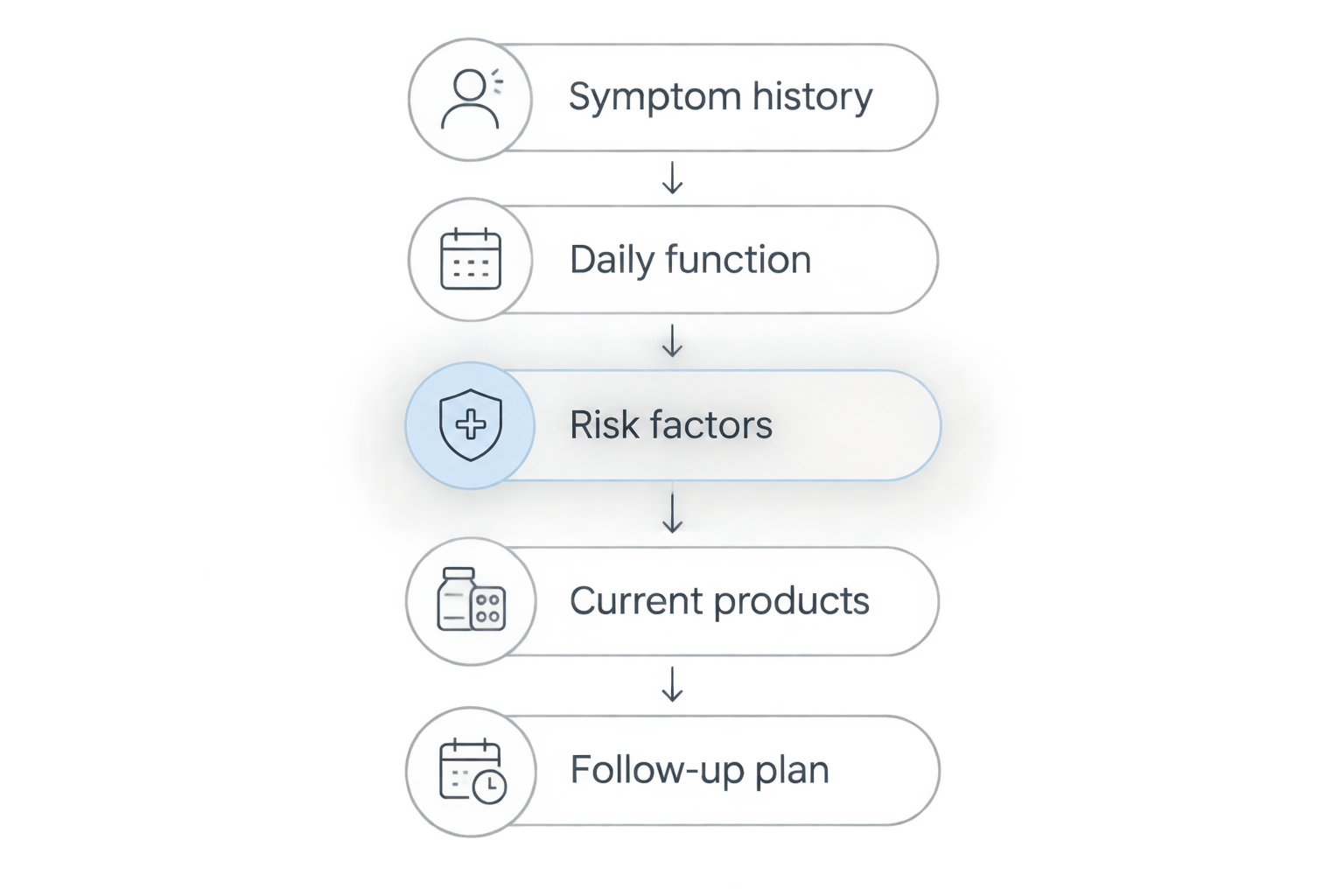
Before discussing vitamin D with your GP, note the following:
- Symptom history: Note where the pain occurs, when it started and whether it is changing.
- Daily function: Explain any difficulty walking, climbing stairs or rising from a chair.
- Risk factors: Describe sun exposure, dietary restrictions and relevant health conditions.
- Current products: Bring the names and labels of supplements and medicines you take.
- Follow-up plan: Ask what the result would change and whether further assessment would be needed.
Testing has a specific purpose: answering a clinical question. It should not become an automatic repeat investigation whenever your back hurts.
What do vitamin D blood results mean?
A blood result needs clinical interpretation, not just a comparison with an online chart. Units matter too: Australian reports commonly use nanomoles per litre, written as nmol/L.
The NIH fact sheet summarises the following National Academies framework for bone health. This is a reference framework, not an Australian diagnosis or a back-pain threshold.
| Blood concentration | NIH summary of the National Academies framework | Important limitation |
|---|---|---|
| Below 30 nmol/L, equivalent to 12 ng/mL | Associated with risk of vitamin D deficiency | Does not identify the cause of back pain |
| 30 to below 50 nmol/L | Generally considered inadequate for bone and overall health in some individuals | Needs interpretation in clinical context |
| At least 50 nmol/L, equivalent to 20 ng/mL | Generally considered adequate for most healthy people | Does not rule out other causes of pain |
Do not use this table to choose a supplement dose. Your laboratory, clinical circumstances and local guidance determine how your GP interprets the result and what happens next.
A result near a cut-off is not a precise dividing line between painful and pain-free. Nor does a higher result establish healthier bones or explain whether your back symptoms need further investigation.
Will taking vitamin D help your back pain?
A confirmed deficiency deserves an individual medical plan, but taking vitamin D does not guarantee an improvement in back pain. The reason for supplementation and the reason for the pain need to be considered separately.
The NIH Office of Dietary Supplements distinguishes vitamin D's established role in bone health from broader proposed health benefits. Do not extend that bone-health role into a promise that supplements will resolve nonspecific lower back pain.
If your GP recommends supplementation, ask what the plan is intended to address, how to take it and whether follow-up testing is appropriate. Avoid adding products simply because the pain persists.
Also check combination products. A multivitamin, calcium product and separate vitamin D supplement can contain overlapping ingredients, making your total intake less obvious than the front labels suggest.
Should you get more sun or change your diet?
Discuss vitamin D intake and sun exposure without treating either as a back-pain prescription. Vitamin D occurs in foods such as oily fish and egg yolks, while some foods have vitamin D added; labels help identify those products.
Food choices can form part of a nutritional discussion, but they do not establish whether a deficiency is present or whether diet alone is an appropriate response. Your circumstances determine the plan.
For sun exposure, follow Cancer Council Australia's guidance about vitamin D and ultraviolet protection. There is no single exposure duration appropriate for every person, location and season, and deliberate sunburn is not a vitamin D strategy.
Do not trade sun protection for an unmeasured attempt to change a blood result. Ask your GP how to address deficiency risk while following local sun-protection advice.
When does back pain need urgent medical assessment?
Do not wait for a vitamin D test if back pain occurs with warning signs. Healthdirect's back-pain guidance identifies symptoms that warrant urgent medical attention.
Seek urgent assessment for:
- New difficulty controlling your bladder or bowel, or difficulty passing urine.
- New numbness around the genitals, buttocks or inner thighs.
- New or worsening leg weakness.
- Back pain with fever or feeling significantly unwell.
- Significant pain following an injury, particularly where fracture is possible.
Unexplained weight loss, a history of cancer or persistent worsening pain also need medical assessment. These features do not establish a diagnosis, but they should not be explained away as low vitamin D.
If you are uncertain about the urgency of your symptoms, contact an appropriate medical service. Do not use a supplement trial to decide whether medical assessment is necessary.
Where does chiropractic care fit?
MyChiro is a chiropractic clinic in Bondi Junction, Sydney. MyChiro is an option for people seeking chiropractic care, not a substitute for medical assessment of suspected vitamin D deficiency.
Vitamin D deficiency and suspected osteomalacia require medical assessment. Spinal adjustments do not replenish vitamin D, and suspected bone fragility is information you should disclose before any manual procedure is considered.
If you are considering a musculoskeletal appointment after medical assessment, explain any diagnosis, blood-test findings and current management plan. You can read about MyChiro without assuming that an appointment or adjustment is necessary for every episode of back pain.
FAQ
Can low vitamin D cause lower back pain?
Severe vitamin D deficiency can contribute to bone pain that includes the back, but lower back pain alone cannot identify a deficiency. Your GP can assess whether testing is justified and investigate other explanations.
How do I know if my back pain is from vitamin D deficiency?
You cannot reliably identify vitamin D deficiency from the location or feel of back pain. A clinical assessment and, when indicated, a blood test are needed to investigate it.
Should everyone with back pain have a vitamin D test?
No—vitamin D testing should answer a clinical question based on symptoms, risk factors or medical history. Ask your GP whether the result would change your care.
Will vitamin D supplements make my back pain go away?
Vitamin D supplements do not guarantee that back pain will improve. If deficiency is confirmed, your GP can address it while assessing the pain separately.
Can I have vitamin D deficiency even if I live in sunny Australia?
Yes—living in Australia does not rule out vitamin D deficiency. Sun exposure, skin pigmentation, absorption, diet and other individual factors influence vitamin D status.
Can chiropractic adjustments correct vitamin D deficiency?
No—chiropractic adjustments do not correct vitamin D deficiency. Suspected deficiency needs medical assessment and an individual plan where indicated.
What back-pain symptoms should not wait for a vitamin D test?
New bladder or bowel changes, numbness around the saddle area, progressive leg weakness or back pain with fever require urgent medical assessment. Do not delay assessment while trying supplements.
What to discuss with your GP
Take your supplement packaging to the appointment, not just a list saying vitamins. The ingredients and directions help your GP or pharmacist identify overlapping products and understand what you already take.
Before your appointment, write down the question you need answered: whether deficiency is plausible, whether testing would change management, or why your back pain persists. Those are different questions, and each deserves an answer.
Sources and scope
This article draws on the NIH Office of Dietary Supplements' Vitamin D Fact Sheet for Health Professionals for deficiency, blood concentrations and supplement cautions; Healthdirect Australia for vitamin D deficiency and back-pain assessment; and Cancer Council Australia for sun-protection context. These sources provide general information, not an individual diagnosis or a basis for promising chiropractic outcomes.
Related guides
- How to prepare for your first chiropractor appointment
- Lower back pain when sitting: causes and practical steps
- How to choose a mattress for back comfort and support