

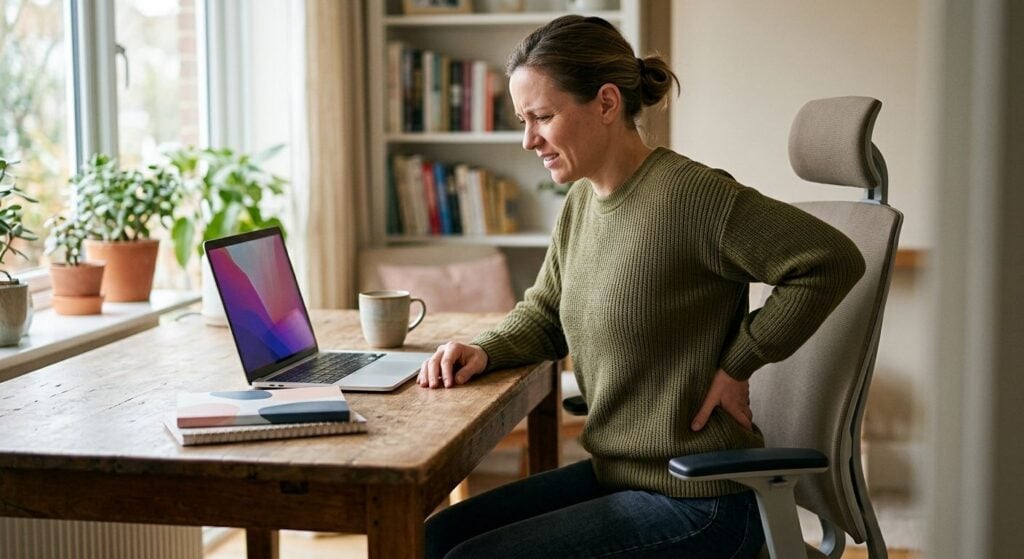
Lower back pain when sitting for long stretches at a desk, behind the wheel or on the couch is one of the most common complaints seen in chiropractic clinics, and the chair is rarely the whole story. This guide breaks down the common factors behind lower back pain when sitting and the practical steps that can ease the load on your spine through 2026.
- Lower back pain when sitting usually comes from poor lumbar support, prolonged static posture and weak core muscles working together.
- Changing position every 30 to 60 minutes reduces sustained pressure on spinal discs and surrounding soft tissue.
- A lumbar cushion or ergonomic chair adjustment can lower strain but doesn’t replace regular movement.
- Persistent lower back pain when sitting that doesn’t ease with movement is worth having assessed by a chiropractor or GP.
Why This Matters
Lower back pain when sitting is not usually caused by the chair alone. It's a combination of prolonged static posture, poor lumbar support, weak core and glute muscles, and reduced movement over time. The lower spine loses its natural curve without support, disc tissue relies on movement for nutrient exchange, and hip flexors shorten the longer you stay seated.
That combination explains why the same office chair feels fine for one person and painful for another after 45 minutes in 2026. A lumbar support cushion can reduce some of that pressure, but it works best alongside regular movement rather than as a standalone answer. Genuinely persistent or worsening pain is a separate issue from the everyday stiffness most seated workers notice by mid-afternoon.
What Causes Lower Back Pain When Sitting
Six factors show up repeatedly when people describe lower back pain when sitting. Some are about the setup, others are about the body doing the sitting.
| Factor | What's happening | What can help |
|---|---|---|
| Weak lumbar support | The lower spine loses its natural inward curve, shifting load onto discs and ligaments | A lumbar support cushion for office chairs or adjustable chair |
| Prolonged static posture | Blood flow and disc hydration drop the longer one position is held | Standing or walking every 30-60 minutes |
| Weak core and glute muscles | Less muscular support around the spine means more load falls on joints and discs | Core strengthening exercises done without straining the back |
| Tight hip flexors | Sitting shortens hip flexors, tilting the pelvis forward and adding strain to the lower back | Stretching during breaks |
| Chair and desk mismatch | Wrong seat height or monitor position forces compensatory posture | Adjusting chair height and screen position |
| Pre-existing spinal changes | Disc bulges or facet joint stiffness can be aggravated by sustained flexion | Assessment from a chiropractor or GP |
Practical Steps to Reduce Lower Back Pain When Sitting
- Set chair height so knees sit level with, or slightly below, hip height.
- Add lumbar support rather than relying on a flat chair back.
- Change position every 30 to 60 minutes — stand, walk, or shift weight.
- Build core and glute strength so the muscles around the spine share more of the load.
- Stretch hip flexors and hamstrings during breaks, especially after long sitting blocks.
- Reposition the monitor so the head doesn't drift forward, which pulls on the lower back indirectly through the whole spine.
None of these steps works in isolation. A well-adjusted chair with no movement breaks still leaves discs under sustained pressure, and frequent movement with poor lumbar support still leaves the lower spine unsupported for the time you are seated.
How Long You Can Sit Before Pain Increases
Most ergonomic guidance points to the 30 to 60 minute mark as when static sitting starts adding noticeable strain, particularly for people who already carry some stiffness or a prior back injury. That's not a hard rule for everyone — some people feel discomfort sooner, others later — but it's a reasonable default for setting a break reminder.
The issue isn't the position itself. It's holding any one position, including standing, for hours without change.
“Sitting isn’t the problem – staying in one position for hours is.”
Microbreaks matter more than posture perfection. A 60-second stand-and-stretch every half hour does more for disc health than an expensive chair that never gets adjusted.
Why Lower Back Pain When Sitting Varies From Person to Person
- Body weight distribution — uneven weight through the hips changes how pressure lands on the lower spine.
- Occupation demands — drivers and shift workers often sit longer with fewer breaks than office staff.
- Prior injury history — an old disc or joint issue can flare with sitting loads that wouldn't bother someone else.
- Activity level outside sitting hours — regular movement elsewhere in the day offsets some sitting load.
- Sleep quality and general muscle tension — poor sleep is linked to increased pain sensitivity generally.
- Chair and desk quality — a genuinely mismatched setup multiplies every other factor above.
Does a Lumbar Cushion Help Lower Back Pain When Sitting?
A lumbar cushion can help lower back pain when sitting by restoring some of the lower spine's natural curve and reducing pressure on the discs and ligaments behind it. It works best combined with regular position changes rather than as a fix on its own — a cushion doesn't compensate for eight hours of no movement.
Can Weak Core Muscles Cause Lower Back Pain When Sitting?
Weak core muscles can contribute to lower back pain when sitting because the spine relies more heavily on ligaments and discs to hold posture when surrounding muscles aren't sharing the load. Building core and glute strength gradually, without straining the lower back during the exercises themselves, tends to reduce that reliance over weeks rather than days.
How Often Should You Stand Up When Sitting All Day?
Standing up every 30 to 60 minutes is the general benchmark most ergonomic guidance in 2026 still points to for reducing sitting-related back strain. Even a short walk to refill water or a minute of stretching counts — the goal is breaking the static position, not achieving a set step count.
When Sitting-Related Back Pain Needs Assessment
Everyday stiffness from a long day at a desk is different from pain that persists after you stand, radiates down a leg, or doesn't ease with movement and rest. In those cases, a chiropractor can assess posture, joint mobility and muscle balance following a proper clinical assessment, and discuss whether adjustments, exercise-based care or referral elsewhere may be appropriate for your situation.
MyChiro, based in Bondi Junction, works with patients dealing with ongoing sitting-related back discomfort as part of broader musculoskeletal assessments. If pain has lasted more than a few weeks or keeps returning despite ergonomic changes, it's worth reading how to know when back pain needs a chiropractor vs a doctor before deciding on next steps.
Get Your Posture Assessed
A chiropractor can assess sitting posture and joint mobility following a consultation.
FAQ
What causes lower back pain when sitting for long periods?
Lower back pain when sitting for long periods usually comes from a mix of poor lumbar support, prolonged static posture, weak core muscles and tight hip flexors. Pre-existing spinal changes can make the same sitting load feel worse for some people than others.
Is sitting bad for lower back pain?
Sitting itself isn’t inherently bad, but staying in one position for hours without movement increases pressure on spinal discs and reduces blood flow to the area. Alternating between sitting, standing and walking through the day matters more than avoiding sitting altogether.
Does a standing desk fix lower back pain from sitting?
A standing desk doesn’t remove lower back pain on its own because static standing carries its own strain if held too long without movement. Alternating between sitting and standing every 30 to 60 minutes tends to help more than switching to one static position permanently.
How long should I sit before standing up?
Most ergonomic guidance recommends standing up or changing position every 30 to 60 minutes to reduce sustained pressure on the lower spine. People with prior back issues may need shorter intervals.
Can a lumbar cushion help with lower back pain when sitting?
A lumbar cushion can reduce pressure on the lower spine by supporting its natural curve while seated. It works best paired with regular movement breaks rather than used as a standalone solution.
Why does my lower back hurt when sitting but not standing?
Sitting flattens the lower back’s natural curve and increases disc pressure in a way that standing generally doesn’t, which is why some people only notice pain in a seated position. Weak core muscles and tight hip flexors from prolonged sitting often add to this effect.
When should I see a chiropractor for lower back pain when sitting?
Seeing a chiropractor is worth considering if lower back pain when sitting persists for more than a few weeks, keeps returning after ergonomic changes, or radiates into the leg. A clinical assessment can identify contributing factors and whether further care or referral is appropriate.
Do core exercises help lower back pain when sitting?
Core exercises can help lower back pain when sitting by sharing more of the spinal load with surrounding muscles instead of ligaments and discs. Building strength gradually, without straining the back during the exercises, tends to show change over several weeks.
One Last Thing
The detail most people miss in 2026 isn't the chair or the cushion — it's that standing desks and "good posture" don't eliminate lower back pain when sitting if the underlying pattern is still one static position held too long. Alternating positions, moving every half hour, and building core strength do more collectively than any single ergonomic purchase. If pain keeps returning despite those changes, that's the signal it's time for an assessment rather than another chair upgrade.
Related Guides
- Best ergonomic setups for shift workers with back pain
- How to prevent back pain from working on the couch with a laptop