

Lower back pain is a common issue in today’s world of desk jobs, long commutes, and screen-heavy lifestyles. It’s not just a source of discomfort – it can also impact sleep, productivity, and quality of life. Fortunately, there are targeted exercises you can do at home to strengthen your core, stretch tight muscles, and alleviate tension in the lower back.
In this guide, we’ll walk through eight exercises, explained by Dr Donovan and physiotherapist Ella, that are designed to reduce lower back pain. These movements are easy to adapt, focus on proper alignment, and cater to a variety of fitness levels. Whether you’re dealing with chronic pain or occasional discomfort, these exercises can help you reclaim mobility and strength.
Why Lower Back Pain Happens
Modern lifestyles often involve prolonged sitting, poor posture, and repetitive movements that put strain on the lower back. Over time, this can lead to tight muscles, weak stabilisers, and imbalances in the body. Common contributors to lower back pain include:
- Poor posture: Slouching at desks or staring at phones can weaken the spine’s natural alignment.
- Lack of core strength: Weak core muscles fail to support the lower back adequately.
- Stress and tension: Emotional and physical stress often manifest as tightness in the back and shoulders.
The exercises below are designed to address these root causes, helping to release tension, build strength, and restore balance.
sbb-itb-585d67d
The 8 Exercises to Relieve Lower Back Pain
1. Cat-Camel Stretch
This dynamic stretch improves spinal mobility and decreases stiffness in the back.
- Starting Position: On hands and knees in a tabletop position.
- Movement:
- Arch your back upwards (cat pose), tucking your chin towards your chest.
- Slowly lift your head and tailbone upwards while curving your spine downwards (cow pose).
- Focus: Move slowly through the stretch, syncing each movement with your breath.
- Repeat for 8-10 reps.
Pro Tip: Visualise pushing your tailbone toward the ceiling during the cow pose for a deeper stretch.
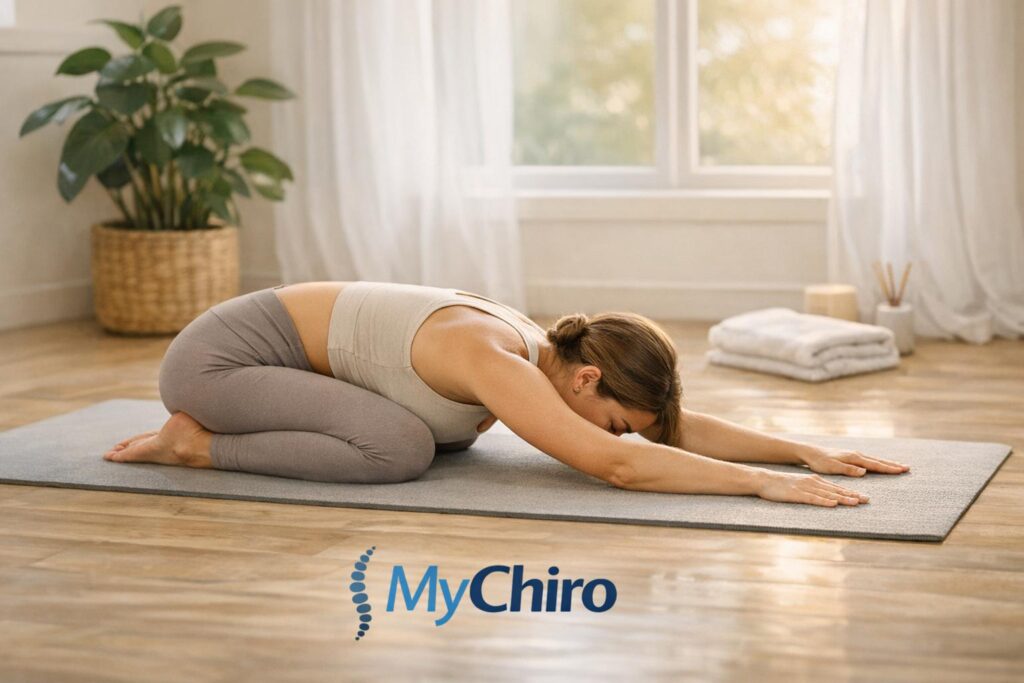
2. Child’s Pose
A calming stretch that targets the lower back and shoulders, while also promoting relaxation.
- Starting Position: Kneel on the floor, hands and knees in a tabletop position.
- Movement:
- Spread your knees slightly wider, keeping your big toes touching.
- Push your hips back onto your heels and extend your arms forward as far as comfortable.
- Rest your head on the floor (or as close as possible).
- Hold: 10–30 seconds, repeating 3–5 times.
Variation: Reach your arms to one side to stretch the side body and back muscles.
3. Glute Bridge
Strengthens the glutes and stabilises the lower back, reducing strain on the spine.
- Starting Position: Lie on your back with your knees bent, feet hip-width apart.
- Movement:
- Press through your heels and lift your hips until they’re in line with your knees and shoulders.
- Squeeze your glutes at the top without overarching your back.
- Slowly lower your hips back to the floor, rolling down vertebra by vertebra.
- Reps: 8–12, holding each lift for 10 seconds.
Pro Tip: If you feel strain in your lower back, tuck your pelvis slightly and focus on using your glutes.
4. Knee-to-Chest Stretch
A gentle stretch for the lower back and hamstrings that soothes tension.
- Starting Position: Lie on your back with your legs extended.
- Movement:
- Pull one knee towards your chest, holding just below the kneecap.
- Keep the other leg extended or bent, depending on what feels comfortable.
- Hold for 10–30 seconds, then switch legs.
- Reps: 5–10 per leg.
Tip: Remember to breathe and avoid pulling too forcefully – comfort is key.
5. Bird Dog
Improves core stability and balance while strengthening the lower back.
- Starting Position: On hands and knees in a tabletop position.
- Movement:
- Extend your left arm and right leg simultaneously, keeping both in line with your torso.
- Hold for a few seconds, then return to the starting position.
- Switch to the opposite arm and leg.
- Reps: 8–10 per side.
Variation: If this is too challenging, try extending just one arm or leg at a time.
6. Supine Twist (T-Trunk Stretch)
Promotes spinal rotation and alleviates tension in the lower and mid-back.
- Starting Position: Lie on your back with your arms stretched out to form a T-shape.
- Movement:
- Bend your knees and roll them to one side while keeping your shoulders flat on the floor.
- Hold the stretch for 5–10 seconds, then return to the centre.
- Repeat on the other side.
- Reps: 6–8 per side.
Pro Tip: If your knees don’t reach the floor, that’s okay – go as far as your body allows.
7. Good Morning Stretch
Combines a stretch and strengthening exercise for the hamstrings and lower back.
- Starting Position: Stand tall, hands placed lightly on your temples.
- Movement:
- Hinge at the hips, pushing your bum back as if closing a car door behind you.
- Keep your back straight and your knees slightly bent.
- Hold the stretch for 5 seconds before returning to standing.
- Reps: 8–12.
Pro Tip: Keep your neck aligned with your spine to avoid strain.
8. Superman
A challenging exercise that strengthens the entire posterior chain, including the lower back.
- Starting Position: Lie face-down on a mat with your arms extended forward.
- Movement:
- Lift your chest, arms, and legs off the floor simultaneously, creating a slight arch in your back.
- Hold for 10–30 seconds, then lower slowly.
- Reps: 5–8.
Variation: For an easier option, lift just your arms or legs instead of both.
Key Takeaways
- Consistency is Key: These exercises work best when performed daily or several times a week.
- Start Slow: Focus on proper form and tailor the movements to your comfort level.
- Listen to Your Body: Avoid pushing into pain – these movements should feel relieving, not aggravating.
- Stability is Crucial: Strengthening core and glute muscles reduces lower back strain over time.
- Breath Matters: Incorporate deep breathing into each stretch to enhance relaxation and release tension.
Final Thoughts
Lower back pain doesn’t have to be a persistent challenge. By incorporating these simple yet effective exercises into your routine, you’ll not only relieve discomfort but also build strength and resilience in your lower back. Each movement is backed by expert guidance from Dr Donovan and Ella, ensuring they’re both safe and beneficial.
Start slow, stay consistent, and prioritise form over speed. In time, your body will thank you with less pain, greater mobility, and an improved sense of well-being.
Source: "8 best exercises to treat LOWER BACK PAIN | Doctor and physiotherapist step-by-step demonstration" – Doctor O’Donovan, YouTube, Feb 5, 2025 – https://www.youtube.com/watch?v=HXSZHLGNSyU


