


As you age, your spine undergoes changes that can lead to stiffness, discomfort, and reduced flexibility. The good news? Certain nutrients can help maintain spinal health by supporting bone density, reducing inflammation, and aiding tissue repair. Here’s a quick rundown:
- Omega-3 Fatty Acids: Reduce inflammation and support tissue repair. Found in fatty fish like salmon and mackerel.
- Antioxidants (Vitamins C and E): Combat oxidative stress, promote collagen production, and aid tissue repair. Found in berries, nuts, and leafy greens.
- Calcium: Strengthens vertebrae and supports muscle function. Found in dairy, leafy greens, and fortified foods.
- Vitamin D: Helps absorb calcium and boosts muscle strength. Get it from sunlight, fatty fish, and supplements.
- Magnesium: Activates Vitamin D, aids calcium absorption, and relaxes spinal muscles. Found in seeds, nuts, and whole grains.
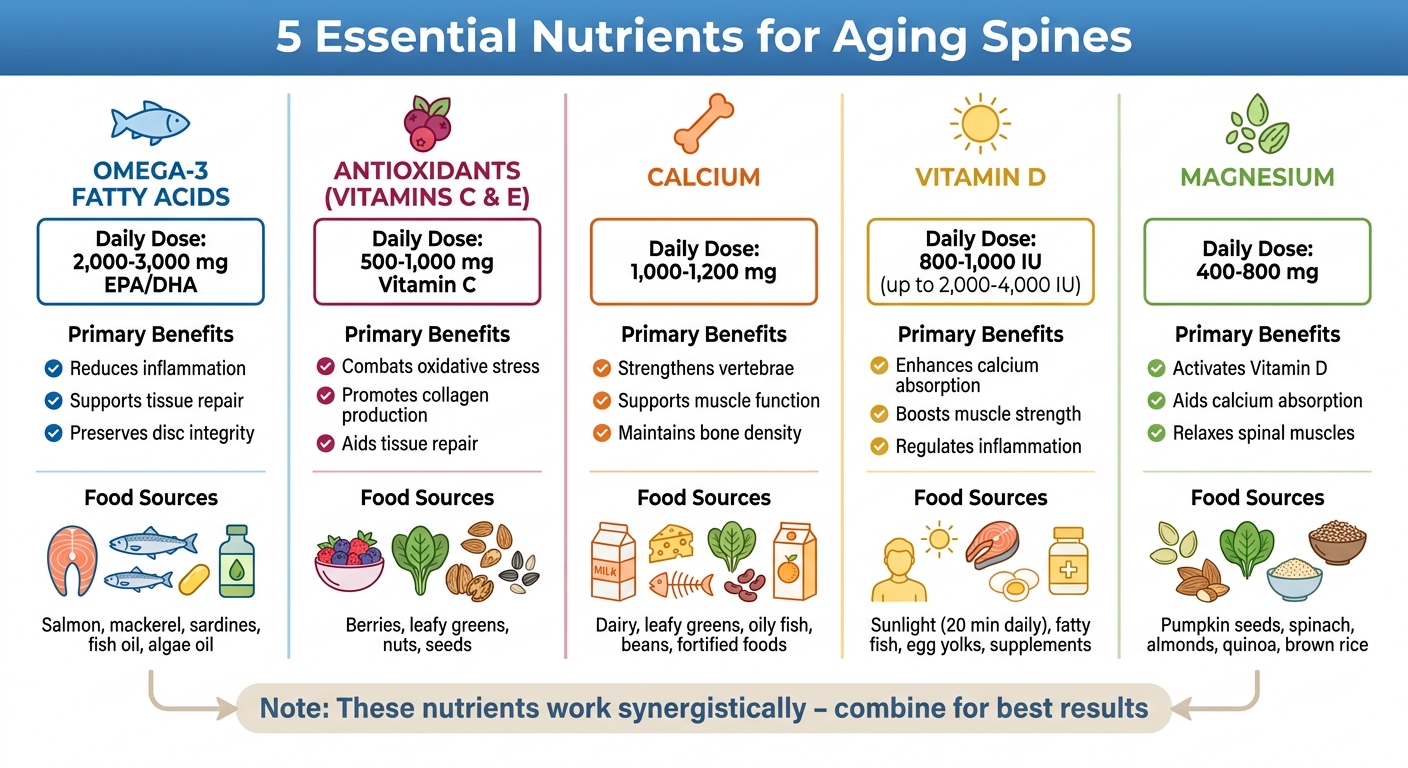
5 Essential Nutrients for Spine Health: Benefits and Food Sources
1. Omega-3 Fatty Acids
Inflammation Support
Omega-3 fatty acids, particularly EPA and DHA, are known for their ability to help manage inflammation throughout the body. This makes them a valuable addition to care routines for conditions like spinal arthritis, disc degeneration, and inflammation caused by injuries. Instead of targeting specific areas, omega-3s work across the entire system, helping to regulate the body’s inflammatory response. This can play a role in easing chronic pain and preserving tissue health when combined with other spinal care strategies.
"Fish oil and other omega-3 sources (EPA and DHA) are among the most well-researched anti-inflammatory compounds available." – Dr. Samantha Coleman, Advanced Certified CBP Chiropractor
For noticeable results, a daily dose of 2,000–3,000 mg of combined EPA and DHA is suggested. You can achieve this by eating fatty fish like salmon, mackerel, and sardines or by taking high-quality fish oil or algae oil supplements. Regular use over a few months is often necessary to see improvements in chronic spinal inflammation.
Beyond inflammation, omega-3s work hand-in-hand with other nutrients to promote overall spine health.
Bone Health
Omega-3s don’t directly strengthen bones like calcium does, but they play a supporting role in maintaining spine health. By helping to preserve the integrity of spinal discs and joints, they work alongside nutrients like calcium and vitamin D to protect against degenerative changes in the spine.
Tissue Repair
Reducing inflammation is just one way omega-3s contribute to recovery. They may also assist in repairing connective tissues, including spinal discs and ligaments. This process can be further supported by vitamin C, which boosts collagen production – key to tissue repair.
sbb-itb-585d67d
2. Antioxidants (Vitamins C and E)
Inflammation Support
Vitamins C and E play a key role in counteracting free radicals, which can cause oxidative stress. This stress often leads to inflammation and damages cells over time. Vitamin E primarily works to neutralise free radicals, while Vitamin C reduces oxidative stress and aids in repairing tissues.
Together, their antioxidant properties contribute to reducing inflammation and promoting healthier tissue function, which ties directly into their role in tissue repair.
Tissue Repair
Collagen is essential for maintaining spinal health, especially as its natural production decreases with age. Vitamin C is a crucial component in collagen synthesis, supporting the structure of spinal discs, ligaments, and cartilage. Maintaining an adequate intake of Vitamin C becomes even more important as you age to help preserve spinal flexibility and disc resilience.
"Without adequate vitamin C, your body can’t build or repair connective tissue effectively. This affects everything from disc health to ligament strength to wound healing after injury." – Dr. Samantha Coleman, Chiropractor
For adults, aiming for 500–1,000 mg of Vitamin C daily can help keep your spine healthy. During times of injury or high stress, higher amounts might be beneficial. Pairing collagen supplements with Vitamin C can further boost the production of structural proteins. You can find these antioxidants naturally in foods like berries, leafy greens, nuts, and seeds, which also offer a variety of other protective nutrients for spinal health.
3. Calcium
Bone Health
Calcium plays a key role in building and maintaining the strength of your spine. Your vertebrae are constantly renewing themselves, replacing old bone tissue with new. Without enough calcium, this renewal process slows down, leaving bones weaker and more prone to fractures. By the time you’re 18, about 90% of your peak bone mass is already formed. After your late 20s, if your diet doesn’t provide enough calcium, your body may start drawing it from your bones to keep other bodily functions running smoothly. This can leave your spine more vulnerable over time. Adults are generally advised to aim for 1,000–1,200 mg of calcium daily, sourced from both food and supplements. Besides fortifying bones, calcium also supports the spinal muscles that keep your back stable.
Muscle Function
Calcium isn’t just about bones – it’s also critical for muscle health. It helps your spinal muscles contract and relax properly, which is vital for maintaining good posture and spinal alignment as you age. To get the most out of calcium, focus on whole foods like dairy products, leafy greens, oily fish (such as salmon and sardines), beans, nuts, and seeds. While supplements can help, food sources are often better absorbed. Calcium works hand-in-hand with Vitamin D (covered next), which enhances absorption, and Vitamin K2, which ensures calcium is directed to your bones rather than soft tissues. Pairing calcium-rich foods with sources of Vitamin D, like egg yolks or fatty fish, can help you make the most of this essential nutrient, keeping both your bones and muscles in top form.
Top 7 Supplements for Spinal Health
4. Vitamin D
Vitamin D plays a crucial role in supporting spinal health by helping your body absorb calcium effectively, which is essential for maintaining strong bones and overall spine function.
Bone Health
Vitamin D is a key player in calcium absorption. Without enough Vitamin D, even a diet rich in calcium may not be enough to support your spine. According to the National Osteoporosis Foundation, adults over 50 should aim for 800–1,000 IU of Vitamin D daily, though some clinical guidelines suggest higher amounts – 2,000–4,000 IU – based on individual needs, sun exposure, and blood levels.
"Remember, even if you are getting enough calcium in your diet, if you don’t absorb it into your body, then it cannot do its job." – National Spine Health Foundation
Your vertebrae are constantly undergoing a process of renewal, balancing bone breakdown and rebuilding. Vitamin D ensures that calcium is available for this process, which can reduce the risk of fractures and degeneration. A 2026 study highlighted by the National Spine Health Foundation found that patients who combined Vitamin D and calcium supplements after spinal fusion surgery experienced quicker fusion rates and less post-operative pain compared to those who only took calcium.
Beyond bone health, Vitamin D also boosts muscle strength, which is essential for spinal stability.
Muscle Function
Vitamin D doesn’t just support your bones – it also helps maintain strong muscles that stabilise your spine. Stronger muscles can improve coordination and balance, which is especially important as you age to lower the risk of falls. To get the most out of Vitamin D, pair foods rich in it – like egg yolks, fatty fish (salmon, mackerel, sardines), and shiitake mushrooms – with calcium-rich foods. Spending at least 20 minutes in direct sunlight daily can also help, though many Australians, particularly those who work indoors, might need supplements. Since Vitamin D deficiency is common, it’s wise to have your levels tested by a healthcare provider to determine the right dosage for you.
Vitamin D also plays a lesser-known but important role in managing inflammation in spinal tissues.
Inflammation Support
Vitamin D contributes to regulating your body’s inflammatory response, which can impact pain levels in spinal tissues. While it’s not as strong an anti-inflammatory as omega-3 fatty acids, it works in tandem with other nutrients. For Vitamin D to function properly, your body also needs magnesium (400–800 mg daily) to activate it and Vitamin K2 (100–200 mcg daily) to ensure calcium is directed into bones rather than soft tissues like arteries or joints.
5. Magnesium
Building on Vitamin D’s role in calcium absorption, magnesium plays a key part in spinal health by activating Vitamin D.
Bone Health
Magnesium works hand-in-hand with calcium and Vitamin D to keep your vertebrae strong and dense. It helps convert Vitamin D into its active form, which is essential for effective calcium absorption. Without enough magnesium, even a diet rich in calcium won’t necessarily lead to stronger bones.
"Magnesium, similar to Vitamin D, enhances the absorption of calcium from the blood into the bone. Magnesium also helps to convert Vitamin D into its active form, which then aids in calcium absorption." – National Spine Health Foundation
Once Vitamin D is activated by magnesium, it helps calcium integrate into the vertebrae, building the density needed to support your spine. The suggested daily intake of magnesium is 400–800 mg, but many Australians don’t meet this target through diet alone. Foods rich in magnesium include spinach, pumpkin seeds, sesame seeds, mackerel, beans, quinoa, brown rice, cashews, and almonds. However, if you’re drinking four or more cups of coffee a day, you could be depleting your magnesium and calcium levels, which might increase your risk of fractures.
Magnesium does more than just strengthen bones – it also supports muscle health.
Muscle Function
Magnesium is essential for relaxing the muscles surrounding your spine. Tight or spasmed muscles – often caused by poor posture, stress, or overuse – can lead to back pain. Magnesium helps these muscles release tension, reducing discomfort and improving spinal stability, especially as you age when muscle stiffness becomes more common.
Additionally, magnesium plays a role in proper nerve signalling along your spine, which may help decrease the perception of pain. If you’re considering supplements, magnesium glycinate or citrate are often recommended for better absorption and muscle support. However, it’s best to consult a healthcare provider before starting any supplementation.
When combined with other nutrients like omega-3s, antioxidants, calcium, and Vitamin D, magnesium helps create a strong foundation for maintaining a healthy spine as you grow older.
Comparison of Benefits and Limitations
This section looks at how the benefits of key nutrients are balanced by their challenges in everyday diets.
Calcium and Vitamin D work hand-in-hand to improve bone density, especially in the vertebrae. However, calcium relies on Vitamin D for proper absorption. While calcium is easy to find in foods like dairy, leafy greens, and fortified plant milks, getting enough Vitamin D is trickier. Since many Australians spend most of their time indoors, sunlight exposure – essential for Vitamin D production – is often insufficient. To complicate matters, compounds like phytates (found in beans and wheat bran) and oxalates (present in spinach) can interfere with calcium absorption, meaning not all calcium-rich foods are equally effective.
Magnesium plays a crucial role in activating Vitamin D, ensuring calcium is delivered to the bones. Foods like spinach, pumpkin seeds, almonds, and quinoa are good sources of magnesium, yet many people still don’t meet the recommended daily intake of 400–800 mg.
Omega-3 fatty acids take a different approach by targeting inflammation rather than directly building bone structure. These healthy fats are found in salmon, mackerel, walnuts, and chia seeds. However, consistency is key – regular consumption over several months is needed to see anti-inflammatory benefits. Sporadic intake won’t yield the same results.
Antioxidants like Vitamins C and E are some of the easiest nutrients to include in your diet. Found in vibrant fruits, vegetables, nuts, and seeds, they help reduce oxidative stress and boost collagen production in spinal discs. However, Vitamin C is water-soluble, so your body can’t store it – you need to replenish it daily to maintain its benefits. Together, these nutrients form a holistic strategy to support spinal health as you age.
Conclusion
A healthy spine thrives on a combination of nutrients working together, rather than relying on any single one. Calcium strengthens the bones in your spine, but it needs Vitamin D for proper absorption. Magnesium steps in to activate Vitamin D and helps move calcium from your bloodstream into your bones. At the same time, Omega-3 fatty acids and antioxidants like Vitamins C and E help combat inflammation and oxidative stress, protecting the discs and joints that keep your spine flexible and mobile.
According to the National Osteoporosis Foundation, adults over 50 should aim for 800–1,000 IU of Vitamin D daily and 1,000–1,200 mg of calcium from both food and supplements. Magnesium intake should range from 400–800 mg per day. To meet these goals, try the plate portioning method: fill half your plate with colourful vegetables, one-quarter with lean protein like salmon or chicken, and one-quarter with whole grains such as quinoa or brown rice. Pair calcium-rich foods with sources of Vitamin D to maximise absorption. This approach reinforces the nutrient synergy mentioned earlier.
Staying hydrated is also key to keeping your spinal discs healthy. On the flip side, try to limit carbonated soft drinks, excessive caffeine (more than four cups a day), and overly salty processed foods, as these can lead to calcium loss.
When paired with proper care, these dietary habits can contribute to better spinal function. While good nutrition provides the building blocks for spinal repair and maintenance, chiropractic care may help with spinal alignment and posture. Together, a balanced diet and professional musculoskeletal care can support mobility and comfort, offering a well-rounded approach to spinal health as you age.
This information is general in nature and not a substitute for professional medical advice. Chiropractic care focuses on musculoskeletal health, and results may vary from person to person. Always consult a qualified healthcare professional before making decisions about your health.
FAQs
Should I get a blood test for vitamin D?
A blood test to check your vitamin D levels might be something to think about if you have symptoms or risk factors for deficiency. That said, it’s not typically recommended solely for assessing spinal health. Speaking with a healthcare professional can help you decide if this type of testing makes sense for your situation.
Can I take calcium and magnesium together?
Yes, you can usually take calcium and magnesium together, and they’re often combined to help maintain bone health. However, getting the right balance and dosage is crucial, as this can differ based on your specific needs. It’s always a good idea to check with a qualified healthcare professional before adding any new supplements to your routine.
When should I consider supplements instead of food?
If your diet is missing key nutrients like calcium, vitamin D, antioxidants, or protein – important for maintaining spinal health – you might think about adding supplements. That said, it’s crucial to speak with a healthcare professional first. They can provide tailored advice to ensure supplements are the right choice for your specific needs.