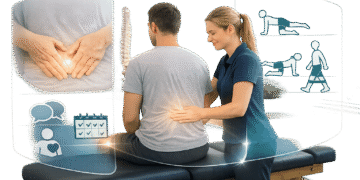


Spinal mobility is about how well your spine moves through its full range of motion – bending, twisting, and rotating. It’s not just about flexibility but how smoothly and efficiently these movements happen. Good spinal mobility is crucial for active people as it prevents strain, improves movement quality, and supports better breathing during exercise.
Key points:
- The thoracic spine (mid-back) is vital for rotation and impacts sports performance and daily activities.
- Limited mobility in one area can cause overcompensation in others, leading to strain or injury.
- Thoracic mobility enhances breathing, improving endurance during physical activities.
- Combining spinal mobility with core stability ensures controlled, efficient movement and reduces injury risk.
You can improve spinal mobility with exercises like cat-cow stretches, thoracic windmills, and Child’s Pose, alongside maintaining good posture and breaking up long sitting periods. Chiropractic care may also help by addressing joint restrictions and supporting alignment. Regular movement, posture awareness, and targeted exercises are key to keeping your spine healthy and functional.
20 Min. Spinal Mobility & Back Stretches | Upper, Mid & Lower Back
sbb-itb-585d67d
Spinal Mobility and Athletic Performance
Thoracic Spine Mobility Statistics and Impact on Movement
Impact on Movement Quality
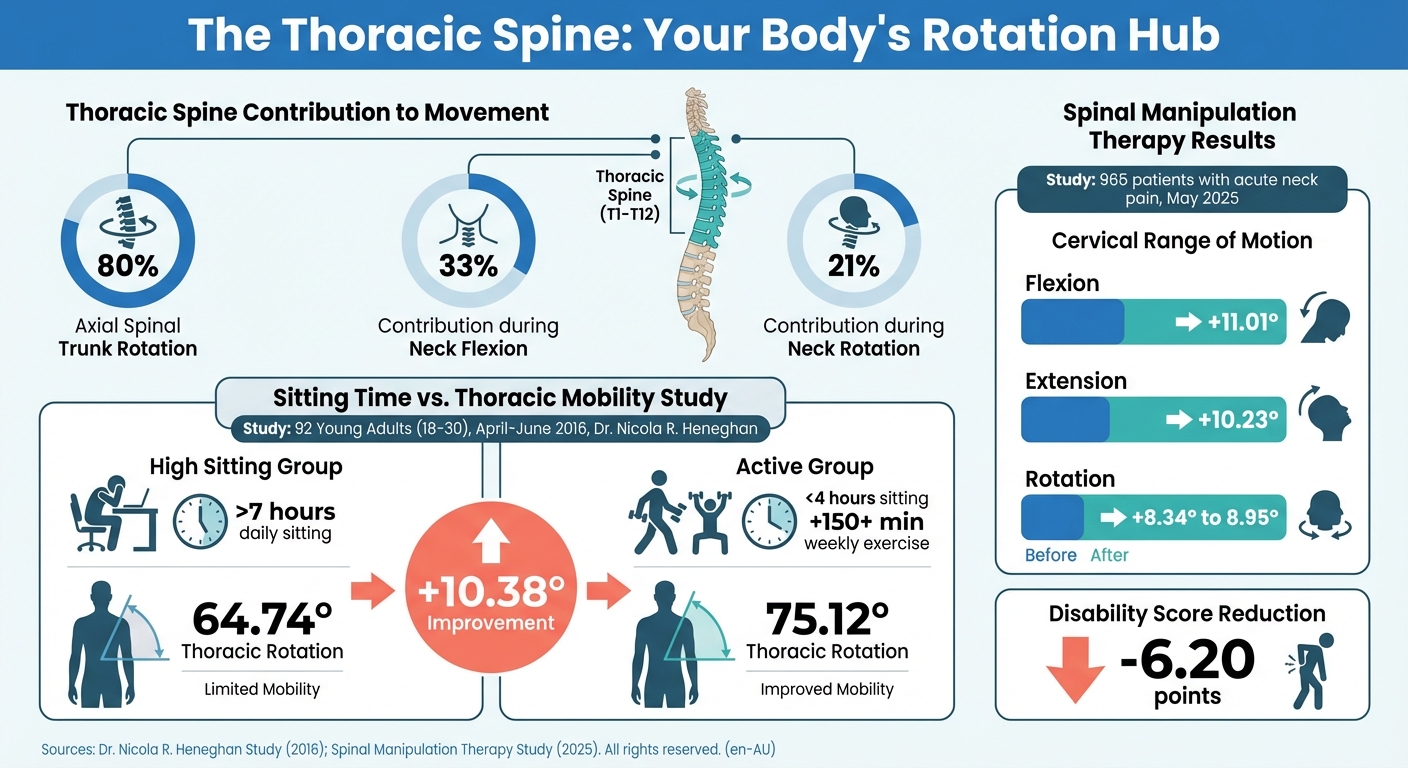
A flexible spine is the foundation of smooth, efficient movement. When your spine can bend, twist, and rotate freely, it positively impacts the rest of your body. This is especially true for the thoracic spine, which is responsible for 80% of axial spinal trunk rotation. In other words, most of your twisting ability comes from your mid-back – a critical factor for sports like tennis, cricket, swimming, and golf.
The thoracic spine also plays a significant role in neck and shoulder movement. Studies show it contributes 33% of the movement during neck flexion and 21% during neck rotation. If your mid-back becomes stiff, your neck and shoulders often have to pick up the slack, leading to strain or discomfort. This concept, called regional interdependence, highlights how restrictions in one area can cause problems elsewhere in the body.
A study led by Dr Nicola R. Heneghan between April and June 2016 examined 92 young adults aged 18–30. The research revealed a clear link between activity levels and thoracic mobility. Participants who sat for over 7 hours daily had an average thoracic rotation of 64.74°, while those who sat less than 4 hours and exercised over 150 minutes weekly achieved 75.12°. That 10.38° difference could significantly affect how efficiently you perform rotational movements in sports or other activities.
While spinal mobility is crucial for quality movement, it must be paired with core stability for proper control and injury prevention.
How Spinal Mobility and Core Stability Work Together
Spinal mobility alone isn’t enough – it needs the support of core stability to ensure controlled and efficient movement. Core muscles like the transversus abdominus and multifidus work together with spinal mobility to prevent compensatory patterns that can lead to discomfort or reduced performance. Without this stability, your body may develop inefficient movement habits, increasing the risk of injury.
A randomised clinical trial conducted by Khalid Alkhathami and colleagues, published in February 2023, examined 40 adults dealing with chronic low back pain over an eight-week period. The study compared two groups: one performing Spinal Stabilisation Exercises (SSE) targeting the transversus abdominus and multifidus, and another following General Exercise (GE). The SSE group showed significantly greater improvements in Functional Movement Screen (FMS) scores, particularly in tests like "rotary stability" and "trunk stability push-up." These findings suggest that focusing on spinal and core stability can enhance movement quality while reducing compensatory patterns.
When spinal mobility and core stability work as a team, your body can handle complex movements – like squats, lunges, or stepping over obstacles – without putting unnecessary strain on other areas. This synergy not only boosts athletic performance but also helps prevent the movement issues that often lead to injuries.
Research on Spinal Mobility and Injury Prevention
Research continues to highlight the role of spinal mobility in preventing injuries by promoting balanced and efficient movement.
Studies on Upper Back Mobility
The relationship between spinal mobility and injury prevention is well-supported by the concept of the kinetic chain. Gray Cook, founder of Functional Movement Systems, introduced the "Joint-by-Joint Approach", which categorises body joints based on their primary function – mobility or stability. According to this model, the thoracic spine is a mobility joint, while the cervical spine (neck) and lumbar spine (lower back) are stability joints.
"The ankle, hip, and thoracic spine represent mobility, whereas the knee, lumbar spine, and cervical spine represent stability." – Gray Cook, Founder of Functional Movement Systems
When thoracic mobility is limited, the neck and lower back may compensate with excessive movement, increasing the risk of injury. A systematic review published in May 2025 in Systematic Reviews examined eight randomised controlled trials involving 965 patients with acute neck pain. The findings showed that spinal manipulative therapy targeting restricted spinal segments significantly improved cervical range of motion. Flexion increased by an average of 11.01°, extension by 10.23°, and rotation by 8.34° to 8.95°. Additionally, disability scores dropped (MD = -6.20), demonstrating the benefits of improving thoracic mobility to reduce strain on the neck.
These results emphasise the interconnectedness of mobility and stability across different spinal regions, a concept also relevant to low back pain.
Low Back Pain and Lower Spine Mobility
The lumbar spine is primarily built for stability rather than mobility. When it compensates for a lack of movement from the thoracic spine or hips, it can lead to chronic low back pain. Jimmy Pritchard of the CU Anschutz Fitness Centre highlights this issue, stating:
"Damaging one area of the body carries repercussions to the surrounding areas and can even affect gross movement patterns."
This insight reinforces the importance of analysing movement holistically rather than focusing solely on the area experiencing pain. Consistent with earlier research on core function, maintaining thoracic mobility can play a key role in protecting the lumbar region. Prolonged sitting or poor posture often restricts the thoracic spine, forcing the lower back to move in ways it is not designed to handle. This additional strain can lead to significant discomfort and injury.
Preserving thoracic mobility is, therefore, not just about improving movement but also about safeguarding the stability and health of the lumbar spine.
How to Improve Spinal Mobility
Keeping your spine flexible and functional involves regular exercises and small tweaks to your daily habits that promote movement in the thoracic region and stability in the lumbar area.
Exercises for Upper and Lower Back Mobility
Incorporating specific exercises into your routine can do wonders for spinal mobility. Start with cat-cow stretches, which gently flex and extend the spine, easing tension throughout your back. For upper back rotation, thoracic windmills are a great choice, especially for activities involving overhead or twisting motions. To decompress the lower back, try Child’s Pose, which also stretches the spine. Nikki Bond, PT, DPT from Hinge Health, highlights the importance of breathing during this stretch:
"I often cue patients to breathe into the back of their rib cage and diaphragm when doing [Child’s Pose] as a way to also stretch the diaphragm muscle, the intercostal muscles between the ribs, and sneak in some stress relief."
To strengthen the glutes and support spinal stability, add bridges to your routine. Low-impact exercises like swimming, walking, or cycling are also excellent for maintaining flexibility without overloading the spine. A commitment of just 15 minutes each day to these movements can enhance mobility and ease discomfort.
But exercises alone aren’t enough – your daily habits play an equally important role.
Posture Awareness and Daily Habits
How you carry yourself throughout the day significantly impacts your spine’s health. Sitting for long periods can reduce joint mobility and stability, leading to stiffness and restricted movement. Breaking up these sedentary stretches with quick desk exercises – like seated pec stretches or seated cat-cow movements – can help stave off mid-back tightness.
Understanding how joints work is key here. Mobility refers to how freely a joint moves, and it’s essential to pay attention to the entire kinetic chain, not just areas of discomfort. For example, maintaining mobility in your hips and ankles can prevent compensatory movements that might strain your neck or lower back. Simple practices like lifting with a neutral spine or sitting upright at your desk can help protect your spine from uneven stress and potential injuries.
How Chiropractic Care May Support Spinal Mobility
While regular exercise and good daily habits are key to maintaining spinal health, chiropractic care can play a role in supporting spinal mobility and managing musculoskeletal challenges.
Spinal Adjustments
Spinal adjustments are often used to improve joint movement and ease stiffness, especially in areas like the thoracic spine where restrictions commonly occur. Gray Cook, founder of Functional Movement Systems, explains how the body alternates between joints that require mobility and those that need stability:
"The ankle, hip, and thoracic spine represent mobility, whereas the knee, lumbar spine, and cervical spine represent stability."
When a joint designed for mobility, such as the thoracic spine, becomes restricted, it can put added pressure on nearby stable joints. This imbalance may lead to instability or even injury. Chiropractic adjustments aim to address these restrictions, working alongside exercise and posture improvements to promote better overall movement.
Posture and Movement Support
Analysing movement patterns and posture is crucial for identifying issues like lateral shifting, which can signal lumbar instability or coordination problems. Chiropractic care in Bondi Junction focuses on gentle treatments that support spinal alignment and nervous system function. This approach can help alleviate strain caused by "tech neck" for office workers or improve biomechanics for those with active lifestyles. Tackling these movement issues early may prevent recurring discomfort or tension, making it easier to maintain proper posture and movement habits.
Chiropractic Care and Injury Prevention
The body functions as a kinetic chain, with bones, joints, and connective tissues working in harmony. Supporting spinal mobility through chiropractic care can help lower the risk of strains or overuse injuries by maintaining the natural balance between mobile and stable areas of the body. Restrictions in one part of the spine can affect overall movement, reinforcing the importance of assessing the body as a whole to maintain optimal function.
Key Takeaways
Benefits of Spinal Mobility
Keeping your spine mobile is essential for the body’s kinetic chain to function smoothly. When the thoracic spine moves well, it helps reduce strain on the lumbar and cervical areas, creating a balanced system that supports everything from everyday movements to athletic performance.
Mobility goes beyond simple flexibility. It involves strong, controlled, and balanced movement, which is crucial for maintaining proper function during both daily tasks and physical activities.
Next Steps
To maintain spinal mobility, here are some practical steps you can take:
- Aim for 150 minutes of moderate exercise or 75 minutes of vigorous activity each week. Include strength and flexibility exercises at least twice a week. Activities like yoga, pilates, or tai chi are excellent for improving both strength and range of motion.
- Avoid sitting for long periods by incorporating regular breaks to stand, walk, or do light household tasks.
- If you’re new to exercise or have health concerns, it’s always a good idea to check with your GP before starting a new routine.
For additional support, consider chiropractic care. Chiropractors can provide gentle adjustments and assess your movement to help maintain joint function and posture.
This content is general information and not a replacement for professional medical advice. Chiropractic care focuses on musculoskeletal health, and outcomes may vary. Always consult a qualified healthcare professional before making health-related decisions.
FAQs
How can I tell if my thoracic spine is stiff?
If your thoracic spine feels stiff, you might notice trouble rotating your upper back, a sense of tightness in the mid-back, or discomfort when twisting or bending. Everyday movements like reaching behind your back or glancing over your shoulder could feel restricted or awkward. If these issues persist, a healthcare professional, like a chiropractor, can evaluate your mobility and offer personalised guidance to help address the problem.
How can I improve spinal mobility without irritating my lower back?
To safely improve spinal mobility, stick to gentle and controlled movements. Exercises like rotational stretches, pelvic tilts, and the cat-cow stretch can help ease stiffness and boost flexibility without putting unnecessary strain on your back. Always avoid movements that feel uncomfortable and pay attention to maintaining proper posture throughout.
It’s a good idea to consult a healthcare professional or a qualified practitioner for personalised guidance. They can help tailor exercises to your specific needs and reduce the risk of irritation or injury. Remember, gradual progress is essential – take it slow and steady.
When should I see a chiropractor for spinal mobility issues?
If you’re dealing with ongoing or worsening issues with spinal mobility, it might be worth seeing a chiropractor. Problems like these can often be linked to musculoskeletal factors such as poor posture, tight muscles, or joint restrictions – areas that chiropractic care might help address.
If stiffness, limited movement, or pain is interfering with your daily life, it’s a good idea to seek professional advice. Chiropractors can evaluate your condition and offer care based on current evidence, though outcomes can differ from person to person. Always consult a qualified healthcare professional for advice tailored to your specific needs.