

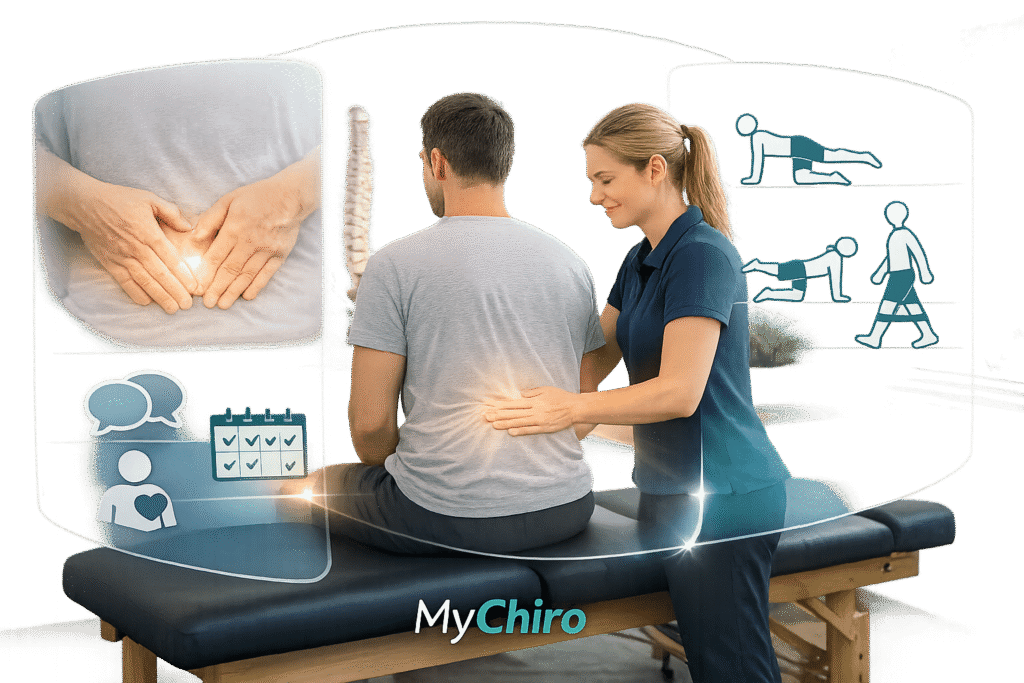
Manual therapy, when combined with integrated care, is reshaping how musculoskeletal conditions like chronic low back pain and sciatica are managed. This approach blends hands-on techniques such as spinal manipulation and mobilisation with structured, multidisciplinary care involving physiotherapy, chiropractic, and patient-focused strategies.
Key takeaways:
- Manual Therapy: Provides short-term pain relief through techniques targeting local tissues and systemic pain modulation.
- Integrated Care: Combines disciplines in a collaborative, patient-centred model, improving outcomes and reducing costs.
- Research Findings: Studies show combining manual therapy with exercise and psychosocial methods enhances recovery and reduces long-term disability.
This method emphasises teamwork, shared decision-making, and sustained care strategies tailored to individual needs. It offers a safer, more effective alternative to standalone treatments or invasive procedures.
Manual Therapy REVOLUTIONIZED with Chad Cook
sbb-itb-585d67d
Recent Research on Manual Therapy for Pain Management
Recent studies suggest that manual therapy, when combined with other treatments, could play a role in managing chronic musculoskeletal conditions. While manual techniques might offer short-term relief, their effectiveness appears to increase when paired with complementary therapies.
Here’s a closer look at the research findings on common musculoskeletal conditions and the advantages of integrating manual therapy with other treatments.
Evidence for Common Musculoskeletal Conditions
Chronic low back pain has shown encouraging results with integrated treatment approaches. A multicentre trial conducted in Sweden from April 2017 to December 2019 involved 88 participants with chronic low back pain. Published in BMC Musculoskeletal Disorders (February 2025), this study compared four approaches: physiotherapy alone, chiropractic care alone, a combination of both, and advice only. The combination therapy group demonstrated a QALY gain of 0.418 and reduced healthcare costs (SEK 3,081).
Back-related leg pain (sciatica) also benefits from integrated care. A feasibility study by the University of Minnesota (December 2021 to February 2023) included 42 participants with chronic back-related leg pain. The intervention, "Supported Biopsychosocial Self-Management", combined spinal manipulation therapy with exercise and psychosocial techniques like progressive muscle relaxation and guided imagery. Results showed a 95% adherence rate for required visits, with 85% of participants reporting high satisfaction with this combined approach.
"Evidence supports exercise therapy as the foundation of management for chronic non-specific low back pain, with manual therapy serving as a useful adjunct for short-term symptom relief." – Innovative Journal of Physiotherapy
Manual Therapy Combined with Other Treatments
The findings highlight that manual therapy works best as part of a comprehensive treatment plan rather than on its own. Combining manual therapy with physiotherapy, exercise programs, and psychological strategies can improve short-term symptoms, enabling patients to take a more active role in their recovery.
Manual therapy can act as a stepping stone – offering enough initial relief to encourage optimism and participation in active treatments. This is particularly important given that while 40–50% of back pain cases may improve within a week, about 40% of patients still report pain six months later. These statistics emphasise the importance of sustained, multi-pronged care strategies to address long-term recovery needs.
How Manual Therapy Works
Understanding how manual therapy operates sheds light on why it may provide relief for musculoskeletal conditions. Studies suggest these techniques work by affecting local tissues directly while also influencing the body on a broader level.
Local Effects on Tissues
Manual therapy techniques, such as those applied to the lower thoracic or lumbar spine and sacroiliac joints, can quickly impact local tissue properties. These changes may help reduce muscle tension, improve joint mobility, and adjust tissue mechanics.
An article in Chiropractic & Manual Therapies highlights that short-term relief from these techniques can pave the way for patients to feel ready to engage in active treatments like exercise or movement-based therapies. While these local effects are important, manual therapy also appears to trigger systemic responses that play a role in how the body manages pain.
Body-Wide Effects
Beyond the immediate tissue-level changes, manual therapy may alter how the nervous system processes pain signals. This systemic effect can help modulate the perception of pain throughout the body.
When combined with psychosocial approaches – like relaxed breathing, progressive muscle relaxation, or guided imagery – manual therapy can also help shift unhelpful beliefs about physical limitations. This blend of physical and mental strategies fosters optimism and encourages healthier pain-coping behaviours. Together, these local and systemic effects make manual therapy a valuable part of multidisciplinary care, helping patients stay engaged and motivated in their treatment journey.
Clinical Guidelines for Manual Therapy in Integrated Care
Current Clinical Recommendations
Recent guidelines now advocate for manual therapy as part of integrated care models, acknowledging its potential benefits for both local and systemic health effects. National and international health organisations recognise manual therapy – like spinal manipulation and mobilisation – as a viable, research-supported alternative to medications or invasive procedures for managing chronic musculoskeletal conditions. This shift is largely due to emerging evidence that prioritises a more holistic view of pain and disability, moving away from an over-reliance on imaging results.
For conditions such as tension-type headaches and migraines, manual therapy is increasingly recommended as part of a broader, multimodal treatment plan. Roberto Tedeschi, from the Department of Biomedical and Neuromotor Sciences at the University of Bologna, highlights its promise:
"manual therapy remains an underutilised yet promising complementary intervention for headache management… it can serve as a valuable component of multimodal care."
This approach not only targets musculoskeletal issues but also addresses central sensitisation – the nervous system’s tendency to intensify pain signals.
Person-Centred Care Approaches
Modern clinical practice is shifting towards personalised care that considers the unique physical, psychological, and social factors influencing each patient. This biopsychosocial model broadens the focus beyond just anatomical problems, recognising the role of stress, social dynamics, and personal beliefs about pain in the recovery process.
Research from the University of Minnesota suggests that combining spinal manipulation with behavioural techniques during tailored sessions can improve patient engagement and satisfaction. This approach highlights the importance of integrating manual therapy into a biopsychosocial framework, with shared decision-making playing a key role in treatment success.
Shared decision-making fosters collaboration between practitioners and patients, ensuring treatment plans align with individual goals and lifestyles. Tools like "Wellbeing Wheels" or "Priority & Goal Check-In Sheets" can facilitate these discussions, helping patients feel more involved and invested in their care.
Safety and Outcomes: Integrated vs Standalone Care
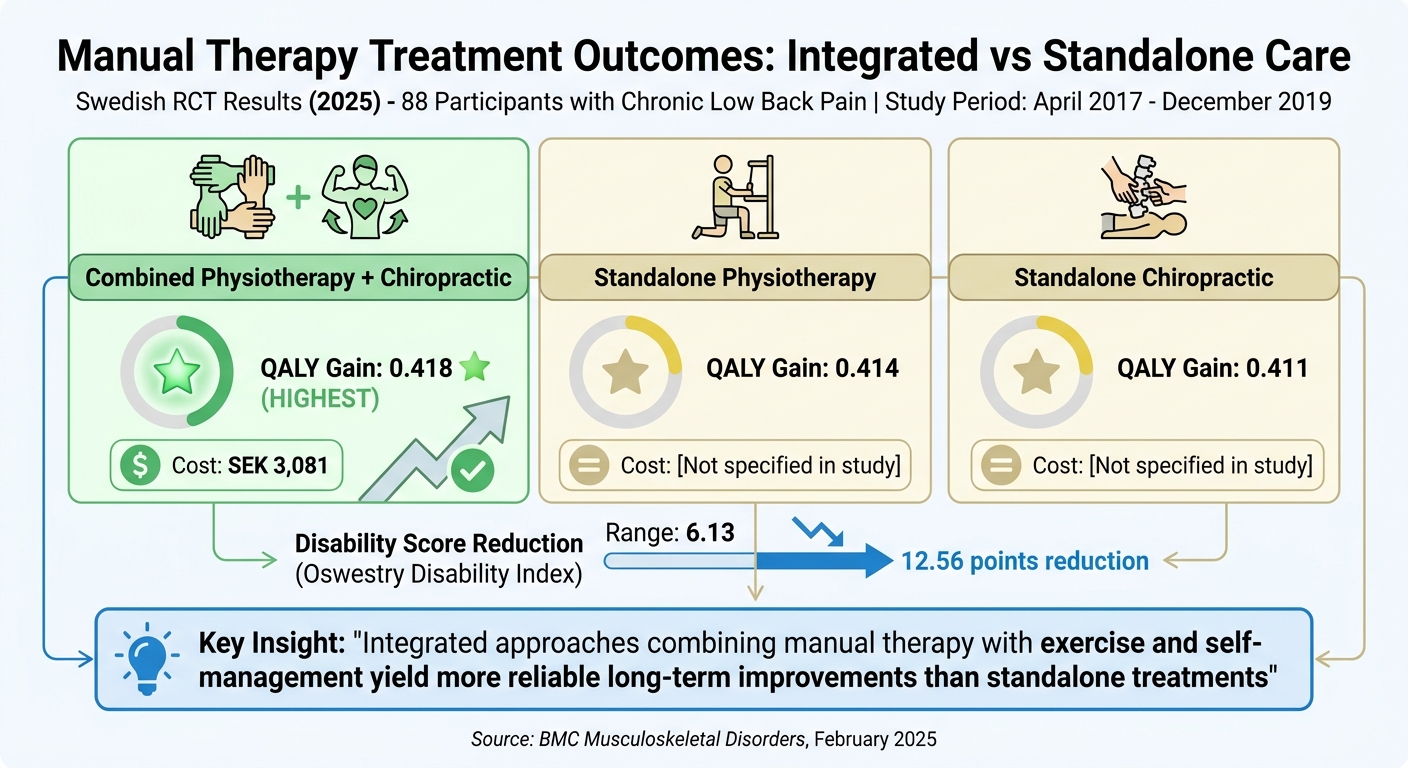
Manual Therapy Treatment Outcomes: Integrated vs Standalone Care Comparison
Looking deeper into clinical guidelines, manual therapy’s safety and effectiveness show added benefits when used as part of integrated care.
Safety Profile of Manual Therapy
Manual therapy is widely regarded as safe when carried out by trained professionals like physiotherapists or chiropractors. These practitioners conduct thorough physical assessments to rule out risks, such as progressive neurological issues or spinal fractures. When compared to invasive treatments often included in integrated care – like opioid prescriptions, imaging, or spinal surgery – manual therapy poses far fewer risks.
In integrated care settings, manual therapy often acts as a "bridge therapy." It provides immediate symptom relief, helping patients shift from passive treatments to active self-management and exercise programs. While manual therapy is generally safe, its long-term benefits become clearer when compared to standalone approaches.
Comparing Treatment Outcomes
A 2025 Swedish randomised controlled trial highlighted that combining physiotherapy and chiropractic care led to a QALY gain of 0.418 at a cost of SEK 3,081. This outperformed standalone physiotherapy (0.414) and standalone chiropractic care (0.411).
The findings suggest standalone manual therapy may offer short-term pain relief, but integrated approaches – blending manual therapy with exercise and self-management – yield more reliable long-term improvements. For instance, reductions in disability scores, measured by the Oswestry Disability Index, ranged between 6.13 and 12.56 points. These results underline the benefits of a combined approach to care, as discussed earlier.
Conclusion
Research suggests that manual therapy can play a valuable role in managing musculoskeletal conditions, especially when combined with exercise and self-management strategies. Studies indicate that multimodal approaches often provide better short-term pain relief and cost-effectiveness compared to single treatments.
Manual therapy is increasingly viewed as a "bridge therapy", offering initial symptom relief to encourage active recovery. While its benefits may be short-lived on their own, pairing manual therapy with exercise and self-management creates a more solid foundation for long-term functional improvement.
"Overall, the evidence supports exercise therapy as the foundation of management for chronic non-specific low back pain, with manual therapy serving as a useful adjunct for short-term symptom relief." – Sumit Singh and Akram Khan, Innovative Journal of Physiotherapy
This perspective aligns with modern clinical guidelines that favour integrated care models over isolated interventions. Chronic musculoskeletal conditions are often influenced by physical, psychological, and social factors. Addressing these complexities requires a coordinated, person-centred approach, which is increasingly reflected in clinical recommendations.
For Australian practitioners, this means working collaboratively across disciplines and involving patients in shared decision-making. Evidence-based practice remains key – when manual therapy is performed by qualified professionals as part of a broader care plan, it can enhance outcomes and reduce risks. Incorporating manual therapy into a multidisciplinary framework offers a promising path for managing chronic musculoskeletal conditions effectively.
This information is general and not a substitute for professional medical advice.
Chiropractic care focuses on musculoskeletal health, and outcomes can vary between individuals.
Always consult a qualified healthcare professional for personalised advice regarding your health.
FAQs
Is manual therapy enough on its own?
Manual therapy can play a role in managing musculoskeletal conditions like chronic low back pain, offering benefits such as pain relief and improved function. However, relying solely on manual therapy might not be enough. Research indicates that combining it with other strategies – like exercise therapy, patient education, and lifestyle adjustments – can lead to more effective and lasting results. This approach fits within the biopsychosocial care model, which considers not just the physical aspects of a condition but also psychological and social factors, creating a more well-rounded treatment plan.
What does “integrated care” actually involve?
Integrated care takes a team-based approach, bringing together different healthcare methods to address a patient’s needs as a whole. For musculoskeletal health, this often means combining manual therapy, tailored exercise programs, and guidance on lifestyle changes. By working together, healthcare providers aim to manage conditions like low back pain more effectively and support overall well-being.
Who shouldn’t have spinal manipulation?
Individuals dealing with severe osteoporosis, spinal instability, infections, or neurological deficits are generally advised to steer clear of spinal manipulation unless a healthcare professional explicitly approves it. These conditions can heighten the likelihood of complications.


