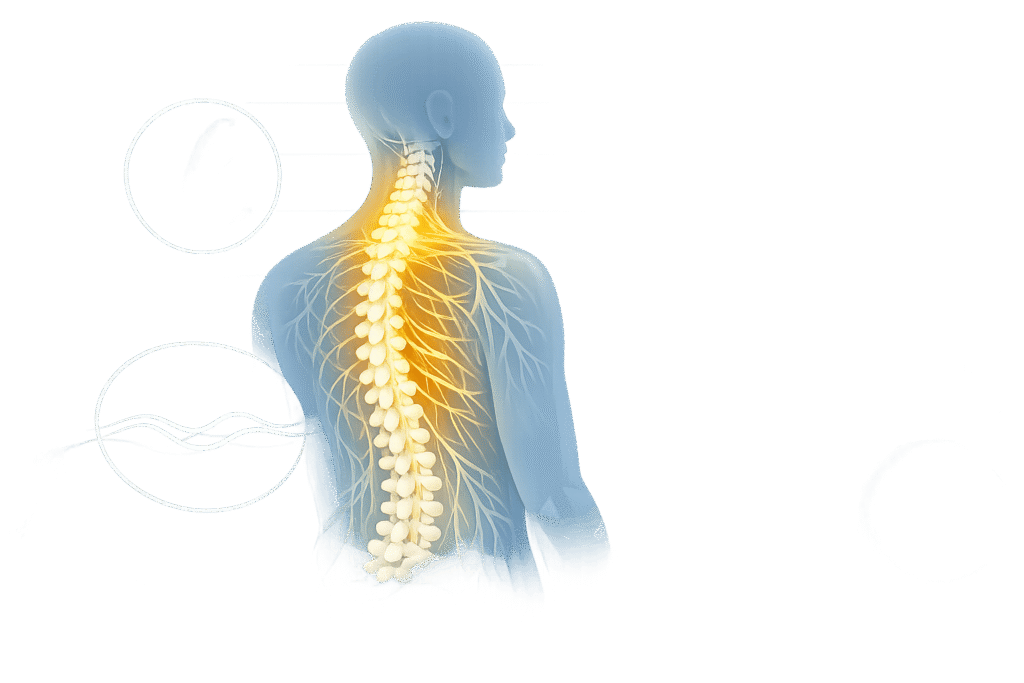
Chiropractic care can assess muscle and joint complaints such as back or neck pain. Spinal adjustments have not been established as a way to reset the autonomic nervous system, improve general nerve communication or treat stress. A plan should address a specific complaint and the activities you want to manage more comfortably.
Key points include:
- The spine protects the spinal cord, which connects the brain to the body.
- Ordinary posture differences do not by themselves show that nerve signals are blocked.
- Manual treatment may be one option for selected musculoskeletal complaints, with benefits, risks and alternatives discussed first.
- Laboratory findings about proteins or nerve activity do not establish a general nervous-system health benefit.
Suitable activity, comfortable work habits and relaxation strategies may support daily wellbeing. They do not require ongoing chiropractic care to maintain nervous-system balance.
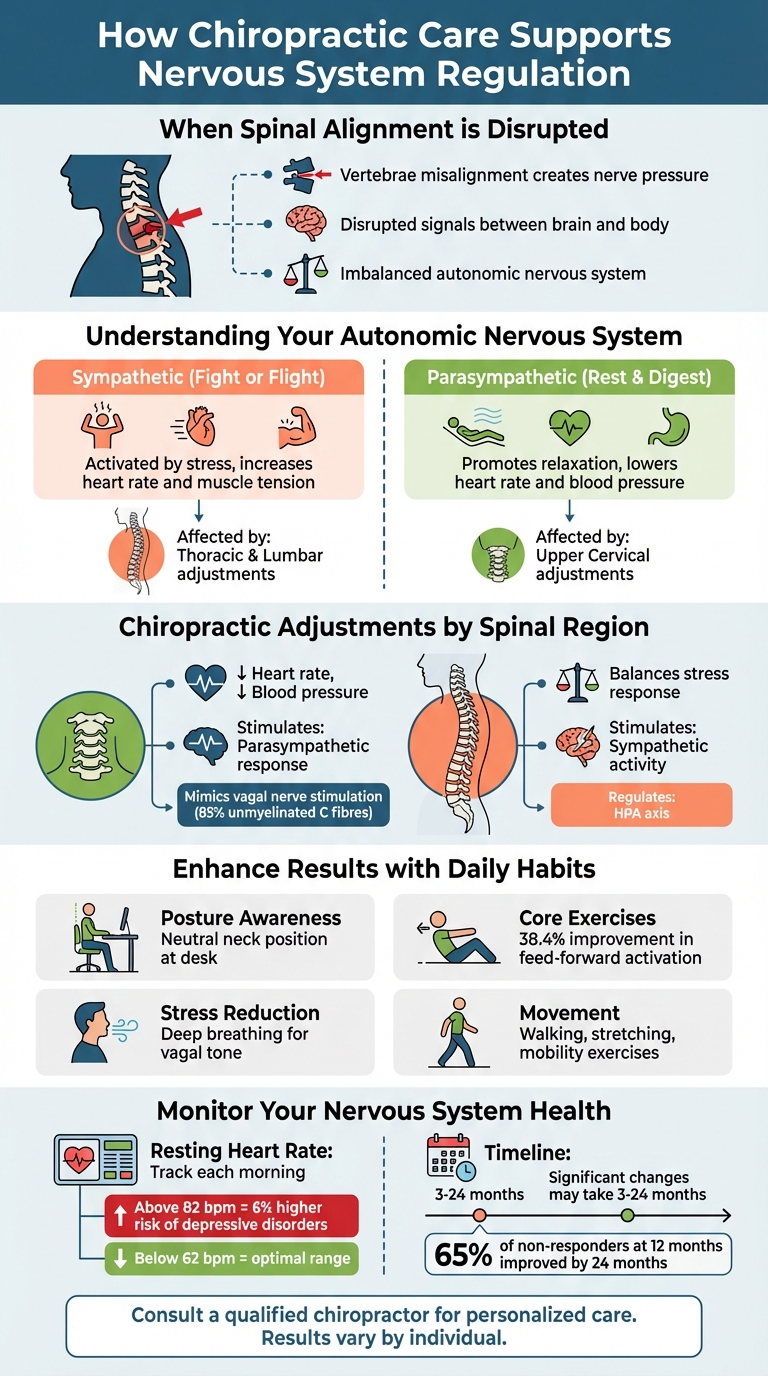
Existing illustration: claims that chiropractic care regulates the nervous system are not established.
The Nervous System and Spinal Health Connection
How the Autonomic Nervous System Works
The autonomic nervous system (ANS) runs in the background, managing essential functions like your heartbeat, breathing, and digestion without requiring conscious effort. It has two main branches: the sympathetic system, which activates the "fight-or-flight" response, and the parasympathetic system, responsible for the "rest-and-digest" mode. These two systems work together to maintain balance in your body.
Stress can change heart rate, breathing and other bodily responses. These systems do not operate as a simple switch that can be reset by correcting posture.
Persistent symptoms deserve appropriate assessment, rather than an assumption that one branch of the nervous system is out of balance.
Fatigue, tension or difficulty coping can have several causes. If these symptoms persist or affect daily life, speak with your GP about suitable assessment and support.
Spinal Anatomy and Symptoms
The spine surrounds the spinal cord, and nerves connect with different parts of the body. This anatomy does not establish that ordinary posture differences interfere with brain-body communication.
New or worsening weakness, altered sensation, coordination changes or difficulty walking needs appropriate medical assessment. These symptoms should not be attributed to a general spinal misalignment.
A change in posture or a clicking joint does not by itself show a blocked nerve or a need for treatment.
Adjusting different spinal regions has not been established as a reliable way to select sympathetic or parasympathetic responses. Blood-pressure concerns need medical assessment and management.
sbb-itb-585d67d
Video Discussion: Chiropractic Care
What Research Can and Cannot Establish
Research on spinal manipulation includes studies of pain, function and physiological measurements. A short-term change in a measurement does not by itself show a useful treatment for an autonomic disorder.
For a treatment decision, ask about outcomes that matter to you, such as symptoms and daily function, as well as risks and alternatives.
Small laboratory or mechanistic studies cannot establish a general nerve-health benefit. The overall evidence and its limitations matter more than an isolated positive finding.
Neck Adjustments and Autonomic Claims
Neck adjustments have not been established as a treatment for high blood pressure, anxiety or autonomic imbalance. A separate neck-pain complaint may be assessed on its own merits.
Do not stop or change prescribed treatment for blood pressure or other medical conditions without advice from the prescribing clinician.
Spinal manipulation is not the same treatment as medical vagus nerve stimulation. Research on heart rate variability does not establish that an adjustment reproduces the effects of a medical device.
Mid- and Lower-Back Treatment Goals
Care involving the mid or lower back should have a clear clinical purpose. Advice, suitable exercise, manual therapy or referral may be considered for a specific musculoskeletal complaint.
Choose care according to the problem being assessed and agreed goals, rather than a promise to activate or balance the nervous system.
Daily Habits for Comfort and Wellbeing
Practical habits can support comfort and general wellbeing, whether or not you choose manual treatment. Start with a small number of manageable changes.
Posture Awareness and Movement Exercises
Choose comfortable positions and vary them during the day. There is no single posture that guarantees clear nerve communication or controls the autonomic nervous system.
Suitable strengthening exercises can be selected for your abilities and goals. A laboratory measure such as muscle activation timing does not establish how you will feel or function after treatment.
Walking or other suitable activity may support general health and form part of a pain-management plan. Build gradually and adapt movements to your symptoms.
Stress Reduction and Relaxation Methods
Comfortable, unforced breathing may feel calming. Avoid forcing deep breaths or prolonged holds, and stop if you feel dizzy. Relaxation does not replace assessment of concerning symptoms.
Some people find mindfulness or relaxation useful for coping with stress. If stress or low mood affects daily life, speak with your GP or a mental health professional.
Reviewing Symptoms and Care
If you try treatment for a musculoskeletal complaint, agree how progress will be assessed. Use goals relevant to your daily activities and review whether the plan is helping.
What to Discuss at Review
Your resting heart rate is not a stand-alone measure of whether chiropractic treatment is working. If you have concerns about your pulse or symptoms such as palpitations, seek appropriate medical advice.
A brief record of pain, activity and the effect on daily tasks can be useful during a review. Changes in sleep, mood or posture do not prove improved nerve communication.
Planning Further Care
Suitable activity and manageable routines can support general wellbeing. Choose habits that fit your health and circumstances.
Adjust your screen, chair and frequently used items for comfort. Take opportunities to move during a desk-based day rather than trying to hold a rigid posture.
Further treatment should have a clear clinical reason. Discuss the expected benefits, risks, costs and review point; ongoing adjustments are not automatically needed for general health.
Conclusion
Chiropractic care may offer options for selected musculoskeletal complaints. Evidence does not establish spinal adjustment as a treatment for general autonomic regulation or chronic stress.
There is no established three- to 24-month adjustment programme for nervous-system regulation. If care is not helping agreed goals, review the plan rather than continuing solely in expectation of delayed neurological changes.
An assessment can consider symptoms, relevant health history and whether musculoskeletal care or medical referral is appropriate. It cannot exclude every medical condition, and treatment is not automatic.
At MyChiro in Bondi Junction, Dr Steve, chiropractor, can discuss back pain, neck pain or headaches. New patients can book a free initial consultation. Same-day treatment is optional, costs $125 and is offered only if clinically appropriate, with no obligation to proceed.
This content is for general informational purposes and is not a replacement for professional medical advice. Chiropractic care focuses on musculoskeletal health, and results can vary. Always consult a qualified healthcare provider before making health-related decisions.
FAQs
Does posture show whether my nervous system is working properly?
Posture alone cannot diagnose nerve compression or an autonomic disorder. Neurological symptoms need appropriate assessment. If manual treatment is considered for a separate muscle or joint complaint, discuss its possible benefits, risks and alternatives first.
How should progress with musculoskeletal care be reviewed?
Agree goals for symptoms and daily function, and a review point. Heart rate variability (HRV) is not an established stand-alone reason to continue spinal adjustments for nervous-system regulation.
What can I try at home for comfort and wellbeing?
Some people find mindfulness, comfortable breathing or other relaxation practices helpful. Suitable activity and a comfortable work setup may also support daily wellbeing. Adapt these options to your health and symptoms.
Seek appropriate advice for persistent or concerning symptoms. Self-care and treatment for a muscle or joint complaint should not replace medical or mental health support when needed.