

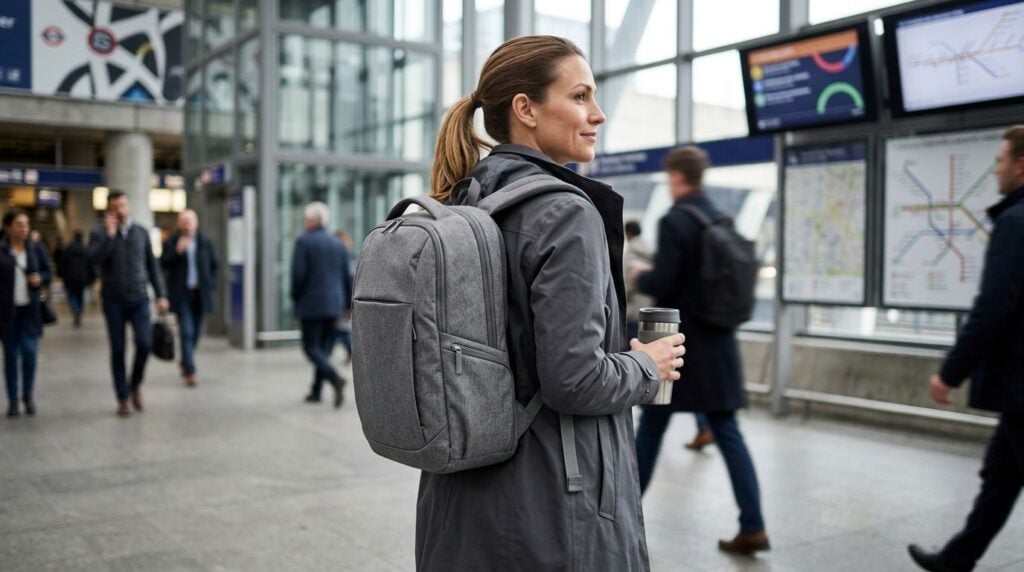
A backpack won't cure back pain, but the wrong one can quietly make a commute worse every single day. This guide ranks five commuter backpack styles by the back-pain scenario they suit best in 2026, from heavy laptop-and-gym-kit hauls on the train to short walks from Bondi Junction to the office.
- A structured hip-belt backpack is the top pick for the best backpack for back pain commuters hauling a laptop, lunch and gym kit daily.
- Slim rigid-panel laptop backpacks suit short commutes under roughly 20 minutes; extra padding just adds bulk.
- Rolling backpack hybrids remove shoulder load entirely but slow you down on stairs and platforms.
- Many ergonomic guidelines cap total pack weight at 10-15% of body weight for daily carrying.
- Pain that persists after switching bags is worth discussing with a chiropractor or GP, not just solved with new gear.
Why this matters
A commuter carrying a laptop, water bottle, lunch and a change of shoes on one shoulder for 30-40 minutes a day is loading soft tissue asymmetrically, twice a day, five days a week. Over months that uneven pull on the trapezius and upper back muscles is one of the more common patterns linked to shoulder pain from carrying a laptop bag daily.
The backpack itself isn't the whole story — posture, desk setup and how the load sits against your spine all play a role. But bag design changes how weight is distributed across your body, and that's the one variable you control before you even leave the house each morning in 2026.
What makes the best backpack for back pain commuters
A handful of design features separate a bag that spreads load evenly from one that just moves the ache around. Before the ranking, here's what actually gets audited:
- Load distribution: a hip belt or sternum strap shifts weight off the shoulders and onto the pelvis or chest, where the body carries mass more comfortably.
- Back panel structure: a rigid or lightly framed panel stops a heavy laptop from sagging backward and pulling your shoulders with it.
- Adjustable torso length: straps that sit in the wrong spot on your back concentrate pressure instead of spreading it.
- Total carried weight: general ergonomic guidance commonly suggests keeping a daily pack at roughly 10-15% of body weight.
- Strap width and padding: wider, padded straps spread pressure over more skin instead of digging into a narrow band of shoulder.
- Compartment layout: heavy items sitting closest to your spine change the leverage on your lower back far more than the same weight carried further out.
Best backpacks for back pain commuters at a glance
| Style | Best for | Standout feature | Key limitation |
|---|---|---|---|
| Structured hip-belt backpack | Heavy daily loads, long commutes | Hip belt shifts weight off shoulders | Bulkier, less suited to crowded carriages |
| Slim rigid-panel laptop backpack | Short commutes, minimalist carry | Rigid back panel keeps load close to spine | Limited capacity for extra gear |
| Rolling backpack/trolley hybrid | Zero tolerance for shoulder load | No shoulder or back strain at all | Slow on stairs, escalators and platforms |
| Ventilated mesh-back cycling pack | Cycling or e-scooter commutes | Airflow channel reduces sweat build-up | Less structured support for very heavy loads |
| Convertible sling/crossbody bag | Light loads, quick platform-to-desk trips | Fast on and off, no strap adjustment | Concentrates weight on one side if overloaded |
1. Structured hip-belt backpack: best for heavy daily loads on long commutes
This style uses a padded hip belt and an internal frame or stiffened back panel, the same principle used in hiking packs scaled down for city use. It moves a meaningful share of the load off the shoulders and onto the hips, which is the single biggest lever for anyone carrying a laptop, lunch, gym kit and a water bottle every day.
Structured hip-belt backpack pros:
- Distributes weight across hips as well as shoulders
- Rigid panel keeps a laptop from sagging and pulling your posture backward
- Handles heavier daily loads without concentrating pressure on one strap
- Often includes a sternum strap for extra stability on crowded trains
Structured hip-belt backpack cons:
- Bulkier profile is harder to manage in packed carriages
- Hip belt can feel unnecessary on very short walks
- Higher price point than a basic laptop backpack
Best for: commuters carrying more than a laptop and phone, especially on long train or bus routes. Verdict: Buy if your commute regularly exceeds 20-30 minutes and your bag is loaded beyond the basics.
2. Slim rigid-panel laptop backpack: best for short commutes and minimalist carry
This is the everyday laptop backpack shape — one main compartment, a padded laptop sleeve, and a firmer back panel than a soft tote-style bag. It keeps the heaviest item (the laptop) sitting flat against your spine instead of swinging loose.
Slim rigid-panel laptop backpack pros:
- Keeps the heaviest item close to your centre of gravity
- Lighter and less bulky than a framed hiking-style pack
- Fits easily on a crowded train or bus without hitting other passengers
Slim rigid-panel laptop backpack cons:
- Limited capacity if you're also carrying gym kit or groceries
- No hip belt, so all the weight still sits on the shoulders
- Cheaper versions often skip the rigid panel entirely — check before buying
Best for: commutes under roughly 20 minutes with a laptop as the main load. Verdict: Buy for straightforward, single-item commutes; Wait if your daily load regularly includes more than a laptop and lunch.
3. Rolling backpack/trolley hybrid: best for zero shoulder or back load
This style zips onto a wheeled base or folds out a retractable handle, so the bag rolls rather than sits on your back for most of the journey. It's the only option on this list that removes carried weight from your spine almost entirely during transit.
Rolling backpack hybrid pros:
- No sustained weight on shoulders or back while rolling
- Genuinely useful for anyone recovering from an injury or managing ongoing discomfort
- Can still be carried as a normal backpack for short stretches
Rolling backpack hybrid cons:
- Awkward on stairs, escalators, and uneven pavement
- Bulkier and heavier than a standard backpack when empty
- Wheels and handle mechanisms add points of failure over time
Best for: commuters who need to avoid shoulder or back load altogether, including those easing back into a full commute after time off. Verdict: Buy if platforms and station layouts on your route are mostly flat and stair-free; Hold if your commute involves several flights of stairs daily.
4. Ventilated mesh-back cycling commuter backpack: best for cycling and e-scooter commutes
Built for movement rather than standing on a platform, this style uses a mesh or channelled back panel to reduce sweat build-up and usually pairs with a sternum strap to stop the bag bouncing while riding. Weight sits higher and closer to the shoulder blades than a hip-belt pack.
Ventilated cycling commuter backpack pros:
- Sternum strap keeps the bag stable while pedalling or riding a scooter
- Ventilation channel reduces heat and moisture against your back
- Usually lighter than a framed hip-belt pack
Ventilated cycling commuter backpack cons:
- Less structured support for very heavy loads
- No hip belt, so shoulders still carry most of the weight
- Mesh panels can wear faster than solid back panels
Best for: cyclists and e-scooter commuters carrying a light-to-moderate daily load. Verdict: Buy for regular cycling commutes; Skip if you're mostly walking or on public transport.
5. Convertible sling/crossbody commuter bag: best for light loads and quick transfers
A single wide strap worn across the body or over one shoulder, often convertible between sling and backpack modes. It's fast to grab and put down, which suits commuters making several short transfers between platforms, buses and the office.
Convertible sling/crossbody bag pros:
- Quick on and off for short, multi-stage commutes
- No strap adjustment needed between wears
- Compact enough for standing-room-only carriages
Convertible sling/crossbody bag cons:
- Concentrates weight on one side of the body if overloaded
- Not designed for heavy daily loads
- Least back support of any style on this list
Best for: light daily loads and commutes with multiple short legs rather than one long stretch. Verdict: Buy for light carry only; Skip if you're regularly loading it with a laptop plus extras.
How this list was ranked
Each style was assessed against the same six criteria: load distribution, back panel structure, torso adjustability, typical carried weight against the 10-15% body-weight guideline, strap width and padding, and compartment layout. No two styles compete for the same use case — a commuter choosing between them is really choosing based on commute length, load, and whether cycling is involved. The same logic applies to how you lift heavy objects safely off a rack or overhead locker: the mechanics of carrying matter as much as the bag itself.
Ongoing back pain despite a better bag?
A MyChiro assessment looks at posture, movement and load patterns behind commuter back pain.
Which backpack should you choose?
For most Sydney commuters carrying a laptop, lunch and a change of shoes on a train or bus for 20-40 minutes a day, the structured hip-belt backpack is the default recommendation — it's the only style on this list built to move weight off the shoulders entirely. If your commute is short and light, the slim rigid-panel laptop backpack is the simpler, less bulky choice. If you're managing ongoing discomfort and need to avoid shoulder load altogether, the rolling backpack hybrid is worth the trade-off on stairs.
Swapping bags is a reasonable first move. If discomfort continues for more than a few weeks after changing how you carry your daily load, that's a sign the issue may sit in posture or movement patterns rather than the bag — worth raising with a chiropractor or GP.
FAQ
What is the best backpack for back pain commuters in 2026?
A structured backpack with a padded hip belt and a rigid back panel is generally the best fit for commuters carrying a laptop and extra gear daily, since it shifts weight off the shoulders and onto the hips. Lighter, shorter commutes can suit a slimmer rigid-panel laptop backpack instead.
Is a rolling backpack better than a shoulder backpack for back pain?
A rolling backpack removes almost all sustained weight from your shoulders and back during transit, which can suit commuters managing ongoing discomfort. It’s slower and bulkier on stairs and escalators, so it works best on flatter commute routes.
How heavy should a commuter backpack be?
General ergonomic guidance commonly suggests keeping a daily pack at roughly 10-15% of your body weight. Going well beyond that regularly, especially on one shoulder, adds unnecessary strain on the neck and upper back.
Do ergonomic backpacks reduce back pain?
Backpack design can change how evenly a load is carried across the body, which may reduce added strain from asymmetric weight. It isn’t a substitute for addressing posture, desk setup or an existing musculoskeletal issue.
Should I use one strap or two straps for a heavy commute bag?
Two straps worn evenly spread load across both shoulders, while a single strap concentrates weight on one side of the body. For anything heavier than a light daily load, two straps or a hip-belt design is the more even option.
Can a hip belt on a backpack help lower back pain?
A hip belt shifts a portion of the carried weight from the shoulders to the pelvis, which can reduce the load reaching the upper back and neck. It doesn’t remove weight from the lower spine entirely, so total pack weight still matters.
When should backpack-related back pain see a chiropractor instead of a new bag?
If discomfort continues for more than a few weeks after switching to a better-distributed backpack, the cause may be posture or movement patterns rather than the bag itself. A chiropractor or GP can assess what’s actually driving the pain.
Are laptop backpacks bad for your back?
A laptop backpack isn’t inherently a problem, but a soft, unstructured one lets the laptop sag backward and pull your shoulders with it. A rigid or semi-rigid back panel keeps the load closer to your spine and reduces that pull.
One last thing
Most commuters overload one side of a bag without noticing — phone, charger and water bottle all end up in the same outer pocket, which shifts the centre of gravity even in a well-designed pack. Spreading heavier items evenly between compartments does more for daily comfort than upgrading to a pricier bag with the same lopsided packing habit.
Related guides
- Upper back pain from carrying a heavy handbag
- How to know when back pain needs a chiropractor vs a doctor


