For tennis elbow or golfer’s elbow, compare brace designs by fit, fastening and intended use—not by promises of recovery. This 2026 guide compares forearm straps, pull-on sleeves and adjustable elbow wraps as shopping options, without ranking their clinical effects or recommending a particular model.
- Forearm straps, elbow sleeves and adjustable wraps have different shapes and fastening arrangements.
- Choose a brace only after checking its intended use, sizing instructions and suitability with a qualified health professional.
- MyChiro provides chiropractic care in Bondi Junction; this elbow brace guide does not prescribe a device.
- A brace label is not a diagnosis, and product advertising is not an individual care plan.
Why this matters
A search for an elbow brace produces products with very different designs. Some wrap around the forearm, some pull over the elbow, and others open completely before fastening around the joint. Comparing them as though they are interchangeable makes the shopping decision harder.
Separate the buying question from the clinical question. You can compare fastening, fabric and washing instructions yourself; whether a brace is appropriate for your symptoms can be discussed with a qualified health professional.
MyChiro is a chiropractic clinic and wellness centre in Bondi Junction, Sydney. This guide describes brace formats rather than making claims about chiropractic care or brace-related outcomes.
What to check in an elbow brace
Use these criteria before comparing individual products in 2026. They give you something concrete to inspect without relying on promotional claims.
- Intended use: Read the manufacturer’s description and instructions. Do not assume that every product labelled elbow support has the same purpose.
- Sizing method: Check where the manufacturer asks you to measure. A forearm measurement and an elbow measurement are not interchangeable purchasing instructions.
- Fastening: Identify whether the product pulls on, opens fully or uses an adjustable strap. Consider whether you can manage that fastening yourself.
- Contact surfaces: Inspect seams, edges, pads and fastening tabs. Product photographs should show the inside as well as the outside.
- Care instructions: Check washing, drying and material information before ordering. Choose instructions you can realistically follow.
- Individual suitability: Ask a qualified health professional whether a brace is appropriate before choosing a design for a diagnosed condition.
Do not interpret a firm feel, a bulky pad or a technical-looking label as evidence of a clinical benefit. Those features need their own explanation in the product instructions.
Elbow brace designs at a glance
The order below moves from a narrow forearm format to broader elbow coverage. It is a design comparison, not a ranking of treatment effects.
| Brace format | Shopping use case | Feature to inspect | Practical advantage | Key limitation |
|---|---|---|---|---|
| Counterforce forearm strap | Comparing narrow forearm designs after professional advice | Strap adjustment and any pad placement instructions | Compact format with an adjustable fastening | Correct positioning cannot be inferred from the product name |
| Pull-on elbow sleeve | Comparing designs without an opening fastening | Size chart, seams and sleeve length | No separate strap to fasten on a simple sleeve | Must be pulled over the hand and forearm |
| Adjustable elbow wrap | Comparing designs that open before fitting | Overlap, closures and fitting sequence | Can be opened rather than pulled on | Multiple tabs or overlapping panels can complicate fitting |
Before comparing colours or accessories, find the fitting instructions. If you cannot establish how a product is meant to be worn, leave it off your shortlist.
1. Counterforce forearm strap: a narrow-format option
A counterforce forearm strap is a band worn around the forearm according to the manufacturer’s instructions. Some designs include a pad; others use a different internal arrangement. Check the actual product rather than assuming all straps share the same construction.
Shopping use case: You have been advised to consider a counterforce design and want to compare its fastening, dimensions and instructions.
Counterforce forearm strap advantages
- A narrow band has less fabric coverage than a sleeve extending across the elbow.
- An opening strap can be placed around the forearm without pulling it over the hand.
- An adjustable closure lets you change the fastening position within the product’s stated limits.
- The compact format gives you fewer fabric panels to inspect and wash.
Counterforce forearm strap limitations
- The product name does not explain the correct placement for an individual user.
- A pad introduces an additional positioning detail to check.
- A fastening tab can sit against clothing or equipment, depending on its location.
For your 2026 shortlist, look for a clear instruction sheet showing the band, closure and any pad. Compare those instructions with the advice you have received, rather than copying a placement photograph from an unrelated product.
A strap marketed for tennis elbow should not automatically be selected for golfer’s elbow. Ask whether the specific device is appropriate and how its instructions apply to you.
Verdict: Hold until the intended use and fitting instructions are clear.
2. Pull-on elbow sleeve: an option without an opening closure
A pull-on elbow sleeve is a fabric tube that passes over the hand and forearm to sit around the elbow. Sleeve construction varies, so inspect the material description, seams and any additional straps separately.
Shopping use case: You want to compare a simple pull-on format and can manage putting it on and taking it off.
Pull-on elbow sleeve advantages
- A simple sleeve has no separate fastening sequence to remember.
- The product’s overall length is easy to compare when dimensions are supplied.
- A plain design avoids exposed fastening tabs.
- Material and care information can be checked directly against your preferences.
Pull-on elbow sleeve limitations
- A sleeve must pass over your hand and forearm during fitting.
- A non-adjustable sleeve depends on selecting the manufacturer’s specified size.
- Fabric covers the elbow crease, making seam position and comfort relevant checks.
Do not choose a smaller size because you want a stronger sensation of support. Follow the manufacturer’s measurement method and discuss any uncertainty about fit with an appropriate health professional.
For a 2026 purchase, inspect whether the sleeve is genuinely plain or includes extra bands, pads or closures. Those additions change the fitting process and should be assessed as separate features.
Verdict: Hold if the sizing method, materials or removal process are unclear.
3. Adjustable elbow wrap: an opening-format option
An adjustable elbow wrap opens before being placed around the elbow and secured. Depending on the design, it can have overlapping panels, separate tabs or a shaped opening; use the product’s own instructions to understand the arrangement.
Shopping use case: You are comparing an opening design rather than a garment that must be pulled over the hand.
Adjustable elbow wrap advantages
- The wrap can be opened before placement.
- Separate closures provide visible fastening points to inspect.
- An opening design lets you examine the inner surface before fitting.
- The fitting sequence can be checked against a manufacturer’s diagram or demonstration.
Adjustable elbow wrap limitations
- Several tabs can make the fitting sequence more involved.
- Overlapping panels add layers where they meet.
- A broad adjustment range does not remove the need to check the size chart.
Check whether you can reach and manage every closure with the opposite hand. A design that looks straightforward in a product photograph can still involve an awkward fastening sequence.
For your 2026 comparison, ask for photographs showing the wrap fully open and fully fastened. That makes its construction easier to understand than a single photograph of someone wearing it.
Verdict: Hold if you cannot follow the fitting sequence or manage the closures.
How these options were compared
This comparison uses observable design differences: coverage, opening method, fastening, sizing and care requirements. It does not assign clinical scores, claim that one format produces better outcomes or present unverified product testing.
No named product is recommended here. A manufacturer’s current instructions and an individual assessment are more relevant to a purchasing decision than an unsupported position on a ranked list.
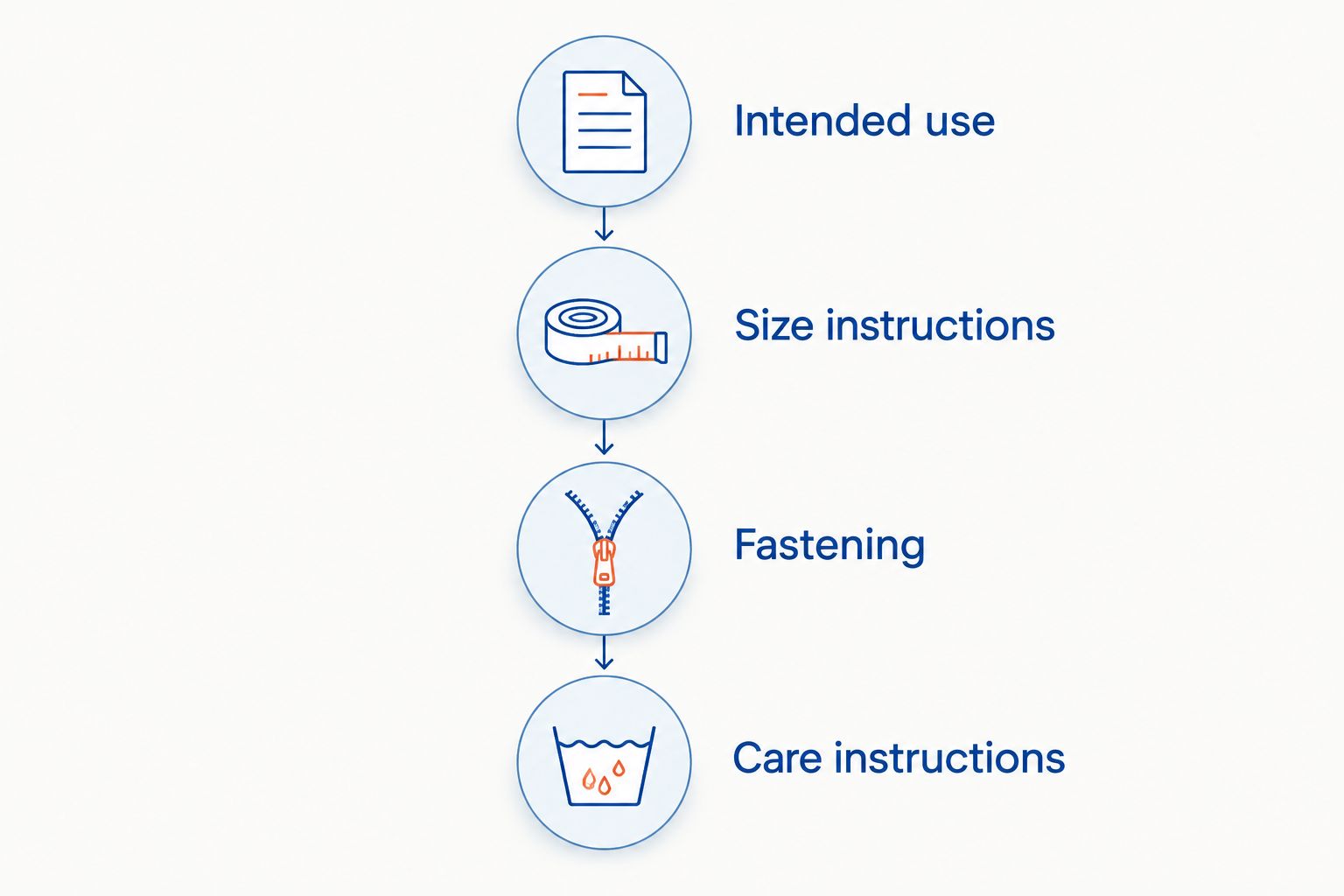
A practical pre-purchase checklist
Take a screenshot or printout of the exact product you are considering. A generic description such as elbow support leaves too much room for confusion when you ask someone about suitability.
Intended use
Find the manufacturer’s stated purpose and any warnings. Keep that information separate from a retailer’s promotional headline, particularly when the headline promises a particular result.
Size instructions
Record the requested measurement location and compare it with the size chart. Do not carry a size across from a different manufacturer or another brace format without checking.
Fastening
Look at how the device opens, closes and comes off. If the listing does not show that process, ask for the instructions before making a decision.
Care instructions
Read the material list and washing directions. Consider your known material sensitivities and whether the product’s care requirements fit your routine.
Keep the packaging and instructions together after purchase. They identify the exact device and provide a reference if you need to ask the manufacturer or a health professional about its use.
Questions to take to a health professional
You do not need to arrive with a chosen brace. Bringing a description of your activities and the products you are considering gives the discussion a clearer starting point.
Useful questions include:
- Is a brace appropriate following assessment of my symptoms?
- Does this particular format match the purpose you have discussed with me?
- Can you explain how the manufacturer’s fitting instructions apply?
- When should I remove it or stop using it?
- What should I do if wearing it causes discomfort or changes in sensation?
- Does my work or sporting equipment create any additional fitting considerations?
Do not use a shopping guide to diagnose elbow symptoms. If symptoms are new, unexplained, worsening or followed an injury, seek medical advice rather than relying on a product label. Seek urgent medical assistance for severe symptoms or concerns about an injury.
MyChiro’s elbow brace guide is general purchasing information, not an individual recommendation or a substitute for medical assessment.
Which elbow brace format should you consider?
Start with whether a brace is appropriate, then compare the design you have been advised to consider. A narrow strap, pull-on sleeve and opening wrap solve different fitting and fastening questions; none earns a default clinical recommendation from its shape alone.
For an undecided shopper in 2026, the next move is to obtain the exact product instructions—not to buy several designs and experiment indiscriminately. Choose clarity over extra features. A product you cannot size, fit or remove confidently is not ready for your shortlist.
FAQ
Which elbow brace should I choose for tennis elbow?
Discuss whether a brace is appropriate with a qualified health professional before choosing a format. Then compare the exact product’s intended use, sizing and fitting instructions rather than relying on its advertising headline.
Can I use a tennis elbow strap for golfer’s elbow?
Do not assume that a product labelled for tennis elbow is appropriate for golfer’s elbow. Check the specific manufacturer’s instructions and discuss suitability and placement with a qualified health professional.
What is the difference between an elbow strap and a sleeve?
A forearm strap is a narrow band, while a pull-on sleeve is a fabric tube worn around the elbow. Their construction and fastening differ; those differences do not establish which is clinically appropriate for you.
Should I choose a smaller elbow sleeve for a tighter fit?
Follow the manufacturer’s size chart rather than deliberately choosing a smaller size. If the instructions or fit are unclear, seek advice before using the product.
Can I wear an elbow brace all day or overnight?
Do not assume that a brace is intended for continuous or overnight use. Follow the product instructions and any individual advice from your health professional.
What should I check before ordering an elbow brace online?
Check intended use, measurement location, fastening, materials and care instructions. Obtain the fitting guide before ordering if the listing does not explain how the device is worn.
Does MyChiro recommend a particular elbow brace brand?
This MyChiro guide does not recommend a named elbow brace brand or model. It compares physical formats and purchasing checks without claiming a particular clinical outcome.
One last thing
The most useful product photograph is often the one showing the brace opened flat. It reveals the closures, seams and overlapping panels that a photograph of someone wearing it can hide.
Before adding a brace to your shortlist, find that view and the instruction sheet. If either leaves you guessing, ask a question rather than filling the gap with an assumption.
Related guides
- Ergonomic keyboards and mice: features to compare
- Preparing for your first chiropractor appointment
- Chiropractor qualifications in Sydney