

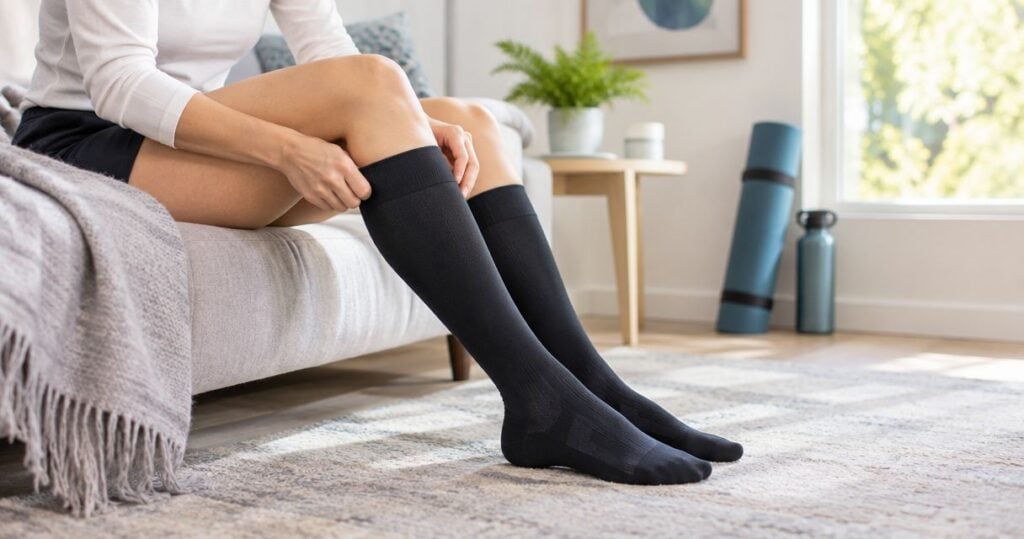
For the best compression socks for circulation, start with a fitted, graduated knee-high sock if a qualified health professional confirms compression is appropriate for you. A thigh-high garment serves a different fitting need; an over-the-counter sock is a convenience option, not a substitute for assessment when you have leg pain or swelling.
- Best compression socks for circulation: start with a fitted, graduated knee-high option after a suitability check.
- A thigh-high garment needs a reason to extend compression above the knee and careful fitting.
- New one-sided leg swelling or pain needs medical assessment, not a sock recommendation.
- Mychiro provides chiropractic care for musculoskeletal concerns, not a diagnosis of circulation problems.
Why this matters
Leg pain and poor circulation are not interchangeable descriptions. Pain can have several causes, and a sock cannot tell you which one applies. The useful first question in 2026 is not which package sounds most convincing; it is whether compression suits your symptoms and health history.
If you have new swelling or pain in one leg, seek prompt medical assessment rather than choosing a sock from this guide. If you also have chest pain or sudden difficulty breathing, call 000 in Australia. These symptoms require medical attention, not a trial of compression or a chiropractic adjustment.
Mychiro is a chiropractic clinic in Bondi Junction that offers chiropractic care and spinal adjustments for musculoskeletal concerns. That is distinct from assessing a suspected circulation problem. Keep the two decisions separate, even if discomfort begins during a long shift or after prolonged sitting.
What makes a compression sock suitable?
Use these criteria before comparing styles. None makes a garment appropriate for every person.
- Reason for wearing it: Tell a qualified health professional whether your concern is discomfort, swelling, a diagnosed condition or a clinician's recommendation. The reason determines what advice you need.
- Suitability check: Ask before using compression if you have a circulation diagnosis, diabetes, reduced sensation, skin problems or unexplained leg symptoms. Do not choose a pressure level from a general buying guide.
- Graduated design: A graduated garment is designed with more pressure near the ankle than higher up the leg. That description does not establish that a particular garment suits you.
- Correct coverage: Knee-high and thigh-high garments cover different areas. Extending a sock farther up the leg is not automatically an upgrade.
- Measured fit: Follow the manufacturer's measuring instructions and any advice from the professional recommending the garment. A size chosen solely by shoe size can miss relevant leg measurements.
- Wearability: Check whether the top stays in place without rolling and whether you can put the garment on and remove it as advised. Discomfort, skin changes or new symptoms call for a fit review.
These criteria also expose a common problem with 2026 roundups: a product can look suitable on a screen while its size or intended use is wrong for the person ordering it. Compare garment types first. Select a specific product only after you know what you need.
Compression sock options at a glance
| Option | Best for | Distinguishing feature | Key limitation |
|---|---|---|---|
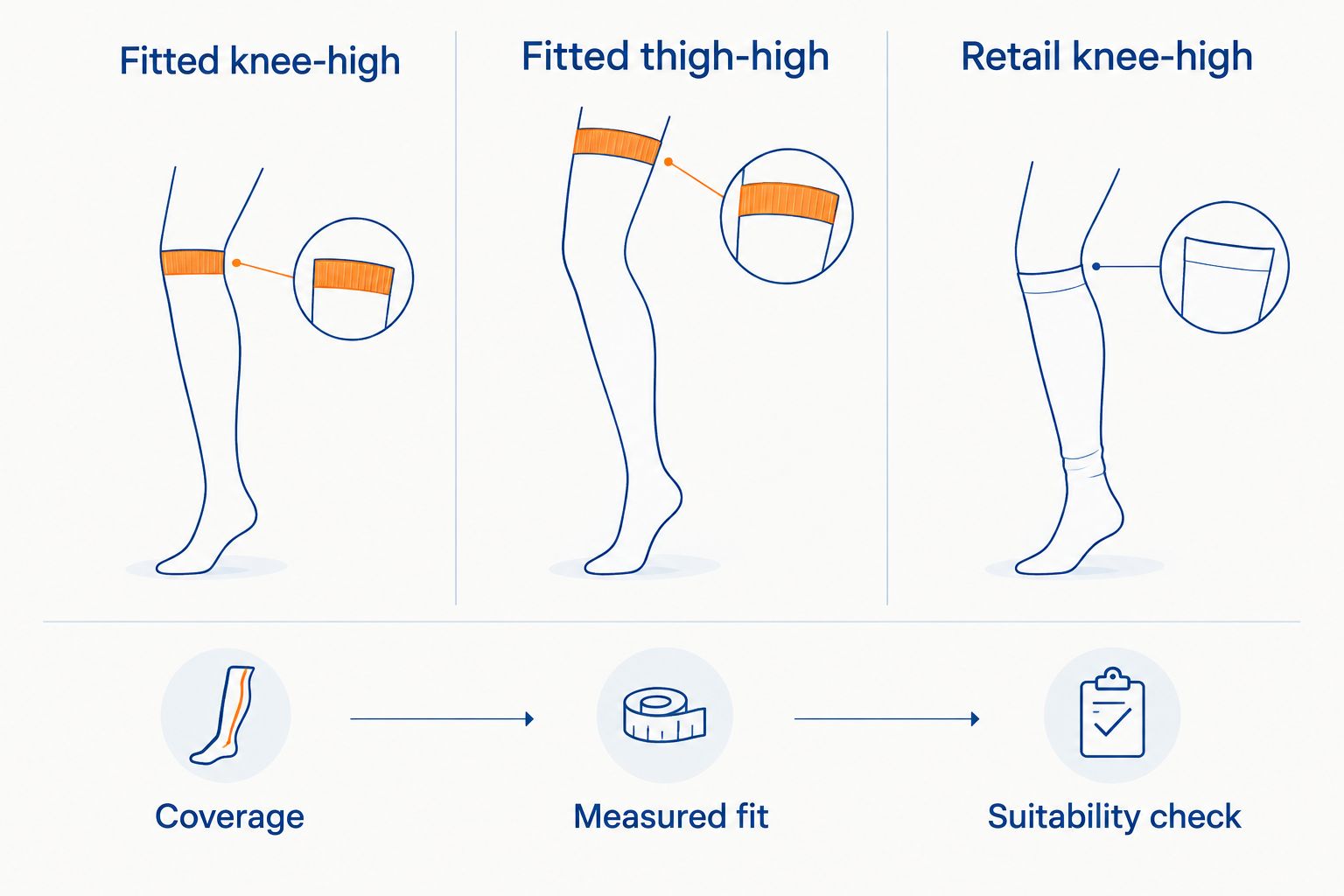
| Fitted graduated knee-high sock | Someone advised to use below-knee compression | Covers the foot, ankle and lower leg | Does not cover the thigh; fit and suitability still need checking |
| Fitted graduated thigh-high garment | Someone specifically advised to use above-knee coverage | Extends compression above the knee | More material to fit and keep in place |
| Over-the-counter graduated knee-high sock | Someone with clear professional advice who can verify the product specification | Can be compared using its stated size and pressure information | A retail label cannot assess symptoms or confirm suitability |
Mychiro does not sell or prescribe a named sock in the information provided for this guide. These are garment categories, not tested products or brand recommendations. That distinction matters: naming a retail winner without verified product specifications would give you confidence the evidence here cannot support.
1. Fitted graduated knee-high sock: for below-knee coverage
A fitted graduated knee-high sock covers the foot, ankle and lower leg. It is the starting option in this comparison only when a qualified health professional has advised below-knee compression. The fitting decision matters more than whether a retailer calls a sock suitable for circulation.
A professional recommendation should tell you what specification to look for and how to measure for it. In 2026, do not substitute an online size chart for that discussion if you have unexplained pain, swelling, reduced sensation or a condition that affects your legs. A sock that matches the intended category can still fit poorly.
Fitted knee-high pros:
- Covers the lower leg without extending above the knee.
- Allows you to compare a recommended specification against a product label.
- Gives you a defined area to measure using the maker's instructions.
Fitted knee-high cons:
- Does not provide above-knee coverage when that has been specifically advised.
- Can bunch, roll or feel uncomfortable if the size or placement is wrong.
- Does not explain the cause of leg pain or swelling.
Best for: A person advised to use below-knee graduated compression who has received suitable fitting guidance.
Verdict: Hold until you have confirmed that compression and the garment specification suit your circumstances. Once confirmed, check the current product information and measure exactly as instructed rather than choosing by appearance.
2. Fitted graduated thigh-high garment: for above-knee coverage
A thigh-high garment extends above the knee. Its purpose in this comparison is coverage, not a claim that more fabric produces a better result. Choose this category only when the person advising you on compression has given a reason for above-knee coverage.
Fit deserves particular attention. The garment needs to match the measurements and wearing instructions for its design; a top that rolls down is a reason to check the fit, not to keep tightening or adjusting it without advice. In 2026, a thigh-high sock is not the default response to pain above the knee, because the location of pain alone does not identify its cause.
Fitted thigh-high pros:
- Covers the thigh when above-knee coverage has been recommended.
- Offers a distinct option when a knee-high garment does not match the advised coverage.
- Can be assessed against specific measuring and wearing instructions.
Fitted thigh-high cons:
- Requires attention to fit along more of the leg.
- A rolling top or uncomfortable fit needs review.
- Greater coverage does not make it appropriate for unexplained symptoms.
Best for: A person specifically advised to use above-knee graduated compression and given fitting guidance.
Verdict: Hold until you know why above-knee coverage is needed and which specification applies. Do not move from knee-high to thigh-high simply because it sounds more thorough.
3. Over-the-counter graduated knee-high sock: for an informed retail choice
An over-the-counter graduated knee-high sock is a product category, not a medical assessment. Retail packaging can help you check stated measurements and pressure information against advice you already have. It cannot determine why your leg hurts or whether compression suits you.
Read the label before comparing colours, fabrics or online reviews. Check that it identifies the garment as graduated, states the relevant product specification and provides measuring instructions you can follow. If those details are missing or unclear, choose a different product to evaluate rather than guessing. A 2026 review score would not settle a fit or suitability question.
Retail knee-high pros:
- Lets you inspect the stated specification before choosing a garment.
- Provides a below-knee option when that coverage matches your advice.
- Allows comparison of care and measuring instructions between products.
Retail knee-high cons:
- Marketing descriptions can leave suitability questions unanswered.
- A self-selected size can be wrong even when the sock feels snug.
- Customer reviews do not establish whether a garment is appropriate for your symptoms.
Best for: A person who already knows the advised garment type and specification and can check the retail label against them.
Verdict: Skip as a way to investigate new or unexplained leg pain. If compression has already been recommended, compare the label and measurements with that advice before choosing.
How these options are ranked
This is a decision order, not a product test. Fitted below-knee compression comes first because it gives a reader with a recommendation a clear coverage and measurement decision. Thigh-high coverage follows for the narrower situation in which it has been specifically advised. Retail self-selection comes last because packaging cannot replace a suitability check.
No named manufacturer, model, pressure level, clinical outcome or price was provided for an independent comparison. The ranking therefore cannot tell you that one brand outperforms another. In 2026, treat any list that makes that jump without explaining fit and intended use as an incomplete buying guide.
Before you choose: separate leg symptoms from back symptoms
A long workday can leave you thinking about your legs and your back at the same time. Describe each concern separately when seeking advice: where you feel it, when it began and whether you have noticed swelling or a change in sensation. Do not assume one sock or one adjustment addresses both.
Mychiro offers chiropractic assessments and adjustments for musculoskeletal concerns. Mychiro is not a substitute for medical assessment of suspected circulation problems. If the question is whether compression is suitable for your legs, put that question to a qualified health professional who can assess it. If the question concerns back pain or posture, discuss that separately.
For prolonged standing, your routine is also worth examining without treating it as a diagnosis. Consider when you can change position and whether your footwear fits your work. For prolonged sitting, consider opportunities to stand and move. Those are practical questions to raise alongside professional advice, not reasons to ignore new swelling, pain or other concerning symptoms.
Which compression sock should you choose?
If a qualified health professional recommends below-knee graduated compression, start by comparing fitted knee-high garments against the advised specification. If the recommendation calls for above-knee coverage, compare fitted thigh-high garments instead. If you are shopping at a retailer, use the label to verify the recommendation; do not let the label create the recommendation.
If you have no recommendation and are searching for the best compression socks for circulation because your leg hurts, pause the purchase decision. Describe the symptoms to a qualified health professional first. For new one-sided swelling or pain, seek prompt medical assessment. For chest pain or sudden difficulty breathing, call 000 in Australia.
That is the practical 2026 verdict: the right garment category follows an assessment of your needs. It does not emerge from a general ranking of sock brands.
FAQ
What are the best compression socks for circulation?
Start with a fitted graduated knee-high sock if a qualified health professional recommends below-knee compression. The appropriate garment and specification depend on your circumstances, so a general ranking cannot choose them for you.
Are knee-high or thigh-high compression socks better?
Neither coverage length is automatically better. Knee-high and thigh-high garments serve different coverage needs; follow the advice you receive about which area the garment should cover.
Can I choose compression socks by shoe size?
Do not rely on shoe size alone. Follow the garment maker’s measuring instructions and any fitting advice from the professional who recommended compression.
Should I wear compression socks for unexplained leg pain?
Get advice about unexplained leg pain before using compression as a response to it. A sock cannot identify the cause of pain, and new one-sided pain or swelling calls for prompt medical assessment.
Do tighter compression socks work better?
Do not assume tighter is better. Ask a qualified health professional which specification is appropriate rather than selecting pressure by feel.
Can Mychiro assess poor circulation?
Mychiro is described as a chiropractic clinic providing care for musculoskeletal concerns. Seek an appropriately qualified health professional for assessment of a suspected circulation problem.
When should I stop using a compression sock and seek advice?
Seek advice if a garment causes discomfort, skin changes or new symptoms. If you develop chest pain or sudden difficulty breathing, call 000 in Australia.
One last thing
A sock can match the category you were advised to buy and still be the wrong size. Take the measurement step as seriously as the garment choice. If the instructions are unclear or the sock rolls, bunches or causes discomfort, ask for a fit review rather than persisting because a roundup ranked the style first.
For 2026, keep Mychiro's musculoskeletal care separate from decisions about compression. Knowing which question belongs with which health professional is more useful than another unverified product winner.
Related guides
- Ergonomic setups for shift workers with back pain
- Stretching during a long flight
- Supportive shoes for nurses