

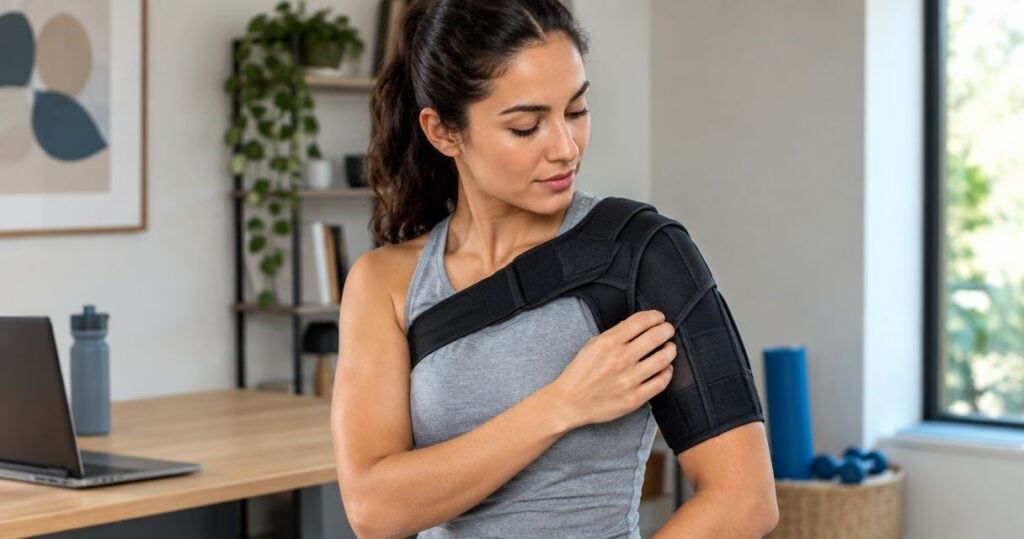
For rotator cuff concerns in 2026, start with the purpose of the brace, not a brand: an adjustable compression wrap permits more movement, a sling holds the arm closer to the body, and an immobiliser restricts movement further. If you have a new injury, marked weakness or a shoulder that looks out of place, seek medical assessment before choosing a brace.
- Choosing a shoulder brace for rotator cuff concerns starts with assessment, not a product ranking.
- An adjustable compression wrap permits movement; a sling or immobiliser restricts it.
- MyChiro is a chiropractic clinic in Bondi Junction, not a shoulder-brace retailer.
- After an injury, deformity, marked weakness or numbness calls for medical assessment before brace selection.
Why this matters
The phrase rotator cuff describes muscles and tendons around the shoulder; it does not tell you why your shoulder hurts. A brace changes how your arm is supported or how far it can move. It cannot establish what has happened inside the joint. If you are considering movement alongside support, read the rotator cuff exercise safety guide and discuss the appropriate next step with a qualified health professional.
In 2026, product listings often group wraps, slings, immobilisers and posture straps together under shoulder support. Those designs do different jobs. Choosing by a product label alone can leave you with a brace that restricts a movement you need, or permits a movement your clinician has asked you to limit.
What makes a shoulder brace suitable in 2026?
Check these points before comparing styles. They describe how a brace works, not whether it is appropriate for your particular shoulder.
- Purpose: Decide whether the aim is light compression, support for the arm, or movement restriction recommended by a clinician.
- Fit: Check the maker’s sizing instructions and whether straps sit where the design requires. A brace that slips needs reassessment rather than ever-tighter straps.
- Movement: Identify which movements the brace permits. Ask a clinician about restrictions if you have been assessed after an injury or procedure.
- Skin contact: Consider seams, pressure points and whether you can inspect the skin beneath the brace.
- Daily tasks: Think about dressing, work and carrying items. A design you cannot put on as instructed is a poor match for that task.
- Clinical instructions: If you have been given a specific brace or wearing schedule, follow that advice rather than replacing it with a general buying guide.
No checklist can diagnose a rotator cuff tear or determine how long to wear a brace. MyChiro provides chiropractic care in Bondi Junction; this comparison is general information, not a recommendation to book chiropractic care for a suspected shoulder injury.
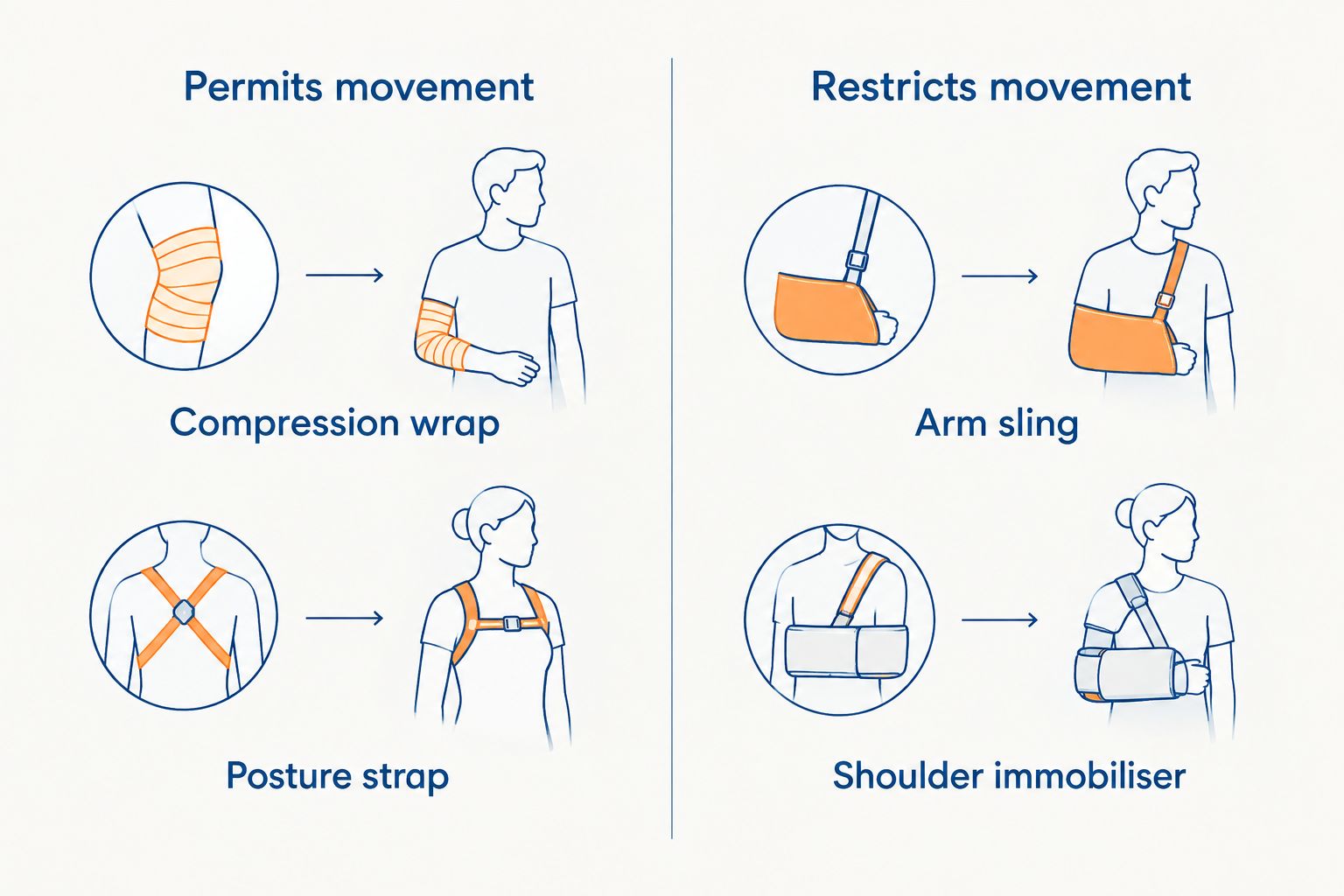
Shoulder-support types at a glance
These are design categories, not ranked products. The table separates their intended use without claiming that any category manages a rotator cuff condition.
| Support type | Use case | Defining feature | Key limitation |
|---|---|---|---|
| Adjustable compression wrap | Light, adjustable support when movement is permitted | Wraparound fit | Does not hold the arm still |
| Arm sling | Arm support when a clinician advises it | Supports the forearm | Restricts everyday arm use |
| Shoulder immobiliser | Clinician-directed movement restriction | Additional straps limit movement | Unsuitable as a casual substitute for assessment |
| Posture strap | A reminder to notice shoulder position | Straps sit across the upper back | Does not support the arm like a sling |
The deciding question in 2026 is not which row sounds strongest. It is whether you need support while moving, support for the arm, or a specific movement restriction. Do not infer that greater restriction means a better choice.
1. Adjustable compression wrap: for permitted movement
An adjustable wrap sits around the shoulder and upper arm, with straps you can reposition according to the maker’s instructions. Its practical advantage is that it leaves the arm available for tasks that a sling would interrupt. That distinction matters only when movement is appropriate for you.
Adjustable compression wrap pros:
- Lets you adjust the fit rather than relying on a fixed position.
- Leaves the forearm free for everyday tasks.
- Is easier to distinguish from an immobiliser by what it does: it does not hold the arm still.
Adjustable compression wrap cons:
- Does not provide the movement restriction a clinician may specify.
- Tight straps can create uncomfortable pressure.
- Fit varies by design, so a general size label does not settle whether it fits you.
Use case: You have been advised that movement is permitted and want to discuss whether light support is appropriate. If you cannot tell whether movement should be limited, do not use a wrap to answer that clinical question. Verdict: Hold until you know what movement is appropriate.
2. Arm sling: for clinician-advised arm support
A sling supports the forearm and keeps the arm closer to the body. It also changes how you dress, carry things and use your hand. Those trade-offs are part of the decision, not minor details to discover after purchase.
Arm sling pros:
- Has a clear purpose: supporting the arm.
- Makes its restriction visible when you plan daily tasks.
- Can be fitted and reviewed against a clinician’s instructions.
Arm sling cons:
- Limits use of the supported arm.
- A poorly positioned strap can press on the neck.
- Choosing a sling yourself does not establish whether movement restriction is needed.
Use case: A qualified health professional has advised arm support and explained when you should wear it. Ask for a fit check if the strap presses, the arm position seems wrong or you cannot follow the wearing instructions. Verdict: Hold unless arm support has been advised.
3. Shoulder immobiliser: for a specified restriction
An immobiliser adds straps to limit shoulder movement beyond what a simple sling permits. Its role is a particular restriction directed by a clinician, not general-purpose support for an unexplained ache. Look at the fitting instructions and ask who will check that it is positioned correctly.
Shoulder immobiliser pros:
- Provides a defined way to limit movement when prescribed.
- Makes the restriction clearer than a light wrap.
- Can be checked against written wearing instructions.
Shoulder immobiliser cons:
- Interferes more with dressing and other tasks.
- Requires clear advice about when it should be worn and removed.
- Is not a substitute for assessment after a new injury.
Use case: You have received a specific instruction to restrict shoulder movement. If you have not, ask for assessment rather than selecting the most restrictive item on a shelf. Verdict: Skip as a self-selected brace.
4. Posture strap: for noticing position, not arm support
A posture strap usually crosses the upper back and pulls on the shoulders when you change position. It differs from a wrap because it does not encircle the shoulder in the same way, and it differs from a sling because it does not carry the forearm. Treat it as a distinct category rather than another version of a rotator cuff brace.
Posture strap pros:
- Has an easily identifiable function: prompting attention to position.
- Leaves the forearm available for tasks.
- Can be compared with changes to your workstation and movement habits.
Posture strap cons:
- Does not provide the arm support of a sling.
- Does not provide the restriction of an immobiliser.
- Can distract from seeking assessment for a new or worsening shoulder problem.
Use case: You want to discuss posture habits, not manage a suspected rotator cuff injury. MyChiro’s description includes care for posture issues, but that does not make a posture strap the answer to shoulder pain. Verdict: Skip for rotator cuff support.
How to make the decision in 2026
The categories above are ordered by decision type, not by clinical outcome. A brace that permits movement and one that restricts it cannot be ranked without knowing the reason for wearing one. Use these steps instead:
- Describe the problem. Note whether symptoms followed an injury, whether you can use the arm as usual and which movements concern you. Do not turn those observations into your own diagnosis.
- Identify urgent concerns. A shoulder that looks out of place, marked weakness, numbness or substantial symptoms after an injury warrant prompt medical assessment. Do not tighten a brace to see whether the problem passes.
- Ask what movement is appropriate. A qualified health professional can discuss whether support, restriction or neither is appropriate after assessment.
- Match the design to the instruction. Check fit, skin contact, permitted movement and how to put the brace on. Ask when to stop using it if you receive a wearing plan.
- Review daily use. If the brace slips, presses or prevents an instructed task, ask for a fit review rather than changing the clinical instruction yourself.
This sequence also prevents a common mix-up: buying an immobiliser because it appears more substantial than a wrap. More material and more straps describe the device. They do not establish what your shoulder needs.
Which shoulder-support type should you choose?
The 2026 default is assessment before a brace purchase when you suspect a rotator cuff injury. If movement has been cleared and light support is appropriate, discuss an adjustable compression wrap. If a clinician advises arm support, discuss a sling. Use an immobiliser only under a specific movement-restriction plan; do not choose a posture strap as a substitute for arm support.
MyChiro is a chiropractic clinic and wellness centre in Bondi Junction, not a shoulder-brace brand. For a shoulder concern, the useful question for a qualified health professional is what needs assessment and whether a brace has a defined role. That is a more precise starting point than a product ranking.
FAQ
Which shoulder brace should I choose for rotator cuff concerns?
Choose the brace type only after you understand what movement is appropriate for your shoulder. A wrap permits movement, while a sling or immobiliser restricts it in different ways.
Is a compression wrap the same as a sling?
No. A compression wrap sits around the shoulder, while a sling supports the forearm and keeps the arm closer to the body. Ask which function you need before buying either.
Should I wear an immobiliser for an unexplained shoulder ache?
Do not select an immobiliser simply because it restricts more movement. Seek assessment to establish whether restriction is appropriate and how the device should be worn.
Can a posture strap replace a shoulder brace?
A posture strap does not replace a sling or an immobiliser. It prompts attention to shoulder position rather than supporting the forearm or providing a specified movement restriction.
What if my shoulder looks out of place after an injury?
Seek prompt medical assessment if your shoulder looks out of place after an injury. Do not use a brace purchase as a substitute for assessment.
What should I check when fitting a shoulder support?
Check the maker’s sizing and fitting instructions, strap position, skin contact and whether the device permits the movement your clinician has advised. Ask for a fit review if it slips or presses.
Does MyChiro sell rotator cuff braces?
MyChiro is described as a chiropractic clinic and wellness centre in Bondi Junction, not a brace retailer. This guide compares support types; it does not identify products sold by the clinic.
One last thing
A product listing can tell you how a brace fastens. It cannot tell you whether restricting your shoulder is appropriate. In 2026, make that distinction before comparing straps, fabrics or product labels.
Related guides
- Shoulder pain from carrying a laptop bag
- Chiropractic care for surfers with shoulder and back pain
- Ergonomic keyboards and mice for wrist and shoulder pain
- Preparing for your first chiropractor appointment