


A TENS machine sends small electrical pulses through electrode pads stuck to the skin, and different designs suit different pain patterns. This guide ranks five types of TENS unit against back, muscle and joint pain so you can match the device to how and where you actually hurt.
- A dual-channel TENS unit is the best tens machine for back pain that covers a wide area like the lower back.
- Wearable clip-on units suit people who want to keep moving at work or during the day.
- TENS plus EMS combination units add a muscle-stimulation mode for tight, tense muscles.
- Single-channel units are the simplest starting point for someone who has never used a TENS machine before.
- A TENS machine is a self-management tool, not a substitute for an assessment if pain persists past a few weeks.
Why this matters
TENS stands for transcutaneous electrical nerve stimulation, and the units have been sold over the counter in Australia for decades. The pulses are thought to work partly through the gate control theory of pain — the electrical signal competes with pain signals travelling to the brain, which is why some people notice the sensation of pain reduce while the unit is switched on.
That's a self-management effect, not a structural one. A TENS machine doesn't correct the cause of muscle tightness, a stiff joint, or nerve irritation — it changes what you feel in the moment. If lower back pain has lasted more than a few weeks, or it's spreading down a leg, an assessment can help work out whether it needs a chiropractor or a doctor before you rely on a device alone.
2026 buyers are choosing between roughly five categories of TENS unit, and each one is built around a different use case rather than a different level of quality.
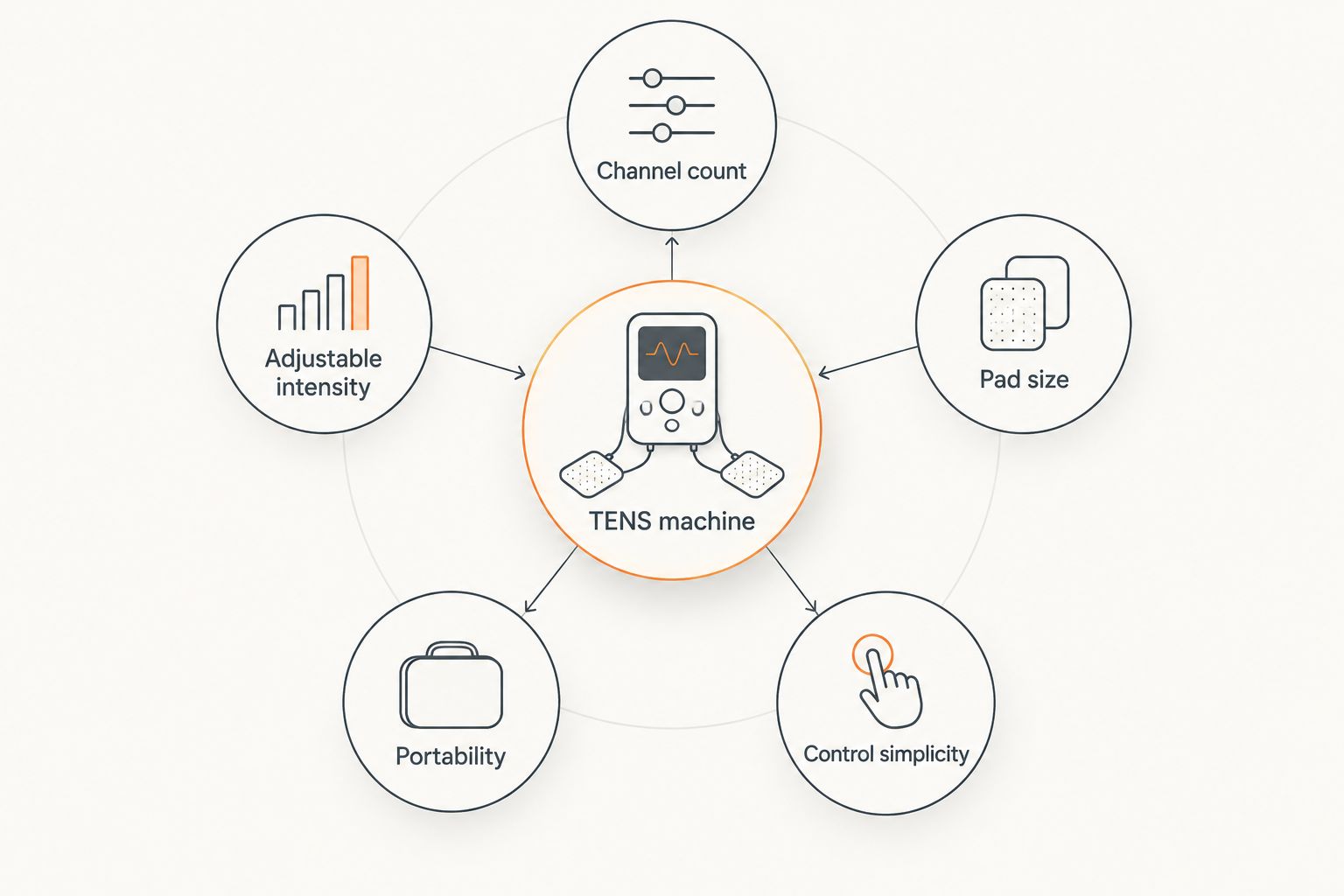
What makes the best TENS machine for back pain
- Channel count — one channel runs one pair of pads; two channels run two pairs, useful for covering both sides of the lower back at once.
- Adjustable intensity — fine steps between low and high settings matter more than a high maximum number.
- Pad size and placement — larger pads spread current over a bigger muscle area; smaller pads suit joints and smaller muscle groups.
- Portability — a clip-on or wireless design lets you keep the unit running while sitting at a desk or standing at work.
- Control simplicity — large buttons and a basic display matter for anyone who finds small dials fiddly.
- Battery type — rechargeable units cost less to run over 2026 than disposable-battery models but need a charging routine.
At a glance
| Unit type | Best for | Standout feature | Key limitation |
|---|---|---|---|
| Dual-channel TENS unit | Widespread lower back pain | Two pad pairs cover both sides of the back | Bulkier body, less discreet under clothing |
| Wearable clip-on TENS unit | Staying mobile during work or daily activity | Small wireless pads, clips to a waistband | Smaller pads limit coverage on a broad area |
| TENS + EMS combo unit | Muscle tension alongside joint stiffness | Switches between nerve stimulation and muscle stimulation modes | Extra modes add a learning curve for first-time users |
| Single-channel TENS unit | First-time users | Minimal buttons, one pad pair | Can't run two pad pairs at once |
| Programmable digital TENS unit | Older adults with joint stiffness | Pre-set programs remove the need to adjust settings manually | Less flexibility to fine-tune intensity by feel |
1. Dual-channel TENS unit: best tens machine for back pain across a wide area
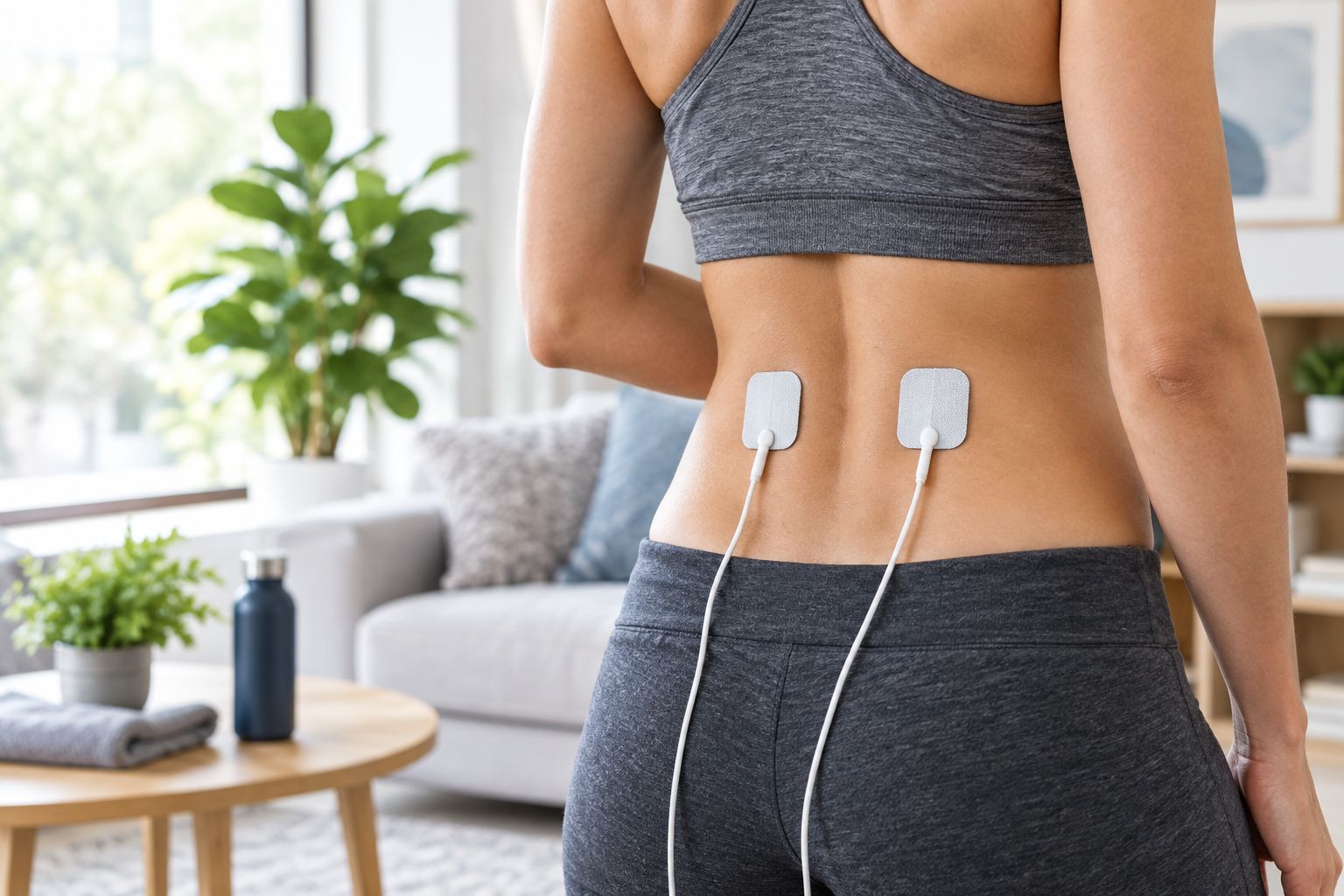
A dual-channel unit runs two separate pairs of electrode pads from one controller, which means you can place pads either side of the spine or cover both the lower back and a hip at the same time. It's the most common configuration sold for general back and muscle use in 2026.
Dual-channel TENS unit pros:
- Covers a wider area than a single-channel unit without buying a second device
- Two channels can run different intensity levels at once
- Suits general lower back muscle tension and stiffness
Dual-channel TENS unit cons:
- Bulkier housing than wearable designs
- Four pads and two leads take longer to set up than a single-channel unit
- Not built to clip discreetly under clothing
Best for: general lower back pain that spans a wider area than one pad pair can cover.
Verdict: Buy if your pain sits across the lower back rather than in one small spot.
2. Wearable clip-on TENS unit: best for staying active during the day
Wearable units use small self-adhesive pads with a compact controller that clips to a waistband or sits flat against the skin, often controlled wirelessly from a phone or a small remote. They're built for people who don't want to sit still with wires running to a bedside unit.
Wearable clip-on TENS unit pros:
- Small enough to wear under a shirt or jumper at a desk
- No trailing wires to a separate controller box
- Suits shift workers, tradies and anyone standing or moving through the day
Wearable clip-on TENS unit cons:
- Pads are usually smaller, so coverage is limited to one focused area
- Wireless models rely on a charged battery and, sometimes, a paired app
- Less suited to a wide, diffuse ache across the whole lower back
Best for: people who need the unit running while they keep working or moving.
Verdict: Buy if pain flares during long shifts standing or sitting rather than at rest.
3. TENS + EMS combo unit: best for muscle tension alongside joint stiffness
A combination unit runs two separate modes from one device — a TENS setting for nerve-focused pulses and an EMS (electrical muscle stimulation) setting that causes the muscle itself to contract. People managing both tight muscles and a stiff joint often end up needing both modes rather than switching between two separate devices.
TENS + EMS combo unit pros:
- One device covers two different stimulation types
- EMS mode can be used for muscle-focused work separate from the TENS mode
- Useful for people managing muscle tightness around a stiff joint
TENS + EMS combo unit cons:
- More settings mean more to learn before first use
- EMS mode isn't the same as, and shouldn't be confused with, nerve-pulse TENS mode
- Larger control unit than a basic single-mode device
Best for: muscle tightness that sits around a stiff or arthritic joint. Ongoing joint pain in the spine or elsewhere can be discussed with a chiropractor following an assessment rather than managed with a device alone.
Verdict: Buy if you're managing both muscle tension and joint stiffness in the same area.
4. Single-channel TENS unit: best for first-time users
A single-channel unit runs one pad pair from a simple controller with a small number of buttons. It's the entry point most pharmacies stock, and it's built to be usable straight out of the box without reading a long manual.
Single-channel TENS unit pros:
- Fewest buttons and settings of any type on this list
- Quick to set up for a single, localised area of pain
- Compact size for storage between uses
Single-channel TENS unit cons:
- Can't run two separate pad pairs at once
- Limited to one area at a time, so a second flare elsewhere needs repositioning the pads
- Fewer intensity steps than higher-end units
Best for: anyone trying a TENS machine for the first time on one specific spot.
Verdict: Buy if this is your first TENS unit and you want the simplest option to learn on.
5. Programmable digital TENS unit: best for older adults with joint stiffness
These units come loaded with pre-set programs — a fixed sequence of pulse patterns selected by pressing one button rather than adjusting frequency and intensity manually. The trade-off for that convenience is less manual control over the exact settings.
Programmable digital TENS unit pros:
- Large buttons and simple menus suit people who find manual dials fiddly
- Pre-set programs remove the guesswork around frequency and pulse width
- Screens are typically larger and easier to read
Programmable digital TENS unit cons:
- Less fine control than a fully manual dual-channel unit
- Pre-set programs may not match every individual's preferred intensity
- Usually single-channel, limiting coverage to one area
Best for: older adults managing joint stiffness who want a straightforward, low-fuss device.
Verdict: Buy if ease of use matters more to you than fine-tuned manual settings.
How this list was ranked
Each unit type was placed against the six criteria above — channel count, adjustable intensity, pad size, portability, control simplicity and battery type — and matched to the use case where its strengths actually apply. No single type wins across every criterion; a dual-channel unit that covers more area loses on portability, and a wearable unit that suits an office day loses on coverage.
Discuss ongoing back pain with a chiropractor
Book an assessment to work out what’s driving the pain a TENS machine is masking.
Which TENS machine should you choose?
For most people managing general lower back pain in 2026, a dual-channel TENS unit is the best tens machine for back pain because it covers both sides of the lower back without buying two devices. If you need to keep working or moving through the day, a wearable clip-on unit fits better into daily life than a bulkier dual-channel model. If muscle tension sits around a stiff joint, the combo TENS + EMS unit covers both problems from one device, and if this is your first TENS machine, start with the simplest single-channel option before upgrading.
A heat-based approach is worth comparing too — heating pad options for lower back pain work through a different mechanism and some people find the two combine well.
FAQ
What is the best tens machine for back pain?
A dual-channel TENS unit is generally the best tens machine for back pain because it covers both sides of the lower back at once. Wearable clip-on units suit people who need to stay mobile during the day instead.
Is a TENS machine the same as an EMS machine?
No. A TENS unit sends pulses aimed at nerve signals, while an EMS unit causes the muscle itself to contract. Combination units run both modes from one device.
How long can you use a TENS machine at a time?
Session length varies by device, and the manufacturer’s instructions for that specific unit set the recommended duration. Check the packaging or manual for the model you buy.
Can a TENS machine be used every day for back pain?
Daily use is common with over-the-counter TENS units, following the manufacturer’s guidance. If back pain persists beyond a few weeks despite regular use, an assessment with a chiropractor or GP is worth booking.
Who should check with a doctor before using a TENS machine?
People with a pacemaker or other implanted electrical device, people who are pregnant, and people with epilepsy are generally advised to check with a doctor first. Manufacturer instructions list the full set of precautions for each model.
Where should TENS pads be placed for lower back pain?
Pads are typically placed either side of the area of discomfort, avoiding broken skin, the front of the neck, and directly over the spine itself. The instructions supplied with each unit give exact placement diagrams.
Does a TENS machine fix the cause of back pain?
No. A TENS machine changes the sensation of pain while it’s switched on; it doesn’t correct a disc, joint or muscle problem causing the pain. Ongoing pain is better assessed than managed with a device alone.
Are wireless TENS units as capable as wired dual-channel units?
Wireless units are usually single-channel with smaller pads, so they cover less area than a wired dual-channel unit. They trade coverage for portability, which suits people who need to keep moving.
One last thing
The detail most first-time buyers miss: pads lose adhesive strength after repeated use, and a unit that feels weaker over a few months is often a pad problem, not a device fault — check the pad condition before assuming the machine has failed. If back pain keeps returning to the same spot no matter which TENS unit you try, that pattern itself is worth mentioning at an assessment for sciatica or nerve-related pain, since a device that only masks the feeling won't change a pattern that keeps repeating through 2026.
Related guides
- Best massage guns for chronic muscle tension relief
- How to relieve sciatica pain fast at home
- Chiropractic care for arthritis in the spine and joints
- Best heating pad options for lower back pain


