

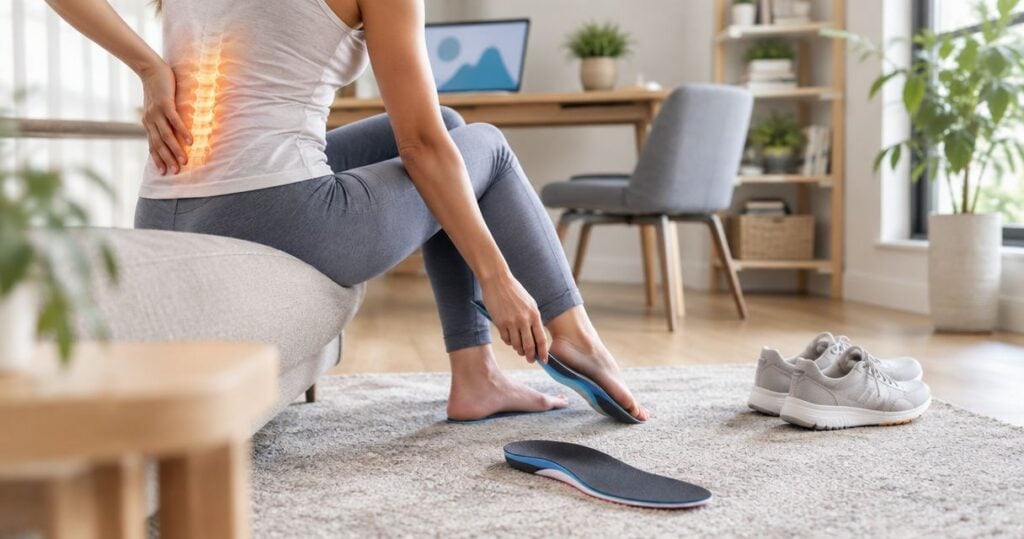
Choosing the right orthotic insole comes down to matching insole type to your foot shape, footwear and how much support your daily activity demands — not picking whichever pair is cheapest at the pharmacy. This guide ranks six categories of orthotic insoles for back and foot pain by use case, so you can work out which one is worth trying before you spend money on the wrong type.
- Custom-moulded orthotics, fitted following a podiatry or chiropractic assessment, rank best overall for structural support in 2026.
- Rigid orthotics suit flat feet and overpronation; cushioned gel insoles suit people standing all day.
- Heat-mouldable insoles are the budget option worth trying before committing to a custom pair.
- No insole on this list replaces an assessment — foot mechanics and back pain are often linked, and a chiropractor can help identify the connection.
Why this matters
Foot posture changes how load travels up through the ankles, knees, hips and lower spine. An insole that flattens or over-corrects your arch can shift stress higher up the chain, which is one reason plantar fasciitis and foot pain so often shows up alongside lower back complaints.
The insole market is crowded with generic "one size supports all" claims. Most feet don't work that way — a rigid orthotic built for a flat, overpronating foot can feel uncomfortable and unhelpful on a high, rigid arch, and vice versa. Matching the insole type to your foot shape and footwear matters more than the price tag.
What makes the best orthotic insoles for back pain
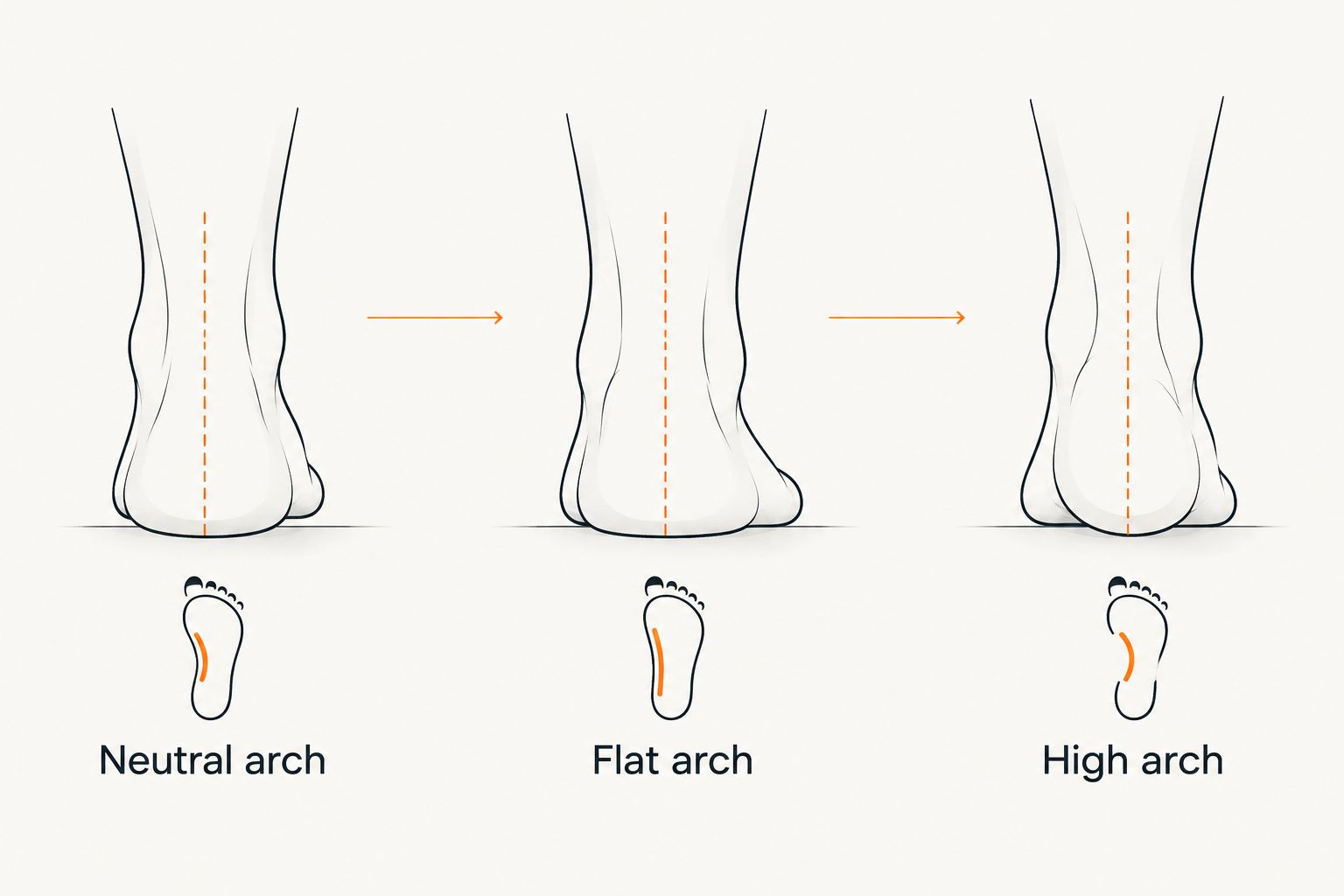
- Arch match — the insole's contour should correspond to your actual arch height (flat, neutral or high), not a generic middle-ground shape
- Rigidity level — soft materials cushion, firm materials control motion; the two do different jobs
- Footwear compatibility — a bulky insole that doesn't fit your everyday shoe won't get worn consistently
- Assessment basis — insoles selected after a gait or postural assessment are more likely to match your actual mechanics than a shelf-guess
- Break-in tolerance — firmer orthotics generally need a gradual introduction period rather than all-day wear from day one
- Durability under daily load — materials compress over time, and a flattened insole stops doing the job it was bought for
The foot itself is a complicated structure to support well: each foot contains 26 bones and 33 joints, and between them the two feet hold roughly a quarter of all the bones in the human body. That's a lot of moving parts for one flat piece of foam to manage.
Orthotic insoles at a glance
| Insole type | Best for | Standout feature | Key limitation |
|---|---|---|---|
| Custom-moulded orthotics | Structural support after assessment | Built from a cast or scan of your own foot | Requires a fitting appointment, not an instant purchase |
| Rigid orthotics | Flat feet and overpronation | Firm shell controls excess inward roll | Can feel harsh until broken in |
| Semi-rigid orthotics | Everyday comfort and moderate support | Balances control with flexibility | Less correction than a rigid shell |
| Cushioned/gel insoles | Standing all day | Shock absorption underfoot | Does not correct alignment |
| Heat-mouldable insoles | Trying orthotic support on a budget | Moulds to your foot at home with heat | Softens and loses shape faster than custom builds |
| Sport-specific insoles | High-impact training | Designed around a single movement pattern | Narrow use case outside that sport |
1. Custom-moulded orthotics: best orthotic insole for structural support after assessment
Custom-moulded orthotics are built from a cast, foam impression or 3D scan of your own foot, then shaped to support your specific arch profile. They're generally supplied following an assessment by a podiatrist or a chiropractor working within a broader postural review, which is why they sit at the top of this list for anyone dealing with back pain that seems connected to foot mechanics.
Custom-moulded orthotics pros:
- Built to your foot shape rather than a generic template
- Can be adjusted or remade if your needs change
- Often paired with a broader assessment that looks at hips and spine, not just feet
Custom-moulded orthotics cons:
- Take longer to obtain than an off-the-shelf pair
- Cost more than pharmacy insoles
- Still need a gradual break-in period, often starting with an hour or two of wear a day
Best for: people whose back or foot pain appears linked to a diagnosed arch or gait issue.
Verdict: Buy — if a foot or postural assessment points to a genuine mechanical mismatch, this is the category worth the extra step.
2. Rigid orthotics: best orthotic insole for flat feet and overpronation
Rigid orthotics use a firm shell, usually plastic or carbon fibre, to resist the inward roll of the foot that happens with flat feet or overpronation. They control motion rather than cushion it, which is a different job to a soft gel pad.
Rigid orthotics pros:
- Strong control over excess pronation
- Long-lasting shape compared with soft foam
- Thin profile fits into most closed shoes
Rigid orthotics cons:
- Can feel uncomfortable on first wear
- Not suited to high, rigid arches — the wrong shape here can aggravate rather than help
- Limited cushioning for people who need shock absorption more than control
Best for: flat feet and moderate-to-severe overpronation confirmed by assessment.
Verdict: Buy — but only after checking your arch type, since a rigid shell on the wrong foot shape works against you.
3. Semi-rigid orthotics: best orthotic insole for everyday comfort and moderate support
Semi-rigid orthotics sit between the firm control of a rigid shell and the softness of a gel pad. They flex with the foot through the walking cycle while still offering arch support, which makes them a common everyday choice for people who don't need aggressive correction.
Semi-rigid orthotics pros:
- More comfortable out of the box than rigid orthotics
- Suits a wider range of arch shapes than a rigid shell
- Works across casual and work shoes
Semi-rigid orthotics cons:
- Offers less correction than a fully rigid orthotic for significant overpronation
- Wears down faster under heavy daily use
- Still benefits from professional fitting advice rather than guesswork
Best for: people with mild-to-moderate foot pain who want daily support without a rigid shell.
Verdict: Hold — a solid everyday option; most people don't need to upgrade past this unless an assessment says otherwise.
4. Cushioned and gel insoles: best orthotic insole for standing all day
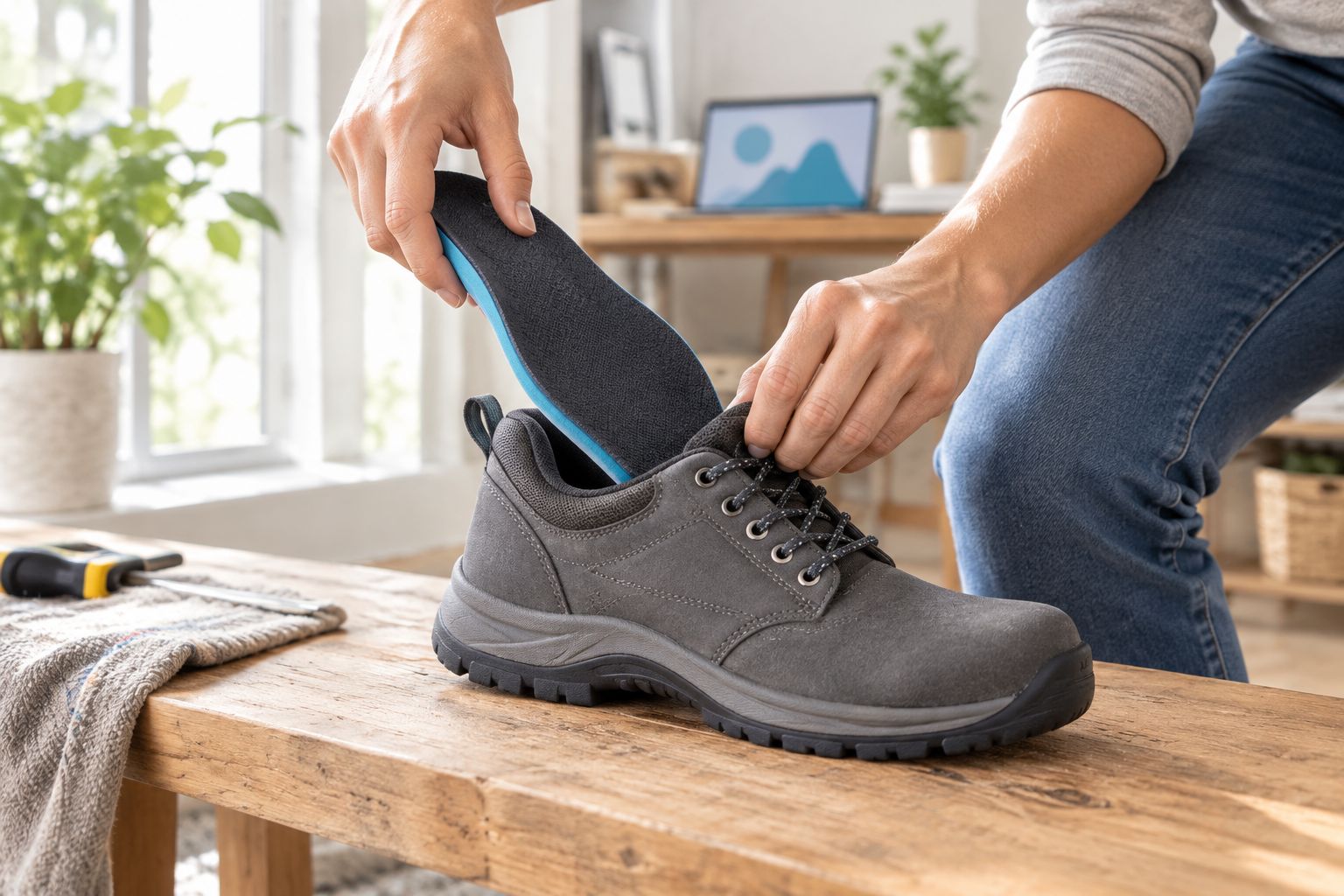
Cushioned or gel insoles are built around shock absorption rather than structural correction. They're the category most people reach for first because they're cheap, comfortable immediately, and widely available.
Cushioned/gel insoles pros:
- Immediate comfort with no break-in period
- Inexpensive relative to custom options
- Genuinely useful for people on their feet for long shifts
Cushioned/gel insoles cons:
- Does nothing to correct overpronation or arch collapse
- Compresses and flattens with use, losing cushioning over months rather than years
- Not a substitute for addressing a structural cause of pain
Best for: people whose main issue is fatigue and impact from long hours standing, rather than a diagnosed alignment problem.
Verdict: Hold — fine as a comfort layer, but don't expect it to correct anything structural.
5. Heat-mouldable insoles: best budget orthotic insole to try first
Heat-mouldable insoles soften in an oven or hot water at home, then set to your foot shape once you stand on them. They sit between a shelf-bought pad and a full custom orthotic, offering a rough personalised fit without a fitting appointment.
Heat-mouldable insoles pros:
- Lower cost entry point into arch-specific support
- Home-mouldable, so no appointment needed
- Useful for testing whether extra arch support helps before spending more
Heat-mouldable insoles cons:
- Less precise than a professionally cast orthotic
- Softens and loses its moulded shape faster than rigid or custom builds
- Home moulding technique affects the result — a rushed mould gives a poor fit
Best for: people wanting to trial extra arch support before committing to a custom pair.
Verdict: Wait — reasonable as a first step, but reassess with a professional if pain continues past a few weeks.
6. Sport-specific insoles: best orthotic insole for high-impact training
Sport-specific insoles are built around a single movement pattern — running, court sports or cycling shoes — and tuned for the load pattern of that activity rather than everyday walking.
Sport-specific insoles pros:
- Matched to the demands of a specific sport's footwear
- Often lighter than general-purpose orthotics
- Useful add-on for athletes already managing training load
Sport-specific insoles cons:
- Narrow use case — doesn't translate well to everyday or work shoes
- Limited benefit if your pain isn't activity-specific
- Usually a second pair on top of everyday insoles, adding cost
Best for: people already training regularly in dedicated sport shoes who want load management during that specific activity.
Verdict: Skip — unless you're already training in shoes built for one sport, this category solves a problem most people don't have.
Not sure which insole fits your foot
A postural assessment can identify whether foot mechanics are linked to your back pain.
How this list was ranked
Each category was ranked against the criteria above: arch match, rigidity level, footwear compatibility, whether it typically follows an assessment, break-in tolerance and durability. Custom and rigid options rank highest for people with a diagnosed mechanical issue; cushioned and heat-mouldable options rank as reasonable entry points; sport-specific insoles rank lowest simply because the use case is narrow.
Which orthotic insole should you choose in 2026?
If a foot or gait assessment has flagged a genuine alignment issue, custom-moulded or rigid orthotics are the categories worth the extra time and cost. If you're mainly dealing with fatigue from standing or walking long hours without a diagnosed structural cause, cushioned insoles or a semi-rigid option cover most of that ground. If you want to test the waters before spending on a custom pair, heat-mouldable insoles are the sensible starting point.
Foot mechanics and back pain often sit on the same chain, and if your lower back pain hasn't shifted despite trying insoles, it's worth working out when back pain needs a chiropractor rather than a general practitioner or podiatrist alone.
FAQ
What’s the best orthotic insole for lower back pain?
Custom-moulded orthotics fitted following an assessment rank highest for structural back-related foot issues in 2026, because they’re shaped to your actual arch rather than a generic template. Rigid or semi-rigid options can be appropriate too, depending on what the assessment finds.
Do orthotic insoles help with back pain?
Insoles that correct arch alignment may help reduce the strain that travels up through the ankles, knees and hips into the lower back, but this depends on whether foot mechanics are actually contributing to the pain. A postural or gait assessment can help identify whether that link applies to you.
Are custom orthotics worth it compared to over-the-counter insoles?
Custom orthotics are shaped to your individual foot and are generally supplied following an assessment, which over-the-counter insoles skip entirely. Whether the extra cost is worth it depends on whether your issue is a genuine structural mismatch or general fatigue from standing.
How long does it take to adjust to new orthotic insoles?
A gradual break-in period is standard advice, often starting with an hour or two of wear a day and building up over one to two weeks. Rigid orthotics typically need a longer adjustment period than cushioned or semi-rigid options.
Can flat feet cause lower back pain?
Flat feet change how load moves up through the leg and pelvis, and this can contribute to lower back discomfort for some people. Whether that’s the cause in your case is something a chiropractor or podiatrist can assess directly rather than assume.
Should I see a chiropractor or podiatrist for orthotic insoles?
Podiatrists typically handle the fitting and casting of custom orthotics, while a chiropractor can assess whether foot mechanics are connected to broader postural or spinal issues. The two areas often overlap, and either can be a reasonable starting point depending on your main concern.
How often should orthotic insoles be replaced?
Insole materials compress and flatten with regular use, and replacement timing depends on the material and how often they’re worn rather than a fixed schedule. A flattened insole that no longer holds its shape has stopped doing the job it was bought for.
Do gel insoles help with foot pain?
Gel insoles absorb shock and can ease fatigue from standing or walking for long periods, but they don’t correct arch alignment the way a rigid or semi-rigid orthotic does. They work best as a comfort layer alongside, not instead of, addressing a structural cause.
One last thing
Most people buy insoles based on comfort in the first ten minutes of wear, which is exactly backwards — a rigid orthotic that feels harsh on day one is often doing more corrective work than a soft gel pad that feels great immediately but changes nothing structurally. Check the wear pattern on the sole of your current shoes before buying anything: uneven wear on the inside or outside edge is a simple clue about which category on this list actually matches your foot.
Related guides
- Best walking shoes for people with lower back pain
- Best supportive shoes for nurses on their feet all day


