
A chiropractor can assess a lower back that feels locked up and discuss whether chiropractic care may be appropriate following assessment; the sensation alone does not establish that an adjustment is needed. New bladder or bowel changes, numbness around the groin, or rapidly worsening leg weakness require emergency medical assessment rather than a routine chiropractic appointment.
- Can a chiropractor help a locked up lower back? Assessment comes first; an adjustment is not automatic.
- Mychiro is a chiropractic clinic in Bondi Junction; its location does not determine whether care is appropriate for you.
- A locked-up feeling is a symptom description, not proof that a spinal joint needs repositioning.
- New bladder changes, groin numbness or rapidly worsening leg weakness require emergency medical assessment.
Can a chiropractor help a locked-up lower back?
A chiropractic assessment may be appropriate, but a locked-up feeling does not identify its cause or establish which care you need. The first decision is whether your symptoms need medical assessment, not which adjustment to request.
For a routine appointment, prepare a short account of what happened, where you feel symptoms and what you currently struggle to do. This guide to preparing for your first chiropractor appointment covers the practical preparation.
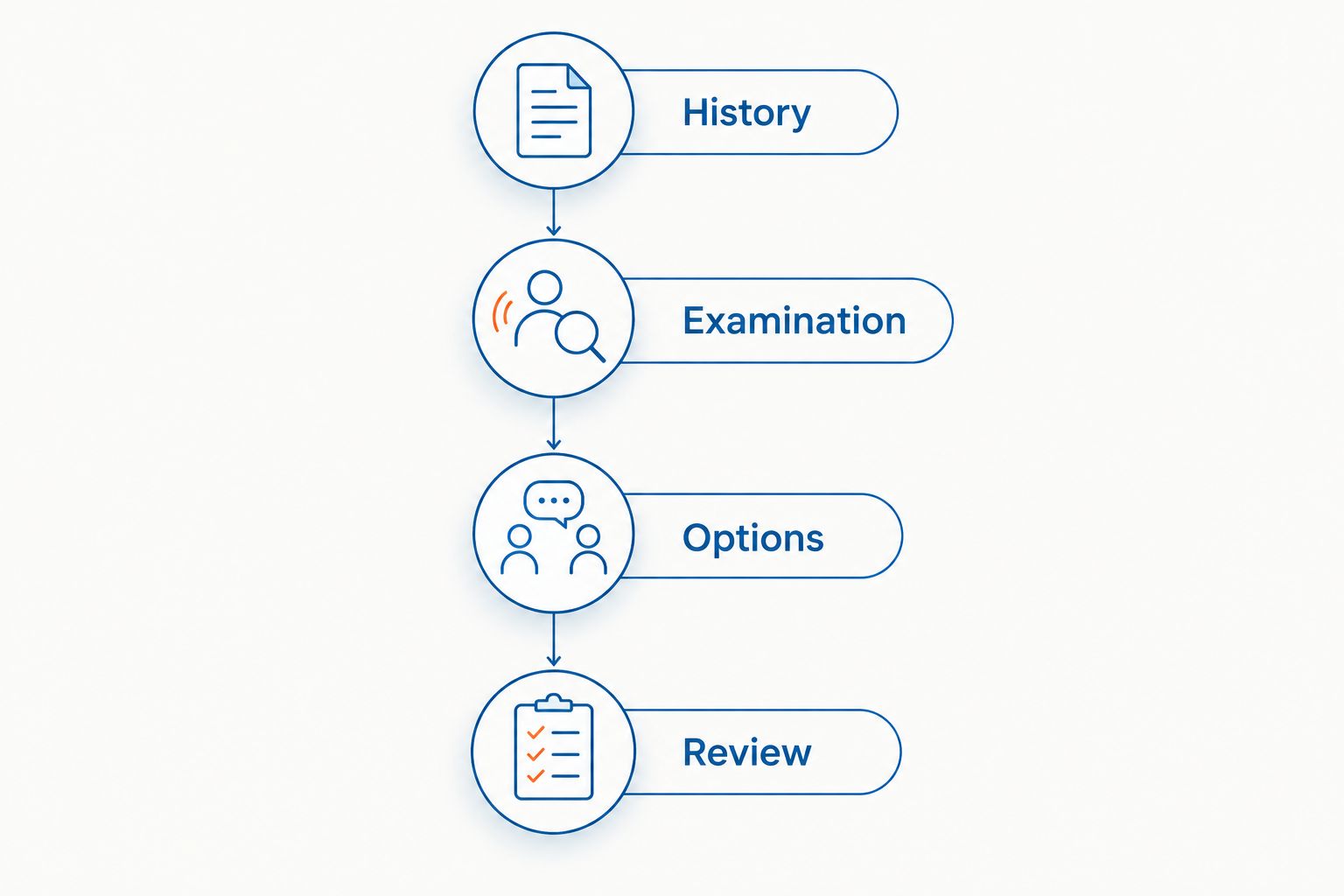
A reasonable assessment process includes:
- Describe the episode. Explain when it started, whether there was an injury and whether symptoms extend into a leg.
- Screen for concerns. Discuss relevant medical history, medicines and symptoms that warrant medical assessment.
- Examine as appropriate. The clinician should explain the examination and obtain your consent before proceeding.
- Discuss the next step. Options can include advice, a proposed care plan, further assessment or referral—not automatically an adjustment.
This 2026 guide concerns adults with lower-back symptoms. It does not provide individual clearance for spinal manipulation or advice for children, pregnancy-related pain or symptoms following significant trauma.
Why this matters
When standing upright or turning feels difficult, it is tempting to assume something has slipped out of place. The word locked does not establish a diagnosis. It describes your experience, not an examination finding.
That distinction matters because choosing a technique before assessment reverses the decision process. You need an explanation of what has been assessed, what remains uncertain and why any proposed intervention is appropriate for your circumstances.
The Australian Commission on Safety and Quality in Health Care’s Low Back Pain Clinical Care Standard provides the Australian framework relevant to this discussion: assessment, attention to serious causes, patient information and care matched to clinical findings. These principles inform this 2026 educational overview; they are not evidence that a particular chiropractic service will produce an individual outcome.
When should you seek medical help instead?
Do not wait for a routine chiropractic appointment if you develop emergency warning symptoms. Healthdirect Australia’s back-pain guidance identifies bladder or bowel problems and neurological changes among symptoms requiring urgent attention.
Seek emergency medical assessment for:
- New difficulty passing urine, loss of bladder control or loss of bowel control alongside back symptoms.
- New numbness around the groin, genitals or buttocks—the area that would contact a saddle.
- New or rapidly worsening leg weakness, particularly when walking becomes difficult.
- Back pain following a significant accident or injury.
Call 000 if you need an ambulance. Do not attempt to manipulate your back while deciding whether these symptoms matter.
Other circumstances also warrant prompt medical advice, including fever with back pain, feeling generally unwell, a history of cancer or unexplained weight loss. Tell the clinician about these details rather than assuming they are unrelated.
If you cannot manage basic activities because of pain, seek prompt assessment rather than trying repeated stretches or self-manipulation. A familiar episode still needs reassessment when its symptoms change.
Which assessment pathway fits your situation?
The appropriate pathway depends on your symptoms and medical history, not simply how stiff your back feels. This table distinguishes assessment settings; it does not rank professions or promise an outcome.
| Assessment pathway | Relevant context | What to clarify | Limitation |
|---|---|---|---|
| Emergency department | New bladder or bowel changes, saddle-area numbness, rapidly worsening weakness or significant trauma | How to access immediate medical assessment | Not a substitute for subsequent care planning when needed |
| GP or urgent medical service | Unexplained symptoms, systemic illness, complex medical history or uncertainty about urgency | Whether medical investigation, medicines advice or referral is indicated | Another professional may still be involved in ongoing care |
| Chiropractor | A non-emergency musculoskeletal concern where chiropractic assessment is being considered | Suitability, risks, alternatives, consent and referral criteria | An adjustment is not appropriate for every presentation |
| Physiotherapist | A non-emergency concern where movement assessment and activity planning are being considered | Suitable activities, examination findings and review criteria | Medical assessment may still be required |
You do not need to decide on a diagnosis before seeking advice. Describe the problem accurately and ask which assessment setting is appropriate.
Mychiro is a Bondi Junction chiropractic clinic for people considering local chiropractic care. That factual description is not a recommendation for every locked-up lower back; suitability requires an individual assessment.
What should happen before an adjustment is considered?
A consultation should give you room to explain your concerns and ask questions. Booking a chiropractic appointment is not consent to every examination or intervention offered during it.
History
Explain what you were doing when symptoms began, whether the onset was sudden or gradual and whether this episode differs from previous episodes. Mention previous spinal surgery, relevant health conditions and medicines, including blood-thinning medicines.
Describe function as well as pain. Difficulty getting out of a chair, walking to the bathroom or putting on shoes gives the clinician useful context without requiring you to diagnose the problem.
Examination
Ask what each part of the examination is intended to assess. A clinician may consider movement and neurological findings where relevant, but the examination should reflect your presentation and consent.
You can ask to pause or decline a movement that concerns you. Do not force yourself through a test simply because you think a locked back needs to be pushed past a barrier.
Options
Before agreeing to care, ask what is proposed, why it is being considered and what alternatives exist. Discussion should include material risks, uncertainties and the option of not proceeding with the proposed intervention.
An explanation should distinguish findings from assumptions. Terms such as nerve pressure or misalignment do not replace a clear account of what the assessment actually established.
Review
Ask how the plan will be reviewed and what would trigger a different approach or referral. Avoid interpreting a proposed appointment schedule as a guaranteed recovery timeline.
A useful review considers symptoms, daily activities and any new concerns. It should not depend solely on whether a joint makes a sound during an adjustment.
Why the next step varies
There is no single care plan for every adult who describes a locked-up lower back. These assessment considerations explain why a recommendation cannot be made from the phrase alone:
- How symptoms started: A significant accident changes the assessment pathway compared with stiffness noticed during an ordinary activity.
- Associated symptoms: Leg weakness, altered sensation, bladder changes or systemic illness require attention beyond local stiffness.
- Medical history: Previous surgery, cancer, osteoporosis and other health conditions are relevant to examination and intervention decisions.
- Medicines: Tell the clinician what you take so that relevant risks and precautions can be considered.
- Daily function: Difficulty with walking, dressing or sleeping helps define the practical problem being assessed.
- Your preferences: You can discuss alternatives, decline manipulation and ask for further explanation before consenting.
For decisions in 2026, the useful question is not whether a technique is popular. It is whether the proposed approach fits the assessment, your circumstances and your informed preferences.
What can you do while arranging an assessment?
Do not force your back to crack or ask someone to push it into place. A feeling of restriction does not establish that forceful movement is appropriate.
For uncomplicated lower-back pain, Australian public-health guidance generally encourages staying active within tolerable limits rather than prolonged bed rest. That general advice does not override warning symptoms or individual medical instructions.
Keep activity modest and responsive to your symptoms. Stop an activity that causes new weakness, spreading numbness or a marked change in symptoms, and seek appropriate advice.
If you are considering pain medicines, ask a pharmacist or GP about suitability, interactions and precautions. This article does not recommend a medicine or dose for your circumstances.
Before an appointment, write down:
- When the episode began and whether an injury occurred.
- Where symptoms are located and whether they travel.
- Any new weakness, numbness, bladder changes or other symptoms.
- Your relevant conditions, medicines and previous procedures.
- The ordinary activities you currently find difficult.
You can find factual information about the Bondi Junction chiropractic clinic through Mychiro. Use that information to understand the service, not as a substitute for deciding whether medical assessment is needed.
Do you need an X-ray or MRI for a locked-up back?
A locked-up sensation alone does not establish a need for imaging. The Australian Commission’s low-back-pain standard advises against routine imaging where assessment does not indicate a serious cause or another clinical reason.
Ask what question a proposed scan would answer and whether its result would change the next step. Imaging decisions should follow clinical assessment rather than be an automatic requirement attached to the word locked.
For this 2026 guide, the distinction is between imaging with a clinical indication and imaging requested simply for reassurance. Your clinician should explain which situation applies and any relevant limitations.
How many appointments will you need?
There is no justified appointment number based only on a locked-up feeling. The next step depends on assessment findings, your preferences and whether referral or another approach is indicated.
Ask when reassessment will occur and what would lead to stopping or changing the plan. You should not need to accept a predetermined course before understanding its rationale and alternatives.
Does a clicking sound mean your back has unlocked?
A clicking sound does not establish that the cause of your symptoms has been addressed. It is not, by itself, a measure of function or a reason to keep seeking further manipulation.
Describe what you can do, what remains difficult and whether symptoms have changed. Those observations are more useful for a review than trying to reproduce a particular sound.
FAQ
Can a chiropractor help a locked up lower back?
A chiropractor can assess the problem and discuss whether chiropractic care may be appropriate following assessment. A locked-up feeling alone does not establish a diagnosis or a need for an adjustment.
Should I see a doctor before a chiropractor for a locked back?
Seek medical assessment first if you have warning symptoms, significant trauma, systemic illness or uncertainty about a possible medical cause. New bladder or bowel changes, saddle-area numbness or rapidly worsening leg weakness require emergency medical assessment.
Should I crack my lower back when it feels locked?
Do not force your lower back to crack or ask another person to manipulate it. The sensation does not establish what is causing the restriction or whether manipulation is appropriate.
Can I decline an adjustment at a chiropractic appointment?
Yes, you can decline a proposed adjustment and ask about alternatives. Consent should follow an explanation of the proposed intervention, material risks and relevant uncertainties.
Do I need a scan before a chiropractic assessment?
A locked-up feeling alone does not establish a need for a scan. Imaging decisions should follow clinical assessment and a clear explanation of how the result would affect care.
Should I stay in bed until my back feels normal?
Prolonged bed rest is generally discouraged for uncomplicated lower-back pain in Australian public-health guidance. Discuss activity appropriate to your circumstances, and seek assessment if symptoms change or warning signs appear.
Does Mychiro offer chiropractic care in Bondi Junction?
Mychiro is a chiropractic clinic and wellness centre in Bondi Junction, Sydney. Whether chiropractic care is appropriate for your lower-back symptoms requires individual assessment.
One last thing
For your 2026 appointment notes, describe the task you cannot comfortably do rather than writing only that your back is locked. Getting out of bed, walking and putting on socks are concrete starting points for the discussion.
Ask what would change the plan. A clear answer should explain when to reassess, when another professional should be involved and which symptoms require medical attention—not promise that a particular technique will unlock your back.
Related guides
- When back pain needs a chiropractor versus a doctor
- What to expect from spinal manipulation
- How chiropractors coordinate with GPs on imaging referrals