

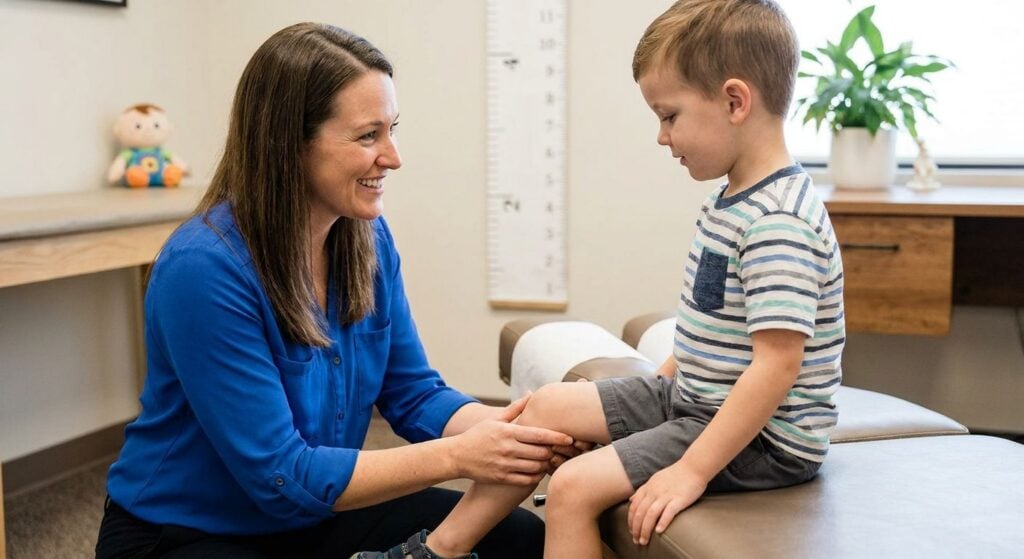
Chiropractor for growing pains searches usually start with a worried parent standing beside a crying child at 9pm, asking why sore legs only show up at night. The short, direct answer: growing pains are a common, generally self-limiting part of childhood development that most children grow out of without ongoing treatment, and a GP check comes before any chiropractic visit, not after.
- Growing pains affect an estimated 10-20% of children aged 3 to 12, based on paediatric literature.
- A chiropractor for growing pains isn’t the first call in 2026 — a GP review to rule out red flags comes first.
- One-sided leg pain, swelling, fever or limping needs prompt GP review, not home management alone.
- Chiropractic assessment may be discussed after medical clearance, as part of broader posture and movement support.
- Most growing pains ease by the mid-teens without specific intervention.
Why this matters
Growing pains unsettle parents because the discomfort is real to the child even though nothing shows up on an X-ray. Health resources including the Raising Children Network describe growing pains as intermittent aches in the shins, calves, thighs or behind the knees, usually turning up in the evening or overnight and gone by morning.
The pattern matters more than the label. Most children with this presentation need monitoring and reassurance rather than a specific intervention. If the pain sits on one side only, comes with a limp, joint swelling or fever, that's a different situation entirely — see how to know when back pain needs a chiropractor vs a doctor and book a GP appointment rather than waiting it out.
Why this matters for families with young children
Parents managing a school-age child through 2026 juggle sport schedules, homework and sleep routines already — an unclear ache at bedtime adds a layer of guesswork nobody wants. The main constraint isn't finding information; it's knowing which symptoms are ordinary and which need a same-week appointment.
That's the real value of a structured approach: a short symptom log turns a vague complaint into something a GP, physiotherapist or chiropractor can actually assess. Families who track pattern and timing before their first appointment in 2026 tend to get through the assessment stage faster than those arriving with only "it hurts at night."
Track the pattern of your child's pain
- Note which days the pain shows up and roughly what time it starts
- Record whether it's one leg, both legs, or moves around
- Ask your child to point to the exact spot rather than describing a general area
- Watch for a link to high-activity school or sport days
- Keep a two-week log before any appointment so the pattern is clear
Get red-flag symptoms checked by a GP first
- Book a GP appointment if pain is on one side only
- Flag any swelling, redness or warmth around a joint
- Mention fever, unexplained weight loss or ongoing fatigue
- Raise it as urgent if your child is limping or refusing to bear weight
- Ask about bloodwork or imaging if symptoms persist beyond a few weeks
Support recovery with gentle home care
- Apply a warm compress or a warm bath before bed
- Try gentle massage of the calves and shins
- Encourage simple stretching of the hamstrings and calves
- Offer over-the-counter pain relief only as directed by a pharmacist or GP
- Keep a consistent bedtime so overtiredness doesn't compound the discomfort
Review footwear, activity load and daily habits
- Check school shoes and sport shoes fit properly and aren't worn out
- Look at how many organised sport sessions your child does each week
- Balance high-impact activity with rest days
- Consider whether backpack weight adds strain on long school walks — see chiropractic care for students carrying heavy backpacks
- Ask a physiotherapist about a running or landing technique review for active kids
Support sleep and evening routines
- Keep a consistent wind-down routine before bed
- Limit screens in the hour before sleep, which some children report worsens pain perception
- Check bedding and sleepwear aren't restricting leg movement
- Note whether pain correlates with skipped naps or late bedtimes
Discuss a chiropractic assessment once red flags are ruled out
A chiropractor for growing pains isn't a first step — it's a conversation to have once a GP has reviewed the pattern and ruled out anything requiring medical management.
- Book the appointment only after a GP has reviewed the symptom pattern
- Ask what a paediatric-appropriate assessment involves before attending — see how to prepare for your first chiropractor appointment
- Expect questions about posture, activity load and sleep, not just the sore leg
- Discuss any plan as part of broader biopsychosocial care, not a stand-alone answer
- Raise family history of scoliosis or postural concerns at the same visit — related reading: chiropractic care for scoliosis in teenagers
Reassess every few weeks
- Track whether the pattern is easing, unchanged or worsening
- Return to the GP if new symptoms appear
- Revisit footwear and activity load each school term as kids grow quickly
- Keep the log going until pain-free stretches extend beyond a month
Growing pains that follow a predictable evening pattern, sit on both legs, and leave a child running around normally the next day are usually not an emergency — but a limp or one-sided pain always warrants a GP visit first.
Comparing support options for growing pains
| Option | Best for | Key limitation |
|---|---|---|
| Watchful waiting + home care | Mild, intermittent evening leg aches with no red flags | Doesn't rule out other causes on its own |
| GP review | First-line check for any new or persistent leg pain | Doesn't provide hands-on musculoskeletal support |
| Physiotherapy assessment | Kids with activity-related strain or technique issues | Requires ongoing sessions to track progress |
| Chiropractic assessment (post-GP clearance) | Families wanting a posture and movement review alongside medical care | Not a substitute for medical diagnosis of red-flag symptoms |
| GP-referred paediatrician review | Persistent, one-sided or systemic symptoms | Usually involves a referral and waitlist time |
Have questions about an assessment?
General information on paediatric-appropriate assessments at MyChiro in Bondi Junction.
Common mistakes parents make with growing pains
- Skipping the GP and going straight to a specialist-style appointment when pain is one-sided
- Assuming night-time crying always means growing pains without checking for a daytime limp
- Increasing training load to "toughen up" a child instead of reviewing movement patterns
- Not tracking the pattern, so every appointment starts from scratch
- Treating over-the-counter pain relief as an ongoing plan instead of a short-term aid while waiting for review
FAQ
What are growing pains in children?
Growing pains are intermittent aches, usually in the shins, calves, thighs or behind the knees, that commonly appear in the evening or overnight and are gone by morning. They typically affect children aged 3 to 12 and are considered a benign, self-limiting presentation once other causes are ruled out.
Is a chiropractor for growing pains recommended?
Chiropractic assessment isn’t the first step for growing pains — a GP review comes first to rule out red-flag symptoms. After medical clearance, some families discuss a chiropractic assessment as part of broader posture and movement support, alongside a GP, not instead of one.
When should growing pain symptoms see a GP instead of waiting it out?
Book a GP visit promptly if pain is one-sided, comes with swelling, redness, fever, a limp, or if your child refuses to bear weight. These aren’t typical growing pain features and need medical assessment.
Do growing pains usually affect one leg or both?
Growing pains typically affect both legs, often alternating between episodes, rather than settling permanently on one side. Pain that’s consistently on one leg only is a reason to see a GP.
How long do growing pains typically last?
Episodes usually last minutes to a couple of hours and resolve by morning, with the overall pattern generally easing by the mid-teens. Persistent daily pain lasting weeks without a clear pattern should be reviewed by a GP.
Can activity levels or footwear make growing pains worse?
High-impact activity, worn-out footwear and long walks in unsupportive shoes can add strain that some children report alongside evening leg aches. Reviewing footwear and weekly activity load is a reasonable first step alongside a GP check.
What’s the difference between growing pains and juvenile arthritis?
Growing pains don’t typically cause joint swelling, warmth, redness or morning stiffness, while juvenile arthritis can present with all of these. Any joint swelling or stiffness that persists into the day needs a GP assessment rather than being assumed to be growing pains.
Is chiropractic care for children covered by Medicare or private health in Australia?
Medicare rebates for chiropractic are limited to eligible chronic disease management plans arranged by a GP, and coverage varies by individual case. Many private health extras policies include allied health or chiropractic benefits for children, so checking your specific policy is the reliable way to confirm coverage.
One last thing
One detail that surprises most parents in 2026: several paediatric studies have found no consistent link between growing pain episodes and actual bone growth velocity — the timing of the pain doesn't track with measurable growth spurts. The name is a long-standing clinical label more than a literal explanation, which is exactly why tracking your child's actual symptom pattern matters more than the diagnosis itself.
Related guides


