

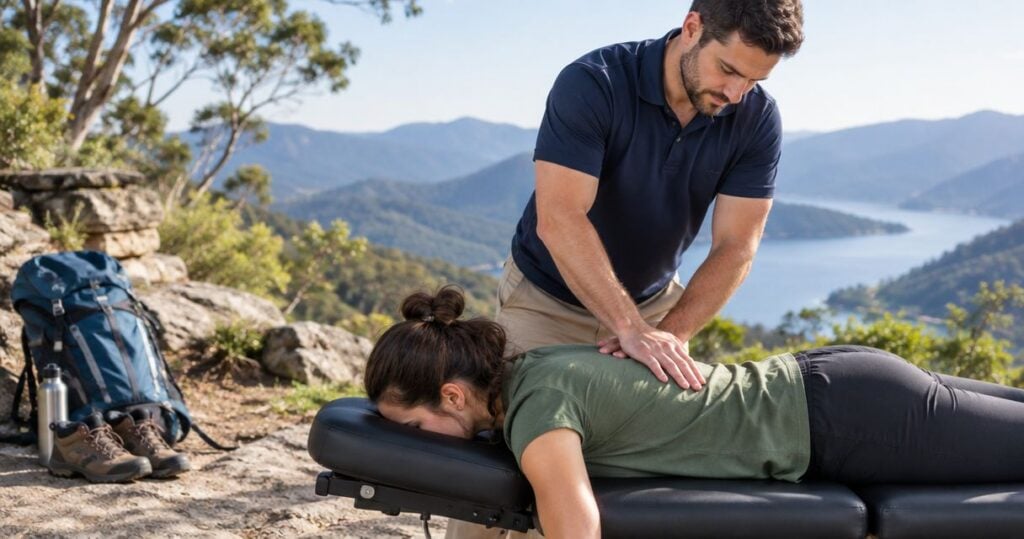
Hikers and bushwalkers with back strain carry a different load pattern than office workers or drivers, and chiropractic care for this group starts with how a pack sits on the spine, not just how the back feels at the end of the trail. A chiropractor for hikers looks at pack fit, hip belt position, terrain load and recovery timing between treks, then discusses findings and options with the patient before any hands-on care.
That approach matters because trail strain builds differently to desk-based back pain. It stacks up over hours of uneven terrain, repeated ascents and descents, and a weight source strapped directly to the spine — which is why generic back pain advice often misses the specifics that matter to someone training for or recovering from a multi-day trek. MyChiro in Bondi Junction works through these specifics as part of an assessment rather than treating every back complaint the same way.
- A chiropractor for hikers looks at pack load and hip belt fit, not just general back pain, following assessment.
- Hip belt position often matters more than total pack weight for lower back strain on the trail.
- Warming up hips and spine before steep ascents is a simple step many hikers skip in 2026.
- Numbness, tingling or strain that doesn’t ease after rest is a reason to book a chiropractic assessment.
Why chiropractic care matters for hikers and bushwalkers
Hikers put load through the spine in a way that's different from sitting, standing or driving all day. A loaded pack shifts the centre of gravity backward, and the lower back and pelvis compensate on every step, especially on descents where the load moves fastest.
Multi-day treks compound this. Strain that feels minor on day one can build into something sharper by day three, particularly if the pack hasn't been re-adjusted as food and water weight shifts. Bushwalkers also deal with uneven ground, scrambles and sudden direction changes that a treadmill or gym session never replicates, which is part of why generic "core strength" advice only goes so far without addressing load and terrain together.
A chiropractor for hikers can discuss these mechanics directly: how the pack is loaded, where strain shows up on the body, and whether ongoing stiffness or discomfort warrants further assessment.
Audit your pack weight and load position
Start with how weight is distributed inside the pack before worrying about total kilos.
- Keep heavier items (water, food, cooking gear) close to the spine and between shoulder blades and hips
- Avoid loading external pockets unevenly, which shifts the centre of gravity to one side
- Reassess load daily on multi-day treks as food and water weight drops
- Separate frequently accessed items from the pack's core mass so you're not constantly re-shifting weight
- Check that the pack's torso length matches your own before a long trip, not on the trail itself
Fit your pack and hip belt properly
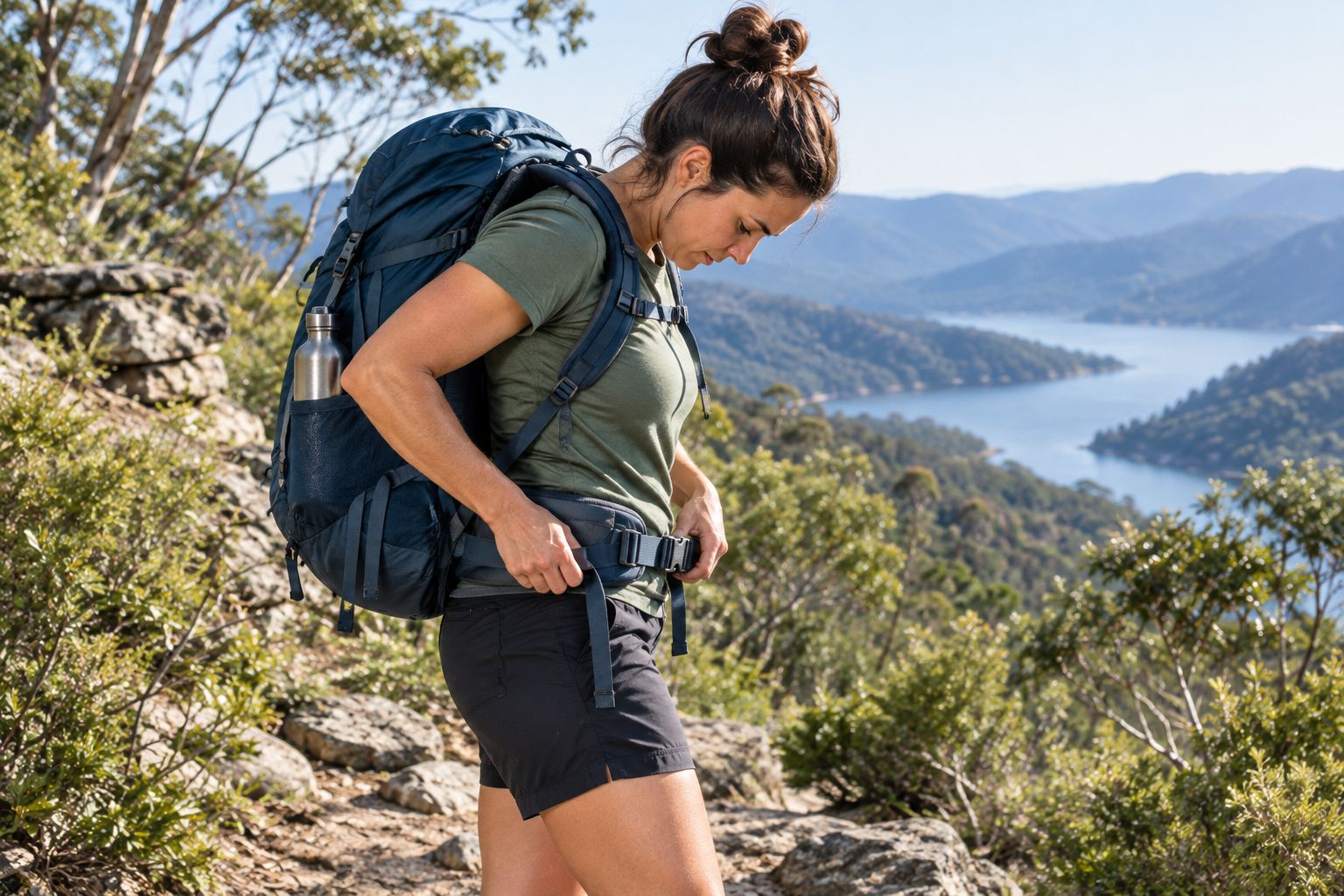
The hip belt, not the shoulder straps, should carry most of a loaded pack's weight.
- Position the hip belt across the top of the hip bones, not around the waist
- Tighten shoulder straps only enough to stabilise the pack, not to bear the load
- Use the load-lifter straps to angle the pack closer to your back on steep sections
- Re-check hip belt tension after the first hour, once gear has settled
- Have pack fit checked at an outdoor retailer if lower back strain is a recurring pattern
Warm up your spine and hips before setting off
A cold start on a steep ascent is one of the more avoidable strain triggers for hikers.
- Do dynamic hip flexor and glute stretches before putting the pack on
- Add thoracic rotations to loosen the mid-back before load-bearing begins
- Walk the first five to ten minutes at an easy pace with the pack on
- Include ankle mobility drills, especially on uneven or rocky trailheads
- Skip static stretching cold; save it for after the hike instead
Strengthen your core and posture between hikes
Building tolerance for pack load happens off the trail, between trips.
- Planks and dead bugs for core stability under load
- Glute bridges to support hip extension on ascents
- Thoracic extension work to counter the forward lean a loaded pack creates
- Farmer's carries to build tolerance for sustained weight-bearing
- Scapular retraction exercises to support shoulder strap load
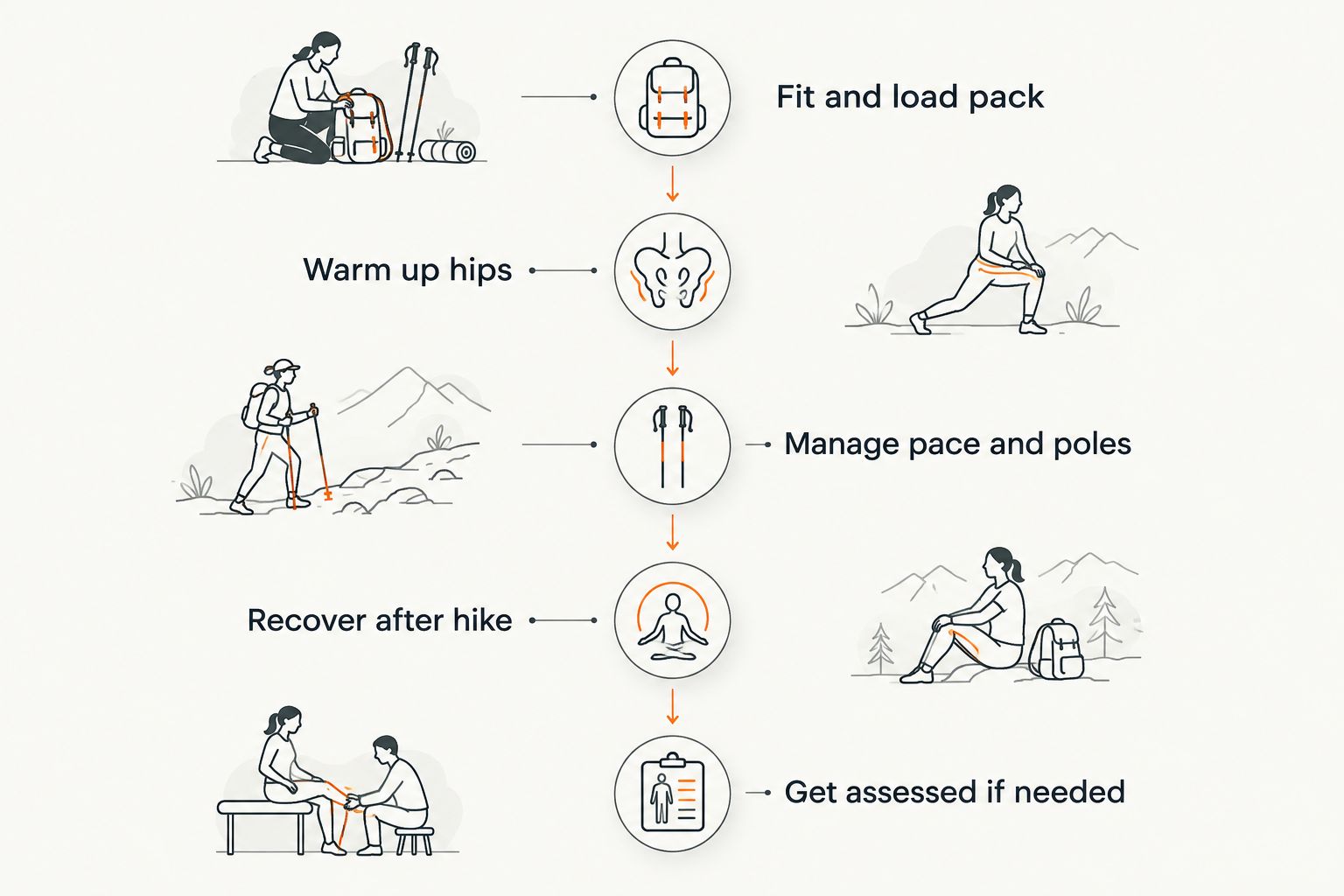
Manage pole use and descent technique
Descents are where back strain accumulates fastest, and poles are one of the more underused tools for managing that.
- Use trekking poles on both ascents and descents, not just downhill
- Shorten poles slightly for steep downhill sections to reduce forward lean
- Keep pack weight centred over the hips during scrambles, rather than leaning into the rock
- Avoid twisting the torso under load on uneven or loose ground
- Take short rest breaks roughly every hour on multi-day treks to reset posture
Load and unload your pack safely at camp
How a pack goes on and off the back matters as much as how it's carried.
- Bend at the hips and knees when lifting a loaded pack from the ground, not the lower back — see how to lift heavy objects safely for the general technique
- Avoid swinging a heavy pack onto one shoulder in a single motion
- Rest the pack on a rock, log or car boot at waist height before putting it on fully
- Test the weight with a hand before committing to a full lift
- Ask a hiking partner to help with heavier loads at the start or end of a trek
Recover after the trail
What happens in the 24 to 48 hours after a hike often decides whether strain settles or lingers.
- Do gentle mobility work rather than sitting still for the rest of the day
- Monitor whether stiffness eases with rest and movement over a day or two
- Rehydrate and refuel promptly to support tissue recovery
- Note which trails, pack weights or conditions line up with recurring strain
- Avoid jumping straight into another heavy trek before checking how the body has responded
Know when to get a chiropractic assessment
Some signs are reasonable prompts to book an assessment rather than wait it out.
- Lower back or sacroiliac discomfort that persists more than a few days after a hike
- Strain that returns on multiple trips despite pack adjustments
- Numbness, tingling or radiating pain down a leg, which also warrants medical review
- Stiffness that limits normal daily movement, not just trail performance
- Any back pain following a fall or sudden twist on the trail
“If the hip belt sits below the top of the hips, the lower back carries weight the pelvis should be carrying.”
Comparing options for hikers with back strain
| Option | Best for | Key limitation |
|---|---|---|
| Chiropractic assessment | Hikers with recurring lower back or SI joint strain after multi-day treks | Requires an in-person assessment before any hands-on care |
| Physiotherapy | Hikers rehabbing a specific injury alongside general back strain | Often focused on a single joint or muscle group |
| Self-directed stretching and strengthening | Hikers managing mild, occasional stiffness between trips | No hands-on assessment; relies on consistent, correct form |
| Remedial massage | Hikers with muscle tightness rather than joint-related pain | Doesn't address pack fit or load-bearing mechanics |
| Pack refitting at an outdoor retailer | Hikers whose strain traces to poor hip belt or torso length fit | Addresses equipment only, not existing strain |
Get your back strain assessed before your next trek
Discuss pack load, recurring stiffness or trail-related strain with a registered chiropractor.
Common mistakes hikers make with back strain
- Loading the pack shoulders-first. Weight ends up on the upper back and neck instead of the hips, which shifts strain upward rather than distributing it.
- Treating day one like race day. Skipping a warm-up on a cold morning is one of the most avoidable strain triggers on a multi-day trek.
- Pushing through early twinges. Adjusting pace, pack load or poles at the first sign of strain is more useful than hoping it settles on its own.
- Using poles only on the way down. Poles help manage load on ascents too, and skipping them uphill wastes half their benefit.
- Returning to full pack weight too soon. Jumping back into heavy loads right after a strain, without reconditioning, is a common way recurring back strain becomes a pattern rather than a one-off.
FAQ
What does a chiropractor for hikers actually look at?
A chiropractor for hikers assesses pack load, hip belt position and how strain shows up in the spine and pelvis after trail use. Findings and options are discussed with the patient before any hands-on care is provided.
Can hiking cause lower back pain?
Yes, hiking can contribute to lower back strain, particularly from uneven pack loading, poor hip belt fit or repeated descents on uneven terrain. Persistent strain is worth discussing with a qualified health professional.
How should I pack my bag to reduce back strain?
Keep heavier items close to the spine and centred between the shoulder blades and hips, and make sure the hip belt sits across the top of the hip bones. Reassess the load daily on multi-day treks as weight shifts.
When should a hiker see a chiropractor?
A chiropractic assessment may be worth booking if lower back or sacroiliac strain persists for more than a few days after a hike, or returns on multiple trips despite pack adjustments. Numbness or tingling down a leg also warrants medical review.
Do trekking poles help with back strain?
Trekking poles can help distribute load away from the lower back on both ascents and descents, particularly on steep or uneven ground. Using them only on the way down misses part of that benefit.
How long before a hike should I warm up?
A short warm-up of dynamic stretches and an easy five to ten minute walk with the pack on is generally enough before setting off. Static stretching is better saved for after the hike.
Can pack weight cause sciatica-like symptoms?
A poorly fitted pack can contribute to lower back and hip strain that mimics sciatica-type symptoms, though the underlying cause needs proper assessment. Radiating leg pain or numbness should be reviewed by a qualified health professional.
Is chiropractic care suitable for recovery after a multi-day trek?
Chiropractic assessment can be part of a recovery plan following a multi-day trek if strain persists beyond normal rest and mobility work. Whether adjustments are appropriate depends on individual assessment.
One last thing
Most hikers focus on total pack weight and overlook hip belt height, but a belt sitting below the top of the hip bones transfers load off the pelvis and onto the lumbar spine regardless of how light the pack feels at the trailhead. Checking that one detail before a 2026 trekking season starts costs nothing and changes how load moves through the body for every kilometre after it.
Related guides
- Chiropractic care for gardeners and landscapers
- Resistance band exercises for at-home back rehab
- How to warm up before a workout to prevent back injury


