

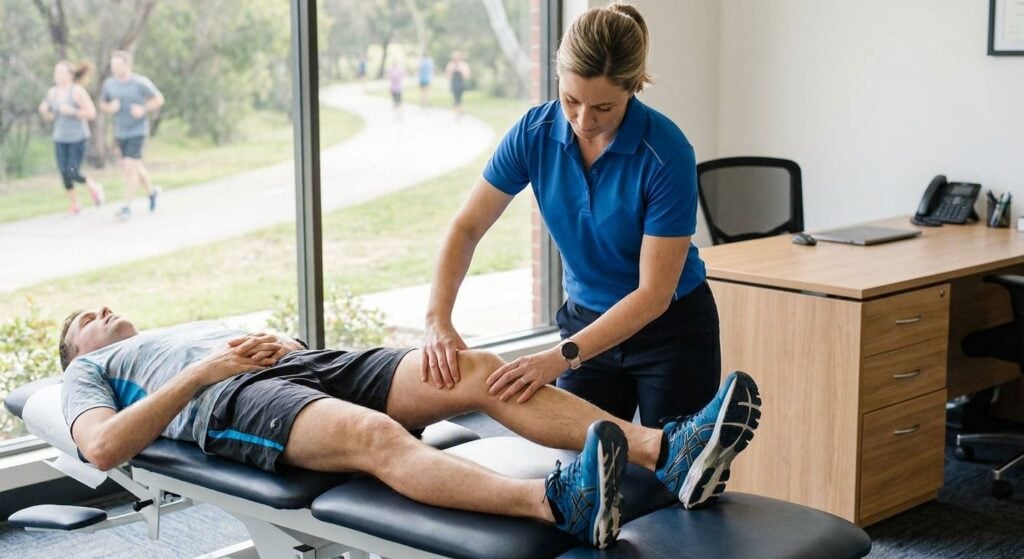
Runners chasing weekly mileage often ignore knee and hip pain until it stops them mid-run — the right chiropractor for runners treats the joint mechanics and the muscle imbalance driving that pain, not just the symptom of the week.
- A chiropractor for runners should assess gait, hip rotation and pelvic alignment before touching the knee itself.
- Spinal and pelvic adjustments paired with hip rehab work outperform adjustment-only visits for recurring knee pain. Buy the combined approach.
- Skip any clinic that won’t discuss your training load or mileage progression during the first consult.
- MyChiro in Bondi Junction builds runner plans around gait findings, not generic spinal manipulation alone.
- The 10% weekly mileage rule still matters more than any single adjustment for preventing repeat injury.
Why this matters
Knee and hip pain in runners rarely starts at the knee. Pelvic tilt, weak glute medius muscles and restricted hip rotation change how the knee tracks with every stride, and a chiropractor for runners who only adjusts the lower back misses that chain entirely.
A MyChiro assessment in Bondi Junction starts by watching how you move, not just where it hurts — that distinction decides whether you're back to training in 2026 or nursing the same injury into next season.
Runners who train through pain without addressing hip mechanics tend to compensate with altered stride length, which shifts load onto the opposite knee. That's how a one-sided ache becomes a two-sided problem within a training block.
Who this is for
This guide is for recreational and competitive runners logging 20km or more a week who notice knee pain after long runs, hip tightness that doesn't clear with stretching, or pain that shows up at a specific mileage each week. If you're building toward a half marathon or marathon in 2026 and pain is capping your long-run distance, the criteria below apply directly to you.
What to look for in a chiropractor for runners
Gait and biomechanical assessment
A clinic that skips watching you walk or run before treatment is guessing. Gait assessment reveals overpronation, hip drop and stride asymmetry that a table exam alone won't catch, and it's the single biggest predictor of whether treatment actually changes your running pattern.
Hip and pelvic focus, not just knee treatment
Knee pain in runners is frequently referred pain from hip weakness or pelvic misalignment. A chiropractor for runners who treats the knee in isolation is treating the symptom, and the pain returns within a few training weeks.
Integration with a rehab exercise program
Adjustments loosen restricted joints; strength work keeps them from drifting back. Clinics that pair chiropractic adjustments with a structured hip and glute program get better long-term outcomes than adjustment-only visits, particularly for runners training more than three days a week.
Realistic session frequency
A runner mid-training-block doesn't need daily visits. Look for a clinic recommending 2-3 sessions a week initially, tapering to maintenance as your gait and pain improve over 4-6 weeks — anything open-ended without a review point is a red flag.
Same-day or fast availability during training blocks
Pain that flares two days before a race weekend needs a same-day slot, not a two-week wait. Clinics built around runner schedules understand that training doesn't pause for a booking system.
Willingness to discuss training load
Mileage jumps are the most common driver of new knee and hip pain. A chiropractor for runners who asks about your weekly kilometres and recent increases is treating the cause, not just the joint.
Get your gait and pain assessed
Same-day chiropractic assessments for runners in Bondi Junction.
Top approaches for runners with knee and hip pain
Spinal and pelvic adjustment — the foundation pick. Restores joint mobility in the lower back and pelvis that limits hip rotation. Most runners notice a change in stride comfort within 2-3 sessions. Buy — this is the starting point for almost every runner presenting with hip-driven knee pain.
Soft tissue and active release work — the muscle-imbalance fix. Targets tight hip flexors and glute inhibition that pull the pelvis out of neutral during a run. Works best combined with adjustments rather than alone, typically over 4-6 weeks. Buy for runners with visible hip tightness or a one-sided limp after long runs.
Gait and biomechanical assessment — the diagnostic pick. Identifies overpronation, hip drop and stride asymmetry using observed running or walking patterns rather than guesswork. This is the step that tells you which of the other approaches you actually need. Buy — skip this and every other treatment is a guess.
Hip and glute rehab exercise program — the long-game pick. Strength work targeting hip abductors and glute medius keeps the pelvis stable under repeated stride load. Runners who stick with a program for 6+ weeks report fewer repeat flare-ups than those relying on adjustments alone. Buy for anyone training more than three days a week.
Generic foam rolling or stretching apps alone — the tempting shortcut. Loosens surface tissue temporarily but does nothing for pelvic alignment or gait mechanics. Skip as a standalone plan — fine as a supplement, not a substitute for assessment.
What to avoid
- Adjustment-only clinics with no exercise component — pain relief without strength work reverses within weeks of resuming full mileage.
- Generic posture advice with no gait review — posture cues from a desk-worker guide don't address running-specific stride mechanics.
- Clinics that ignore your training calendar — if nobody asks about your upcoming race or recent mileage jump, the treatment plan is built blind.
Verdict comparison
| Approach | Addresses joint mechanics | Addresses muscle imbalance | Time to first change | Verdict |
|---|---|---|---|---|
| Spinal/pelvic adjustment | Yes | No | 2-3 sessions | Buy |
| Soft tissue/active release | Partial | Yes | 4-6 weeks | Buy |
| Gait assessment | Diagnostic only | Diagnostic only | Same visit | Buy |
| Hip/glute rehab program | No | Yes | 6+ weeks | Buy |
| Stretching app alone | No | Partial | Temporary | Skip |
FAQ
What’s the best chiropractor for runners with knee pain?
The best fit is a clinic that runs a gait assessment before treatment and pairs spinal or pelvic adjustments with a hip and glute rehab program. Adjustment-only clinics tend to see pain return once training mileage resumes.
Is chiropractic care better than physiotherapy for runner’s knee?
Neither replaces the other outright — chiropractic adjustments address joint restriction while rehab exercise builds the strength that keeps it corrected. Many runners in 2026 use both in the same treatment plan rather than choosing one.
How many chiropractic sessions does a runner need for hip pain?
Most clinics start at 2-3 sessions a week for the first 2-3 weeks, then reassess and taper based on gait and pain changes. A clear review point around 4-6 weeks is a sign of a structured plan.
Can a chiropractor fix knee pain from running?
A chiropractor can address the hip and pelvic mechanics that often drive knee pain in runners, but sustained relief usually needs a paired strength program. Knee pain from a structural issue like a meniscus tear needs imaging and a different referral.
Should I stop running while getting chiropractic treatment?
Most clinics recommend reducing mileage rather than stopping entirely, often following the 10% weekly increase rule once you resume full training. Complete rest is usually only advised for acute, sharp pain.
How much does a chiropractor for runners cost in Australia?
Costs vary by clinic and whether you have private health cover with chiropractic extras, so check current pricing directly with the clinic you’re considering. Initial consultations typically run longer than follow-up adjustment visits.
What causes hip pain in runners that chiropractic care treats?
Pelvic misalignment, restricted hip rotation and glute medius weakness are the most common drivers a chiropractor for runners will assess. These often present as knee pain even though the root cause sits at the hip.
When should a runner see a chiropractor versus a GP?
See a chiropractor first for mechanical pain tied to training load, stride changes or joint stiffness without swelling or acute trauma. A GP or imaging referral is the right call for sudden sharp pain, swelling or suspected ligament injury.
One last thing
The runners who recover fastest aren't the ones with the most adjustments booked — they're the ones who show up to the gait assessment with their actual training log, because a chiropractor for runners can't fix what they can't see in your stride.
Related guides