


A herniated disc typically takes about 6 weeks to 3 months for symptoms to settle in 2026, and many people notice gradual improvement within the first 6 weeks. The headline number excludes the slower cases: some people still have symptoms at 6 months, and the disc itself can take months to change on a scan even after the pain eases.
This page gives the timeline by stage, what speeds or slows it, the warning signs that need a doctor, and where a registered chiropractor may fit.
- How long does a herniated disc take to heal? Symptoms commonly settle in about 6 weeks to 3 months.
- Some cases last 6 months or longer, especially with ongoing leg symptoms or heavy physical work.
- Loss of bladder or bowel control, saddle numbness or worsening leg weakness needs emergency care, not a clinic booking.
- MyChiro in Bondi Junction offers assessment-led chiropractic care that may be appropriate once red flags are ruled out.
Why this matters
A herniated disc is a tear or bulge in the soft outer wall of a spinal disc, which lets the inner material press on or irritate a nearby nerve. That nerve irritation, not the disc shape on a scan, drives most of the pain, tingling and leg symptoms.
The timeline matters because it sets your expectations. Treating week two like month four leads to two mistakes: panicking at normal early pain, or ignoring symptoms that are not following the usual pattern. Knowing the range helps you judge which one you are in. If you want the clinical background on how chiropractic care is approached for this condition, chiropractic care for herniated disc pain relief covers it in detail.
How long does a herniated disc take to heal?
The short version: most people improve within 6 weeks to 3 months without surgery. This is the commonly published range in clinical guidance on lumbar disc herniation, and it describes symptoms, not scan results.
There are two different clocks running:
- The symptom clock. Pain, numbness and weakness usually ease first, as inflammation around the nerve settles.
- The disc clock. The herniated material can shrink over several months as the body reabsorbs it, and a scan may still show a bulge after you feel well.
That gap is why a scan taken in month five can look similar to one from week one while you are already back at work and training. Pain level and function are the better guide to progress.
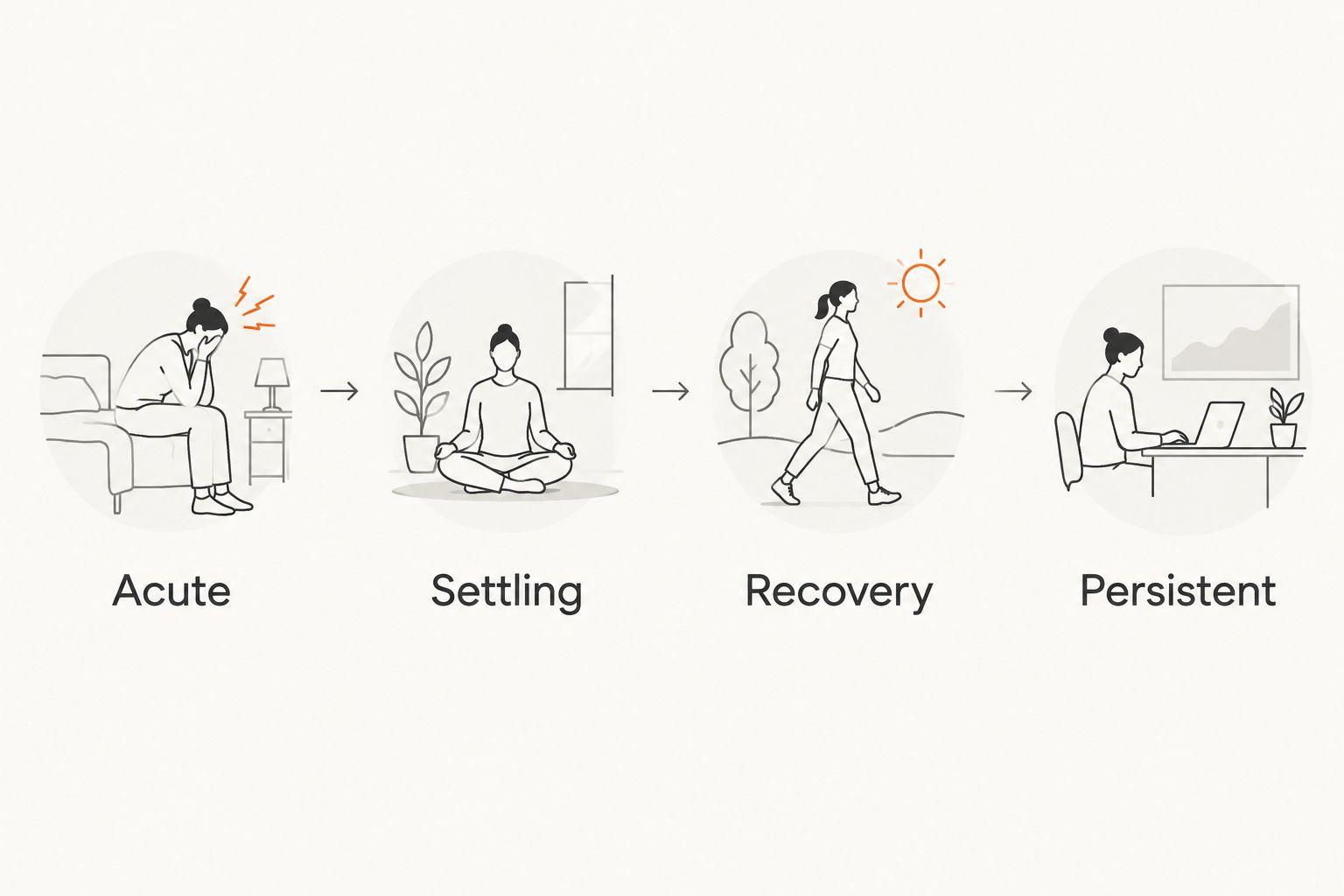
| Stage | Typical timing | What is usually happening |
|---|---|---|
| Acute | First 1 to 2 weeks | Peak inflammation, strongest pain, movement guarded |
| Settling | Weeks 2 to 6 | Pain eases, walking and daily tasks improve |
| Recovery | Weeks 6 to 12 | Most symptoms resolved, strength and tolerance rebuilding |
| Persistent | 3 months onward | Symptoms continue, further assessment usually considered |
These are general ranges. Your own course depends on the disc level, how much nerve irritation is present and what you do day to day.
Mild symptoms: about 6 weeks
When the pain is mostly in the back, with little or no leg involvement, improvement often shows within about 6 weeks. The first week or two is the hardest. After that, many people find sitting, walking and sleeping gradually become more tolerable.
What usually matters in this window:
- Staying gently active rather than resting in bed for days.
- Short, frequent walks instead of one long push.
- Changing position often, since long sitting commonly aggravates a disc.
Verdict: expect noticeable improvement by week 6. If nothing has shifted by then, get it reviewed.
Moderate symptoms: up to 3 months
When the herniation irritates a nerve root, you may have pain, pins and needles or numbness travelling into the buttock, leg or foot. This is often called sciatica when it affects the lower back. These cases commonly take longer, with most settling by around 3 months.
Leg symptoms can lag behind back pain. It is common for the back to feel better first while a patch of numbness or tingling lingers. For a deeper look at that nerve-pain timeline, see how long sciatica takes to heal.
Verdict: plan for 8 to 12 weeks of gradual change, not a single turning point.
Persistent symptoms: 6 months or longer
A minority of people still have significant symptoms at 6 months. The disc may be larger, the nerve more irritated, or other factors may be keeping the problem going, including heavy lifting at work, prolonged sitting, poor sleep and high stress.
At this point, a qualified health professional will usually reassess the diagnosis, consider imaging and discuss options. Those can include a referral to a specialist. Surgery is generally considered only when symptoms are severe or have not improved after a sustained period of conservative care.
Verdict: persistent symptoms are not a failure on your part. They are a signal to change the plan with your GP or treating practitioner.
Why herniated disc recovery varies
Two people with the same scan can have very different timelines. The main drivers:
- Location and level. Lower lumbar levels commonly affect the leg; neck discs can affect the arm.
- Degree of nerve involvement. Pain confined to the back usually settles sooner than pain with weakness or numbness.
- Daily load. Repeated bending, heavy lifting or long driving can keep the area irritated.
- Movement habits. Gradual, regular activity generally supports recovery better than extended bed rest.
- Sleep and stress. Poor sleep and high stress can amplify how pain is experienced.
- Age and other health conditions. These can influence how quickly tissues recover.
If your work involves standing, lifting or driving, the load factor is often the one you can influence most. Related reading includes how to safely return to exercise after a back injury.
What can support recovery at home
These are general self-management steps, not a treatment plan. Check them with your GP or another qualified health professional first.
- Keep moving within comfort. Short walks several times a day are commonly recommended over prolonged rest.
- Change position regularly. Avoid sitting for long unbroken stretches.
- Lift close to the body. Bend at the hips and knees and avoid twisting while loaded.
- Use heat or cold for comfort. Either may ease muscle tension around the area.
- Build back gradually. Increase walking and activity in small steps rather than jumping back to full training.
- Protect sleep. A supportive position, such as lying on your side with a pillow between the knees, is often more comfortable.
Pain that spikes after an activity is a cue to scale it back, not push through.
Where chiropractic care may fit
MyChiro is a chiropractic clinic in Bondi Junction, Sydney. Chiropractors assess how the spine and surrounding joints and muscles are moving, and discuss management options that may include adjustments, exercise guidance and posture or workplace advice. Whether any of these is appropriate for a herniated disc depends on a full assessment, including screening for red flags.
Be realistic about what chiropractic care does and does not do. It is not a substitute for medical review when warning signs are present, and no practitioner can promise a recovery date. Research on spinal manipulation for disc-related pain is mixed, and approaches differ between practitioners and patients. For a plain-language overview of the methods used, see chiropractic techniques for herniated discs.
Honest pros and cons of an assessment-led chiropractic approach:
- Pro: a hands-on assessment, an explanation of what your symptoms may mean and practical movement guidance.
- Pro: care can be coordinated with your GP when imaging or referral is needed.
- Con: it may not be appropriate for everyone, particularly where there are neurological red flags.
- Con: improvement varies, and some people need a medical or specialist pathway.
Verdict: MyChiro suits people with back or leg symptoms who want a conservative, assessment-first conversation with a registered chiropractor in Bondi Junction, once urgent causes have been ruled out.
Talk through your back symptoms
Book an assessment with a registered chiropractor in Bondi Junction.
Red flags: when to seek urgent medical care
Some symptoms are not part of a normal disc recovery and need prompt medical attention. In Australia, call 000 or go to the nearest emergency department for any of these:
- Loss of bladder or bowel control, or difficulty passing urine
- Numbness around the groin, buttocks or inner thighs (saddle numbness)
- Leg weakness that is getting worse, or a foot that drags
- Severe back pain after a significant fall or accident
- Back pain with fever, unexplained weight loss or a history of cancer
These can signal serious nerve compression such as cauda equina syndrome, which is time-critical. If you are unsure whether your symptoms need a doctor or a chiropractor first, read how to know when back pain needs a chiropractor versus a doctor.
How long until I can go back to work after a herniated disc?
Many people with mild symptoms return to some form of work within a few weeks, often with modified duties. Heavy manual jobs commonly take longer. Your GP or treating practitioner can advise on a graduated return based on your symptoms and role.
Does a herniated disc heal on its own?
Often, yes. The body can reabsorb herniated disc material over several months, and symptoms commonly ease within about 6 weeks to 3 months. Persistent or worsening symptoms still warrant a professional review rather than waiting it out.
Can a herniated disc come back?
It can. Recurrence is more likely when the same loads and habits continue unchanged, so gradual strengthening, regular movement breaks and sensible lifting technique matter after symptoms settle.
FAQ
How long does a herniated disc take to heal?
Symptoms commonly settle within about 6 weeks to 3 months in 2026 guidance. Some people take 6 months or longer, and the disc can take months to change on a scan.
Can a herniated disc heal without surgery?
Yes, most do. The majority of people improve with conservative management over weeks to months. Surgery is generally considered only when symptoms are severe or persist despite sustained non-surgical care.
Should I rest or stay active with a herniated disc?
Gentle activity within comfort is commonly recommended over prolonged bed rest. Short walks and regular position changes help, while heavy lifting and long sitting tend to aggravate symptoms.
How do I know if my herniated disc is getting better?
Falling pain, easier walking and sitting, and less leg tingling or numbness are good signs. Symptoms that are worsening, spreading or causing weakness need a medical review.
When is a herniated disc an emergency?
Call 000 for loss of bladder or bowel control, saddle numbness, or rapidly worsening leg weakness. These can indicate serious nerve compression that needs urgent medical care.
Can a chiropractor help with a herniated disc?
A registered chiropractor can assess your symptoms and discuss whether chiropractic care may be appropriate, after screening for red flags. Results vary, and some cases need medical or specialist input.
Why does my leg still hurt when my back feels better?
Leg symptoms often lag behind back pain because the irritated nerve takes longer to settle. If they continue past about 3 months, ask your doctor or practitioner to reassess.
One last thing
A scan showing a disc bulge does not set your timeline. Many people with visible herniations on imaging have no symptoms at all, and symptoms can improve while the scan looks unchanged. Track how you function, how far you can walk, how long you can sit and how well you sleep. Those measures tell you more about progress than the image does.
Related guides
- How to know when back pain needs a chiropractor versus a doctor
- Chiropractic techniques for herniated discs
- How to safely return to exercise after a back injury