


Sciatica often improves over a few weeks to a few months, but there is no fixed healing date for an individual episode. This 2026 guide explains why reduced pain does not necessarily mean complete recovery, what to discuss with your GP and which symptoms need urgent medical assessment.
- How long does sciatica take to heal? NHS guidance describes a few weeks to a few months, sometimes longer.
- New bladder problems, saddle numbness or severe symptoms in both legs require emergency assessment.
- Track walking, sleep and everyday function alongside pain; a quieter day does not establish complete recovery.
- Discuss persistent or worsening symptoms with your GP rather than relying on a predicted recovery date.
Seek emergency medical assessment for new difficulty passing urine, loss of bladder or bowel control, numbness around the genitals or bottom, or severe or worsening weakness in both legs. Do not wait for a routine appointment. If you need an ambulance in Australia, call 000.
For non-emergency decisions about who to consult, the guide to when back pain needs medical assessment provides related context. New or progressive weakness needs prompt medical attention, even if pain has eased.
How long does sciatica take to heal?
The NHS patient guide to sciatica describes improvement over a few weeks to a few months, while acknowledging that symptoms sometimes last longer. That is a general expectation, not a deadline or a prediction for your symptoms.
In 2026, the useful distinction remains improvement versus complete recovery. Less pain, easier walking and better sleep describe different parts of progress; none alone confirms that the underlying problem has resolved.
| Symptom pattern | What it tells you | What to do |
|---|---|---|
| Symptoms are easing and everyday tasks are becoming easier | You have useful signs of improvement | Continue the agreed plan and monitor changes |
| Pain fluctuates but function is gradually improving | Recovery is not necessarily a straight line | Discuss setbacks and activity changes at review |
| Symptoms remain troublesome or limit usual activities | A general recovery estimate is not enough | Arrange a GP assessment or review |
| Weakness is new or worsening | The change needs medical attention | Seek prompt assessment rather than waiting |
| Bladder or bowel changes occur with saddle numbness | There are warning signs requiring emergency assessment | Go to an emergency department |
A timeline cannot confirm the cause of leg pain. If you have labelled the symptoms yourself, start with an assessment rather than assuming that every pain running down a leg is sciatica.
Why this matters
Waiting for a particular date can distract you from the changes that matter. Improving function and worsening weakness are very different situations, even when both happen within the same broad recovery window.
The opposite mistake is interpreting every uncomfortable day as a new injury. Describe the overall pattern to your health professional, including what you can do, what has changed and whether there are new symptoms.
Use the calendar as background, not as a reason to ignore deterioration. A recovery estimate should never override warning signs or an individual assessment.
Why sciatica recovery varies
An individual recovery estimate depends on information that a search result cannot establish. These are relevant assessment considerations, not a formula for calculating your healing date:
- The underlying cause. Sciatica symptoms can have different causes, including a disc problem or narrowing around spinal nerves. A symptom label does not establish which applies.
- Changes in nerve function. Numbness, weakness and altered walking need to be considered alongside pain. New or progressive changes can alter the assessment pathway.
- How long symptoms have been present. A new episode and longstanding symptoms need different discussions about assessment, management and review.
- Impact on daily life. Trouble sleeping, walking or working gives your clinician information that a pain description alone does not provide.
- Your wider health and circumstances. Medical history, medicines, work demands and concerns about movement help shape an individual plan.
These factors do not justify promising a particular outcome. They explain why your clinician needs more than the date the pain started.
Avoid comparing your progress with someone else's account. Similar descriptions of leg pain do not establish the same cause, examination findings or care needs.
What should you track while symptoms settle?
Keep a brief record that helps you explain the pattern, rather than repeatedly testing painful movements. Use activities you already do; do not add challenges just to prove that you are recovering.
- Pain pattern. Note where symptoms occur, whether they extend down the leg and whether the distribution changes.
- Daily function. Record whether ordinary tasks such as dressing, walking or sitting are becoming easier or harder.
- Sleep pattern. Note whether symptoms wake you and whether getting comfortable is becoming easier.
- Nerve symptoms. Record numbness or tingling, and seek medical advice for weakness rather than simply logging it.
- Review questions. Write down changes you want your clinician to assess and questions about your current plan.
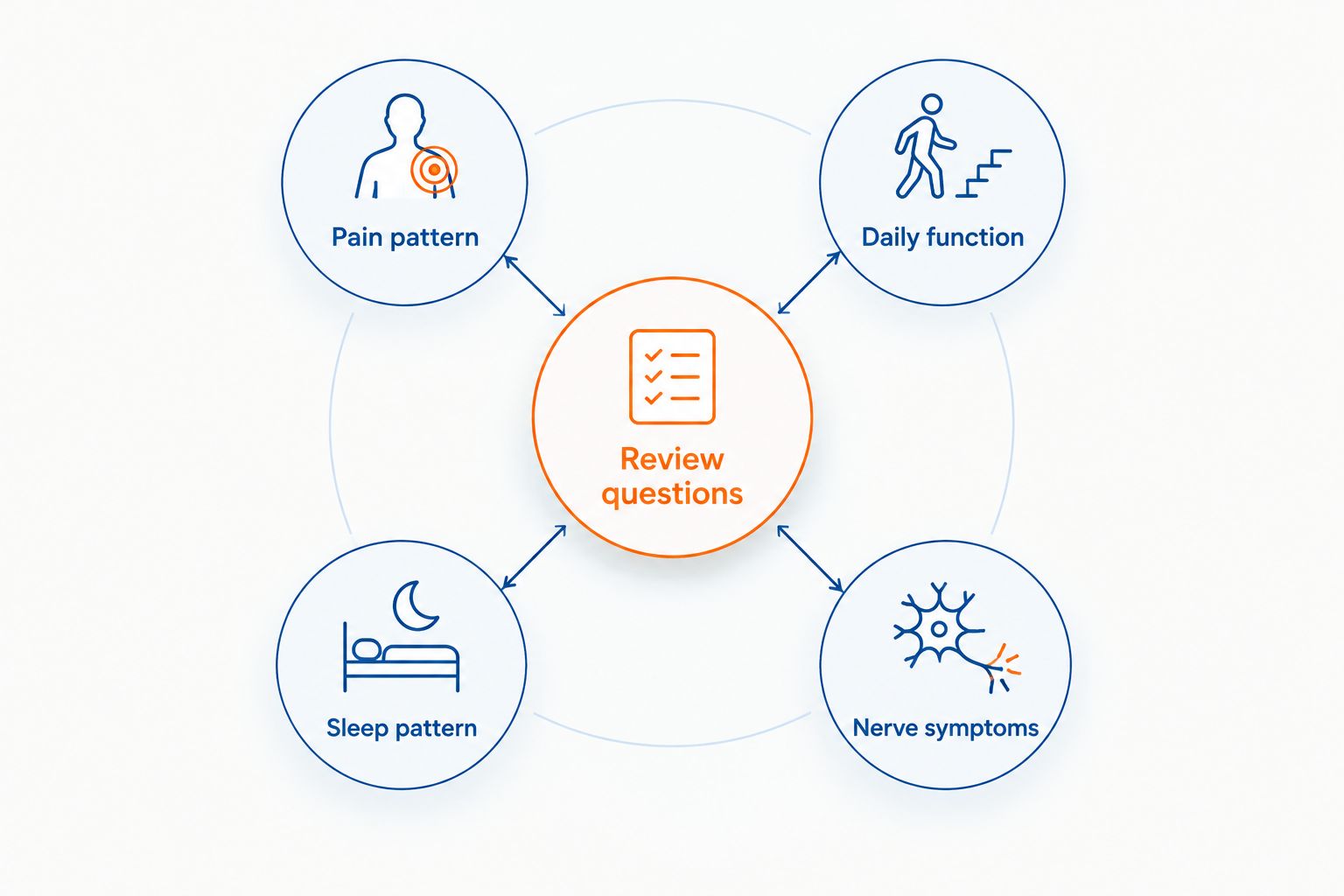
Bring the record to your appointment. A specific description, such as difficulty lifting the front of your foot, gives more useful information than saying your leg feels different.
Do not use a diary to postpone care. New bladder symptoms, saddle numbness or progressive weakness need assessment when they occur, not at the next planned review.
What can you do while waiting for an assessment?
NHS sciatica guidance advises continuing normal activities as much as possible and avoiding long periods of sitting or lying down. This is general advice, not an instruction to push through worsening leg symptoms or weakness.
Choose manageable activity within the advice you have received. If your work involves lifting, prolonged driving or tasks you cannot currently manage, discuss temporary changes with your GP and employer rather than forcing your usual workload.
Movement is not a test of determination
A generic exercise video cannot establish which movements are appropriate for you. Ask a qualified health professional about activity choices, particularly when symptoms extend down the leg or include altered sensation.
Do not assume that stronger stretching means faster healing. If a movement brings on new symptoms or makes existing symptoms worse, stop and seek individual guidance rather than repeatedly testing it.
Medicines need an individual discussion
Ask your GP or pharmacist about medicines rather than selecting them from a recovery story online. Suitability depends on your health, other medicines and the balance of possible benefits and harms.
NICE guidance on low back pain and sciatica includes specific cautions about medicines used for sciatica. Do not start, stop or change a prescribed medicine solely because a general article mentions it; discuss the change with the prescriber.
Does sleeping differently change the healing time?
A more comfortable sleeping position does not establish a shorter recovery time. Judge a position by comfort and tolerance, not by claims that it puts a disc back or releases a trapped nerve overnight.
For this 2026 guide, the practical distinction is between supporting sleep and predicting healing. You can discuss positioning with your clinician without treating a pillow, mattress or sleeping posture as a solution to the underlying cause.
If symptoms are repeatedly disrupting sleep, include that in your medical review. Also describe any new symptoms rather than attributing every night-time change to your sleeping position.
When should you see your GP rather than keep waiting?
Arrange a GP review when symptoms are worsening, remain troublesome despite self-care or stop you doing usual activities. You do not need to wait until a general recovery window has passed to ask for assessment.
Tell your GP about weakness, changes in sensation and walking difficulties. Also mention fever, unexplained weight loss, a history of cancer, recent significant injury or feeling generally unwell, because these details can change the assessment.
A useful review should answer practical questions:
- Does the symptom pattern fit sciatica, or does another explanation need consideration?
- Are there changes in strength, sensation or function that need further assessment?
- What activity advice applies to your situation?
- When should the plan be reviewed, and what changes need earlier attention?
- Would a test or referral change the next decision?
There is no universal appointment count that answers these questions. The plan should respond to your findings and progress rather than a predetermined course presented as necessary for everyone.
Does lasting pain mean you need a scan or surgery?
Persistent pain does not automatically mean you need a scan or surgery. NICE guidance advises against routine imaging in non-specialist settings and recommends considering imaging in specialist settings when the result is likely to change management.
Your GP can explain whether your symptoms and examination warrant further investigation or referral. The decision depends on clinical findings, not simply how worried you feel about the time elapsed.
The same distinction applies to surgery. A general article cannot establish whether it is appropriate; that requires individual assessment and, where relevant, discussion with a medical specialist about options, uncertainties and risks.
Where does chiropractic care fit into this discussion?
Mychiro is a chiropractic clinic and wellness centre in Bondi Junction, Sydney, offering chiropractic care and spinal adjustments. That service description is not evidence that adjustments shorten sciatica recovery or are appropriate for every person with leg symptoms.
For a 2026 discussion about care, ask what assessment is proposed, what alternatives exist, what risks apply and when medical referral would be recommended. Any chiropractic care should be considered only after individual assessment; it must not replace emergency assessment or necessary medical investigation.
You are entitled to understand the purpose of a proposed intervention before deciding. Ask how progress would be reviewed and what would happen if symptoms did not improve or new symptoms appeared.
What sources support this recovery guidance?
The source scope for this 2026 guide is general adult patient education and clinical decision-making, not evidence of a particular clinic's outcomes:
- NHS, “Sciatica”: general recovery expectations, everyday activity advice and symptoms requiring urgent assessment.
- NICE, “Low back pain and sciatica in over 16s: assessment and management” (NG59): assessment, imaging and management recommendations within the guideline's stated scope.
- Healthdirect Australia, “Sciatica”: Australian patient information about symptoms, assessment and seeking medical help.
These sources do not establish your diagnosis or predict your recovery date. Use their general guidance alongside an assessment that considers your symptoms, examination and medical history.
FAQ
How long does sciatica take to heal without treatment?
Sciatica often improves over a few weeks to a few months, according to NHS patient guidance, but some episodes last longer. That general expectation is not a reason to delay assessment for worsening symptoms, weakness or emergency warning signs.
Can sciatica last for months?
Sciatica can last for months, and NHS guidance acknowledges that symptoms sometimes persist beyond the usual recovery period. Arrange a GP review if symptoms remain troublesome or interfere with everyday activities.
How do I know if my sciatica is getting better?
Easier everyday activity, improved sleep and easing symptoms are useful changes to report, but they do not confirm complete recovery. New or worsening weakness needs medical assessment even when pain has reduced.
Should I stay in bed until sciatica goes away?
Prolonged bed rest is not the general advice in NHS sciatica guidance. Continue manageable activities as advised, and seek individual guidance if movement worsens symptoms or you have weakness.
Do I need an MRI if sciatica is not improving?
An MRI is not automatically required because sciatica has persisted. NICE recommends considering imaging in specialist settings when the result is likely to change management; your clinician can explain whether this applies.
Can chiropractic adjustments guarantee faster sciatica recovery?
No individual recovery deadline or faster recovery should be promised on the basis of receiving adjustments. Whether any intervention is appropriate requires individual assessment and discussion of alternatives, uncertainties and risks.
Which sciatica symptoms mean I should go to hospital?
New difficulty passing urine, loss of bladder or bowel control, numbness around the genitals or bottom, or severe or worsening weakness in both legs require emergency medical assessment. Go to an emergency department; call 000 if you need an ambulance in Australia.
One last thing
Less pain does not cancel out new weakness. If your leg hurts less but you develop difficulty lifting your foot, altered walking or another loss of strength, seek prompt medical assessment rather than interpreting the quieter pain as proof of healing.
Before your next review, write down what has changed in both directions: what is easier and what is harder. That gives your clinician a clearer basis for the next decision than a predicted finish date.
Related guides
- How to sleep with sciatica pain
- Lower back pain when sitting: causes and practical steps
- How chiropractors coordinate with GPs on imaging referrals