

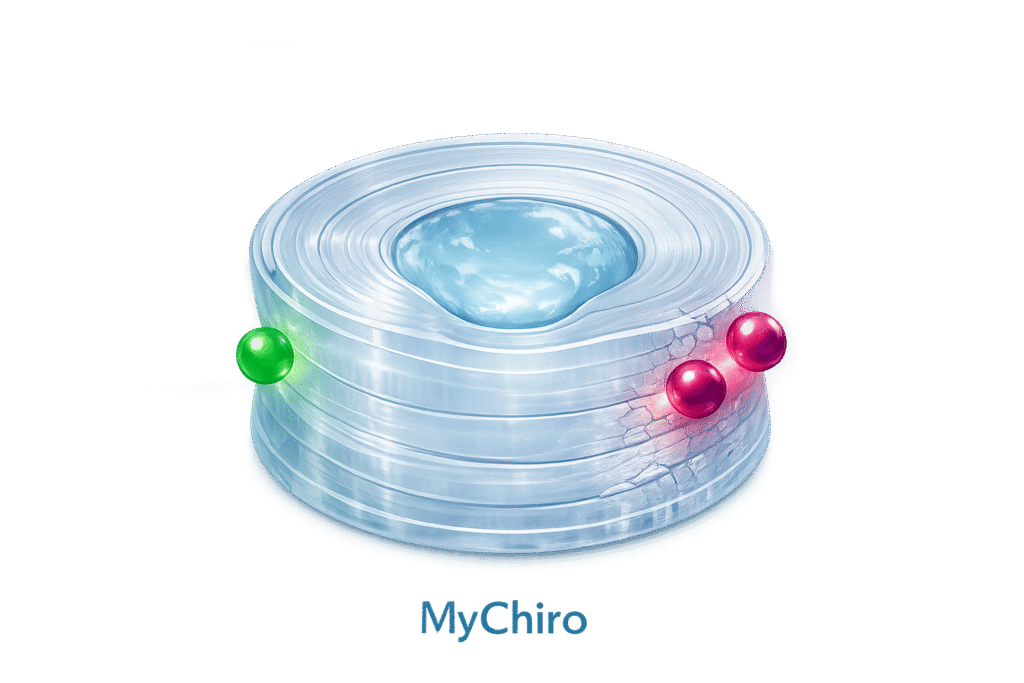
Oxidative stress plays a key role in spinal degeneration, damaging intervertebral discs and accelerating ageing. Antioxidants might help by neutralising harmful molecules, reducing inflammation, and protecting spinal tissues. Research highlights compounds like curcumin, fisetin, vitamin D3, and omega-3 fatty acids as having potential benefits for spinal health. While studies in animals and lab settings show promise, large-scale human trials are still needed to confirm these effects.
Key Takeaways:
- Oxidative stress contributes to disc degeneration by breaking down structural proteins and triggering inflammation.
- Antioxidants such as curcumin, fisetin, and vitamin D3 may support spinal health by reducing oxidative damage.
- Laboratory studies show antioxidants can protect spinal cells, but human research is limited.
- Incorporate antioxidant-rich foods (e.g., strawberries, turmeric, fatty fish) and maintain good posture and movement habits to support spinal health.
Further research is required to determine the best delivery methods and dosages for humans. While not a standalone solution, antioxidants may complement a healthy lifestyle to maintain spinal health.
Sciatica Getting Worse? Try These 3 Supplements First
sbb-itb-585d67d
Antioxidants Studied for Spinal Health
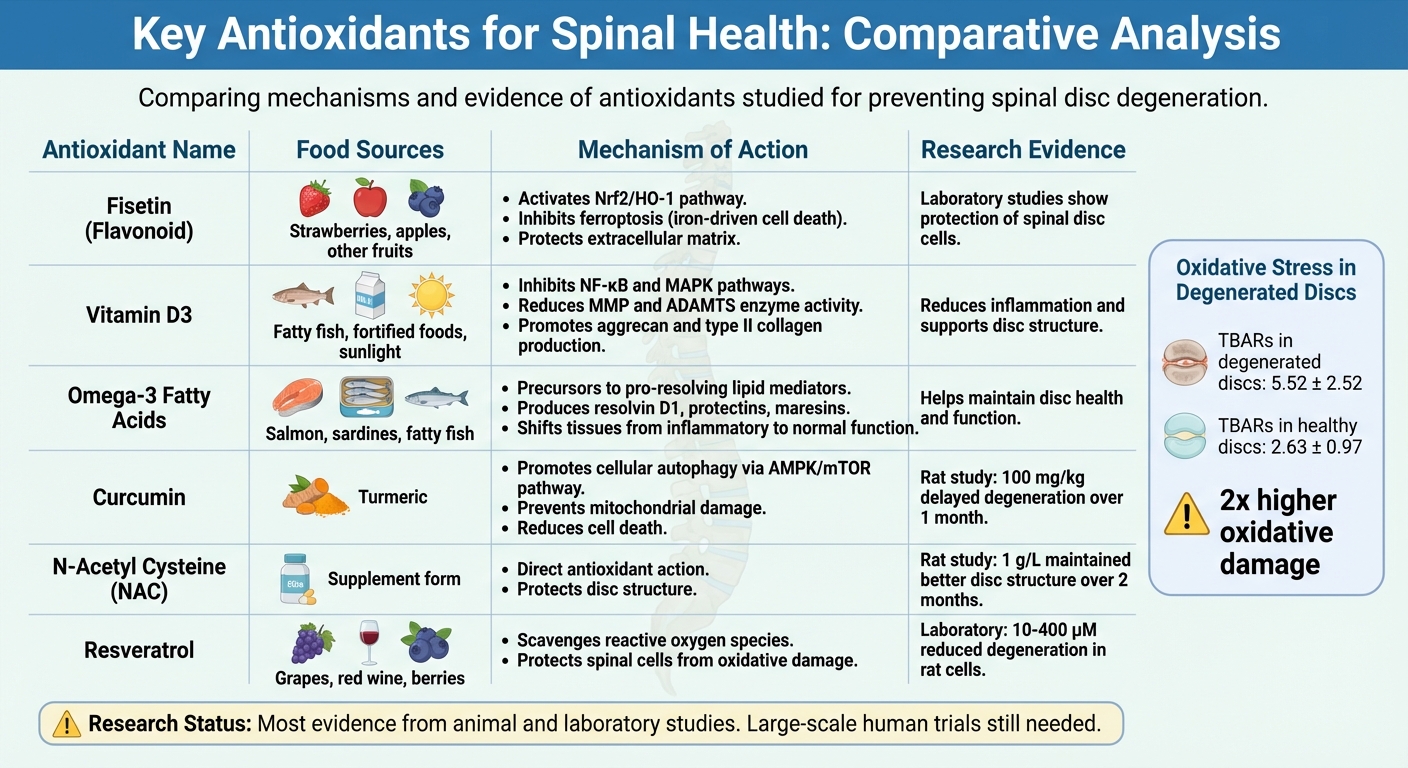
Key Antioxidants for Spinal Health: Sources, Mechanisms, and Research Evidence
Antioxidants are being closely examined for their potential to protect spinal tissues from oxidative stress. While this area of research is still evolving, a few compounds are showing encouraging results in laboratory and animal studies.
Fisetin: A Flavonoid with Potential
Fisetin, a flavonoid found in strawberries and other fruits, has caught researchers’ attention for its ability to protect spinal cells. Studies suggest it works through the Nrf2/HO-1 pathway, which helps cells combat oxidative stress.
Another intriguing aspect of fisetin is its ability to inhibit ferroptosis – a form of cell death driven by iron that can harm spinal disc tissues. By blocking this process, fisetin may help preserve the extracellular matrix, which is critical for maintaining the discs’ strength and flexibility.
"Phytochemicals are promising candidates for further development and research on IDD treatment." – Liang Kang, Department of Orthopedics and Spine Surgery, The First Affiliated Hospital of Anhui Medical University
Vitamin D3 and Its Role in Spinal Health
Vitamin D3 is well-known for supporting bone health, but its potential benefits for spinal health are gaining attention. Research indicates that vitamin D3 can inhibit NF-κB and MAPK pathways, which are commonly activated by inflammatory molecules like IL-1β. This inhibition may reduce the activity of enzymes (MMPs and ADAMTS) that degrade the disc matrix while encouraging the production of aggrecan and type II collagen – key components for maintaining disc structure.
Although the link between vitamin D and spinal health is still under investigation, its antioxidant effects and ability to reduce inflammation make it a promising candidate for addressing disc degeneration.
Omega-3 Fatty Acids and Inflammation Management
Omega-3 fatty acids take a different approach by acting as precursors to pro-resolving lipid mediators such as resolvin D1, protectins, and maresins. These mediators actively help tissues shift from an inflammatory state back to normal function.
"Pro-resolving lipid mediators (lipoxin A4, resolvin D1, protectins, and maresins) also reduce inflammation, maintaining disc health and function." – James Melrose, University of Sydney at Royal North Shore Hospital
These findings highlight the growing interest in incorporating antioxidants into daily life to support spinal health and prevent degeneration.
What Research Studies Show
Recent studies are shedding light on how various antioxidants may impact spinal tissues, offering intriguing possibilities for their role in managing disc degeneration.
Antioxidants in Disc Degeneration Studies
Laboratory and animal research suggests antioxidants could help protect spinal tissues. For example, a study led by Satoshi Suzuki at Keio University examined the effects of N-Acetyl Cysteine (NAC) on disc degeneration in 8-week-old Wistar rats. Researchers induced degeneration using needle puncture and administered NAC orally at 1 g/L, starting one week before the procedure and continuing for two months. The results? MRI and tissue analysis revealed that NAC-treated rats maintained better disc structure and signal intensity compared to untreated ones.
Similarly, Kang and colleagues explored the effects of curcumin on human nucleus pulposus cells and in a rat model of disc degeneration. Rats received 100 mg/kg of curcumin via intraperitoneal injection twice weekly for a month. Their findings showed that curcumin delayed degeneration by promoting cellular autophagy through the AMPK/mTOR pathway, helping to prevent mitochondrial damage and cell death. Another study by Li and colleagues focused on resveratrol, demonstrating its ability to protect rat spinal cells from damage by scavenging reactive oxygen species. Laboratory cultures confirmed that doses ranging from 10–400 μM reduced degeneration.
These studies are beginning to unravel the cellular mechanisms that might explain the benefits of antioxidants.
How Antioxidants Work at the Cellular Level
Antioxidants seem to do more than just neutralise free radicals; they also support disc health through complex cellular processes. Research indicates they may restore balance between matrix synthesis and degradation by reducing enzyme activity (e.g., MMP-3 and ADAMTS-5) that contributes to disc breakdown, while encouraging the synthesis of vital matrix components.
"Antioxidant therapy for disc degeneration holds excellent promise." – Guoshuai Cao et al., Hebei Medical University
Degenerated discs often show significantly higher levels of oxidative stress markers. For instance, TBARs – an indicator of lipid damage – are more than double in degenerated discs (5.52 ± 2.52) compared to healthy ones (2.63 ± 0.97). By targeting these oxidative imbalances, antioxidants may help slow degeneration before structural damage becomes irreversible.
Gaps in Current Research
While these findings are promising, there are still major gaps to address. Most of the evidence comes from cell cultures and animal studies, particularly in rats, with a lack of large-scale human clinical trials to confirm these benefits. This challenge is compounded by the avascular nature of the intervertebral disc, which makes it difficult for oral antioxidants to reach therapeutic levels within the tissue.
"The current clinical drug treatment of IDD focuses on the symptoms and not their pathogenesis, which results in frequent recurrence and gradual aggravation." – Frontiers in Pharmacology
Another issue lies in how the body processes these compounds. Many plant-based antioxidants are metabolised by gut bacteria into smaller components before they can reach the spine, raising questions about which forms are most effective. Future research will need to explore optimal delivery methods, appropriate dosages for humans, and whether these treatments can reverse existing damage or simply slow its progression. Until robust human trials are conducted, the practical use of antioxidant therapy for spinal health remains a work in progress.
Adding Antioxidants to Your Daily Routine
Incorporating antioxidants into your daily habits can play a role in supporting spinal health, especially when combined with good movement and posture practices. Let’s explore how your diet, daily activities, and chiropractic care can work together to maintain a healthy spine.
Foods Rich in Antioxidants
Many antioxidant-rich foods that may benefit spinal health are common in Australian diets. For instance:
- Turmeric contains curcumin, which may aid mitochondrial function in spinal cells.
- Tomatoes are a source of lycopene.
- Strawberries and apples provide fisetin.
- Green tea offers EGCG.
- Fatty fish like salmon or sardines deliver omega-3 fatty acids.
- Citrus fruits are rich in naringin, while mangoes contain mangiferin.
- Even your morning coffee has chlorogenic acid, which might help protect the spinal extracellular matrix.
Additionally, ensuring adequate intake of zinc and magnesium – found in nuts, seeds, and leafy greens – can support the enzymes that combat oxidative stress.
Posture and Movement Habits
Since intervertebral discs don’t have a direct blood supply, regular movement is essential for delivering nutrients, including antioxidants, to spinal tissues. However, poor habits like sitting for long periods with bad posture or repetitive heavy lifting can cause oxidative stress.
Small changes can make a big difference. Try standing up every 30–45 minutes, keeping your spine in a neutral position while sitting, and avoiding prolonged forward head posture. These simple adjustments can reduce mechanical strain, creating a better environment for antioxidants to support spinal health and nutrient diffusion into disc tissues.
Chiropractic Care for Spinal Support
Chiropractic care can complement an antioxidant-rich lifestyle by addressing spinal alignment and reducing mechanical stress. For example, Dr Steve in Bondi Junction offers gentle, evidence-based adjustments to improve joint movement and posture. By relieving abnormal mechanical loads, chiropractic care may help reduce the production of reactive oxygen species in spinal disc cells.
When performed by a qualified practitioner, chiropractic care is generally safe and can be part of a holistic approach to spinal health, alongside proper nutrition, movement, and lifestyle changes.
Conclusion
Oxidative stress has been linked to spinal degeneration, but antioxidant therapy is still in its early stages of research. Laboratory studies have shown that compounds like curcumin, quercetin, and epigallocatechin-3-gallate (EGCG) may protect disc cells and reduce inflammation. However, large-scale human trials are necessary to confirm these effects and to create standardised treatment protocols.
While antioxidants show potential, they are not a standalone fix. Instead, they could become part of a broader approach that includes proper nutrition, regular movement, good posture habits, and professional care. Current treatments primarily focus on managing pain, but antioxidants might eventually address the root causes of degeneration – pending further clinical validation.
"Antioxidant therapy for disc degeneration holds excellent promise." – Guoshuai Cao, Department of Clinical Medicine at Hebei Medical University
"Until this evidence is available, it would be prudent to be cautious in the use of such compounds." – Associate Professor James Melrose
For Australians, incorporating antioxidant-rich foods into a balanced diet, staying active, and seeking professional advice offer practical ways to support spinal health. Whether it’s through dietary changes or consulting a qualified practitioner, such as Dr Steve in Bondi Junction, the focus should be on maintaining spinal health from multiple perspectives while research in this area progresses.
This information is general in nature and does not replace professional medical advice.
Chiropractic care addresses musculoskeletal health, and outcomes can vary between individuals.
Always consult a qualified healthcare professional before making health-related decisions.
FAQs
Do antioxidant supplements actually reach spinal discs?
Current studies indicate that antioxidant supplements like pyrroloquinoline quinone (PQQ) might play a role in lowering oxidative stress, which is associated with intervertebral disc degeneration. However, it remains unclear if these supplements can directly target or build up within spinal discs.
Which antioxidants are safest to try for disc health?
Some antioxidants, like pyrroloquinoline quinone (PQQ) and lycopene, are thought to be safe for human use and may help maintain disc health. These compounds work by lowering oxidative stress, a factor that can play a role in intervertebral disc degeneration. However, it’s essential to consult a qualified healthcare professional before adding any supplements to your routine, ensuring they align with your specific health needs.
Can antioxidants reverse disc degeneration or just slow it?
Current studies indicate that antioxidants might play a role in reducing oxidative stress, which is associated with disc degeneration. However, there’s no clear evidence that they can completely reverse the condition. Instead, they seem more effective at potentially slowing down its progression or alleviating certain symptoms. Outcomes can differ, and further research is necessary to better understand their impact.


