


Poor posture often stems from tight fascia – a connective tissue that supports and connects muscles, bones, and organs. Indirect myofascial release (IMR) is a gentle therapy that helps ease fascial restrictions, improving alignment, mobility, and reducing pain.
Here’s how it works:
- Fascia and Posture: Healthy fascia is flexible and hydrated, but tight or dehydrated fascia can pull your body out of alignment, leading to issues like rounded shoulders or neck tension.
- IMR Technique: Therapists apply light pressure along the fascia’s natural path for 90-120 seconds, encouraging it to soften and regain flexibility.
- Nervous System Impact: IMR stimulates relaxation by activating the parasympathetic nervous system, reducing stress and muscle tension.
- Who Benefits: Office workers, athletes, individuals with chronic pain, or those recovering from surgery may find relief with IMR.
This approach is ideal for sensitive areas or pain conditions, offering a gentle way to address posture issues and promote better movement.
Fix Your Posture & Release Muscle Tension (Myofascial Release Guide)
sbb-itb-585d67d
How Fascia Affects Posture
Fascia is like your body’s internal support system, helping muscles move smoothly while keeping everything aligned. When it’s healthy, this connective tissue is flexible and well-hydrated. But when fascia becomes tight and dehydrated, it can lose its flexibility, throwing off your body’s natural alignment.
"Fascia is a continuous web of connective tissue that runs throughout your entire body. Think of it like a three-dimensional spider web that wraps around and connects every muscle, bone, nerve, blood vessel, and organ in your body." – Thrive Spine & Sports Rehab
Because fascia is so interconnected, a restriction in one spot can create problems elsewhere. For example, tightness in the hips might lead to neck tension, or restrictions in the shoulders could trigger headaches. Over time, the body compensates by shifting into awkward positions, which can cause lasting postural imbalances.
Common Causes of Fascial Tension
Several factors can cause fascia to tighten or lose hydration. Injuries and surgeries often lead to adhesions, which bind fascia to nearby tissues. Repetitive activities – whether it’s sitting at a desk all day or performing athletic movements – can also create tension in specific areas.
A lack of movement is especially harmful. Sitting for long periods, for instance, can cause fascia to dry out and become sticky, making it harder for muscles to move freely. Emotional stress can also show up as physical tension in the fascia, while chronic inflammation from overuse can cause it to thicken. Dehydration adds to the problem, as fascia needs water to stay flexible and function properly.
How Fascial Restrictions Lead to Postural Issues
When fascia tightens, the body often compensates by adopting new positions to avoid discomfort. This can lead to postural changes like rounded shoulders, a anterior pelvic tilt, or a head that juts forward – all of which put extra strain on muscles and joints. These shifts can result in chronic pain, such as neck and back aches or tension headaches.
Restricted fascia can also create trigger points – sensitive knots that cause pain in other areas. For instance, tension in the shoulders might lead to headaches, while tightness in the glutes could mimic the symptoms of sciatica. Because the fascial system is so interconnected, addressing posture problems often requires looking beyond the painful area to find the root cause. Understanding these connections is a crucial step toward relieving discomfort and restoring natural alignment.
What Is Indirect Myofascial Release?
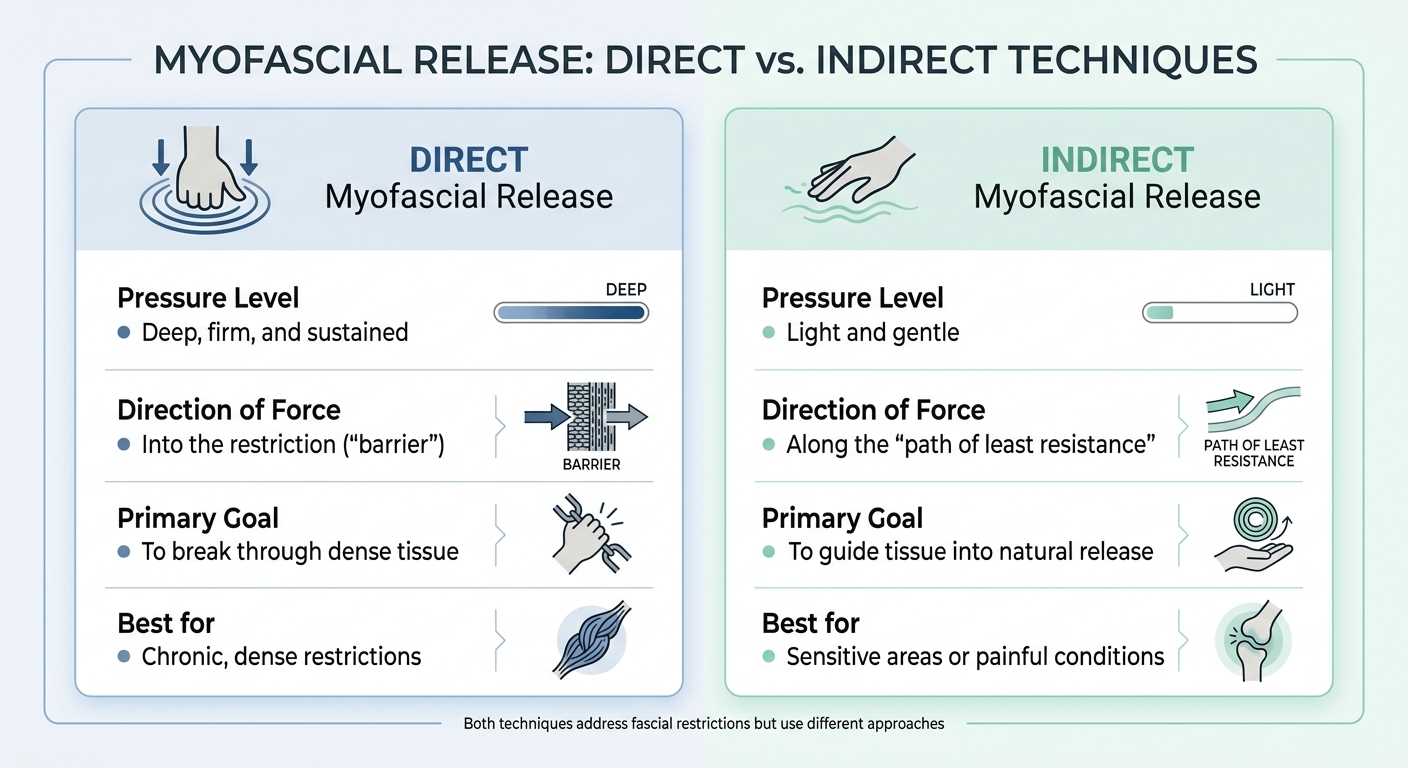
Direct vs Indirect Myofascial Release Techniques Comparison
Indirect myofascial release is a hands-on therapy that works with your body’s natural movements. Instead of applying heavy pressure to tight areas, the therapist uses light pressure, following the tissue’s natural path. This approach, often described as the "path of least resistance", gently guides the fascia into a position where it can release tension on its own. The result? A smoother, more natural release within the fascial network.
By holding this gentle pressure for 90 to 120 seconds, the fascia undergoes a process called thixotropy. This means the tissue shifts from a gel-like state to a more fluid one, softening and easing restrictions. During this process, you might notice sensations like warmth, a "melting" feeling, or a gentle release as your tissue adjusts and reorganises.
The Technique Explained
The indirect method works by using light contact to move fascia away from areas of restriction. This is quite different from the direct method, which involves applying deep pressure into the restriction itself.
| Feature | Direct Myofascial Release | Indirect Myofascial Release |
|---|---|---|
| Pressure Level | Deep, firm, and sustained | Light and gentle |
| Direction of Force | Into the restriction ("barrier") | Along the "path of least resistance" |
| Primary Goal | To break through dense tissue | To guide tissue into natural release |
| Best for | Chronic, dense restrictions | Sensitive areas or painful conditions |
This table highlights how the indirect method gently encourages the body to heal itself, making it particularly suitable for sensitive areas or individuals who cannot tolerate intense pressure. It’s also an effective way to improve posture without causing discomfort.
Effects on the Nervous System
A key benefit of indirect myofascial release is its impact on the nervous system. The gentle, sustained pressure stimulates mechanoreceptors in the fascia, which can help decrease pain and relax muscles.
"The sustained, gentle pressure of myofascial release activates the parasympathetic nervous system, promoting deep relaxation and reducing overall stress levels." – Thrive Spine & Sports Rehab
This technique activates the parasympathetic nervous system, often referred to as the "rest and digest" mode. By doing so, it helps reduce stress and encourages the body to release protective muscle tension. When your nervous system perceives a movement or position as safe, it naturally lets go of tightness. This calming effect not only eases physical tension but also addresses the emotional stress that often shows up as tightness in the fascia. By working on both the tissue and the nervous system, indirect myofascial release supports better posture and long-term relief. Next, we’ll explore how these benefits can translate to improved posture.
Potential Benefits for Posture
Indirect myofascial release has the potential to improve posture by addressing fascial restrictions. This can lead to better alignment, increased mobility, and reduced discomfort.
Supporting Natural Alignment
When fascial restrictions are released, the body may regain a more balanced alignment, easing the strain on muscles and joints.
"Releasing chronic fascial patterns allows the body to return to more optimal alignment, reducing strain on muscles and joints." – Thrive Spine & Sports Rehab
The concept of thixotropy, where collagen fibres become more pliable, helps these fibres realign in a way that supports a more natural posture. This process also enhances how the body moves, making everyday activities feel more fluid.
Increasing Mobility and Flexibility
Tight fascia can limit how muscles and joints move by creating adhesions – areas where tissues stick together and lose hydration. Indirect myofascial release may help break down these adhesions, restoring muscle glide and joint flexibility.
For those who spend long hours at a desk, this can mean smoother movements, like reaching overhead or turning your head, without feeling stiffness or restriction.
Addressing Chronic Pain
Better alignment and mobility can also play a role in managing pain. Poor posture often leads to ongoing discomfort in areas like the neck, shoulders, and lower back. By reducing trigger point sensitivity and easing fascial restrictions, this technique may help relieve these issues. The gentle, sustained pressure used during treatment is thought to activate mechanoreceptors in the fascia. This can reduce pain signals and encourage muscle relaxation, offering relief from chronic discomfort.
Who May Benefit from This Approach?
Indirect myofascial release offers potential relief for a variety of individuals dealing with postural challenges. From desk workers to athletes and those managing chronic pain, this technique may provide support tailored to specific needs.
Suitable Candidates
Office workers dealing with "tech neck" and shoulder strain from prolonged desk work could find relief through this technique. Did you know that a mere one-inch forward head shift adds about 4.5 kg (10 lb) of pressure to the cervical spine? This is a common issue for those in remote or hybrid work setups. Indirect myofascial release may help ease built-up tension in the neck and upper back.
Athletes looking to enhance movement efficiency and speed up recovery between workouts might also benefit. By addressing fascial restrictions, the technique supports smoother movement patterns and may lower the risk of injuries caused by muscle imbalances.
For individuals managing chronic pain conditions like fibromyalgia, sciatica, tension headaches, or TMJ disorders, this approach could provide relief. Research shows that up to 85% of people will experience myofascial pain syndrome at some point, making this a potentially helpful option for those dealing with acute discomfort or heightened sensitivity.
Those recovering from surgery or injury may use this method to address scar tissue and adhesions that often develop during healing. Post-surgical fascial restrictions can interfere with natural alignment, and this technique may assist in restoring mobility and improving posture during recovery.
These examples illustrate the versatility of indirect myofascial release in addressing various postural concerns and pave the way for understanding how to begin treatment.
Getting Started with Treatment
Knowing who can benefit is just the first step. For acute postural issues, noticeable improvements might occur within 3 to 6 sessions, while chronic conditions often require 8 to 12 sessions or more. Consistency matters – regular maintenance sessions every few weeks or months can help keep fascial restrictions at bay. After each session, staying hydrated and engaging in light movement can support the body in adapting to new postural patterns. However, it’s best to avoid intense exercise for the rest of the day.
It’s important to note that this treatment should be avoided or approached cautiously in cases of acute infections, open wounds, blood clots, severe osteoporosis, active cancer or tumour sites, or recent surgeries without medical clearance. Additionally, insurance coverage for myofascial release may vary, so checking with your provider is a smart step if it’s part of a broader treatment plan.
Next Steps
Building on the earlier discussion about its benefits and selecting the right practitioner, indirect myofascial release could be an option to address postural issues stemming from fascial tension and nervous system imbalances. Whether you’re dealing with desk-related strain, recovering from an injury, or looking for a gentler alternative to deep-pressure techniques, this approach might be worth considering.
If you’re ready to work on improving your posture, here’s how to get started. First, seek an assessment from a qualified practitioner such as a physical therapist, osteopath, or chiropractor trained in indirect myofascial release. Make sure they’re registered with the appropriate professional body. For your initial consultation, wear loose, comfortable athletic clothing to allow for a proper evaluation of your postural alignment.
Be prepared to share your medical history, including details about recent surgeries, blood clots, fractures, or medications. If you’ve been experiencing chronic muscle tension that doesn’t improve with stretching, reduced range of motion, or sensitivity to touch, indirect techniques might be especially suitable for you.
"If you have pain in your myofascial tissues, ask your healthcare provider if myofascial release therapy could be right for you. While research hasn’t proven the technique is 100% beneficial, it may help reduce or eliminate your pain." – Cleveland Clinic
Consistency is key for lasting postural improvements. After your treatment, stay hydrated, move lightly, and avoid intense physical activity for 24 hours to support your body’s adjustments. It’s also a good idea to check with your insurance provider, as myofascial release performed by licensed physical therapists is often included in coverage.
This information is for general purposes and does not replace professional medical advice. Chiropractic care focuses on musculoskeletal health, and results can vary. Always consult a qualified healthcare provider before making health-related decisions.
FAQs
How is indirect myofascial release different from a deep tissue massage?
Indirect myofascial release is a technique that works on the fascia – the connective tissue surrounding muscles and organs – using light, sustained pressure to ease tension and enhance mobility. This method avoids applying deep or forceful pressure, making it a slower and more targeted approach.
On the other hand, deep tissue massage zeroes in on the deeper layers of muscle, using firm and intense pressure to tackle knots and boost circulation. While both methods can benefit musculoskeletal health, myofascial release takes a gentler, fascia-centred approach, whereas deep tissue massage is more vigorous and muscle-focused.
How can I tell if tight fascia is affecting my posture?
Signs that tight fascia might be affecting your posture can include a restricted range of motion, ongoing muscle tightness, or discomfort that seems to intensify with movement. If these issues sound familiar, it could be worth consulting a healthcare professional, like a chiropractor or physiotherapist. They can evaluate fascial restrictions by observing your movement and using palpation techniques.
To address these restrictions, treatments such as myofascial release therapy may be beneficial. This approach could help improve posture while also alleviating related symptoms.
How long do results from IMR typically last?
The length of time that the effects of indirect myofascial release (IMR) last can vary greatly from person to person. Factors like the specific condition being addressed and how an individual responds to the therapy play a big role. Because of these differences, there’s no universal timeline for how long the benefits might persist.


