


Trigger point pain – those tight, tender muscle knots – can cause discomfort and even radiate pain to other areas of your body. While mild cases often improve with rest, stretching, or heat, persistent or severe pain might need professional care. Chiropractors specialise in treating musculoskeletal issues, including trigger points, using hands-on techniques to address the root causes.
Here’s when to consider seeing a chiropractor:
- Pain lasts over 6 weeks despite self-care.
- Discomfort interferes with daily activities.
- Stretching or rest doesn’t improve symptoms.
- Pain radiates or feels widespread.
Chiropractic care can involve myofascial release, dry needling, spinal adjustments, and personalised advice to correct posture or movement patterns. If your pain persists or worsens, it’s worth consulting a chiropractor to explore targeted solutions.
What is Trigger Point Therapy? Explained By a New York City Chiropractor
sbb-itb-585d67d
What Are Trigger Points?
Trigger points are tight, localised muscle spasms that form within your muscles and tendons. These knots can cause pain that radiates from the affected area to other parts of your body. Unlike nerve pain, which typically follows a specific path (like pain travelling down your thumb and index finger due to a compressed C6 nerve), trigger point pain tends to spread more broadly. For example, it might affect the entire upper arm or the shawl area of your back.
This broad pain pattern often leads to misdiagnoses. For instance, leg pain might be mistaken for a herniated disc, or wrist pain could be confused with carpal tunnel syndrome.
Trigger points can result from repetitive strain, poor posture, or acute injuries. They may also develop secondary to other conditions. These points often feel like small, firm lumps under the skin, resembling pebbles. They are most commonly found in areas like the neck, upper back, and lower back. Since they are often tied to underlying issues with how your body moves and holds itself, addressing them might require more than just rest or stretching.
Recognising these characteristics can help in determining when it’s time to seek professional care.
Signs That You May Need Chiropractic Care
Muscle pain doesn’t always call for professional attention, but certain patterns can signal that self-care might not be enough. If you’ve been trying to manage discomfort on your own without success, these signs could suggest it’s time to consult a chiropractor.
Pain Lasting Over 6 Weeks
Muscle pain that sticks around for more than six weeks, even with rest and home remedies, might indicate chronic trigger points. This type of pain often spreads across a region rather than following a specific nerve path. If it disrupts your daily life – whether it’s work, sleep, or exercise – seeking professional help could be the next step.
Difficulty With Daily Activities
When pain starts interfering with your ability to move comfortably or perform everyday tasks, it can take a toll on your quality of life. Muscle spasms that limit your movements might benefit from chiropractic care, which focuses on restoring proper movement patterns.
Pain That Doesn’t Respond to Stretching or Rest
Stretching, rest, and heat are great starting points for managing muscle pain, but they don’t always address deeper biomechanical issues. Research suggests that combining manual therapy with stretching routines can be more effective for chronic pain than stretching alone. If your discomfort persists despite self-care or if common treatments aren’t working, it could be referred pain from trigger points. In these cases, a professional evaluation may uncover the biomechanical causes behind the pain and offer targeted solutions.
"Chiropractic care is the optimal method for managing trigger point pain. Chiropractic care is a drug-free approach which directly addresses the biomechanical causes of these persistent trigger points and their associated patterns of radiating pain."
– Loving Chiropractic and Wellness Center
How Chiropractors Approach Trigger Point Pain
Chiropractors tackle trigger point pain by looking beyond the surface symptoms to understand the deeper musculoskeletal connections. Their aim is to pinpoint the root cause of muscle spasms, often exploring whether biomechanical issues are contributing to the problem. This deeper analysis allows them to tailor specific treatment plans, as outlined below.
Assessment Process
When you first visit a chiropractor, they’ll carefully evaluate the type and spread of your pain. A key part of this process is distinguishing between diffuse trigger point pain and localised nerve compression. Trigger point pain often feels widespread and less defined, while nerve compression pain tends to be sharper and follows a specific path, like the thumb and index finger for a C6 nerve issue or the little toe for an S1 nerve problem.
The physical exam involves locating tender spots in your muscles and assessing your posture and movement patterns. Chiropractors will also check for structural issues such as spinal misalignments, herniated discs, or degenerative arthritis, as these can contribute to muscle tension. This detailed approach helps avoid common misdiagnoses. For example, trigger point pain in the wrist is sometimes confused with carpal tunnel syndrome, but a thorough evaluation can clarify the true cause.
Treatment Techniques
Once the problem areas are identified, chiropractors use hands-on techniques like myofascial release and dry needling to address the pain. Myofascial release focuses on easing tension in the fascia – the thin tissue surrounding muscles – by targeting areas of contracted muscle fibres. Dry needling, on the other hand, involves inserting a fine needle into the trigger point to create a twitch response, which helps the muscle relax. These treatments are often paired with stretching exercises to promote long-term relief and better muscle function.
Spinal adjustments may also play a role, especially if joint dysfunction or poor movement patterns are aggravating the muscle spasms. Research shows that myofascial pain and trigger points affect about 85% of people at some point in their lives. Chiropractic care often offers relief within 24 to 72 hours, with benefits lasting for about a month. These techniques are part of a broader plan to manage trigger point pain effectively.
Prevention Advice
Chiropractors don’t just treat the pain – they also focus on preventing it from coming back. They might help you address postural imbalances, such as upper or lower crossed syndromes, and identify ergonomic factors like repetitive motions or sustained pressure that could be contributing to your discomfort. Tailored rehabilitation exercises are often recommended to improve flexibility, strengthen supporting muscles, and correct movement patterns.
"Rehabilitation exercise is a crucial component of any successful MPS treatment program. The goal of exercise is to improve flexibility and strength while correcting faulty biomechanics and postures."
– Tim Bertelsman, DC, ChiroUp
Lifestyle changes are also part of the plan. Chiropractors might suggest staying hydrated, improving your sleep quality, or using stress management techniques to keep tension at bay. The focus is on shifting from passive treatments to active self-care, empowering you to maintain the progress you’ve made over the long term.
When to Seek Chiropractic Care vs. Self-Care
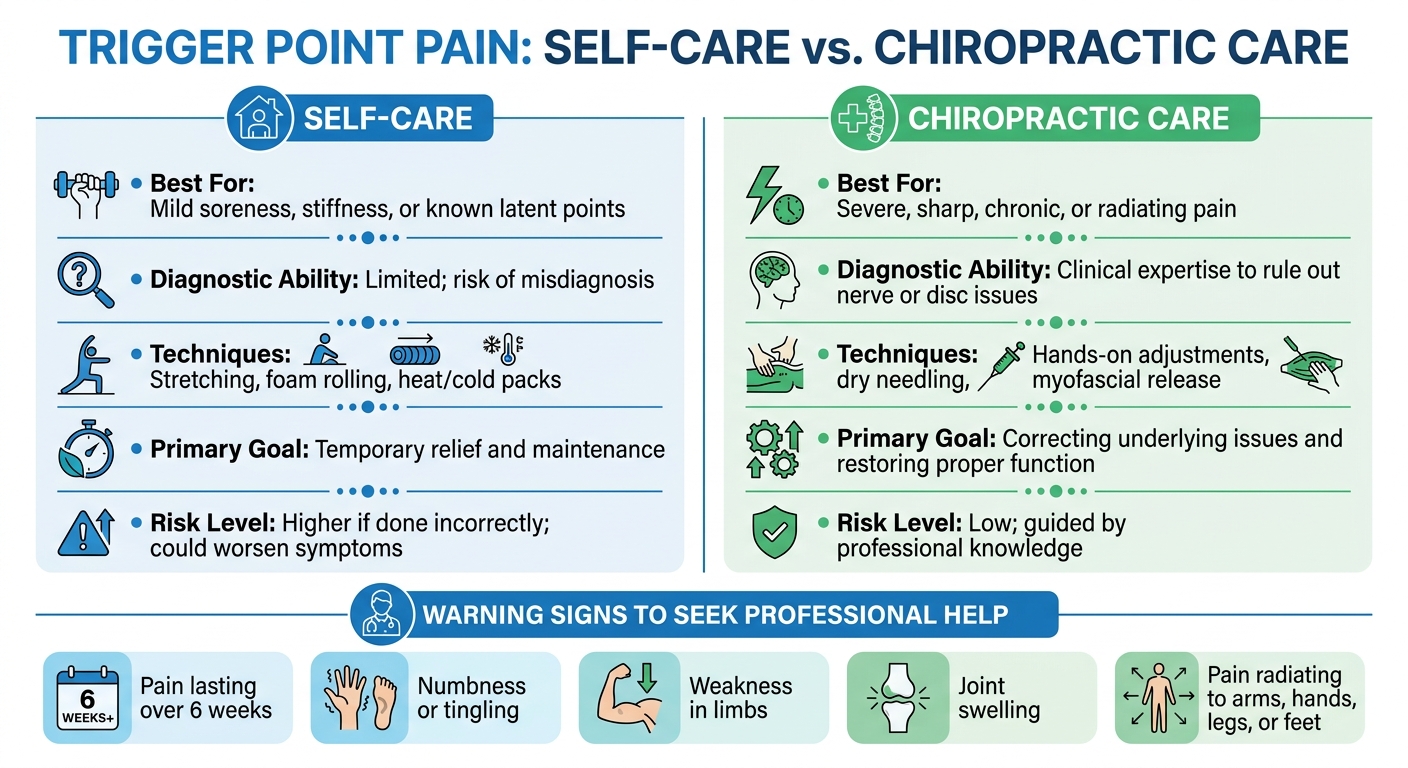
When to Use Self-Care vs Chiropractic Care for Trigger Point Pain
Not every muscle knot or discomfort requires a trip to the chiropractor. Mild, localised pain often responds well to at-home remedies, while persistent or worsening pain might be a sign that professional care is needed. Understanding when to handle it yourself and when to call in an expert can save you both time and unnecessary discomfort. Let’s break it down.
Self-Care for Mild Symptoms
If your pain is minor, there are plenty of home remedies that can help. Gentle stretching can keep your muscles flexible, while heat therapy – applied for 15 to 20 minutes – can loosen tight areas before using tools like a foam roller or massage ball. Applying steady pressure for 30–60 seconds helps muscles relax. For fresh injuries, cold packs applied for 10 to 15 minutes can bring down inflammation. And don’t underestimate the power of good posture – especially if you’re sitting at a desk all day. Regularly adjusting your position can prevent tension from building up in the first place.
When to See a Professional
If your pain persists or worsens despite these efforts, it’s time to seek professional help. Chiropractors are particularly helpful when pain becomes sharp, severe, or starts radiating to other areas like your arms, hands, legs, or feet. This could signal nerve compression rather than just a muscle issue. Chiropractors are trained to distinguish between simple trigger point pain and more serious conditions. Chronic pain that doesn’t respond to rest or stretching is often linked to deeper issues like muscle imbalances, poor posture, or improper movement patterns – all of which benefit from hands-on treatment.
Comparison Table: Self-Care vs. Chiropractic Care
| Feature | Self-Care | Chiropractic Care |
|---|---|---|
| Best For | Mild soreness, stiffness, or known latent points | Severe, sharp, chronic, or radiating pain |
| Diagnostic Ability | Limited; risk of misdiagnosis | Clinical expertise to rule out nerve or disc issues |
| Techniques | Stretching, foam rolling, heat/cold packs | Hands-on adjustments, dry needling, myofascial release |
| Primary Goal | Temporary relief and maintenance | Correcting underlying issues and restoring proper function |
| Risk Level | Higher if done incorrectly; could worsen symptoms | Low; guided by professional knowledge |
If you notice symptoms like numbness, tingling, weakness, or swelling in your joints, stop self-care immediately and consult a professional. These could be signs of nerve involvement or a more serious condition. While at-home techniques like stretching can complement professional treatments, many chronic trigger points stem from deeper muscular or biomechanical issues that require expert attention to resolve fully.
Conclusion
Trigger point pain can be both frustrating and disruptive. Understanding when to manage it on your own and when to seek professional care is crucial for effective recovery and reducing the chances of the pain returning. While minor discomfort might improve with stretching, heat therapy, or rest, ongoing or radiating pain should be evaluated by a healthcare professional.
Chiropractors can play a key role in identifying whether your pain stems from trigger points or other issues like nerve compression or spinal problems. As highlighted by Loving Chiropractic and Wellness Centre, "A patient in whom a correct diagnosis of trigger point pain is missed may lose much time and other resources, as she fruitlessly ‘tries’ one doctor after another and needlessly undergoes all sorts of complex and costly testing." Getting an accurate diagnosis early can save time, effort, and money.
Chiropractic care may address the root biomechanical causes of trigger points rather than merely masking symptoms. This approach could help restore proper movement, support muscle function, and potentially lower the risk of recurring pain.
If self-care methods haven’t eased your discomfort, or if your pain is sharp, chronic, radiating, or persists for weeks, it may be time to consult a qualified chiropractor. A tailored assessment can uncover the underlying causes and guide you towards a treatment plan suited to your needs.
This information is intended as a general guide and should not replace professional medical advice. Chiropractic care focuses on musculoskeletal health, and outcomes can vary between individuals. Always consult a qualified healthcare professional before making decisions about your health.
FAQs
How do I tell trigger point pain from nerve pain?
Trigger point pain is often described as a deep, dull ache or a tight, knot-like feeling in a muscle. Pressing on the affected area can sometimes cause pain to radiate to nearby regions. In contrast, nerve pain tends to feel sharp, burning, or tingling and usually follows the path of a specific nerve. Since these types of pain can overlap and may need different treatments, it’s important to consult a healthcare professional for proper diagnosis and care.
What happens during a first chiropractic visit for trigger points?
Your first chiropractic appointment for trigger points usually begins with a thorough evaluation of your musculoskeletal health. This includes discussing your symptoms, medical history, and lifestyle habits. The chiropractor will likely perform a physical examination, which may involve feeling your muscles to locate any tight or tender spots.
If trigger points are found, they might use techniques like applying manual pressure or soft tissue therapy to help release the tension. Additionally, they may provide advice on improving posture or making lifestyle changes to support your overall well-being in the long run.
Are there warning signs that mean I should stop self-care?
If you notice new or worsening symptoms, experience ongoing pain, or find that your discomfort doesn’t ease with basic self-care, it’s time to pause and reassess. In such situations, seeking professional advice is the best course of action to ensure your concerns are addressed properly.


